Artwork
A cook and his wife
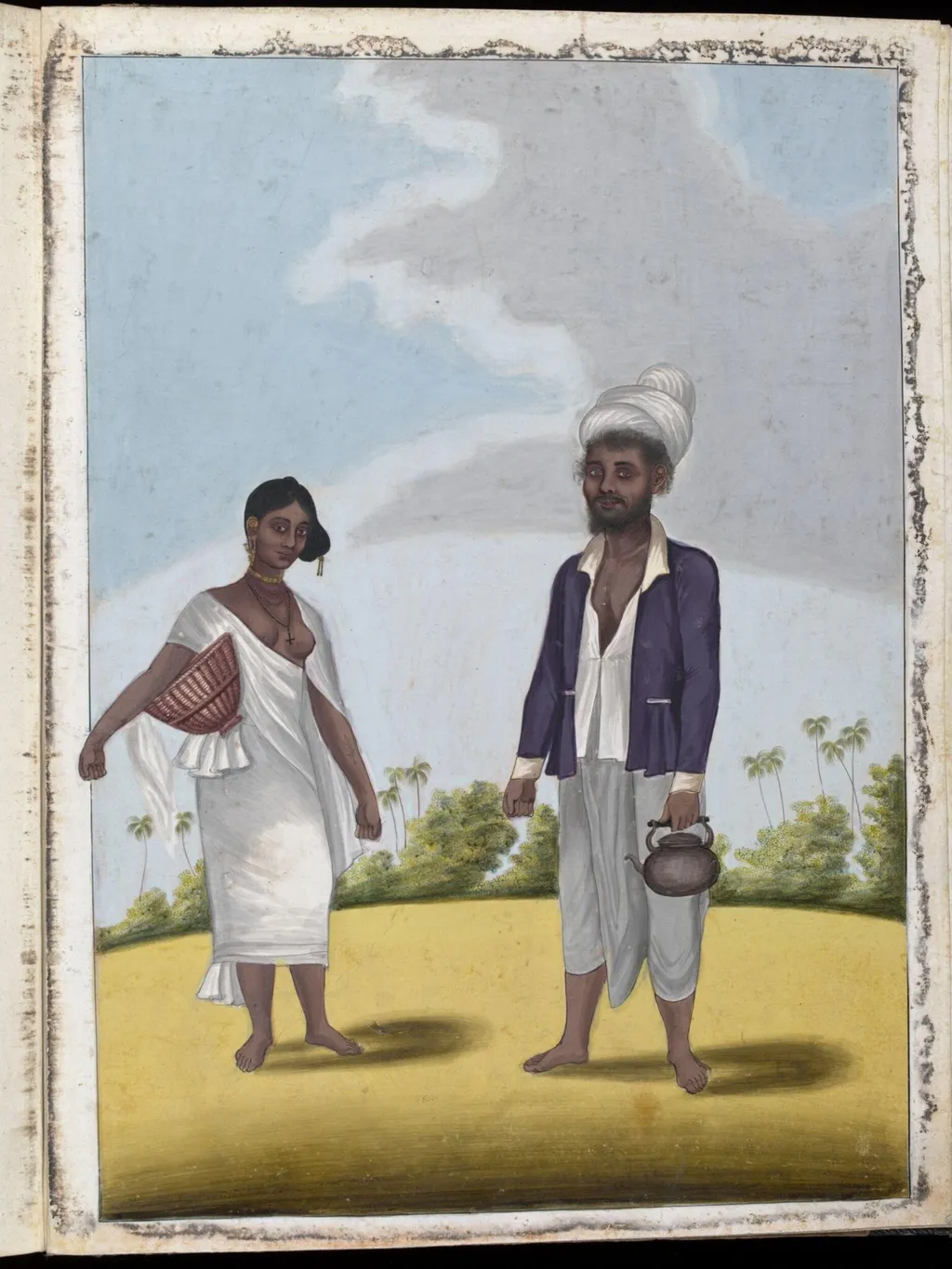
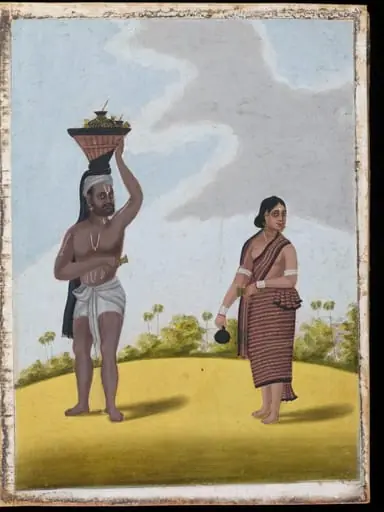
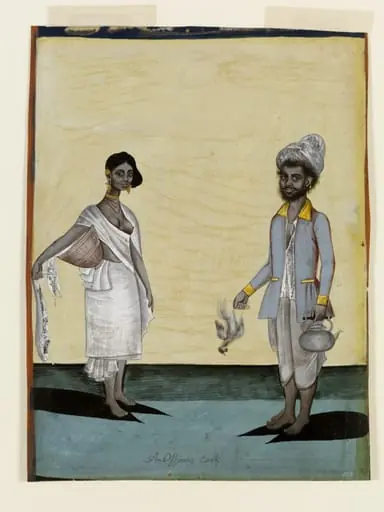
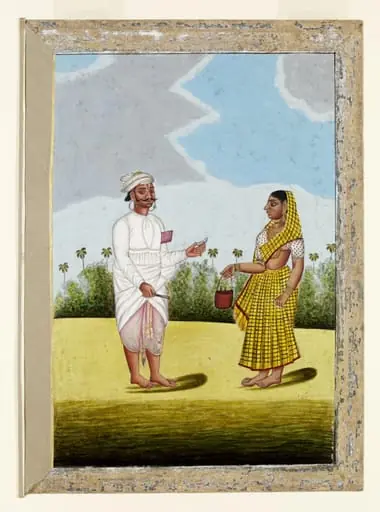
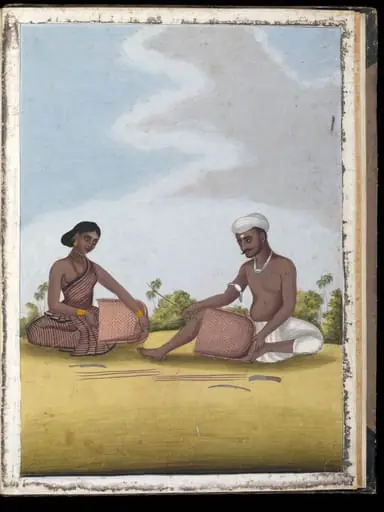
A cook and his wife is a paint painting by the Romanticist artist Unknown. It dates from 1805 and is held in the collection of the Victoria and Albert Museum. This painting is one of thirty-six in a series documenting everyday labor and regional dress.
About this work
Overview
The setting is a flat, arid landscape with scattered palm trees and a pale sky, emphasizing simplicity and environmental context over narrative drama.
This painting is one of thirty-six in a series documenting everyday labor and regional dress. It portrays a cook and his wife outdoors, engaged in quiet, routine activity. The setting is a flat, arid landscape with scattered palm trees and a pale sky, emphasizing simplicity and environmental context over narrative drama. The figures are rendered with attention to costume and posture, reflecting an interest in ethnographic detail rather than idealization.
Subject & Meaning
The man, identified as a cook, holds a small kettle, while his wife carries a woven basket, suggesting their roles in food preparation and domestic supply. Their bare feet and unadorned garments indicate modest means, yet their calm demeanor conveys dignity in labor. The pairing implies partnership in daily work, with no overt symbolism—instead, the focus lies in the authenticity of their presence and attire within a specific cultural setting.
Technique & Style
The figures are painted with soft, even brushwork and muted tones, avoiding dramatic lighting or emotional intensity. Clothing is rendered with subtle texture to distinguish fabric types—coarse weave for the basket, smooth folds in the man’s coat. The background is simplified, with palm trunks outlined against a washed-out sky, creating spatial depth without perspective complexity. The style prioritizes clarity and observational accuracy over embellishment.
History & Provenance
The painting belongs to a documented series commissioned to record regional trades and attire, likely produced in the late 18th or early 19th century. Its origin is tied to colonial administrative or ethnographic projects, possibly in South Asia or the Middle East. The series was intended as a visual archive, and this work has remained in institutional collections since at least the 19th century, with no known private ownership history.
Context
Created during a period when European and colonial powers systematically documented local cultures, this work reflects an emerging interest in vernacular life. Unlike romanticized depictions of the exotic, it presents laborers without sentimentality. The inclusion of specific garments and tools aligns with contemporary efforts to classify social roles through visual taxonomy, often for educational or bureaucratic purposes.
Legacy
As part of a larger ethnographic collection, this painting contributes to historical records of everyday labor in non-Western societies. It has been referenced in studies of material culture and occupational identity, valued for its unembellished representation. While not widely exhibited, it remains a quiet but significant artifact in the documentation of pre-modern daily life, offering insight into social structure through visual detail.
Artist & collection

 Domestic Scene
 Giacomo and Cardinal Marco, investing Andrea, Abbot of San Zeno, with his Benefice
 The Nymph of Fontainebleau
 Portrait of a Woman
 Madonna and Child with Saints in the Enclosed Garden
 Venus and Minerva
 Family Group of Four on Sofa
 Wall painting from Room H of the Villa of P. Fannius Synistor at Boscoreale