Artwork
A European Woman Pouring Wine into a Cup
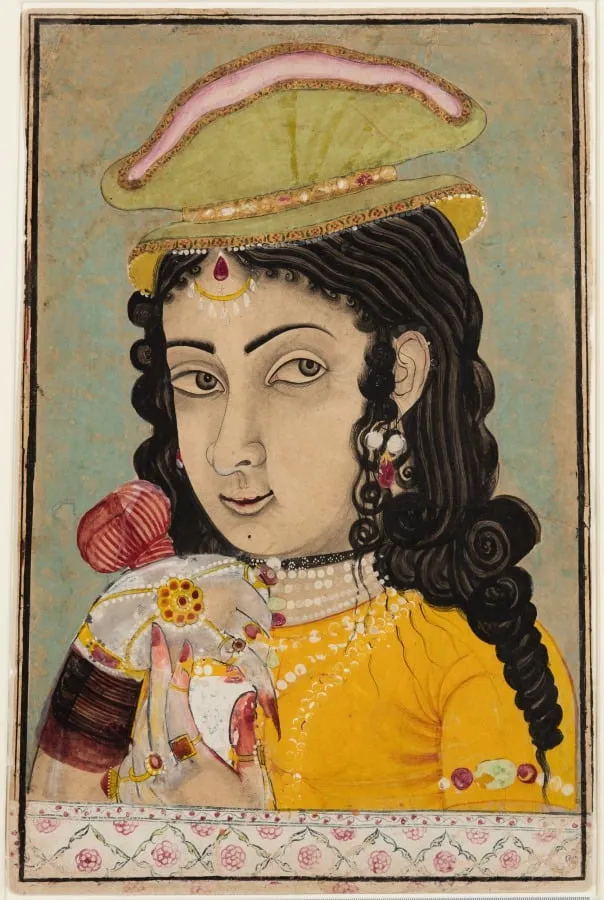
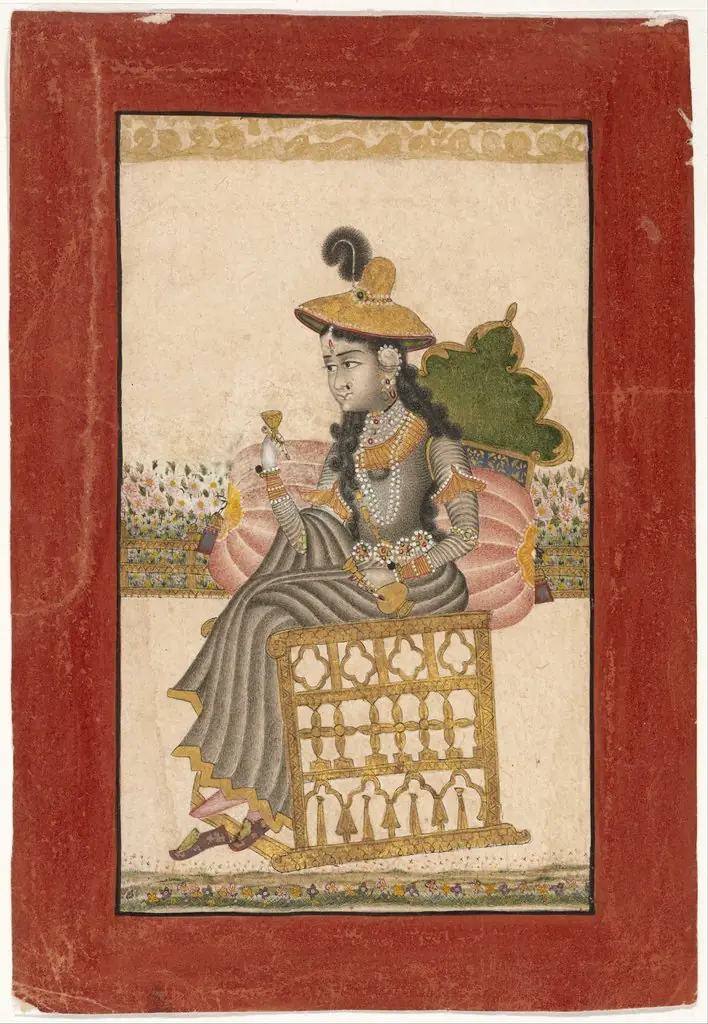
A European Woman Pouring Wine into a Cup is an unspecified painting by the Baroque artist Unknown. It dates from 1715 and is held in the collection of the Cleveland Museum of Art. This painting depicts a woman in the act of pouring wine from a red glass bottle into a cup.
About this work
Overview
This painting depicts a woman in the act of pouring wine from a red glass bottle into a cup. Her gaze is directed sideways, suggesting a moment of quiet attention or distraction. The composition centers on her gesture, framed by a blend of attire and adornments that draw from both European and Indian visual traditions, reflecting cross-cultural exchanges in 18th-century Rajasthan.
Subject & Meaning
The act of pouring wine may symbolize hospitality, leisure, or even subtle transgression, depending on context.
The figure’s identity remains ambiguous, but her actions evoke domestic ritual or social ceremony. The act of pouring wine may symbolize hospitality, leisure, or even subtle transgression, depending on context. Her alert expression and the fusion of attire suggest a person navigating multiple cultural worlds, embodying the hybrid identities emerging in regional courts influenced by foreign imagery.
Technique & Style
The artist employs soft modeling and subtle gradations of tone to render form, aligning with sfumato-like effects seen in European prints. Facial features and drapery are rendered with delicate transitions, avoiding harsh outlines. The brushwork is precise yet restrained, prioritizing atmospheric clarity over dramatic contrast, mirroring the aesthetic of imported European engravings adapted to local sensibilities.
History & Provenance
Created in Rajasthan during the 18th century, the work stems from a period when European prints circulated among Indian courts and inspired local artists. These images were reinterpreted through indigenous conventions, resulting in hybrid compositions. The painting likely originated in a royal or aristocratic setting, where curiosity about foreign visual forms was cultivated among patrons and painters alike.
Context
In 18th-century Rajasthan, European engravings arrived via trade and missionary networks, influencing regional painting styles. Artists incorporated foreign motifs—such as berets, glassware, and postures—while retaining local elements like jewelry and color preferences. This synthesis reflects broader patterns of cultural adaptation, where foreign imagery was not copied but transformed to suit indigenous tastes and symbolic frameworks.
Legacy
The painting stands as a quiet testament to the fluid exchange of visual culture between Europe and India during the early modern period. It illustrates how local artists selectively absorbed and reimagined foreign elements, creating unique hybrid forms. Such works contribute to a broader understanding of global artistic dialogue before colonial dominance reshaped aesthetic hierarchies.
Artist & collection

 Domestic Scene
 Giacomo and Cardinal Marco, investing Andrea, Abbot of San Zeno, with his Benefice
 The Nymph of Fontainebleau
 Portrait of a Woman
 Madonna and Child with Saints in the Enclosed Garden
 Venus and Minerva
 Family Group of Four on Sofa
 Wall painting from Room H of the Villa of P. Fannius Synistor at Boscoreale