Artwork
A Newly Cut Print: Scenes from the First Part of Outlaws of the Marsh
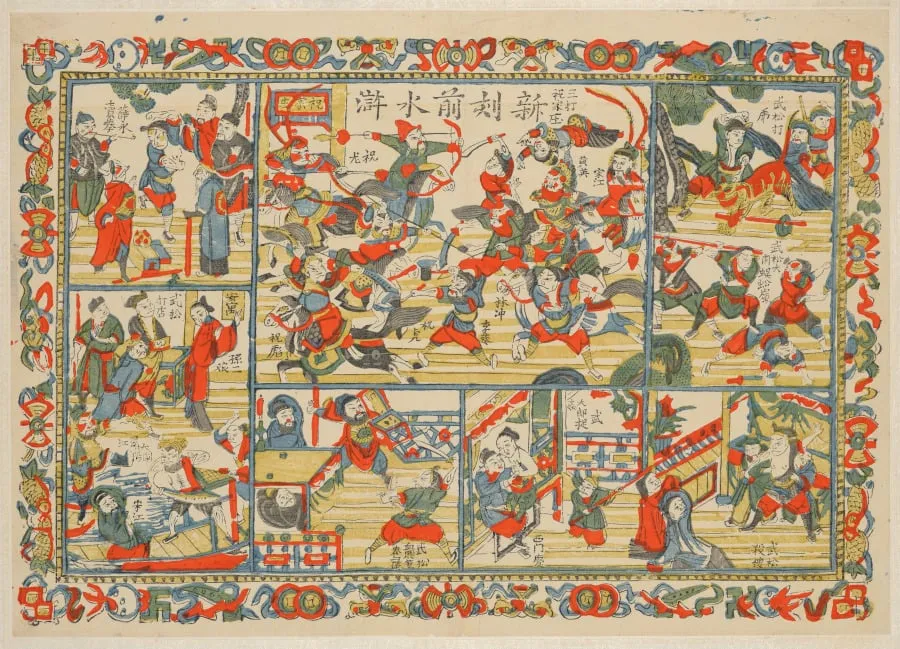
A Newly Cut Print: Scenes from the First Part of Outlaws of the Marsh is a print by the Romanticist artist Unknown. It dates from 1808 and is held in the collection of the Cleveland Museum of Art.
About this work
You see a bright, busy print of warriors fighting in a forest—swords flashing, horses rearing, banners fluttering.
You see a bright, busy print of warriors fighting in a forest—swords flashing, horses rearing, banners fluttering.
This isn’t just a battle scene. It’s a single sheet from a long story, *Outlaws of the Marsh*, printed in color to hang on a wall. Most prints back then were for books, but this one was made to sell alone, like a poster.
Look up *Qing dynasty (1644–1911)* to see more of these bold, crowded scenes.
Overview
This early‑modern Chinese woodblock print depicts a tumultuous forest battle, with swords gleaming, horses rearing, and banners snapping in the wind. Rendered in vivid pigments on a single sheet, the image was intended for display on a wall rather than inclusion in a bound volume, reflecting a shift in print culture toward standalone visual works.
Subject & Meaning
The scene illustrates a episode from the classic novel *Outlaws of the Marsh*, portraying heroic warriors engaged in combat. By isolating a dramatic moment from the narrative, the print invites viewers to recall the larger story while celebrating the martial virtues and camaraderie celebrated in the text.
Technique & Style
Executed with multicolored woodblock printing, the composition relies on dense, overlapping figures and dynamic lines to convey movement. The bold, crowded arrangement and bright palette are characteristic of late‑Ming and early‑Qing popular prints, emphasizing visual impact over subtlety.
History & Provenance
Produced in the 17th century, the work originates from the prosperous Jiangnan region, where cities such as Nanjing, Suzhou, Hangzhou and Huizhou were centers of printmaking. It represents a transitional moment when publishers began issuing single‑sheet prints for decorative purposes rather than solely for illustrated books.
Context
During the Qing dynasty (1644–1911), the market for colorful, narrative prints expanded dramatically, catering to an urban audience eager for accessible art. This piece exemplifies that trend, serving both as a visual retelling of a beloved literary work and as a decorative object within the domestic interiors of the time.
Artist & collection

 Domestic Scene
 Giacomo and Cardinal Marco, investing Andrea, Abbot of San Zeno, with his Benefice
 The Nymph of Fontainebleau
 Portrait of a Woman
 Madonna and Child with Saints in the Enclosed Garden
 Venus and Minerva
 Family Group of Four on Sofa
 Wall painting from Room H of the Villa of P. Fannius Synistor at Boscoreale
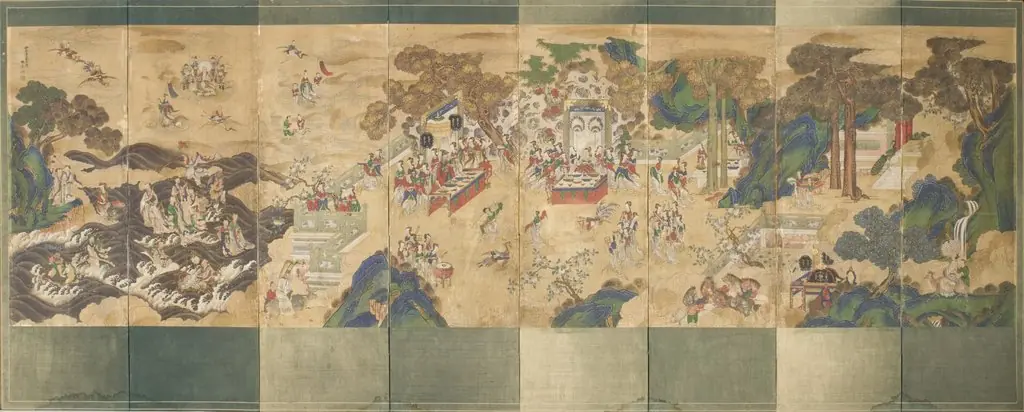 The Banquet of Seowangmo (Xiwangmu), Queen Mother of the West
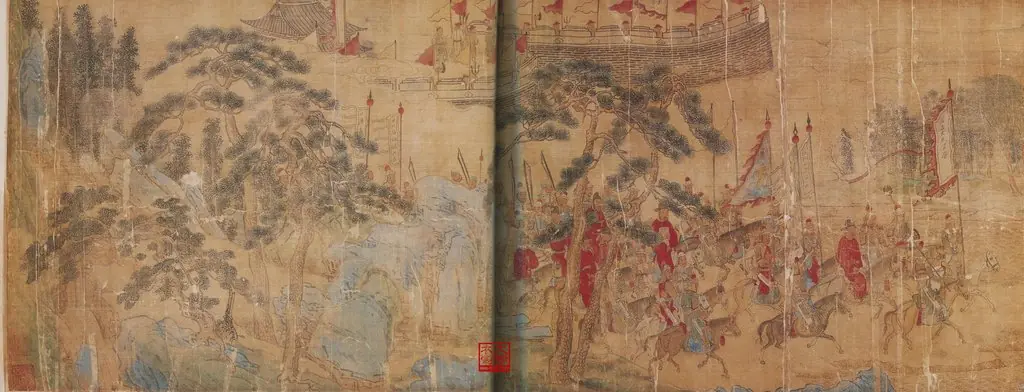 Resisting Japanese Pirates
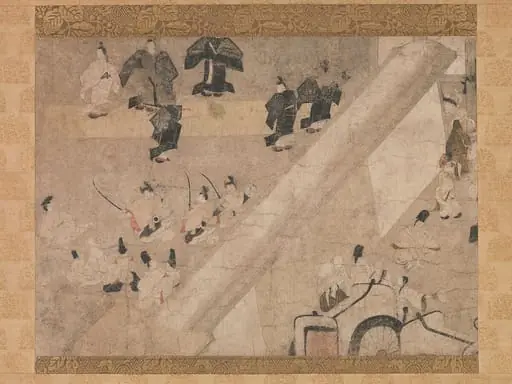 「高陽院駒競行幸絵巻」『栄花物語』 断簡|"Imperial Visit to the Great Horse Race at the Kaya-no-in Mansion" from the Tale of Flowering Fortunes
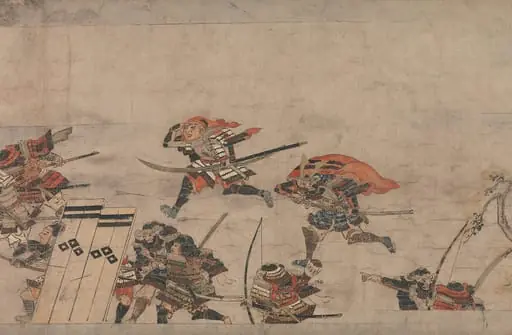 秋夜長物語|A Long Tale for an Autumn Night (Aki no yo nagamonogatari)
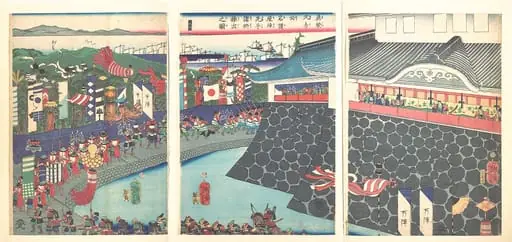 真柴秀吉公名護屋陣先手諸将繰出之図|Hideyoshi and His Troops Leaving Nagoya Camp (Mashiba Hideyoshi kō nagoya jin saki te no shoshō kuridashi no zu)
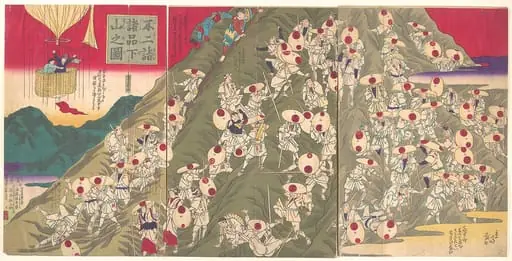 不二詣諸品下山之図|View of the Descent from a Mountain by Many from Pilgrimage to Mt. Fuji (Fuji mōde shoshina gesan no zu)
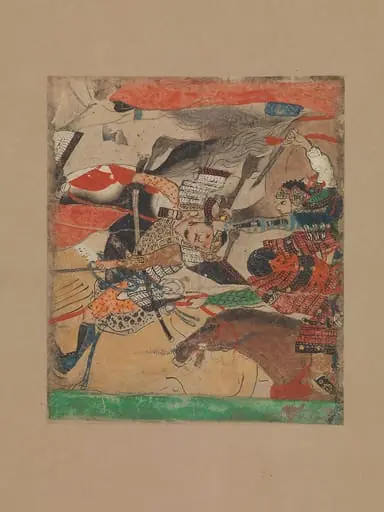 六波羅合戦 平治物語絵巻 断簡|Battle at Rokuhara, from The Tale of the Heiji Rebellion