Artwork
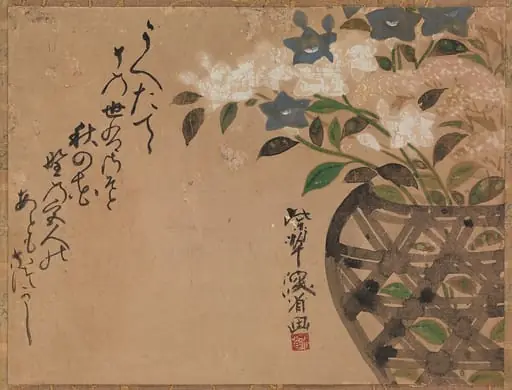
A Poem from the Shin Kokinshu with Design of Shinobugusa Grasses
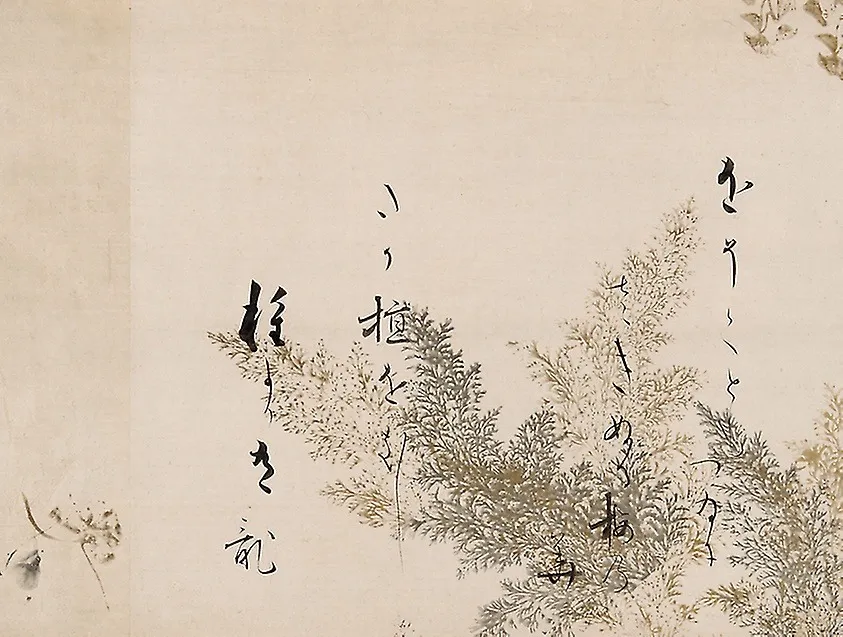
A Poem from the Shin Kokinshu with Design of Shinobugusa Grasses is an unspecified painting by Unknown. It dates from 1607 and is held in the collection of the Art Institute of Chicago. Painted in 1607, this work pairs a classical poem from the Shin Kokinshu anthology with a delicate depiction of shinobugusa grasses.
About this work
The painting is titled A Poem from the Shin Kokinshu with Design of Shinobugusa Grasses.
It was created in 1607, which is an interesting fact because it tells us about the time period it came from. The artist is unknown, but the painting is part of a collection at a museum.
You can learn more about this type of art at the Art Institute of Chicago.
Overview
Painted in 1607, this work pairs a classical poem from the Shin Kokinshu anthology with a delicate depiction of shinobugusa grasses.
Painted in 1607, this work pairs a classical poem from the Shin Kokinshu anthology with a delicate depiction of shinobugusa grasses. Though the artist remains unidentified, the piece reflects the refined aesthetic of early Edo-period Japan. It belongs to a tradition of illustrated poetry scrolls, where text and image complement one another in quiet harmony. The painting is held in the collection of the Art Institute of Chicago.
Subject & Meaning
The poem, drawn from the Shin Kokinshu, evokes seasonal transience through the image of shinobugusa—delicate, wind-swaying grasses often associated with autumn. The visual rendering of the grasses mirrors the poem’s tone: understated, contemplative, and rooted in nature’s fleeting beauty. Together, text and image invite quiet reflection rather than dramatic expression, aligning with classical Japanese poetic ideals.
Technique & Style
Executed in ink and light color on paper, the painting employs subtle brushwork and sparse composition. The grasses are rendered with fine, flowing lines, suggesting movement without detail. The poem is inscribed in elegant calligraphy beside the image, its placement integral to the visual rhythm. This restrained approach reflects the wabi-sabi sensibility of the time, valuing simplicity and impermanence.
History & Provenance
Created in 1607, the work likely originated as part of a larger album or scroll collection, common among aristocratic and scholarly circles. Its survival into the modern era suggests careful preservation. It entered the Art Institute of Chicago’s collection through documented acquisition, though its earlier ownership history remains undocumented beyond its Japanese provenance.
Context
This piece emerged during Japan’s early Edo period, a time when courtly literary traditions persisted alongside rising samurai culture. Illustrated poetry albums like this one were prized by educated elites who valued classical texts and refined aesthetics. The continued use of the Shin Kokinshu, compiled centuries earlier, reveals a cultural reverence for Heian-era literary forms even as political power shifted.
Legacy
Though unsigned, the work exemplifies a broader tradition of poetic painting that influenced later Japanese art forms, including ukiyo-e and album paintings. Its preservation in a major Western museum underscores its role as a bridge between Japanese literary culture and global art historical study. It remains a quiet testament to the enduring power of poetry and nature in visual expression.
Artist & collection

 Domestic Scene
 Giacomo and Cardinal Marco, investing Andrea, Abbot of San Zeno, with his Benefice
 The Nymph of Fontainebleau
 Portrait of a Woman
 Madonna and Child with Saints in the Enclosed Garden
 Venus and Minerva
 Family Group of Four on Sofa
 Wall painting from Room H of the Villa of P. Fannius Synistor at Boscoreale
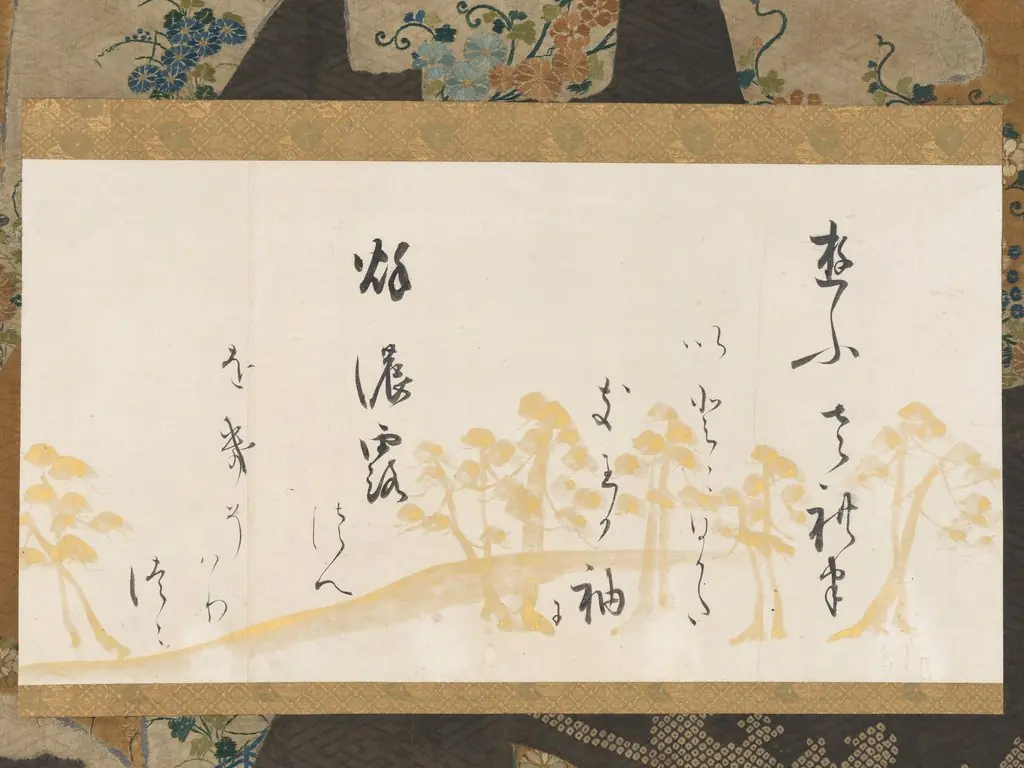 Section of a Handscroll with Waka and Underpainting of Pines
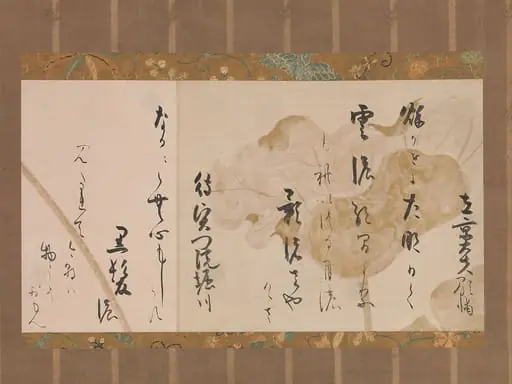 本阿弥光悦書・俵屋宗達下絵 小倉百人一首和歌巻断簡|Two Poems from One Hundred Poems by One Hundred Poets
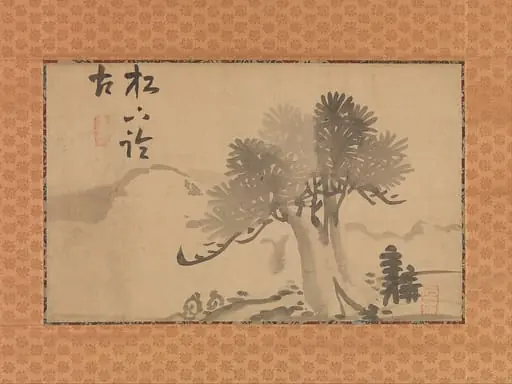 池大雅筆 「大雅堂画弁題詩」|Pine Tree and Calligraphy
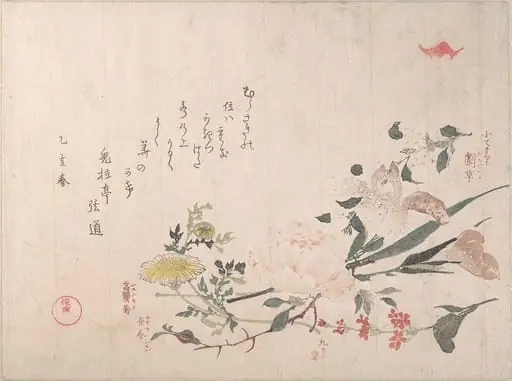 Untitled
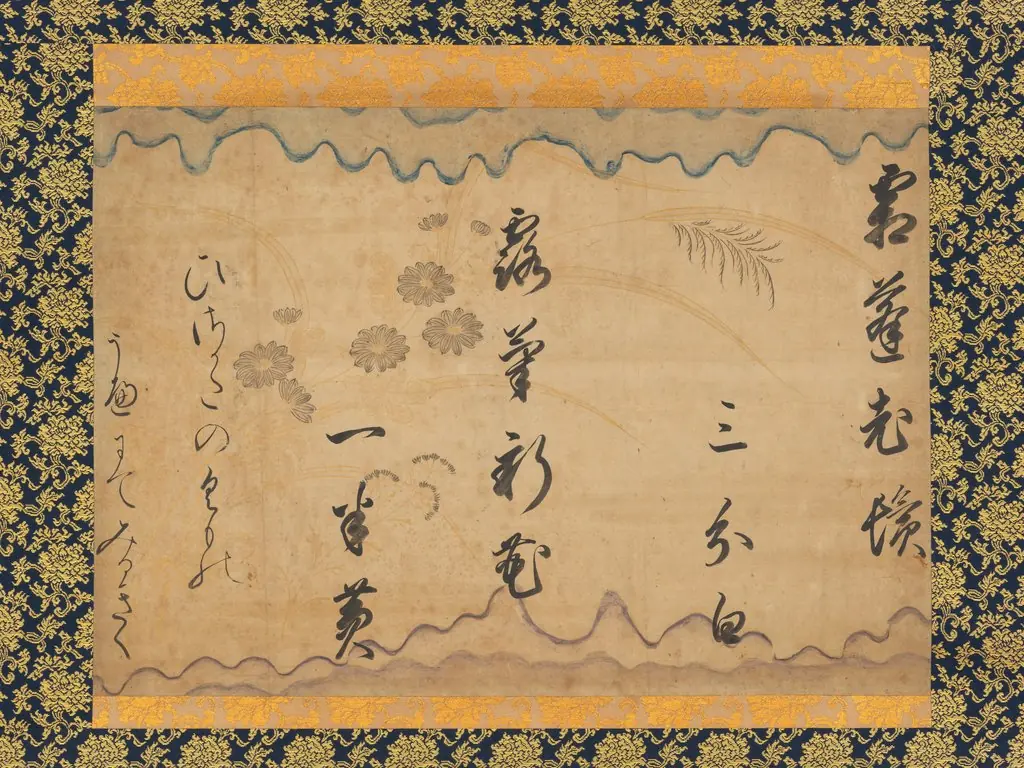 Chinese Couplet by Bai Juyi and Waka by Fujiwara no Toshiyuki (partial) from “Japanese and Chinese Poems to Sing” (Wakan rōeishū)
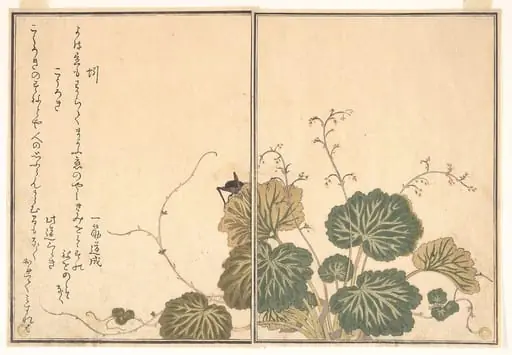 『画本虫撰』「蚓」「こうろき」|Earthworm (Mimizu); Cricket (Kōrogi), from the Picture Book of Crawling Creatures (Ehon mushi erami)
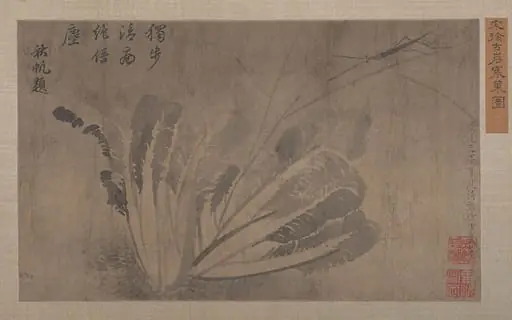 Untitled
 Untitled