Artwork
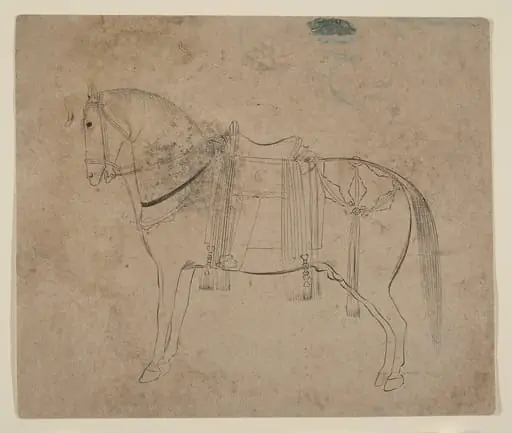
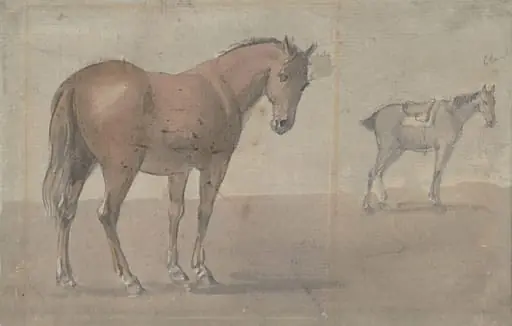
A saddled horse
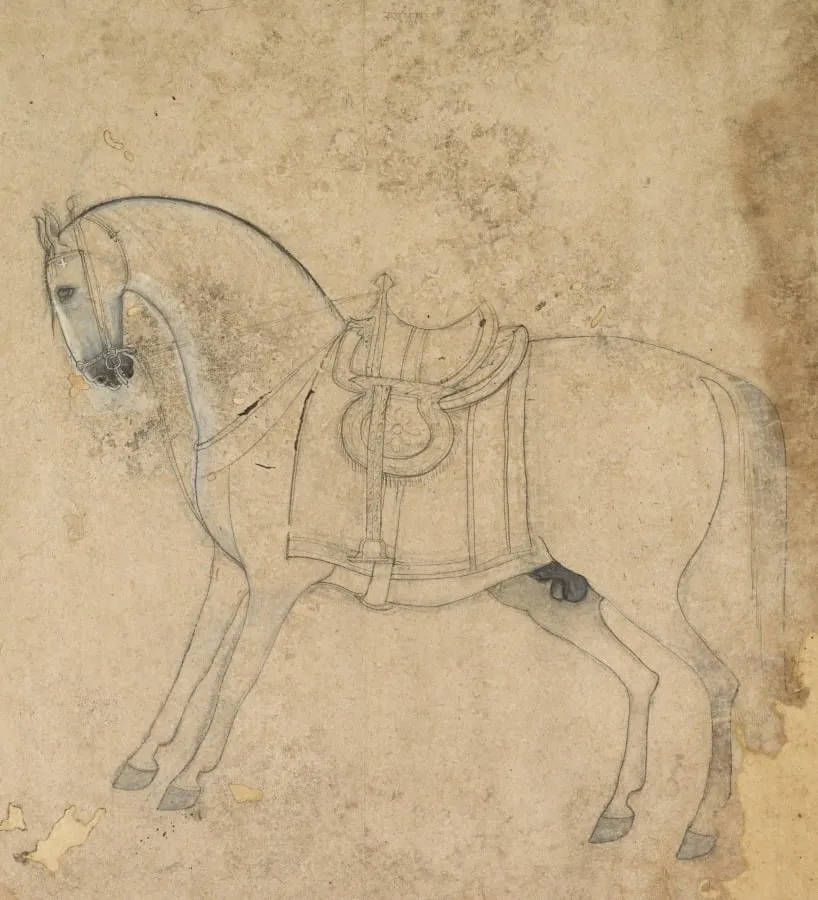
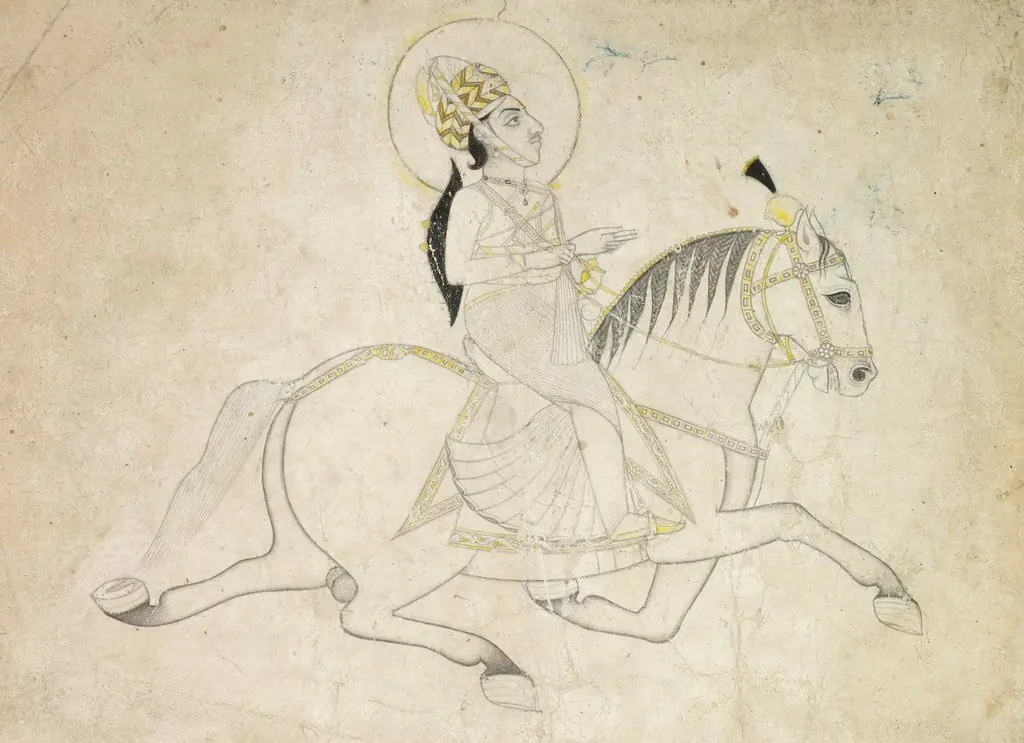
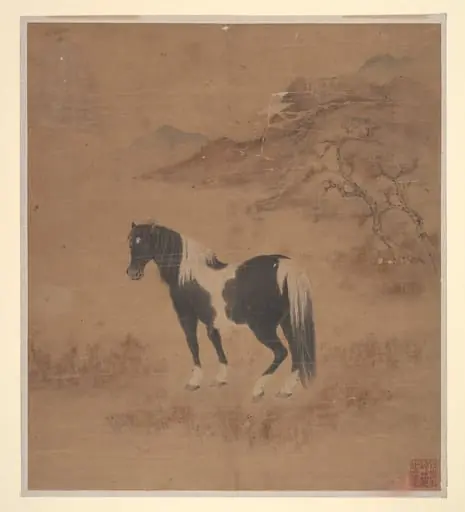
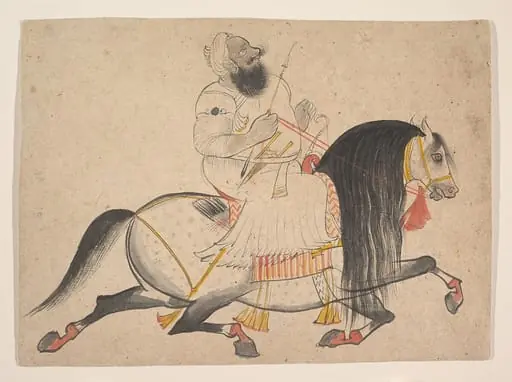
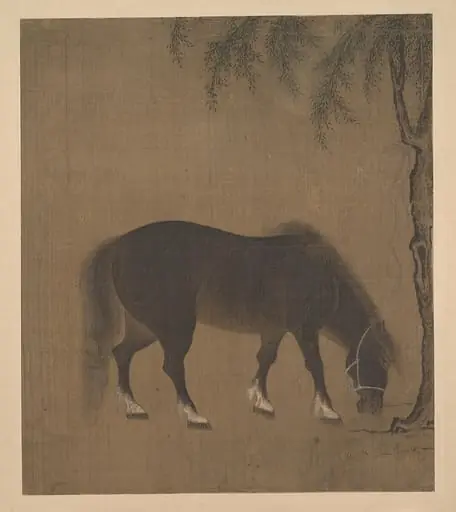
A saddled horse is a drawing by the Baroque artist Unknown. It dates from 1750 and is held in the collection of the Cleveland Museum of Art. The drawing presents a brown horse equipped with a red saddle, rendered in delicate black lines against an unadorned paper background.
About this work
Overview
The drawing presents a brown horse equipped with a red saddle, rendered in delicate black lines against an unadorned paper background. The animal stands motionless, its musculature and vascular details suggested by fine, controlled strokes that convey both form and texture without the use of color beyond the saddle.
Subject & Meaning
In the visual culture of the Pahari courts, horses functioned as symbols of royal authority and martial prowess, frequently appearing in portraiture, ceremonial processions, and illustrated musical sequences. This particular depiction would have been integrated into a larger composition, reinforcing the status of the patron or the narrative context in which it was placed.
Technique & Style
The artist employed a single brush loaded with black pigment to execute the image on handmade paper, a method characteristic of Pahari drawing practice. Repeated exposure to equine anatomy allowed the draughtsman to capture subtle anatomical features—muscle tone, tendon lines, and vein patterns—through minimal, precise line work.
History & Provenance
Originating from the northern Indian Pahari kingdoms, the work reflects a regional tradition that flourished between the 17th and 19th centuries. Such drawings were typically produced for inclusion in royal portrait cycles or ragamalas, illustrated collections linked to lyrical verses and musical modes, and were circulated within courtly patronage networks.
Artist & collection

 Domestic Scene
 Giacomo and Cardinal Marco, investing Andrea, Abbot of San Zeno, with his Benefice
 The Nymph of Fontainebleau
 Portrait of a Woman
 Madonna and Child with Saints in the Enclosed Garden
 Venus and Minerva
 Family Group of Four on Sofa
 Wall painting from Room H of the Villa of P. Fannius Synistor at Boscoreale