Artwork
Akrura and Krishna
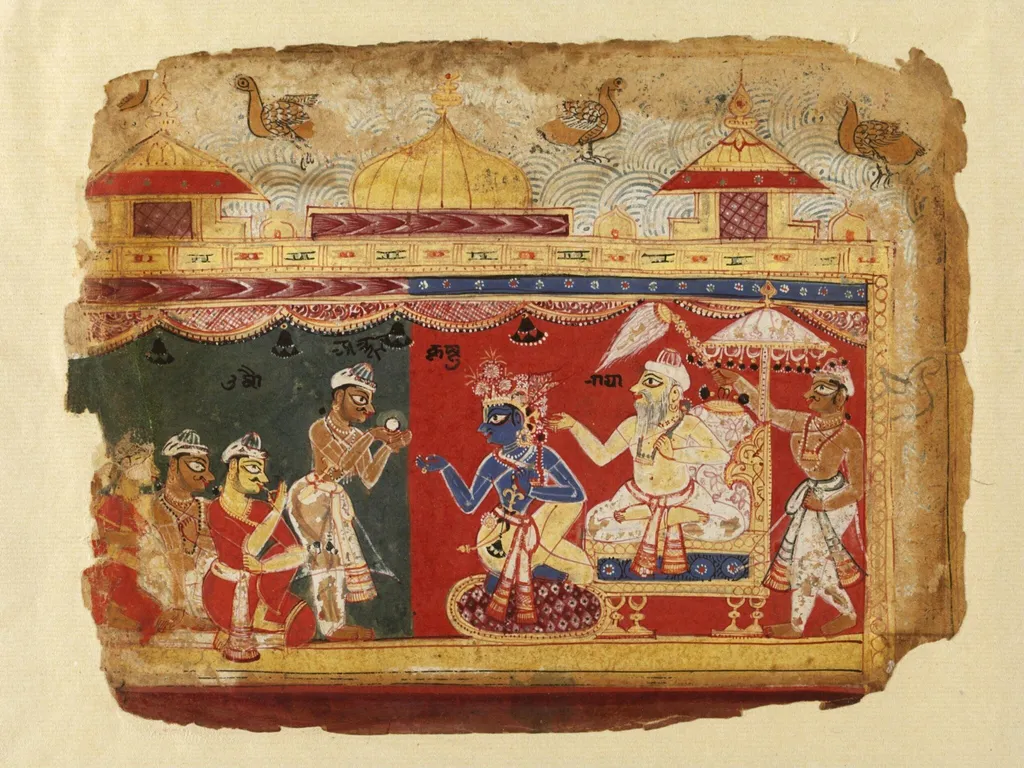
Akrura and Krishna is a paint painting by the Mannerist artist Unknown. It dates from 1520 and is held in the collection of the Victoria and Albert Museum. This opaque watercolour on paper dates to circa 1520 and comes from a now-dispersed illustrated manuscript of the Bhagavata Purana.
About this work
Overview
The composition is dense with figures, rich in colour, and marked by decorative motifs that blend regional Indian and Sultanate-inspired forms.
This opaque watercolour on paper dates to circa 1520 and comes from a now-dispersed illustrated manuscript of the Bhagavata Purana. It depicts a moment from Krishna’s early life in Dwarka, where the noble Akrura presents the sacred Shyamantaka jewel to the divine youth. The scene unfolds within a stylized palace setting, framed by a yellow border that suggests architectural enclosure. The composition is dense with figures, rich in colour, and marked by decorative motifs that blend regional Indian and Sultanate-inspired forms.
Subject & Meaning
The scene illustrates Akrura’s act of offering the Shyamantaka jewel to Krishna, a gesture affirming Krishna’s divine status and rightful authority. Krishna, identified by his blue skin and crown, sits calmly at the feet of King Ugrasena, symbolizing humility despite his divinity. Akrura, standing with the jewel, is surrounded by courtiers, while a dancer—possibly a celestial being—gestures in reverence. The moment underscores themes of devotion, legitimacy, and the intersection of earthly and divine realms in Vaishnava tradition.
Technique & Style
The painting employs opaque watercolour with fine brushwork, typical of early Rajput manuscript illustration. Figures are rendered with delicate outlines and flat, saturated hues—red, green, gold—arranged in contrasting zones to define spatial groups. Architectural elements, such as domed pavilions and basket-weave patterns suggesting water, reflect a fusion of local and Islamicate visual vocabularies. The gold border frames the scene as a sacred vignette, while wear along the edges hints at the manuscript’s age and handling over centuries.
History & Provenance
The painting originated in a larger illustrated Bhagavata Purana manuscript, likely produced in the early 16th century in northern India, possibly in the Braj region. The manuscript was later disassembled, with individual folios entering private and institutional collections. This sheet is now held by the Victoria and Albert Museum, where it is studied as a key example of early Hindu devotional painting. Its survival reflects the value placed on such texts by royal and religious patrons of the period.
Context
Created during a period of flourishing devotional literature, this painting responds to the growing popularity of Krishna worship in north India. Artists drew from both indigenous traditions and the refined aesthetics of Sultanate courts, producing hybrid styles that appealed to Hindu patrons seeking both spiritual and cultural legitimacy. The inclusion of architectural details like domes and arches signals a broader visual dialogue between Islamic and Hindu artistic conventions in early modern India.
Legacy
As one of the earliest surviving illustrated episodes from the Bhagavata Purana, this work influenced later regional schools of painting in Rajasthan and the Punjab Hills. Its synthesis of narrative clarity, symbolic colour, and architectural framing became a model for devotional illustration. Though fragmented, its surviving folios continue to inform scholarly understanding of how Hindu texts were visually interpreted and materially sustained in pre-modern India.
Artist & collection

 Domestic Scene
 Giacomo and Cardinal Marco, investing Andrea, Abbot of San Zeno, with his Benefice
 The Nymph of Fontainebleau
 Portrait of a Woman
 Madonna and Child with Saints in the Enclosed Garden
 Venus and Minerva
 Family Group of Four on Sofa
 Wall painting from Room H of the Villa of P. Fannius Synistor at Boscoreale
 The Infant Krishna Spirited Away by Vasudev, page from the Dispersed Bhagavatapurana manuscript
 Vasudeva and Devaki
 Nanda and the elders, page from a Bhagavata Purana
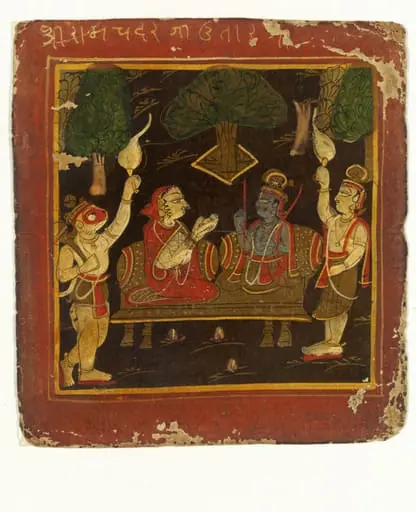 Rama and Sita, Lakshman and Hanuman
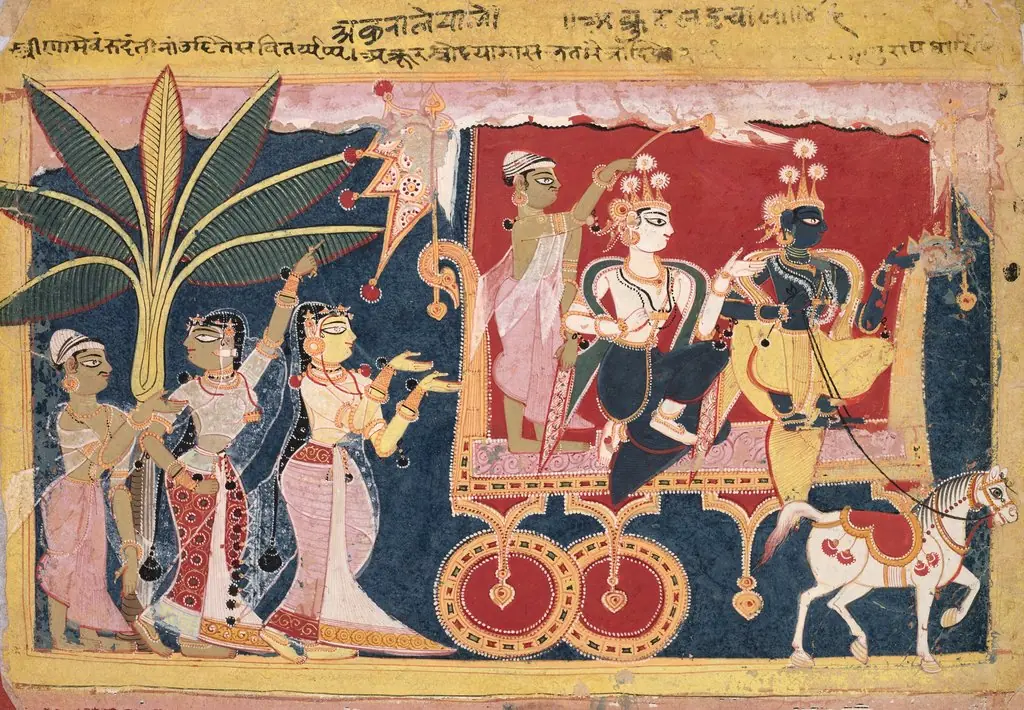 Akrura Drives Krishna and Balarama to Mathura, from the “Isarda Bhagavata Purana,”
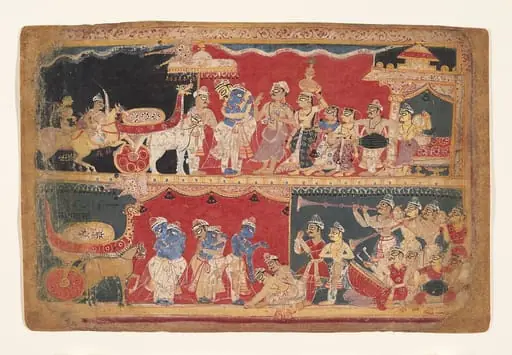 Untitled
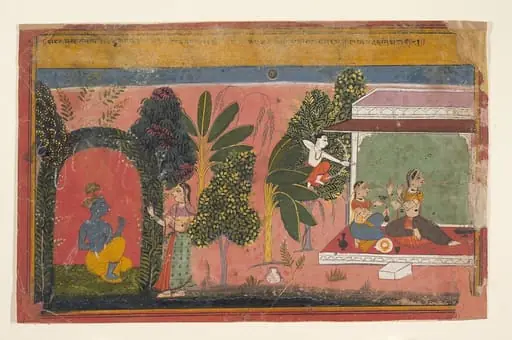 Untitled
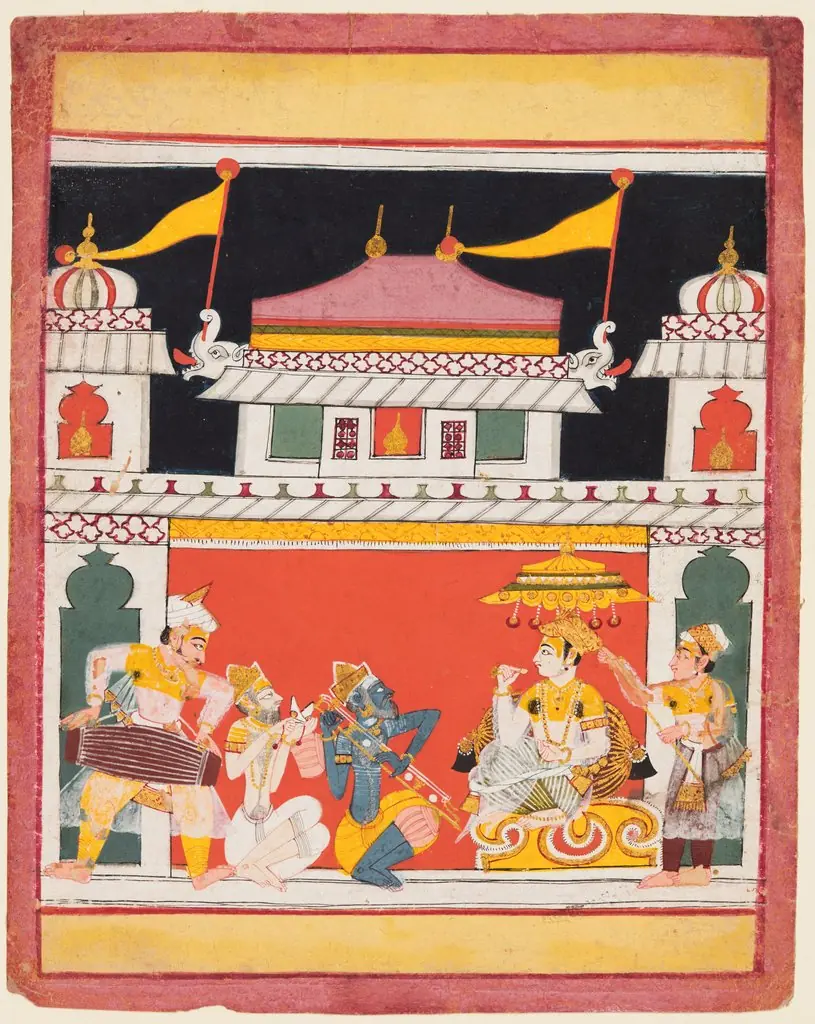 Three Musicians Perform Before a King: Shri Raga, from a Ragamala
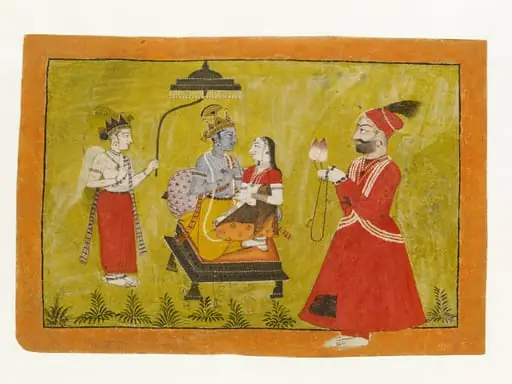 Raja Ajmer Chand of Bilaspur
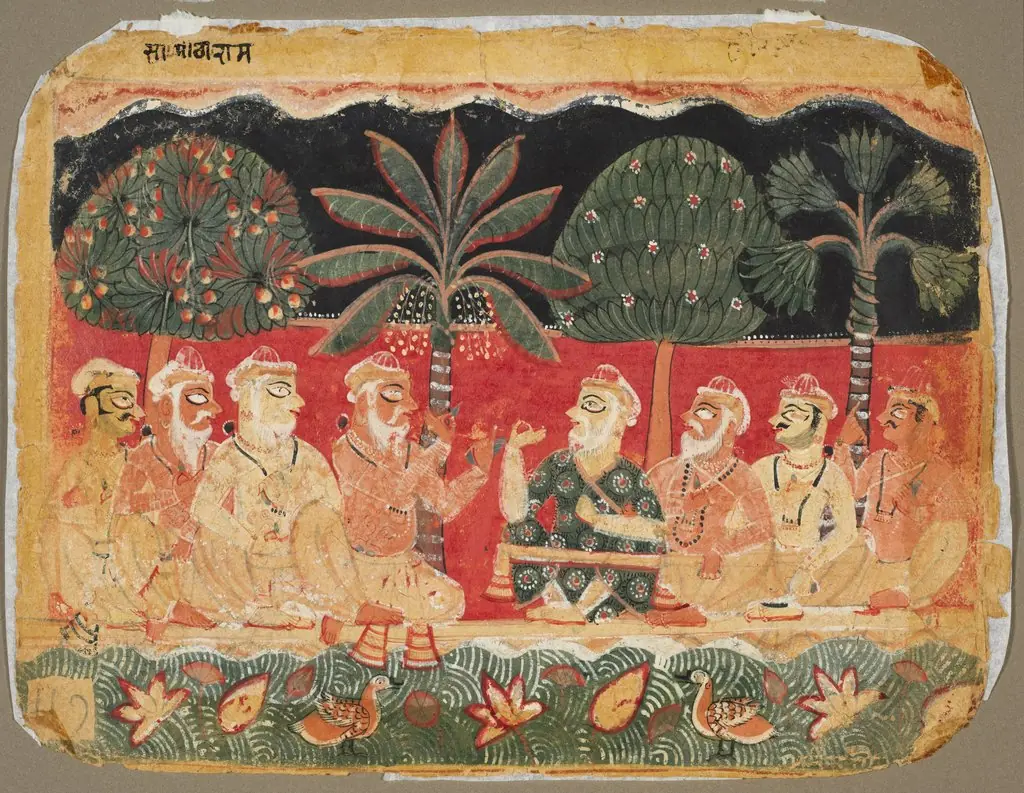 Nanda and the Elders, page from a Bhagavata Purana