Artwork
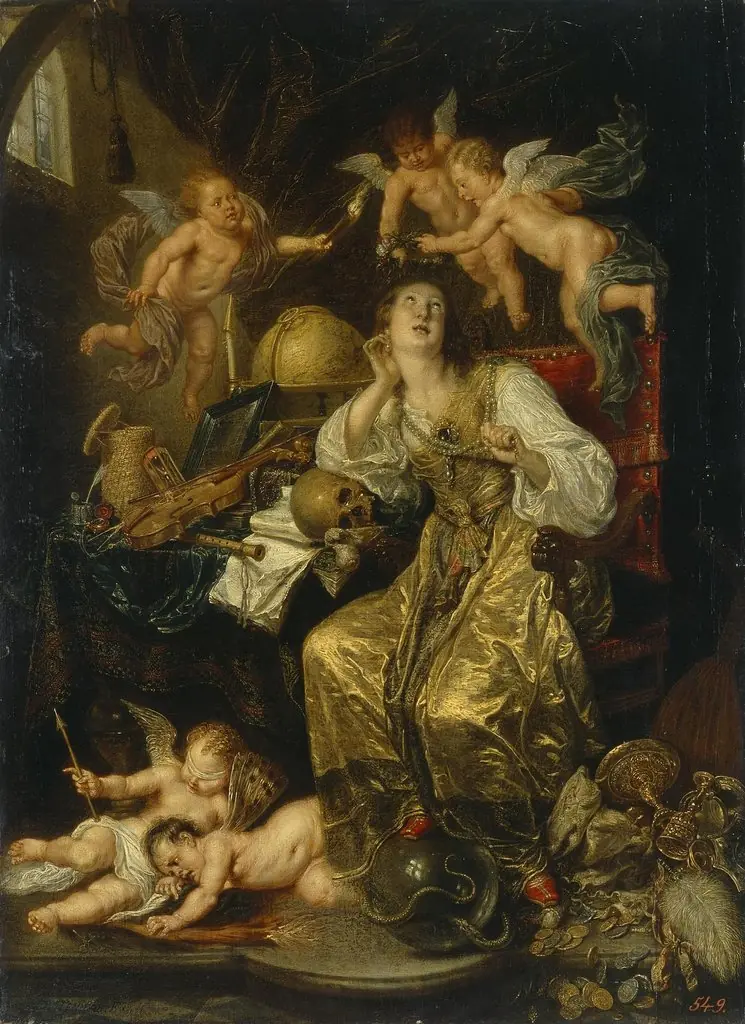
Allegory of Transience
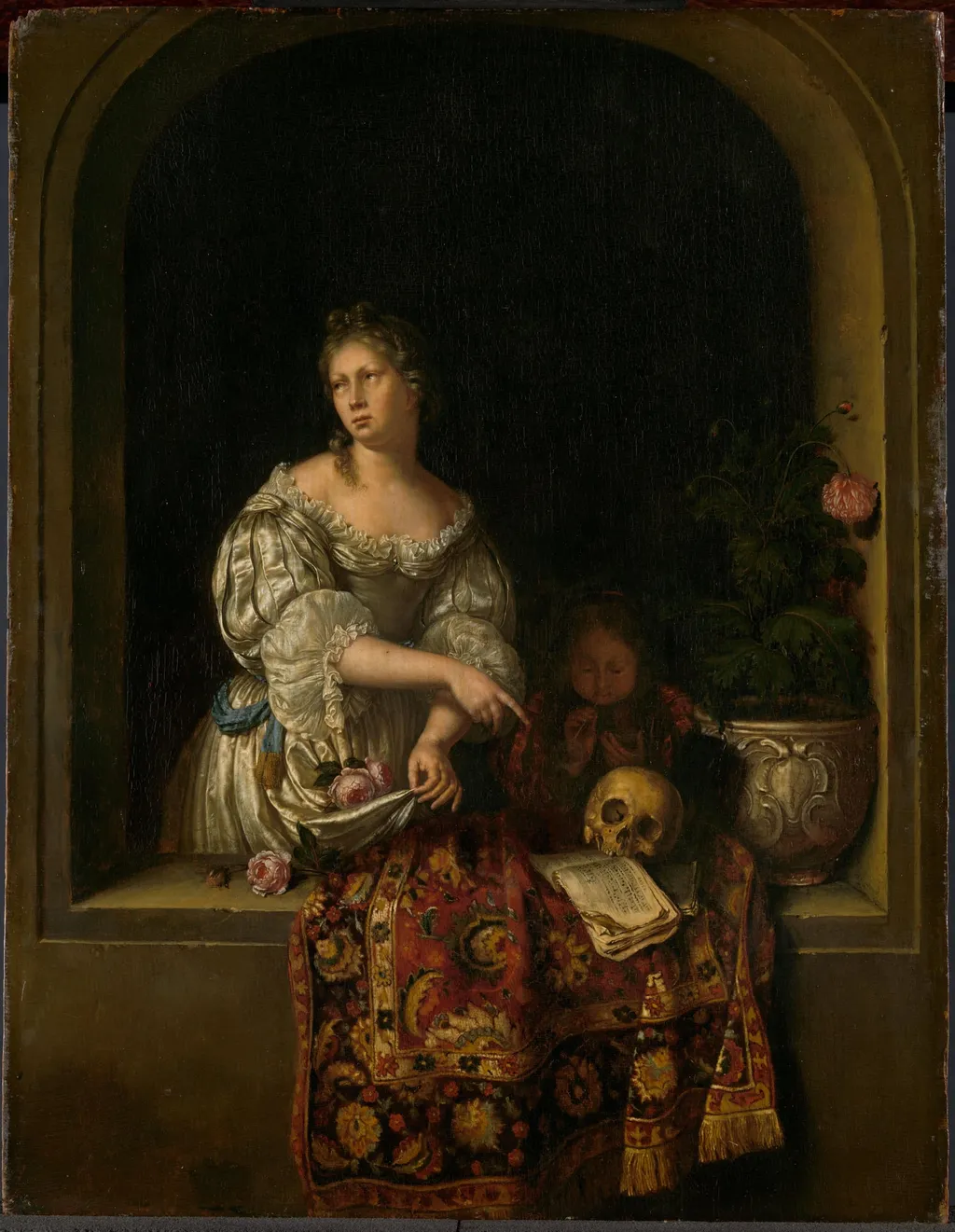
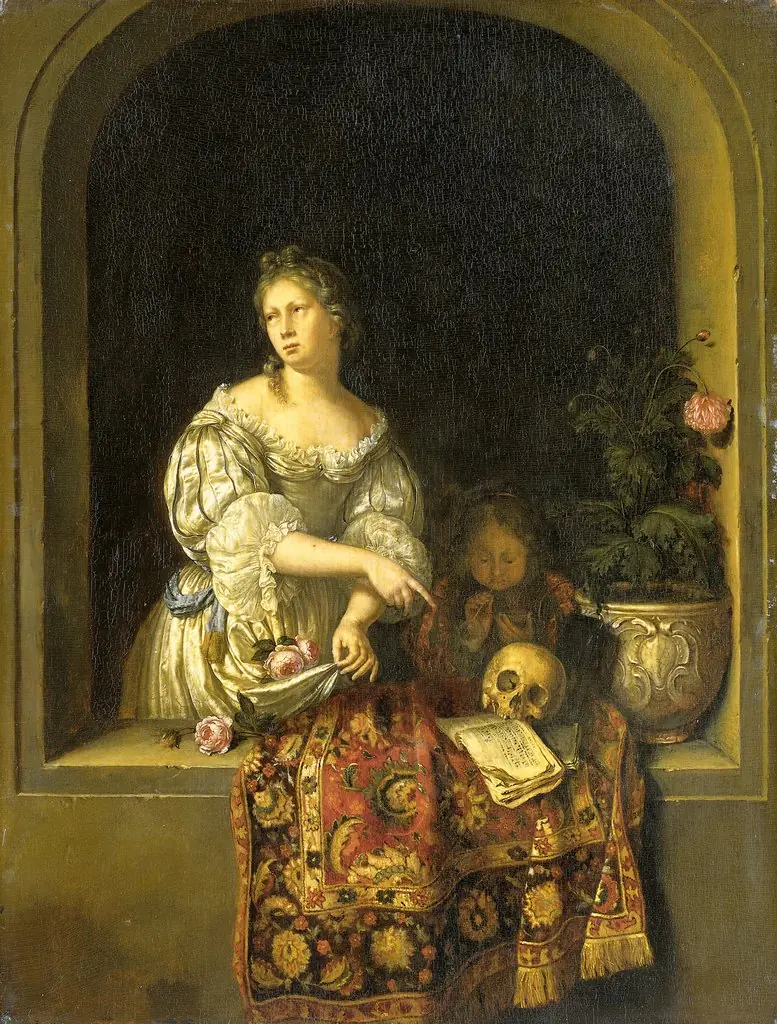
Allegory of Transience is an unspecified painting by the Dutch Golden Age artist Unknown. It dates from 1676 and is held in the collection of the Rijksmuseum.
About this work
Overview
Allegory of Transience is a painting depicting a poignant scene of mortality and the fleeting nature of life, conveyed through symbolic elements within a serene composition.
Subject & Meaning
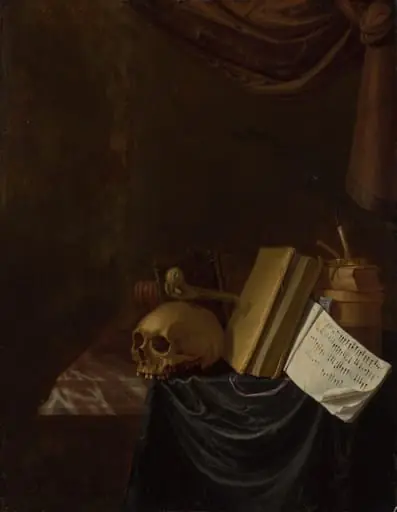
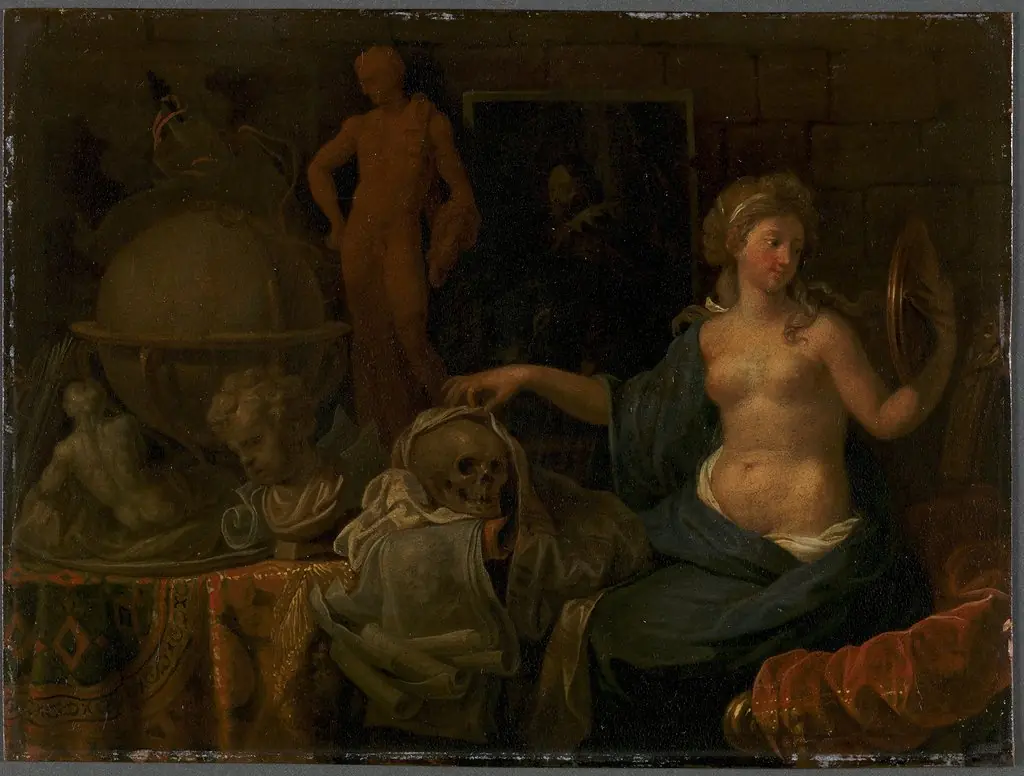
A young woman at a window gestures towards a skull and an open music book on the sill, while a boy behind her blows soap bubbles. These elements, along with flowers in her apron and a potted poppy, collectively symbolize the transience of life, where even joyful moments (music, bubbles, blooming flowers) are underscored by the inevitability of death (skull) and impermanence.
Technique & Style
The painting's style blends realism in the depiction of figures and objects with a contemplative, symbolic depth characteristic of allegorical works. The use of a window setting and the juxtaposition of vibrant, living elements (flowers, poppy, bubbles) with a skull creates a visually striking and thought-provoking contrast.
History & Provenance
Originally titled 'Allegorie op de vergankelijkheid', the work's historical context and artist are not specified in the provided details, suggesting a need for further research to uncover its origins and ownership history.
Context
This allegory reflects a common theme in Dutch Golden Age art, where still-life elements and everyday scenes were often imbued with deeper moral or philosophical meanings, encouraging viewers to ponder the passage of time and the nature of mortality.
Legacy
The painting's impact lies in its enduring message about the transience of life, resonating with viewers across time. Its symbolic richness invites contemplation, making it a significant example of allegorical art that transcends mere decoration to provoke reflection.
Artist & collection

 Domestic Scene
 Giacomo and Cardinal Marco, investing Andrea, Abbot of San Zeno, with his Benefice
 The Nymph of Fontainebleau
 Portrait of a Woman
 Madonna and Child with Saints in the Enclosed Garden
 Venus and Minerva
 Family Group of Four on Sofa
 Wall painting from Room H of the Villa of P. Fannius Synistor at Boscoreale