Artwork
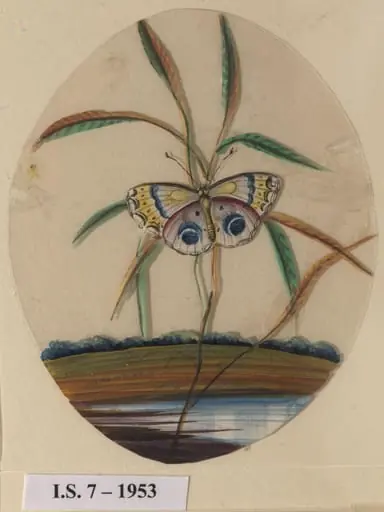
An unidentified butterfly on a leaf
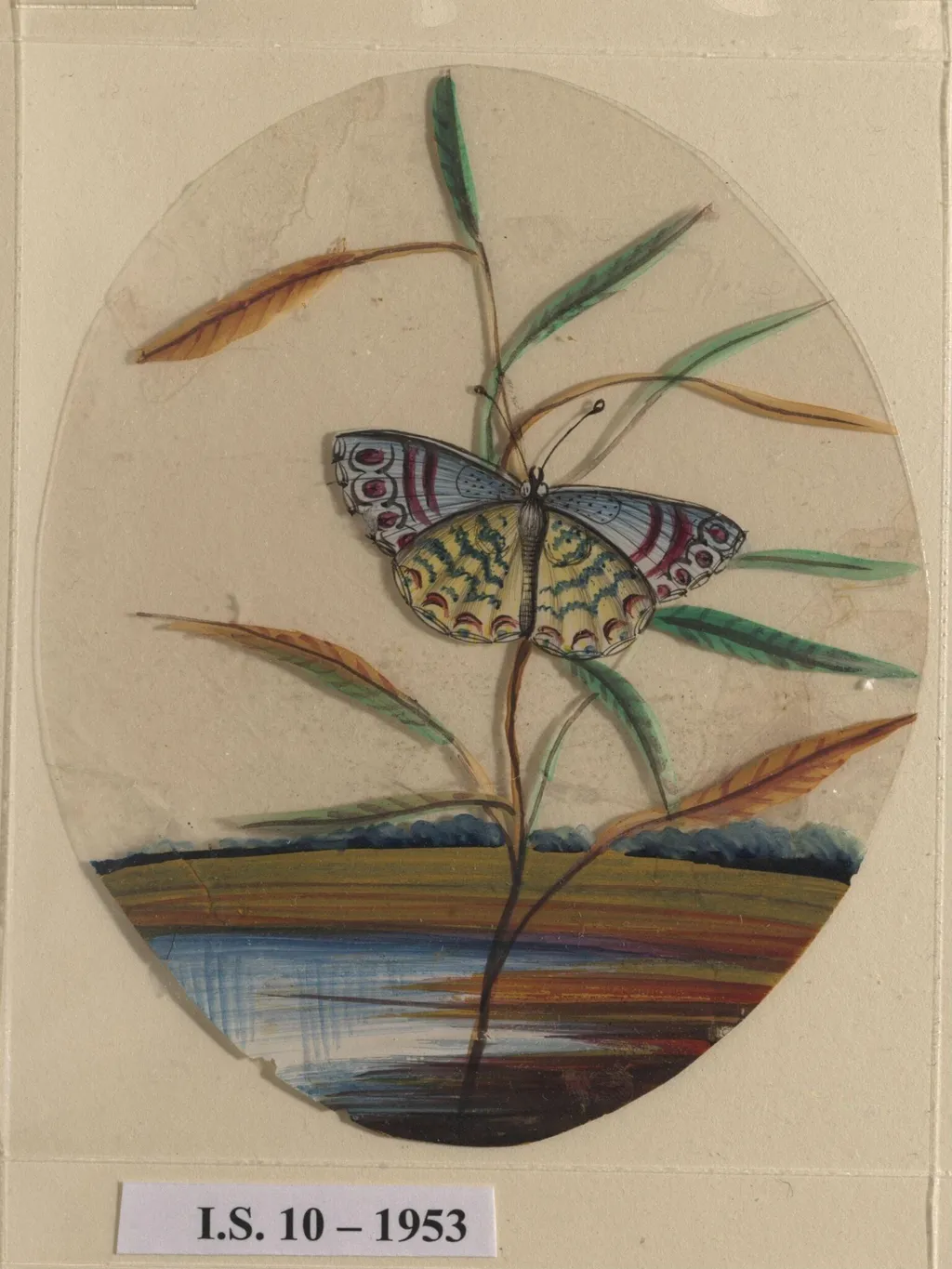
An unidentified butterfly on a leaf is a paint painting by the Impressionist artist Unknown. It dates from 1860 and is held in the collection of the Victoria and Albert Museum. Painted in 1860, this work depicts a single butterfly resting on a leaf, rendered with quiet precision.
About this work
Overview
The paint surface shows subtle signs of aging, with pigments softened over time, yet the overall form retains clarity and balance.
Painted in 1860, this work depicts a single butterfly resting on a leaf, rendered with quiet precision. The composition is minimal, focusing entirely on the insect and its perch. The background fades into muted blues and browns, suggesting ambient light or water, while the subject remains sharply defined. The paint surface shows subtle signs of aging, with pigments softened over time, yet the overall form retains clarity and balance.
Subject & Meaning
The butterfly, though unidentified, is rendered with attention to its wing patterns—blue, yellow, and red markings arranged with naturalistic detail. Its stillness on the leaf implies a moment of pause in nature, evoking themes of transience and observation. The dark shape beneath the leaf may hint at moisture or shadow, grounding the scene in a tangible environment without introducing narrative or symbolism.
Technique & Style
The artist employed smooth, controlled brushwork to capture the delicate texture of the butterfly’s wings and the leaf’s veins. Colors are restrained but deliberately placed to maximize contrast: the vivid wings stand out against the subdued background. The leaf’s edge curves downward into a shadowed area, suggesting depth without perspective. The technique favors close observation over dramatic effect, aligning with 19th-century naturalist traditions.
History & Provenance
The painting’s origin and early ownership remain undocumented. It was likely created as a study or private work, given its intimate scale and lack of signature. No exhibition history or collector records from the 19th century have been traced. Its survival suggests it was preserved within a personal collection, possibly by someone with an interest in natural history or botanical art.
Context
In the mid-19th century, detailed depictions of insects and flora were common among amateur and professional naturalists, especially in Britain. Artists often worked from life, using observation to document species before photography became widespread. This painting fits within that tradition—neither scientific illustration nor decorative art, but a quiet record of a fleeting natural moment.
Legacy
Though unsigned and unattributed, the painting contributes to a broader body of 19th-century nature studies that valued precision over grandeur. It reflects a period when close observation of the natural world was both a scientific pursuit and an aesthetic practice. Its preservation offers insight into how ordinary specimens were rendered with care, outside the realm of formal academic art.
Artist & collection

 Domestic Scene
 Giacomo and Cardinal Marco, investing Andrea, Abbot of San Zeno, with his Benefice
 The Nymph of Fontainebleau
 Portrait of a Woman
 Madonna and Child with Saints in the Enclosed Garden
 Venus and Minerva
 Family Group of Four on Sofa
 Wall painting from Room H of the Villa of P. Fannius Synistor at Boscoreale