Artwork
Artist with His Palette and Brushes
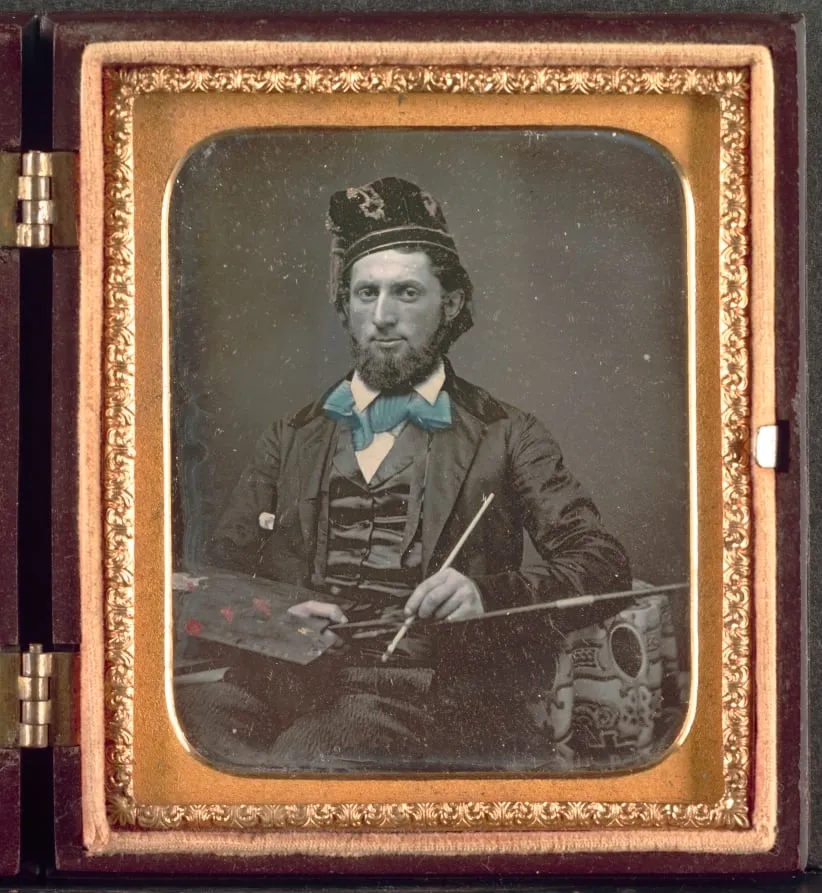
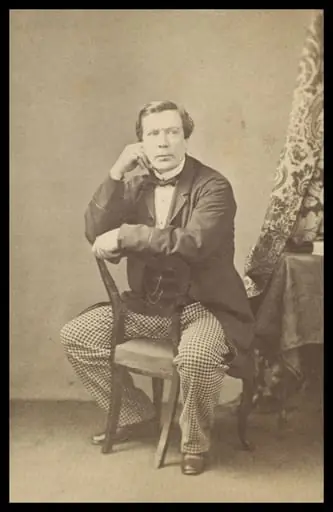
Artist with His Palette and Brushes is a photography by the Impressionist artist Unknown. It dates from 1855 and is held in the collection of the Cleveland Museum of Art. This mid-19th-century photograph captures an unnamed painter in his studio, holding his palette and brushes.
About this work
Overview
The image, though monochrome, was manually enhanced with hand-painted color, a common practice to animate early photographic portraits.
This mid-19th-century photograph captures an unnamed painter in his studio, holding his palette and brushes. The image, though monochrome, was manually enhanced with hand-painted color, a common practice to animate early photographic portraits. Soft yet directional studio lighting sculpts the figure’s form, emphasizing texture and volume, while the pose conveys quiet readiness rather than staged formality.
Subject & Meaning
The sitter, identified only as a painter, is presented with tools of his trade held with quiet authority. His attire—a fez tilted at an angle and a vividly colored bow tie—hints at personal expression and cultural fascination with Orientalism, a trend among artists of the era. These elements suggest identity as performance, blending professional identity with aesthetic curiosity.
Technique & Style
The photograph employs naturalistic studio lighting to achieve chiaroscuro effects, defining the contours of the face and clothing with subtle gradations. Hand-applied pigments on the bow tie and fez introduce deliberate chromatic emphasis, contrasting with the monochrome base. The technique bridges photographic realism and painterly intervention, reflecting the transitional nature of early photographic practice.
History & Provenance
Created likely in the 1850s, the photograph reflects a period when photographers frequently colored prints to enhance emotional resonance or mimic the vibrancy of paintings. Its survival suggests it was valued by the sitter or a collector. The identity of both photographer and subject remains undocumented, typical of many studio portraits from this era.
Context
During the mid-1800s, European and American artists often adopted exoticized Eastern attire as symbols of creativity and cosmopolitanism. The fez, popularized through Orientalist art and travel literature, became a fashionable prop in artistic self-representation. This photograph situates the sitter within that cultural current, using dress to signal artistic identity beyond mere profession.
Legacy
The image stands as a quiet testament to the hybrid nature of early photography—caught between documentation and artifice. Its hand-colored details reveal the desire to humanize mechanical reproduction, offering insight into how artists of the time negotiated identity, craft, and spectacle in an age of emerging visual technologies.
Artist & collection

 Domestic Scene
 Giacomo and Cardinal Marco, investing Andrea, Abbot of San Zeno, with his Benefice
 The Nymph of Fontainebleau
 Portrait of a Woman
 Madonna and Child with Saints in the Enclosed Garden
 Venus and Minerva
 Family Group of Four on Sofa
 Wall painting from Room H of the Villa of P. Fannius Synistor at Boscoreale
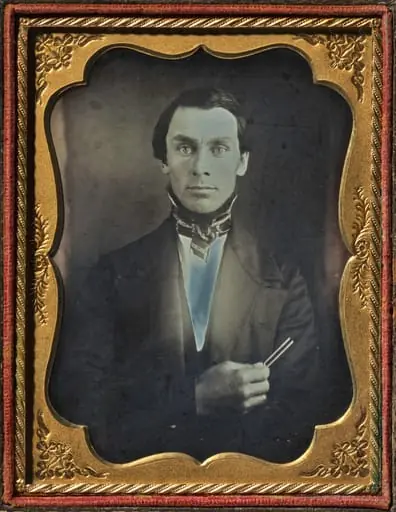 The Music Teacher
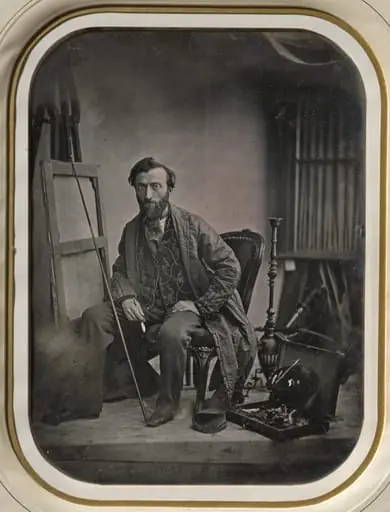 Self-Portrait in Painting Studio
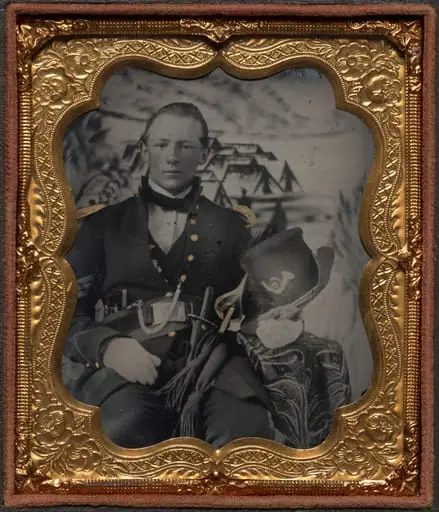 Civil War soldier with painted bivouac background
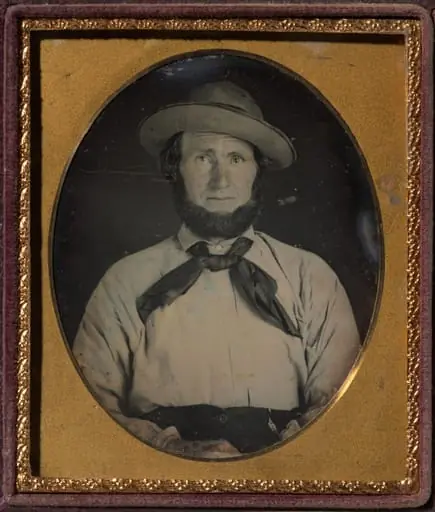 Miner
Miner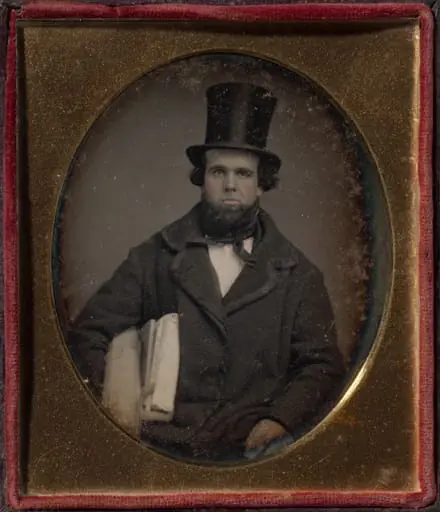 Architect with his drawings
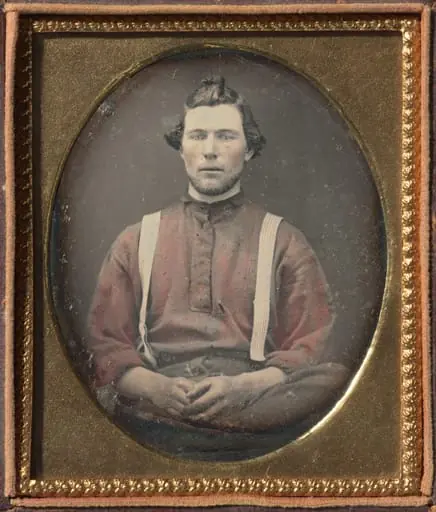 Workman in Red Flannel Shirt and Suspenders
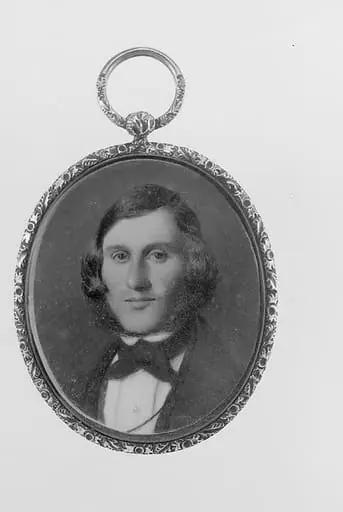 Portrait of a Gentleman
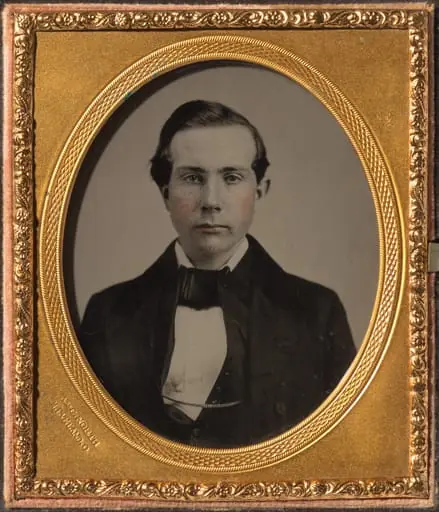 Portrait of John D. Rockefeller
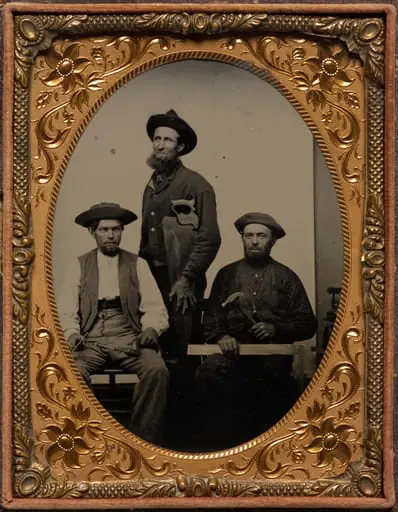 Three Carpenters
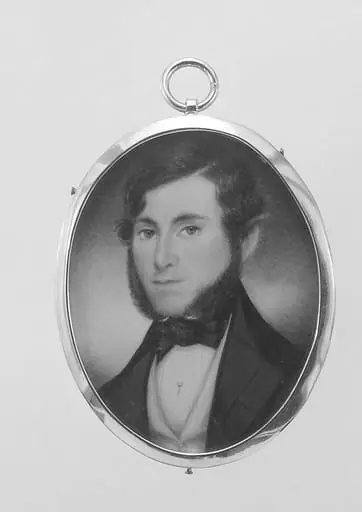 Portrait of a Gentleman
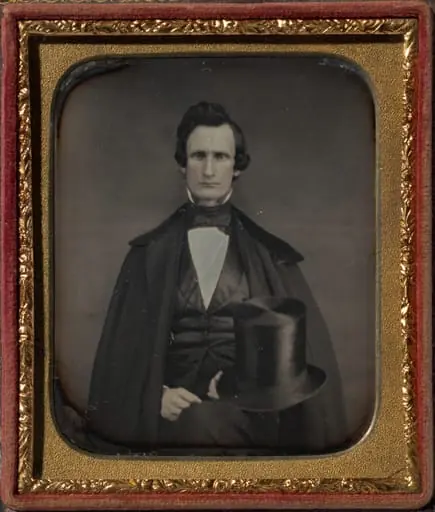 Magician
 Guy Little Theatrical Photograph