Artwork
Blumenstilleben
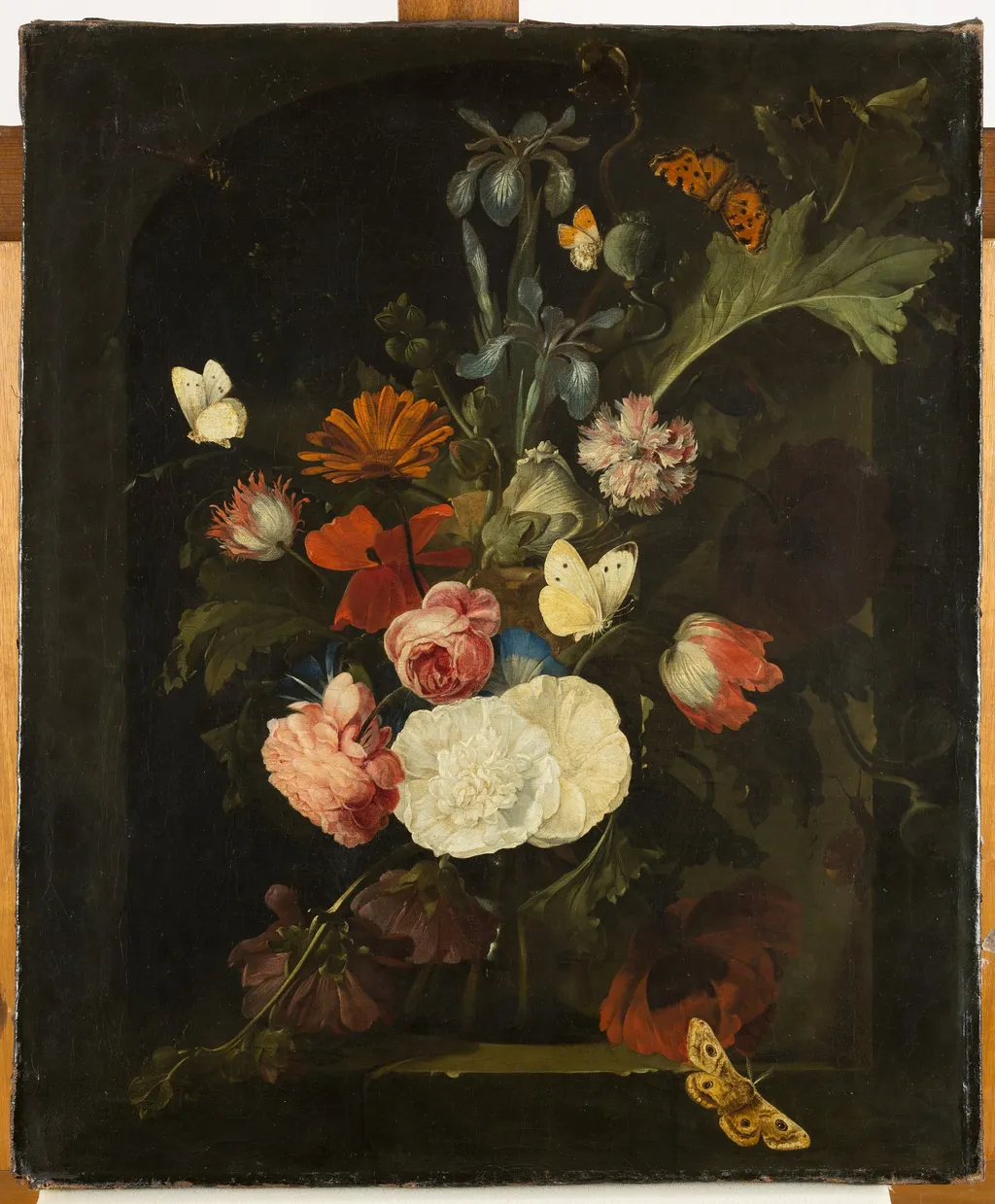
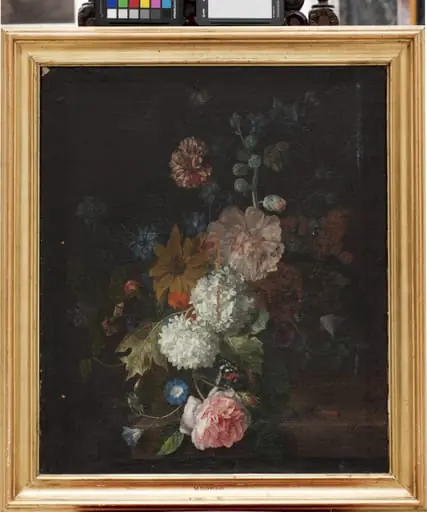
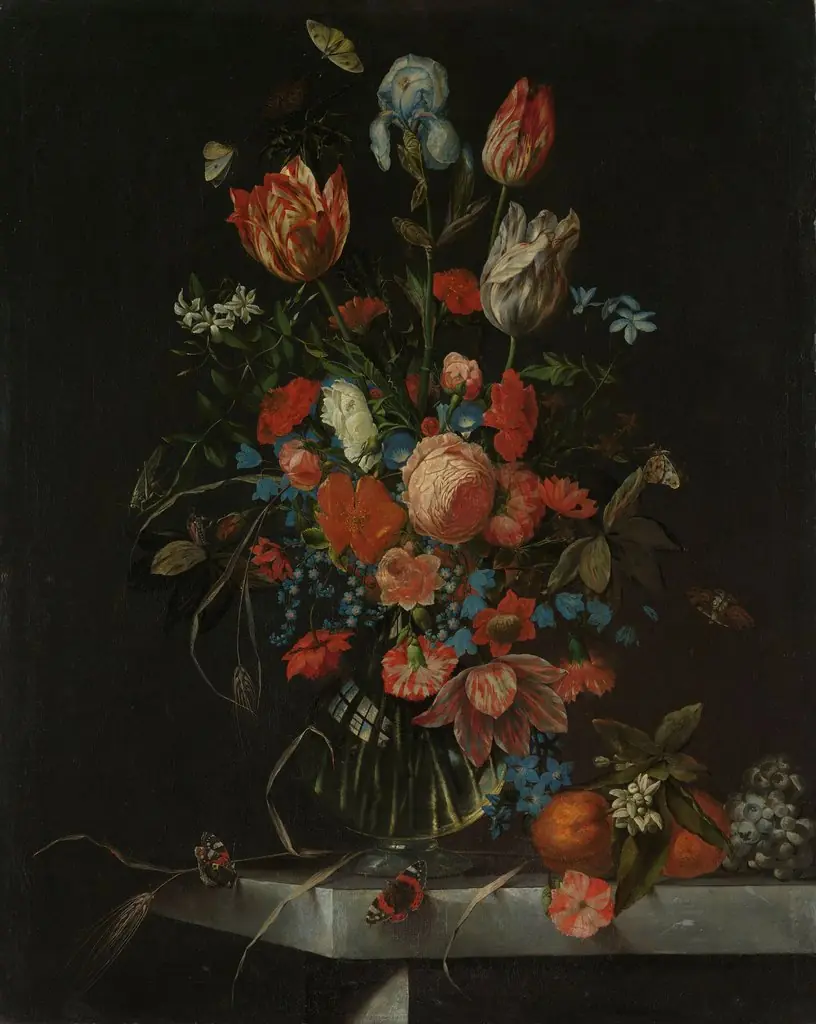
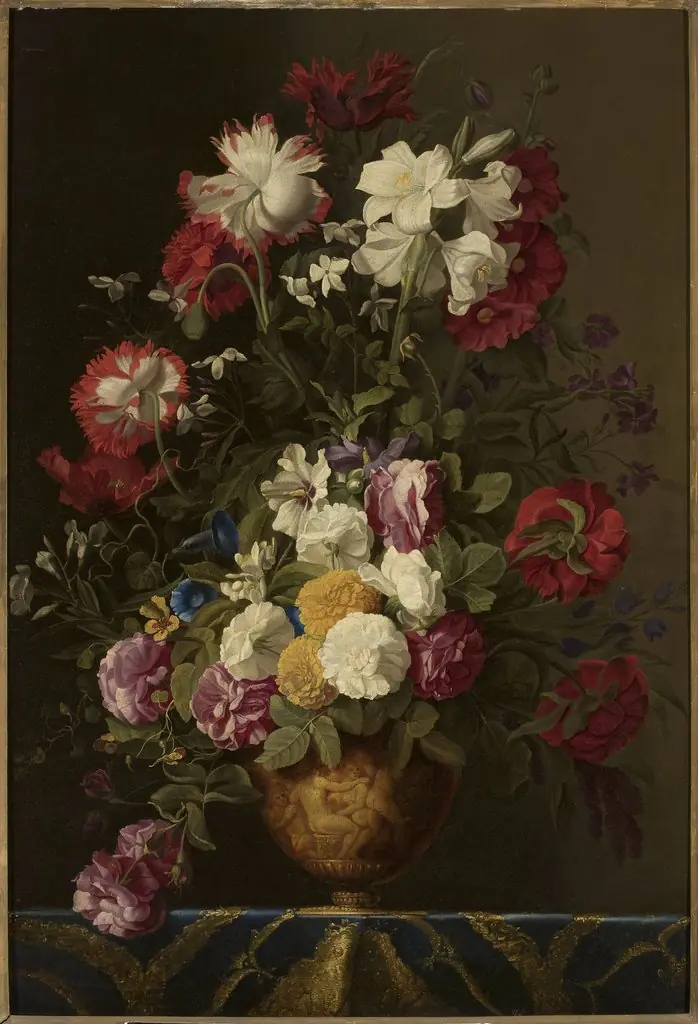
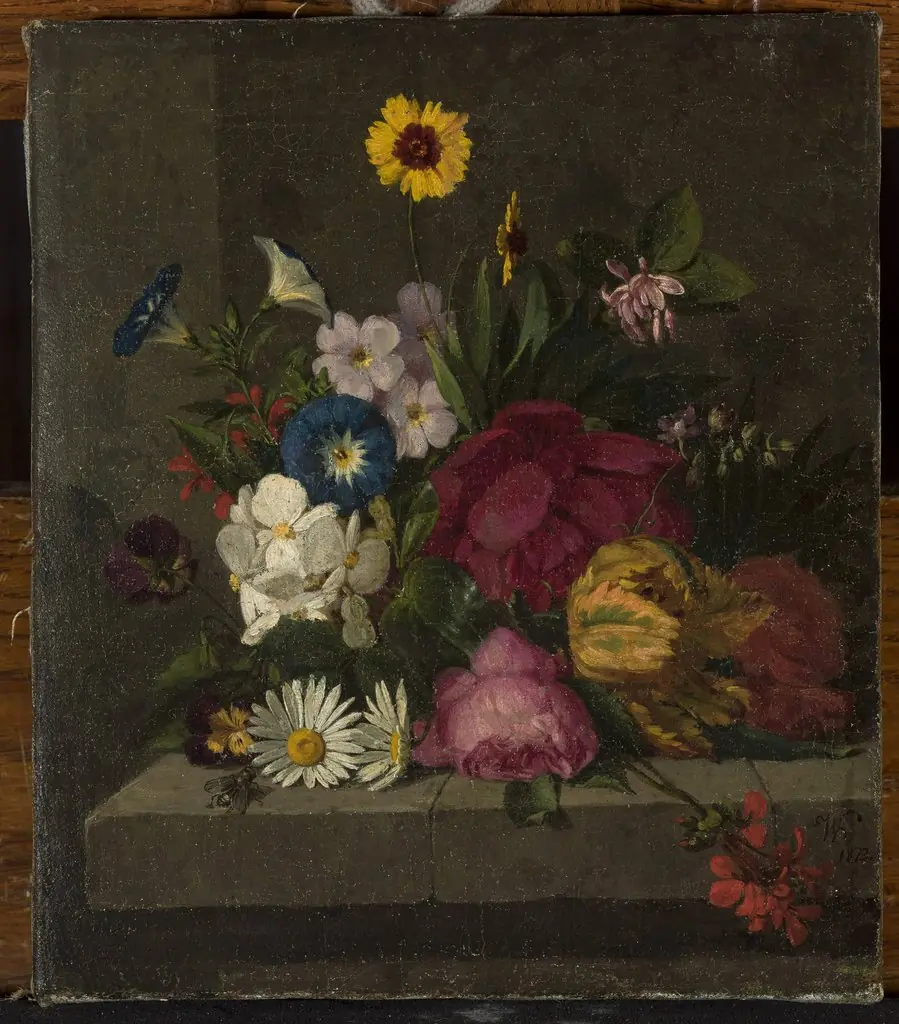
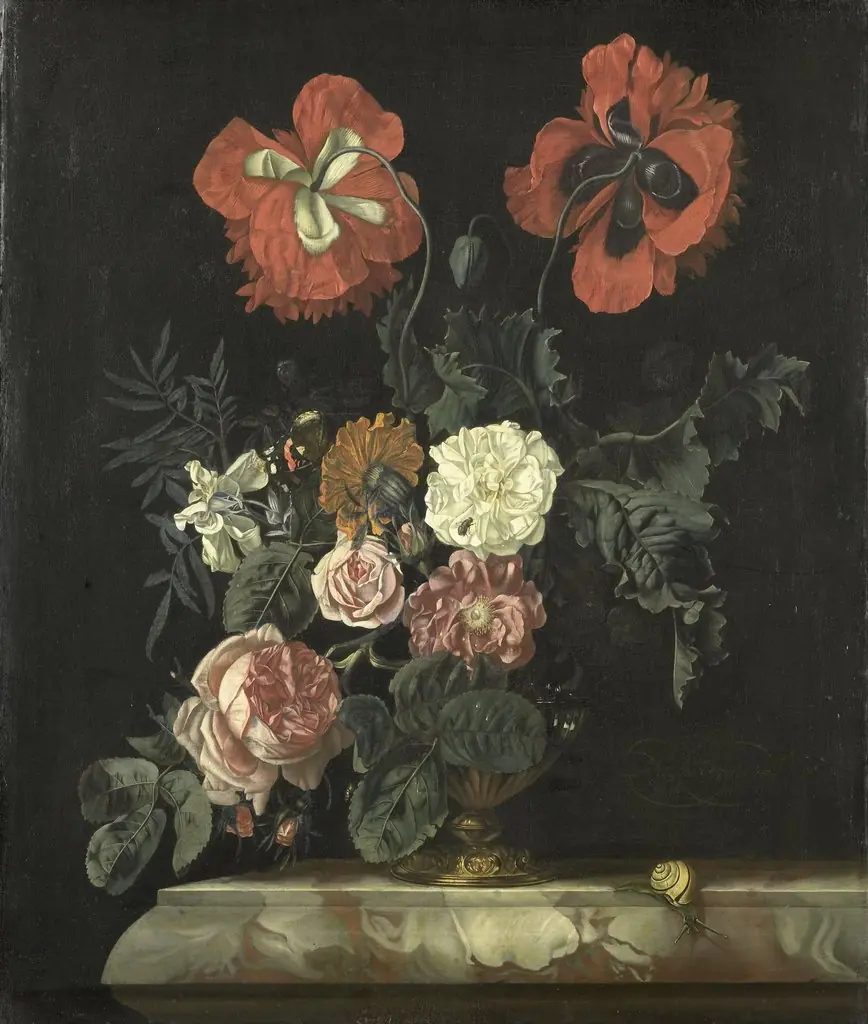
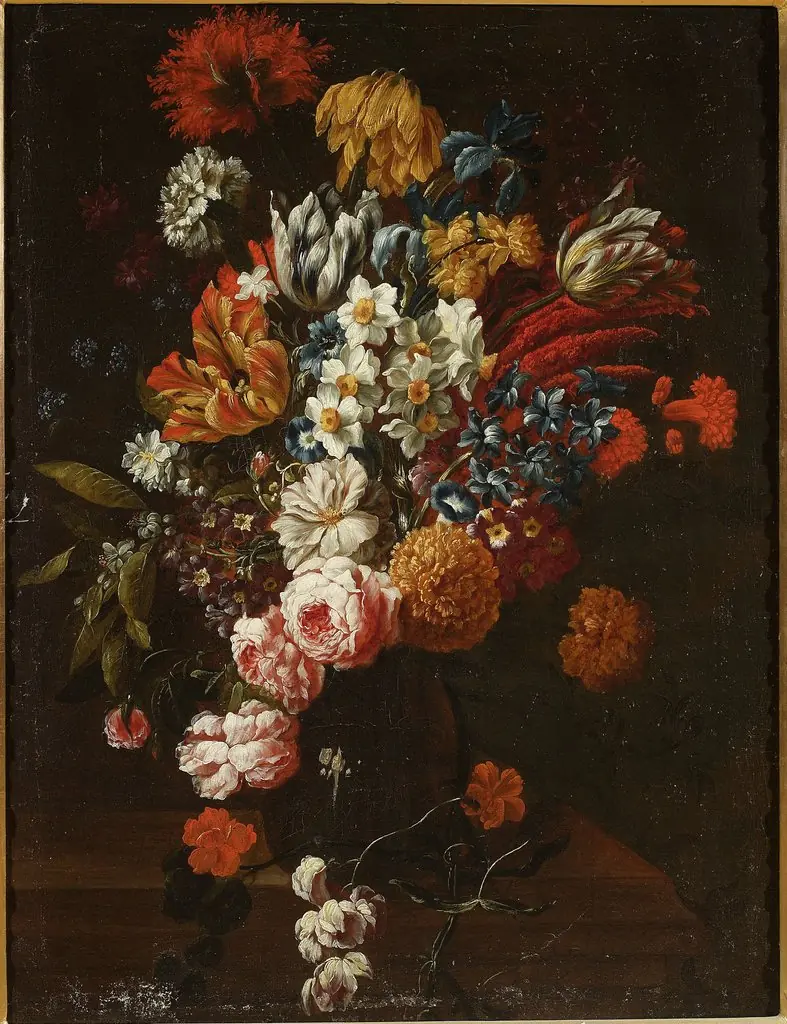
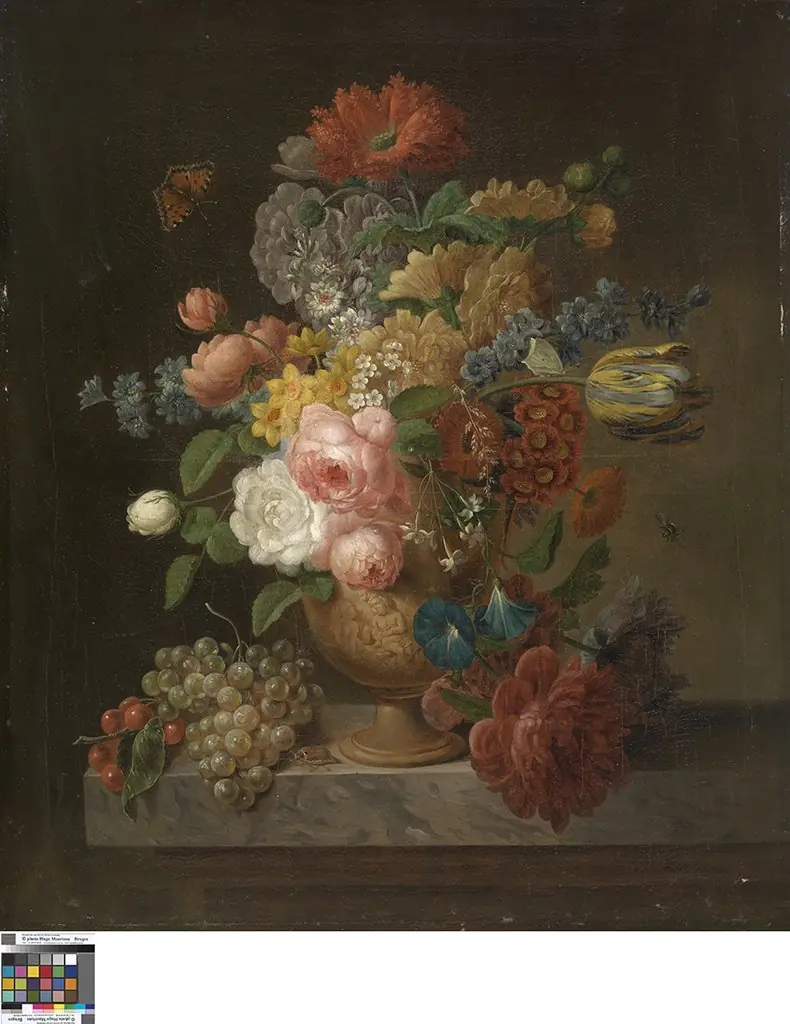
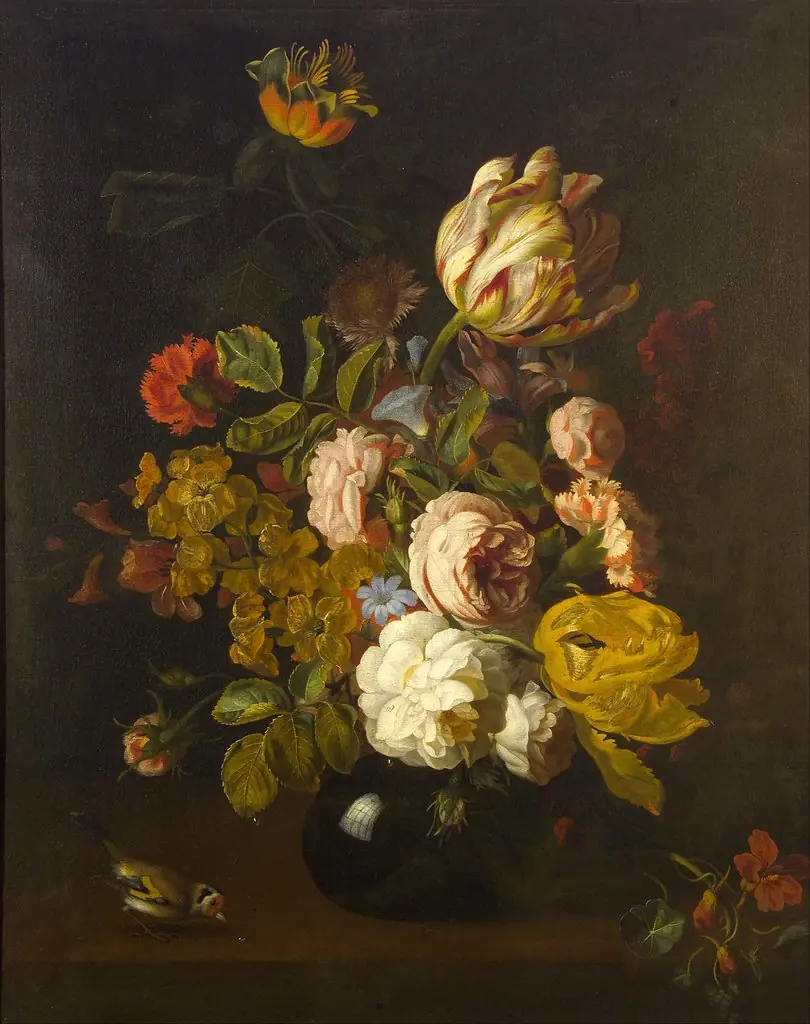
Blumenstilleben is a drawing by Unknown. It dates from 1650 and is held in the collection of the Art Collection of the University Göttingen. This detailed drawing presents a dense arrangement of flowers and butterflies against a dark, unmodulated background.
About this work
Overview
The contrast between the deep ground and vivid botanical elements heightens the sense of immediacy, as if the flora might detach from the page at any moment.
This detailed drawing presents a dense arrangement of flowers and butterflies against a dark, unmodulated background. The composition emphasizes naturalistic rendering, with each petal, leaf vein, and wing membrane rendered in precise line work. The contrast between the deep ground and vivid botanical elements heightens the sense of immediacy, as if the flora might detach from the page at any moment.
Subject & Meaning
The subject is a still life of wild and cultivated blooms—roses, poppies, and unidentified orange flowers—accompanied by butterflies in flight. No symbolic narrative is overt, but the inclusion of ephemeral insects alongside transient blossoms subtly evokes themes of fragility and the passage of time, common in European botanical art of the period.
Technique & Style
The artist employs fine, controlled linework to capture texture and form, with careful attention to the veining of leaves and the layered softness of petals. Cross-hatching and delicate stippling suggest volume without shading, relying on line density to model light and depth. The absence of color in the medium underscores the precision of the draftsmanship.
History & Provenance
The work’s origin and prior ownership are not documented in available records. Its style aligns with 18th- or early 19th-century European botanical illustrations, often created for scientific or private collections. The absence of a signature or watermark limits definitive attribution, though the technique suggests training in naturalist drawing traditions.
Context
This drawing reflects a broader tradition of detailed botanical observation prevalent in Enlightenment-era Europe, where art and science intersected. Such works were often made as studies for published floras or as personal records of cultivated specimens. The inclusion of butterflies, common in such drawings, signals an interest in the interconnectedness of plant and insect life.
Legacy
Though not widely exhibited or reproduced, the drawing exemplifies the quiet rigor of pre-photographic natural history illustration. Its emphasis on accuracy over ornamentation places it within a lineage of artists who valued observation as a form of quiet documentation, influencing later botanical and entomological art.
Artist & collection
Museum
Art Collection of the University Göttingen
Continue through works from the same source collection.
 Domestic Scene
 Giacomo and Cardinal Marco, investing Andrea, Abbot of San Zeno, with his Benefice
 The Nymph of Fontainebleau
 Portrait of a Woman
 Madonna and Child with Saints in the Enclosed Garden
 Venus and Minerva
 Family Group of Four on Sofa
 Wall painting from Room H of the Villa of P. Fannius Synistor at Boscoreale