Artwork
Capsize - to upset or turn over any thing
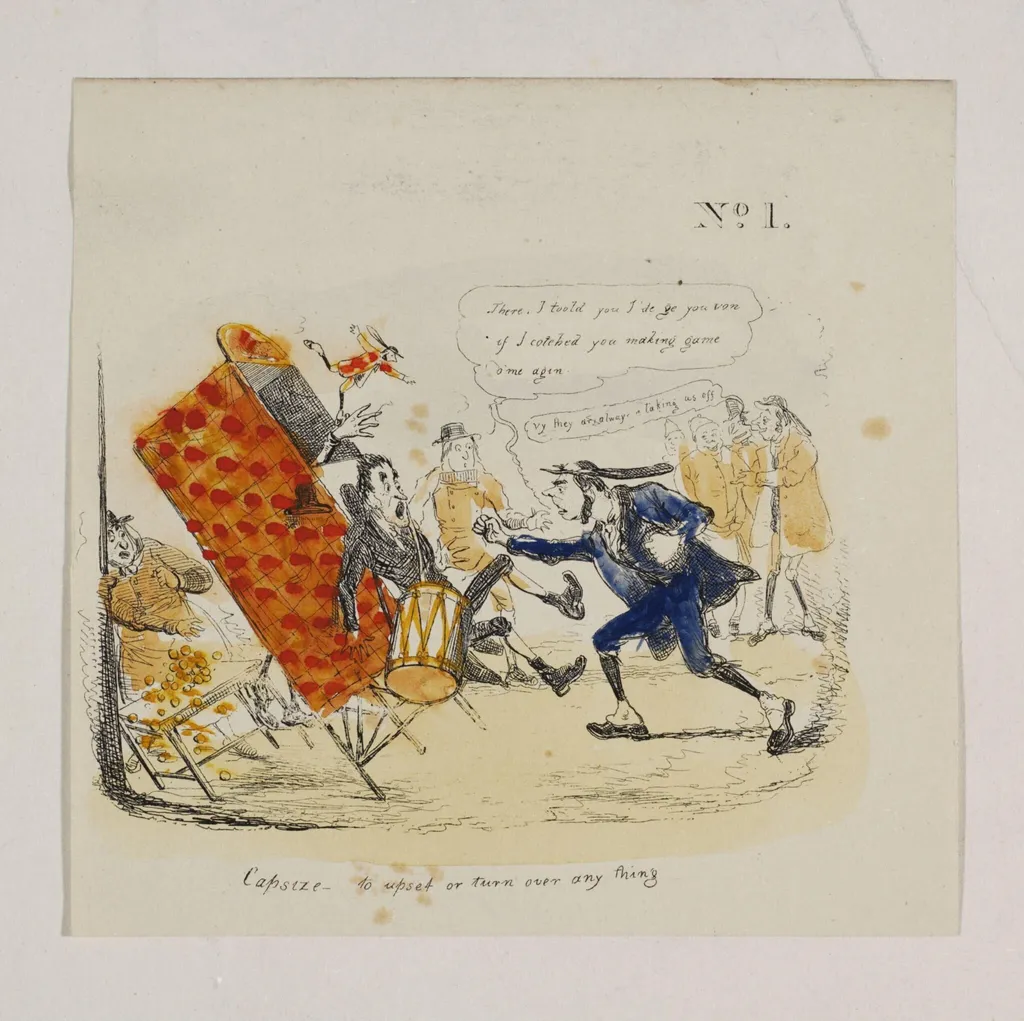
Capsize - to upset or turn over any thing is a print by the Romanticist artist Unknown. It dates from 1830 and is held in the collection of the Victoria and Albert Museum. This print, titled 'Capsize,' depicts a chaotic maritime mishap in a humorous tone.
About this work
Check out more in the Victoria and Albert Museum’s prints section.
A small boat tilts wildly, dumping two men into choppy water.
Their wide hats float away as waves crash over the hull.
A third man hangs onto the side, arms straining.
This is a comic print meant to make people laugh.
In 1830, cartoons rarely showed real danger—this one did.
It poked fun at clumsy sailors who couldn’t stay upright.
Check out more in the Victoria and Albert Museum’s prints section.
Overview
This print, titled 'Capsize,' depicts a chaotic maritime mishap in a humorous tone. Created in the early 19th century, it belongs to the George Speaight Punch & Judy Collection and was likely produced as a standalone comic image. Unlike many contemporary illustrations that avoided depicting physical peril, this work embraces the absurdity of human error at sea, using exaggerated motion and precarious balance to provoke amusement.
Subject & Meaning
The scene shows three men in a capsizing boat: two are flailing in the water, their broad hats drifting away, while a third clings desperately to the hull. The composition emphasizes instability and futility, turning a common maritime hazard into a farcical spectacle. The image mocks the incompetence of sailors, reflecting a broader cultural tendency to laugh at those who fail to master their environment, particularly in roles associated with rugged competence.
Technique & Style
Rendered in ink on paper, the print uses bold, fluid lines to convey motion and tension. Figures are simplified but expressive, with exaggerated postures enhancing the comedic effect. The waves are suggested through rhythmic strokes, and the boat’s tilt creates a dynamic diagonal that pulls the viewer’s eye through the chaos. The absence of fine detail focuses attention on the action, aligning with the conventions of early comic illustration meant for quick comprehension and immediate impact.
History & Provenance
The print is part of the George Speaight Punch & Judy Collection, assembled by the British theatre historian and puppetry scholar. Its publisher remains unidentified, suggesting it may have been a cheaply produced broadside or sheet sold in urban markets. Dating to around 1830, it reflects the rise of mass-produced visual humor in Britain, where printed images were increasingly used to entertain a growing literate public outside elite circles.
Context
In the early 1830s, most illustrated humor avoided depicting genuine peril, favoring polite satire or domestic absurdities. This print stands out for its unflinching portrayal of physical danger, aligning it with emerging traditions of slapstick and seaside caricature. Its focus on sailors—a familiar subject in British popular culture—suggests it resonated with audiences familiar with maritime life, whether through trade, naval service, or coastal folklore.
Legacy
The print survives as a rare example of pre-Victorian comic art that treats physical mishap without moralizing. It contributes to the understanding of how humor evolved in printed media, bridging folk traditions and the later development of newspaper cartoons. Held by the Victoria and Albert Museum, it remains a tangible artifact of how everyday dangers were transformed into public amusement during a time of rapid social and visual change.
Artist & collection

 Domestic Scene
 Giacomo and Cardinal Marco, investing Andrea, Abbot of San Zeno, with his Benefice
 The Nymph of Fontainebleau
 Portrait of a Woman
 Madonna and Child with Saints in the Enclosed Garden
 Venus and Minerva
 Family Group of Four on Sofa
 Wall painting from Room H of the Villa of P. Fannius Synistor at Boscoreale
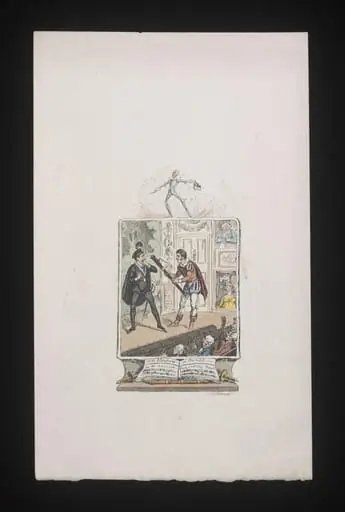 Tom Blanchard in Hamlet. For the Bassoon. Lady Coventry's Minuet
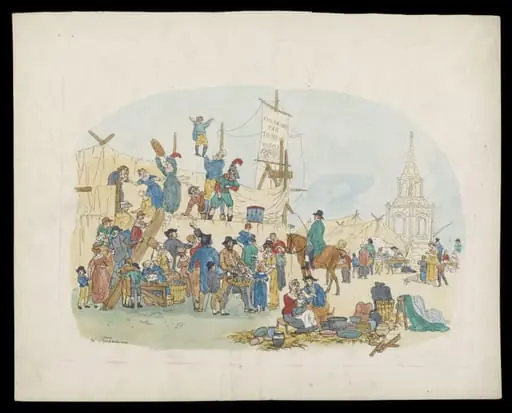 H Beard Print Collection
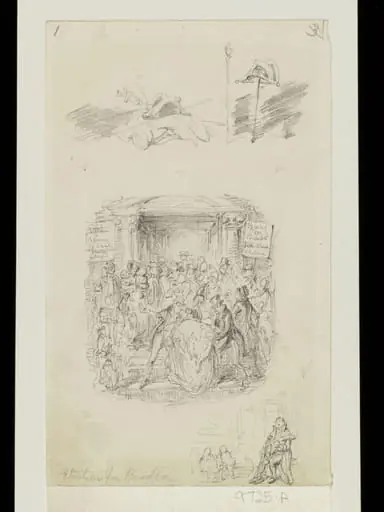 Election for Beadle
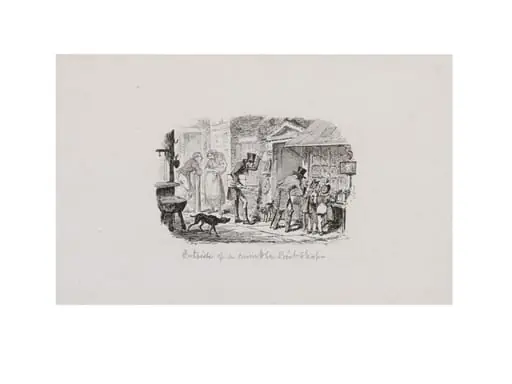 Outside of a Humble Print Shop
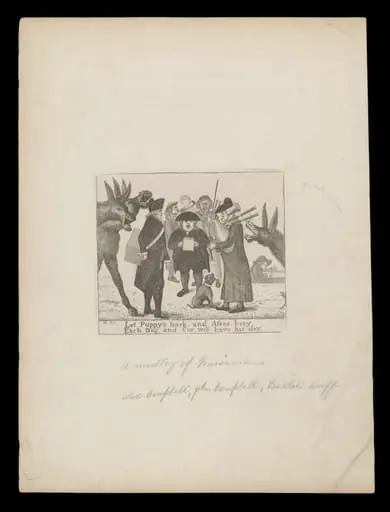 H Beard Print Collection
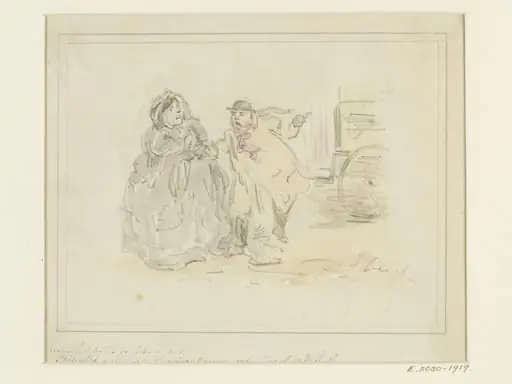 Drawing for book illustration: an old lady and a cabman
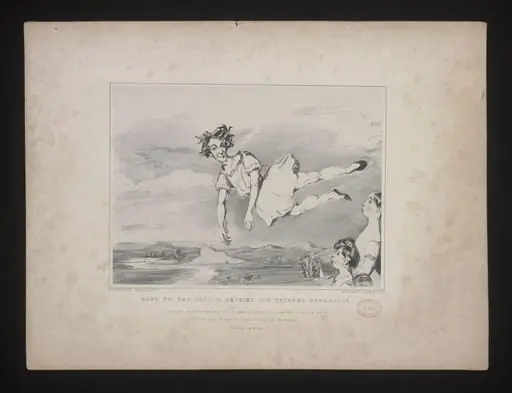 Dans un pas-seul il exprime son extrême desespoir
 H Beard Print Collection
 Séquestré
 Preperations for a New Comedy
 Woman Riding a Man
 Désagrément de diner au trop grand air