Artwork
Chaitanya as Rama and Krishna
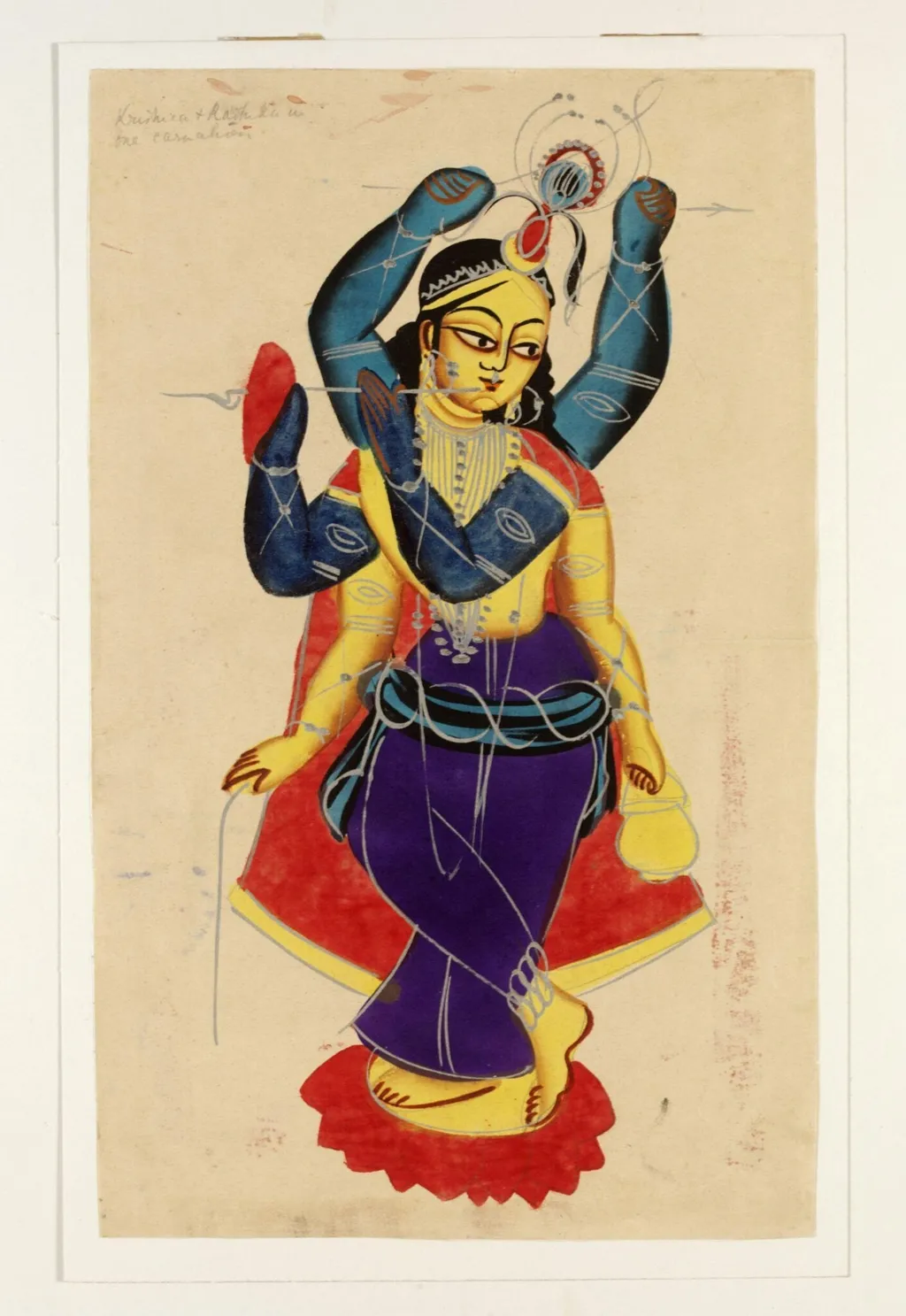
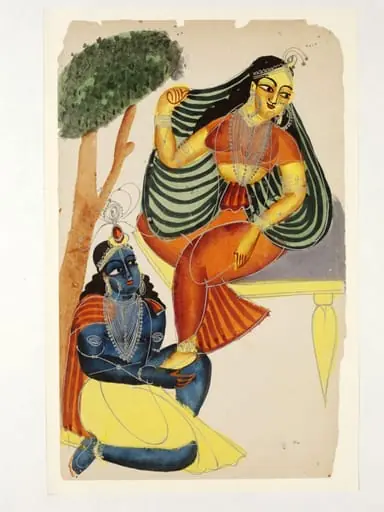
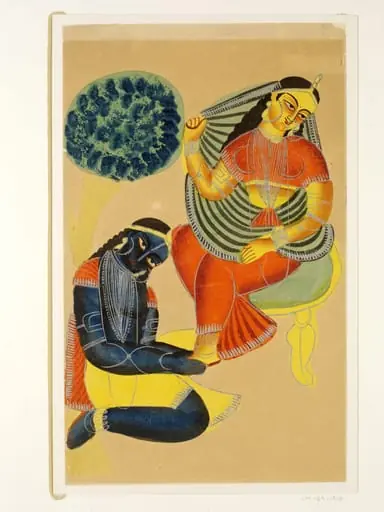
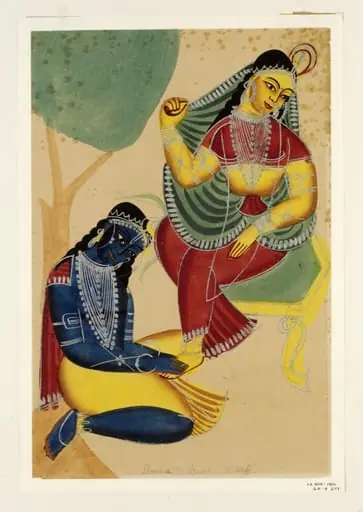
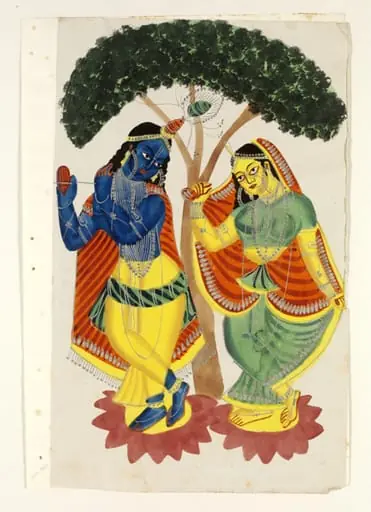
Chaitanya as Rama and Krishna is a paint painting by the Impressionist artist Unknown. It dates from 1885 and is held in the collection of the Victoria and Albert Museum.
About this work
Overview
This 1885 opaque watercolor on paper portrays the Bengali saint Chaitanya Mahaprabhu in a composite form, merging attributes of the deities Rama and Krishna.
This 1885 opaque watercolor on paper portrays the Bengali saint Chaitanya Mahaprabhu in a composite form, merging attributes of the deities Rama and Krishna. Created in the Kalighat style, the work reflects devotional traditions of 19th-century Bengal. It was acquired by the museum in 1894 from Miss M. Steele, who inherited it through her mother, a Cambridge Sanskrit scholar. The painting’s origins likely trace to a family with connections to colonial India.
Subject & Meaning
Chaitanya is depicted with four arms, symbolizing his divine status as an incarnation of both Rama and Krishna. Each hand holds or gestures with symbolic objects: one points skyward, another holds a red disc, while the others convey blessing or invocation. The fusion of these avatars underscores his role in Gaudiya Vaishnavism as a living embodiment of divine love and devotion. The composition avoids narrative context, focusing instead on his sacred presence.
Technique & Style
Executed in opaque watercolor on paper, the painting employs bold, flat areas of color typical of Kalighat art. The figure stands out against a plain background, enhancing visual impact. Vibrant hues—yellow, purple, red—are applied with minimal shading, emphasizing form over depth. The lines are confident and stylized, reflecting the rapid, expressive brushwork of bazaar artists who catered to pilgrims and devotees in 19th-century Calcutta.
History & Provenance
The painting entered the museum’s collection in 1894, sourced from Miss M. Steele, whose mother was a Sanskrit scholar. The family’s connection to India suggests the work may have been collected during the 19th century by a relative living there. While the exact origin remains uncertain, its style and subject align with Kalighat productions from Calcutta, likely made for private devotion rather than public display.
Context
This work emerged during a period when Kalighat artists adapted traditional Hindu iconography for a changing society. As pilgrimage culture intersected with urban markets, artists created portable devotional images for home worship. Depictions of Chaitanya as Rama-Krishna reflect theological syncretism in Gaudiya Vaishnavism, blending regional devotion with broader Vaishnava theology in accessible visual form.
Legacy
The painting preserves a specific devotional interpretation of Chaitanya that was widespread in 19th-century Bengal but rarely documented in surviving artworks. Its survival through colonial-era collections highlights how Indian religious imagery entered Western institutions, often detached from its original context. It remains a rare example of Kalighat art dedicated to a living saint rather than classical deities.
Artist & collection

 Domestic Scene
 Giacomo and Cardinal Marco, investing Andrea, Abbot of San Zeno, with his Benefice
 The Nymph of Fontainebleau
 Portrait of a Woman
 Madonna and Child with Saints in the Enclosed Garden
 Venus and Minerva
 Family Group of Four on Sofa
 Wall painting from Room H of the Villa of P. Fannius Synistor at Boscoreale