Artwork
Copy after the painting Death of the Knight of Celano by the Master of the St Francis cycle in the Upper Church, San Francesco, Assisi
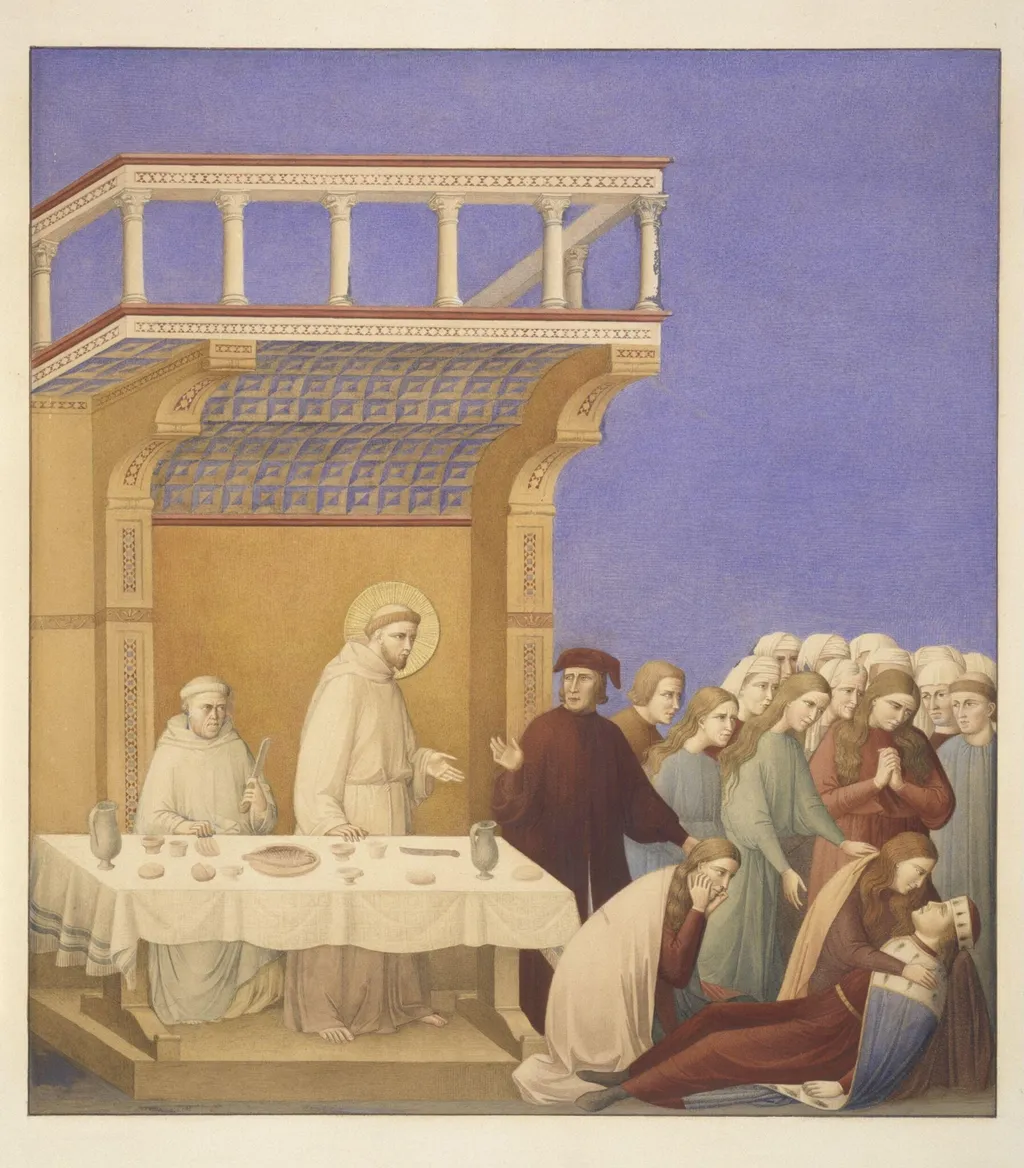
Copy after the painting Death of the Knight of Celano by the Master of the St Francis cycle in the Upper Church, San Francesco, Assisi is a watercolor work on paper by the Impressionist artist Unknown. It dates from 1862 and is held in the collection of the Victoria and Albert Museum. This watercolour, dated 1862, is a faithful reproduction of a fresco originally painted in the Upper Church of San Francesco in Assisi.
About this work
Overview
Created as part of a series commissioned by the Arundel Society to document medieval religious art, it was never printed or widely distributed.
This watercolour, dated 1862, is a faithful reproduction of a fresco originally painted in the Upper Church of San Francesco in Assisi. Created as part of a series commissioned by the Arundel Society to document medieval religious art, it was never printed or widely distributed. The work preserves the composition and emotional tone of the lost or deteriorated original, serving as a visual record of a 13th-century Franciscan narrative scene.
Subject & Meaning
The scene portrays the death of a nobleman, likely the Knight of Celano, surrounded by witnesses in a modest interior. A central figure in a white robe, marked by a halo, appears to offer spiritual counsel at the moment of passing. The posture of the onlookers—kneeling, standing, and one prostrate—suggests reverence and grief. The setting, though sparse, evokes a sacred space, emphasizing the transition from earthly life to divine grace.
Technique & Style
Executed in watercolour, the copy employs delicate washes to suggest form and atmosphere, mirroring the tonal subtleties of the original fresco. The artist rendered figures with restrained detail, focusing on gesture and spatial arrangement rather than individualized features. The patterned walls and simplified architecture reflect the stylistic conventions of the 13th-century Assisi school, adapted into a 19th-century reproductive medium.
History & Provenance
Commissioned by the Arundel Society in the mid-19th century, this watercolour was one of many attempts to preserve deteriorating medieval murals before photography became widespread. Though intended for publication, the series was never released, possibly due to shifting priorities or technical limitations. The work remains in private or institutional collections, valued as a historical document rather than an independent artistic achievement.
Context
The original fresco belonged to a cycle illustrating the life of Saint Francis, painted by an anonymous artist known as the Master of the St. Francis Cycle. These works, completed around 1290, were part of a broader effort to visually convey Franciscan ideals of humility and devotion. The 1862 copy reflects Victorian-era antiquarian interests in preserving religious art, particularly in Italy, where restoration practices were often invasive.
Legacy
Though unpublished and little known outside specialist circles, this watercolour contributes to the archival record of Assisi’s frescoes, many of which have since faded or been altered. It stands as an example of 19th-century scholarly efforts to document early Christian art, bridging medieval iconography and modern conservation practices without imposing stylistic interpretation.
Artist & collection

 Domestic Scene
 Giacomo and Cardinal Marco, investing Andrea, Abbot of San Zeno, with his Benefice
 The Nymph of Fontainebleau
 Portrait of a Woman
 Madonna and Child with Saints in the Enclosed Garden
 Venus and Minerva
 Family Group of Four on Sofa
 Wall painting from Room H of the Villa of P. Fannius Synistor at Boscoreale
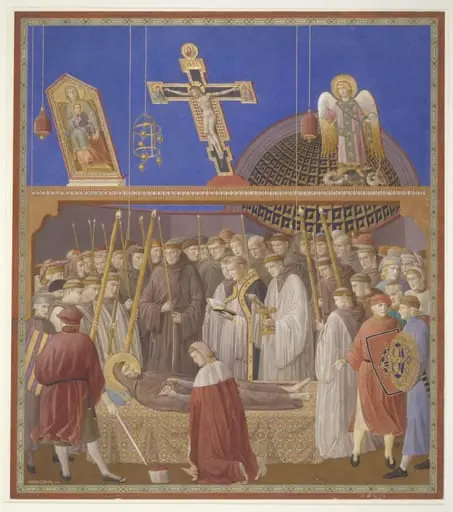 Copy after the painting Death of St Francis by the Master of the St Francis cycle in the Upper Church, San Francesco, Assisi
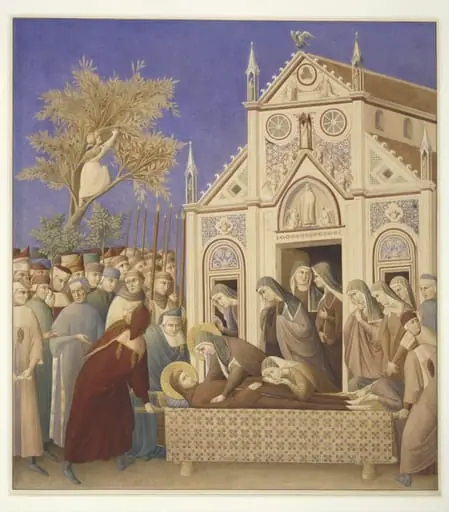 Copy after the painting The Body of St Francis Met by Santa Chiara by the Master of the St Francis Cycle in the Upper Church, San Francesco Assisi
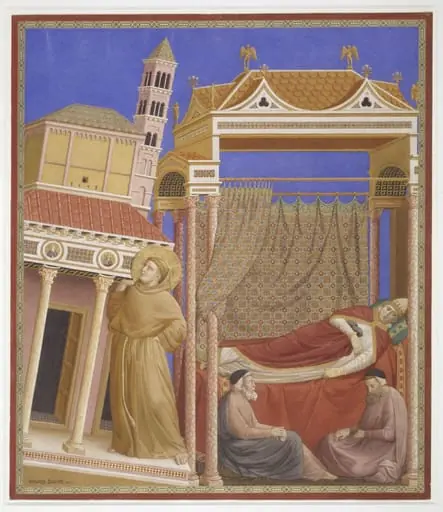 Copy after the painting The Dream of Innocent III by the Master of the St Francis cycle in the Upper Church, San Francesco, Assisi
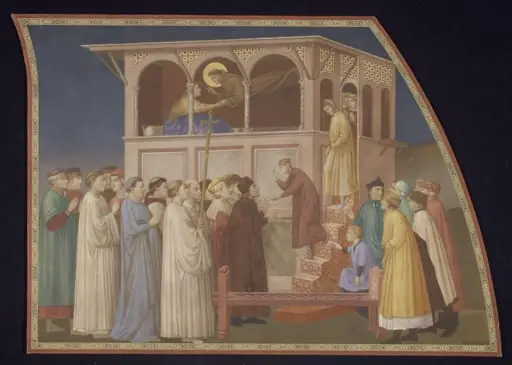 Copy after the painting Posthumous Miracle of St Francis by a follower of Giotto in the Lower Church, San Francesco, Assisi
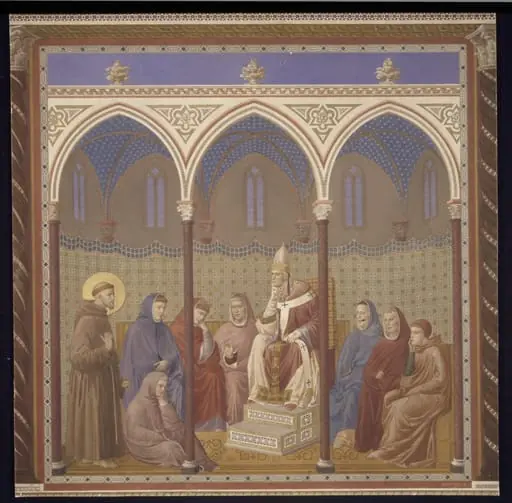 Copy after the painting St Francis before Pope Honorius by the Master of the St Francis cycle in the Upper Church, San Francesco, Assisi
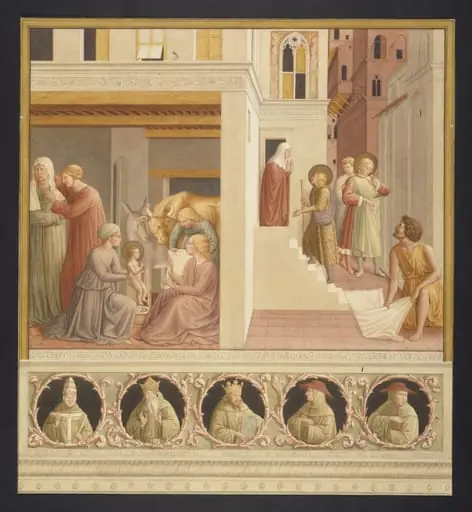 Copy after the cycle of the <i>Life of St Francis</i> (<i>Birth of St Francis</i>), Benozzo Gozzoli in San Francesco, Montefalco