Artwork
drawing from the Ionides Album
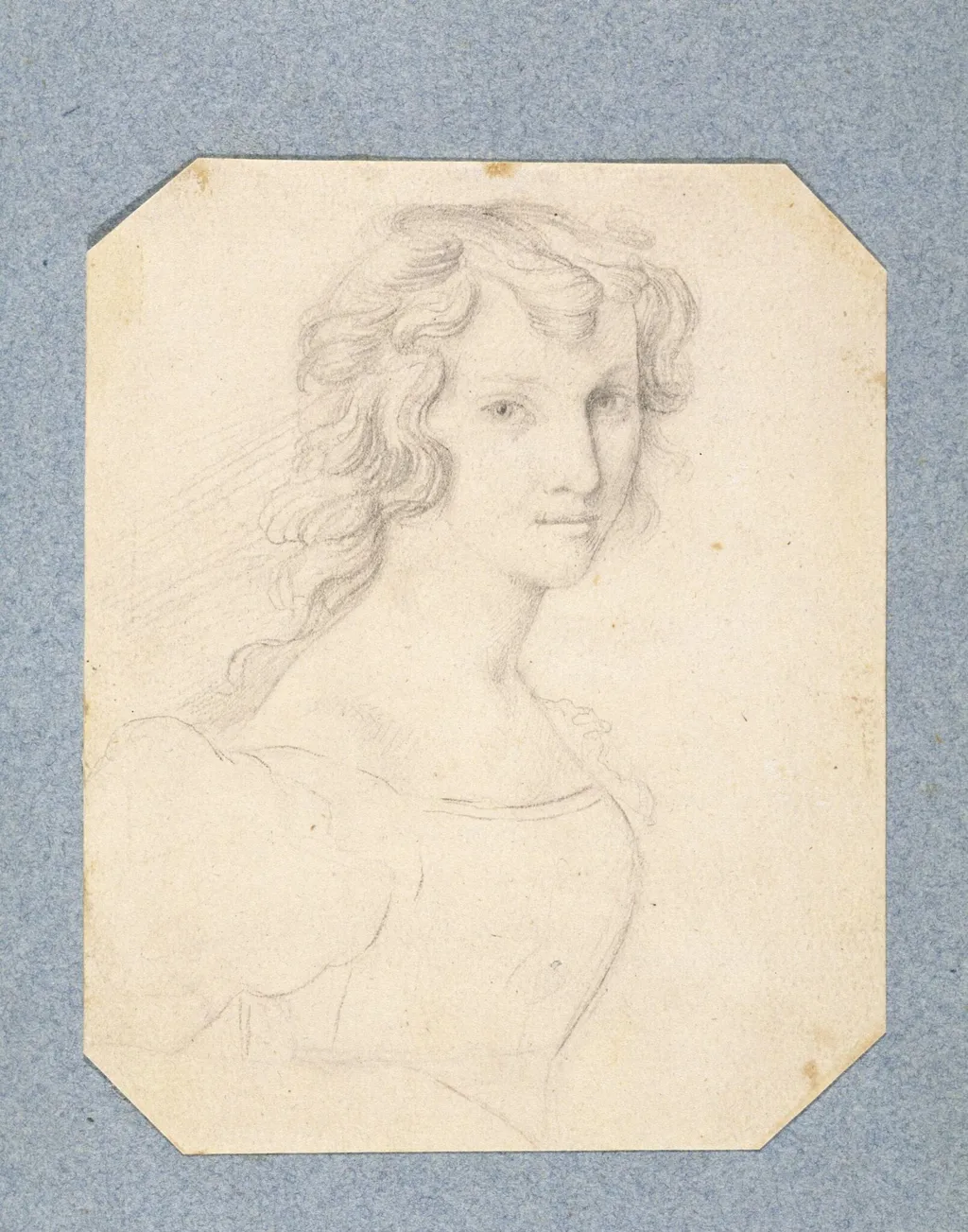
drawing from the Ionides Album is a drawing by Unknown. It dates from 1850 and is held in the collection of the Victoria and Albert Museum.
About this work
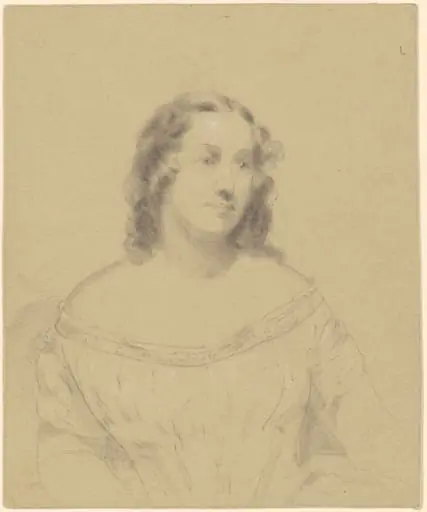
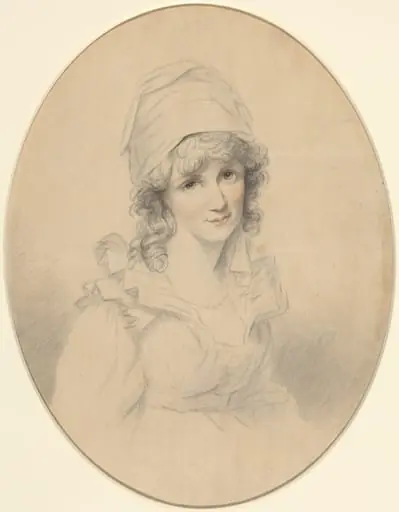
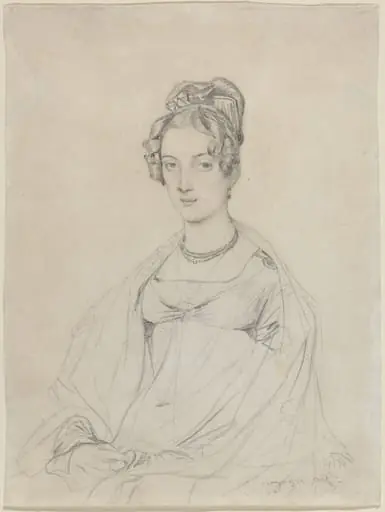
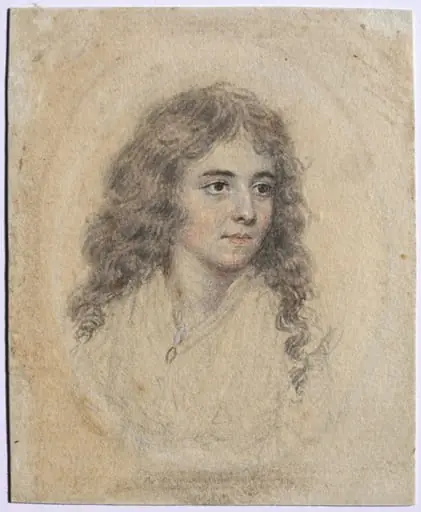
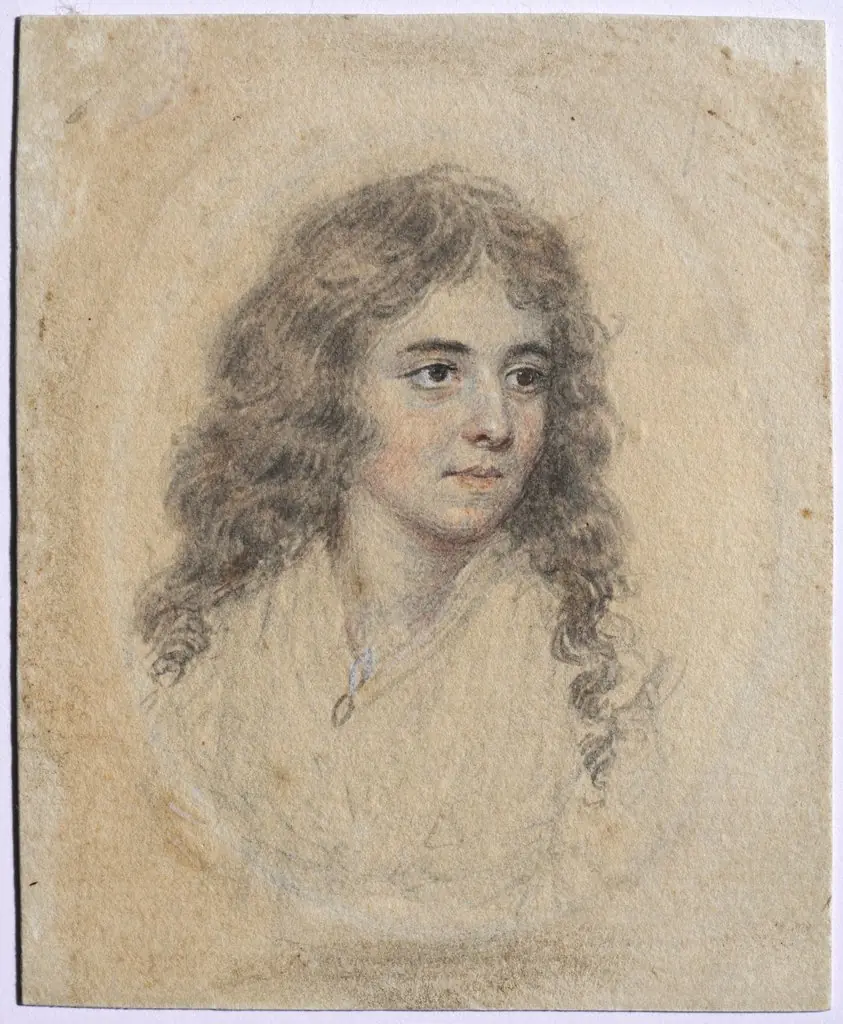
This drawing shows a woman in three-quarter profile, looking out at the audience.
This drawing shows a woman in three-quarter profile, looking out at the audience.
She's wearing a dress with puffed sleeves.
The drawing is done in graphite, with loose lines outlining her form.
The artist used a mix of soft and heavy lines to focus on her features.
This style was common during the early 19th century.
The loose hair and simple dress suggest it's from the 1820s or 1830s.
The drawing is simple, yet detailed.
To learn more about this style, look into the technique: cross-hatching.
Overview
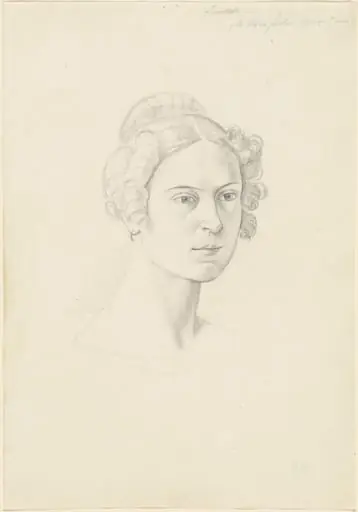
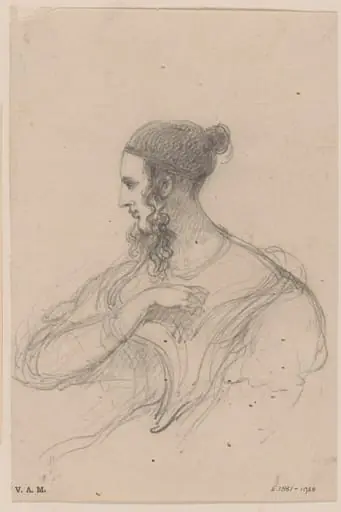
This graphite drawing, part of the Ionides Album, presents a bust-length portrait of a woman in three-quarter profile, her head turned to gaze directly at the viewer. Executed with fluid, varied line work, the piece captures a quiet intimacy. The simplicity of the composition and the focus on facial expression reflect a tradition of private portraiture common in early 19th-century Britain.
Subject & Meaning
The sitter, though unidentified, is rendered with a sense of personal presence rather than formal grandeur. Her direct gaze and unadorned attire suggest an informal, perhaps domestic setting. The drawing conveys individuality through subtle expression and naturalistic posture, aligning with a shift in portraiture toward personal rather than aristocratic representation during the 1820s and 1830s.
Technique & Style
The artist employed graphite with deliberate variation in line weight—soft contours for the face and hair, heavier strokes for shadows and dress folds. Cross-hatching and light tonal gradations define the features without heavy modeling. The loose, sketch-like outline of the dress contrasts with the refined detail of the face, emphasizing the sitter’s expression over costume.
History & Provenance
The drawing originates from the Ionides Album, a collection assembled by the Greek-British collector Constantine Ionides in the 19th century. These albums often contained works by amateur and professional artists, serving as personal archives of contemporary portraiture. The piece likely passed through private hands before entering institutional collection.
Context
In the 1820s–1830s, graphite drawings of this type were common among the British middle and upper classes as affordable, intimate records of individuals. Fashionable dress—puffed sleeves, loose hair—reflects Regency-era aesthetics. Such drawings were often made as keepsakes or studies, distinct from formal oil portraits, and valued for their immediacy and personal tone.
Legacy
This drawing exemplifies the quiet endurance of private portraiture in an age of rising photographic technology. Its preservation in the Ionides Album underscores its role as a cultural artifact of everyday visual practice. Today, it offers insight into how individuals were visually documented outside formal artistic institutions during the early 19th century.
Artist & collection

 Domestic Scene
 Giacomo and Cardinal Marco, investing Andrea, Abbot of San Zeno, with his Benefice
 The Nymph of Fontainebleau
 Portrait of a Woman
 Madonna and Child with Saints in the Enclosed Garden
 Venus and Minerva
 Family Group of Four on Sofa
 Wall painting from Room H of the Villa of P. Fannius Synistor at Boscoreale