Artwork
Eagles
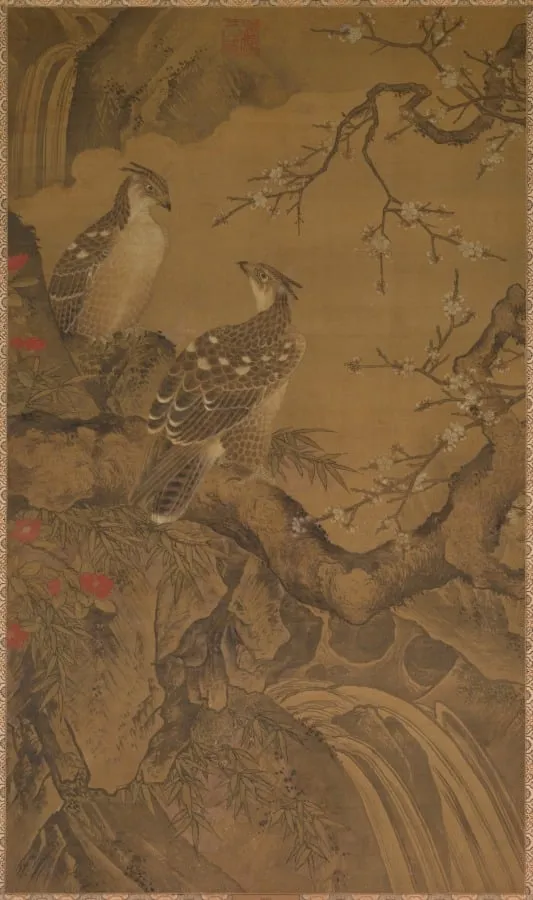
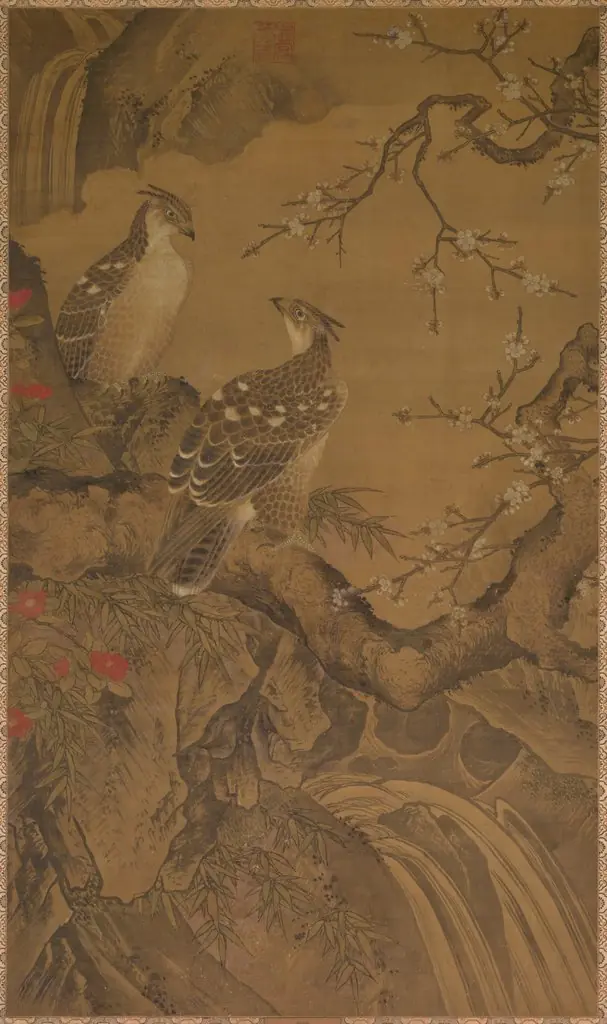
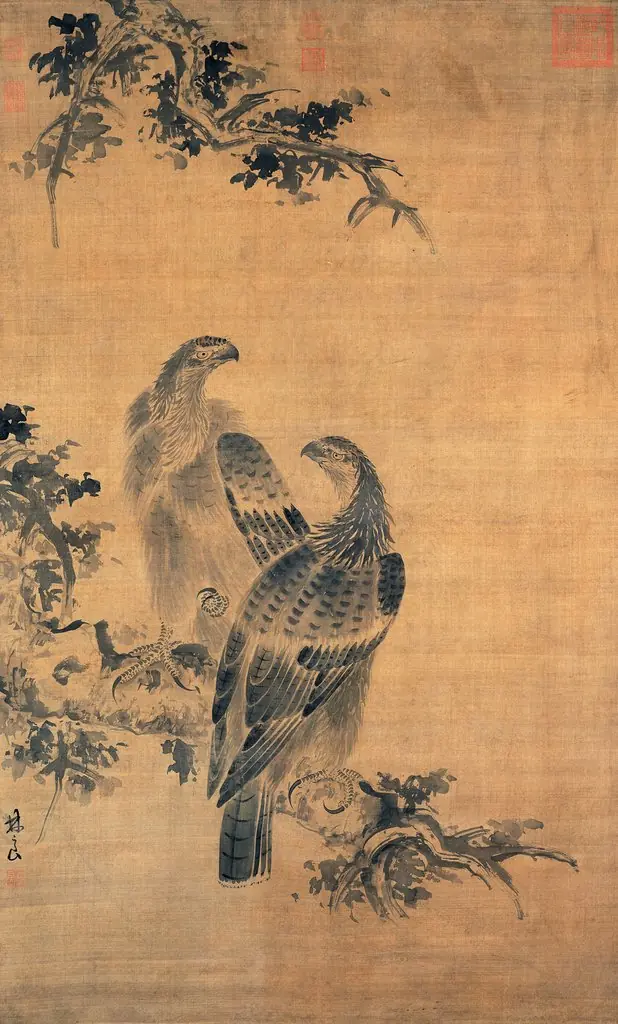
Eagles is an unspecified painting by the Ming dynasty painting artist Unknown. It dates from 1506 and is held in the collection of the Cleveland Museum of Art.
About this work
In Ming China, eagles could mean different things—strength, danger, or even a warning.
Two eagles sit on rocks above water and flowers. Their feathers are painted with thin, careful lines. The plants below are done in quick, loose strokes.
In Ming China, eagles could mean different things—strength, danger, or even a warning. Artists used them to show power or change, especially when rulers came and went. The painting feels quiet but carries a lot of hidden meaning.
If you like this, look up more about china, ming dynasty (1368–1644).
Overview
The work portrays a pair of eagles perched atop rocky outcrops that rise above a watery surface dotted with flowering camellia and assorted foliage. The birds are rendered with delicate, fine lines that define their plumage, while the surrounding vegetation is suggested through broader, more gestural brushstrokes. The composition balances meticulous detail with sweeping movement, creating a tranquil yet symbolically charged scene.
Subject & Meaning
In Chinese visual culture, eagles have served as versatile symbols, ranging from fierce aggressors to embodiments of heroic virtue or imperial enlightenment. By placing two eagles in a calm, elevated pose, the painting evokes an idealized representation of a wise ruler and consort, suggesting harmonious governance and elevated moral authority rather than martial aggression.
Technique & Style
The artist employs a dual brushwork approach: the avian figures are delineated with thin, precise strokes that capture feather texture, whereas the landscape elements—water, rocks, and plants—are treated with broader, sweeping marks that convey atmosphere and depth. This contrast between exacting line work and expressive washes reflects a mature Ming aesthetic that values both observation and abstraction.
Context
Eagle imagery gained particular resonance during the Yuan (1279–1368) and Ming (1368–1644) periods, eras marked by significant political transition. The evolving symbolic lexicon allowed artists to comment on power dynamics, using the bird’s attributes to allude to strength, danger, or moral warning amid shifting dynastic rule.
Legacy
While the painting’s precise origin remains undocumented, its stylistic traits align with courtly production in early Ming China. The work continues to be cited in scholarship on symbolic animal representation, illustrating how a seemingly simple natural scene can encode complex political and philosophical ideas.
Artist & collection

 Domestic Scene
 Giacomo and Cardinal Marco, investing Andrea, Abbot of San Zeno, with his Benefice
 The Nymph of Fontainebleau
 Portrait of a Woman
 Madonna and Child with Saints in the Enclosed Garden
 Venus and Minerva
 Family Group of Four on Sofa
 Wall painting from Room H of the Villa of P. Fannius Synistor at Boscoreale