Artwork
Fan mei gui
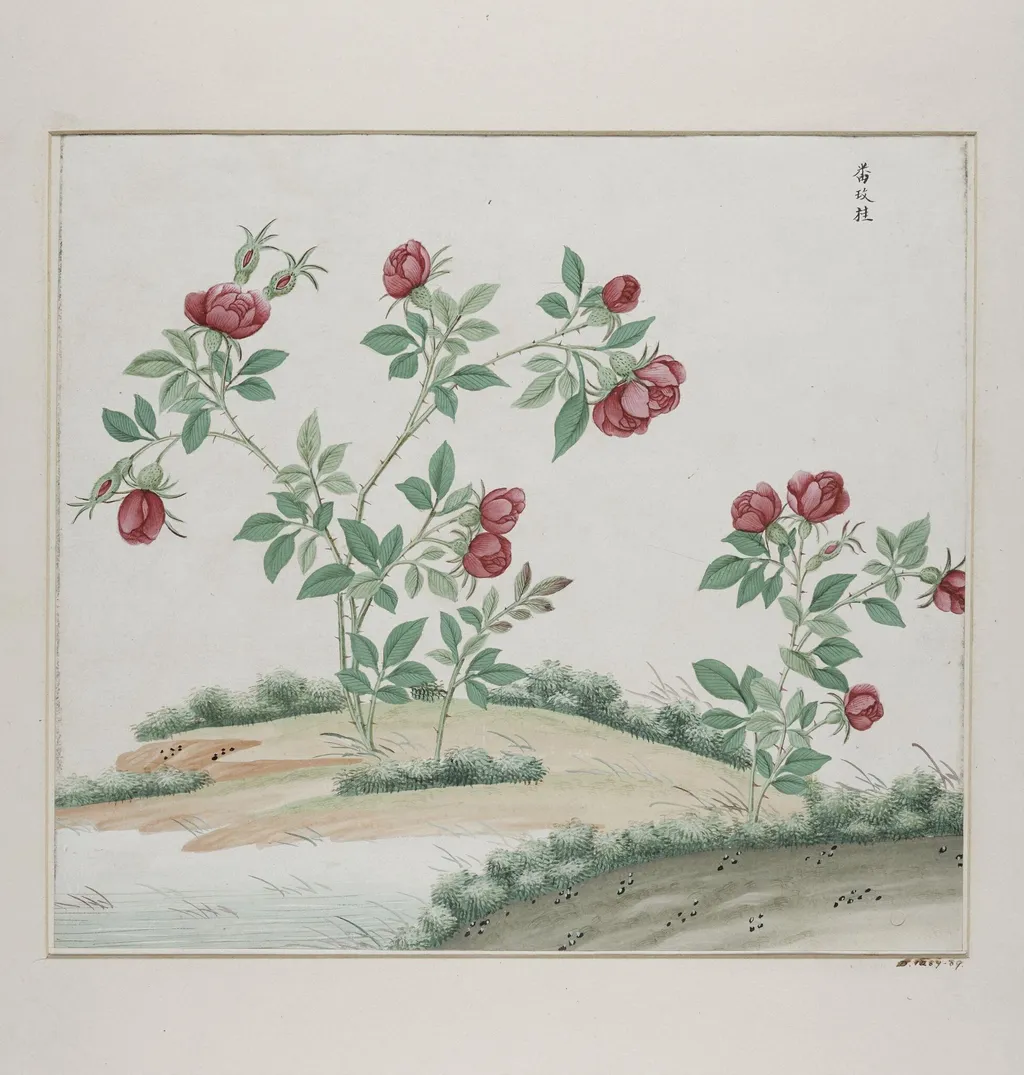
Fan mei gui is a paint painting by the Rococo painting artist Unknown. It dates from 1780 and is held in the collection of the Victoria and Albert Museum.
About this work
Overview
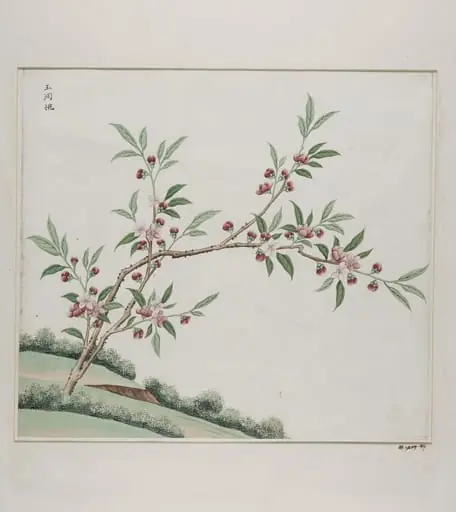
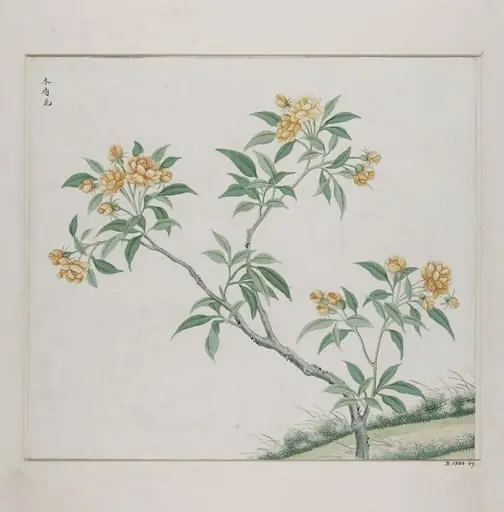
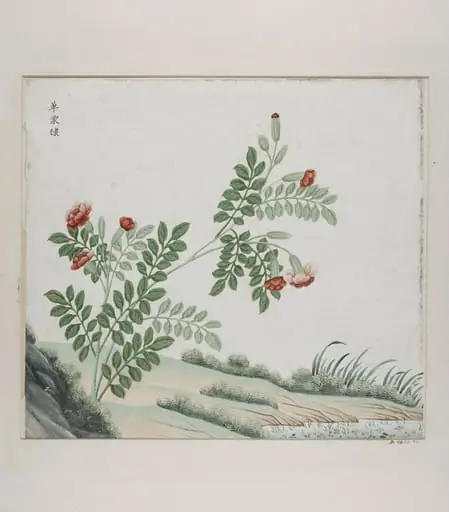
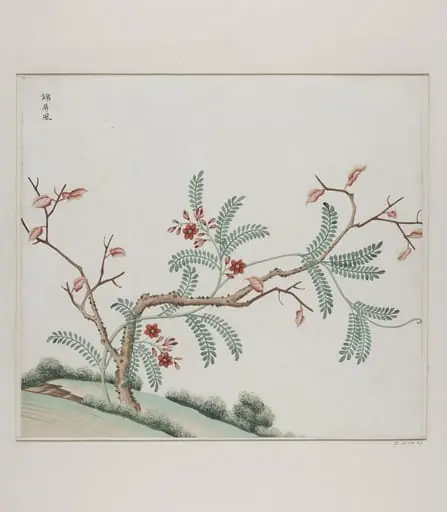
This painting, titled 'Fan mei gui,' is one of many botanical works produced in China during the 18th century for export to Europe. Created as part of a larger set, it was shipped in bulk from Canton, often alongside hundreds of similar sheets. The subject—a rose—is rendered with careful attention to natural detail, reflecting a commercial demand for exotic flora among European collectors.
Subject & Meaning
The Chinese caption 'fan meigui' translates to 'foreign rose,' signaling the plant’s non-native status to Chinese viewers. The painting captures a species unfamiliar in East Asia, likely introduced through global trade. Its inclusion in a botanical series suggests an intent to document and classify plants new to European audiences, blending scientific curiosity with aesthetic presentation.
Technique & Style
The artist employed restrained pigments and subtle gradations to suggest volume and texture, particularly in the petals and foliage. While not strictly adhering to European chiaroscuro, the work demonstrates an awareness of light and shadow to enhance realism. Brushwork is precise yet unembellished, prioritizing clarity over ornamentation, characteristic of export art designed for Western tastes.
History & Provenance
Produced in Guangzhou during the height of the Canton trade, this painting was likely made by anonymous artisans working for foreign merchants. Such works were mass-produced for European markets, often bound into albums or displayed as decorative specimens. Its survival as a single sheet indicates it was separated from its original set, possibly during transit or later dispersal.
Context
These botanical paintings emerged from a unique cultural exchange: Chinese artists adapted their techniques to meet European expectations of naturalism, while European buyers sought accurate depictions of exotic plants. The genre reflects broader 18th-century interests in botany, colonial expansion, and the commodification of nature, positioning art as both record and merchandise.
Legacy
The 'fan meigui' and its companion pieces contributed to European botanical illustration, influencing how foreign flora were visually understood before photographic documentation. Though often overlooked as commercial art, these works remain valuable as material evidence of cross-cultural exchange, bridging Chinese craftsmanship with Western scientific and aesthetic frameworks.
Artist & collection

 Domestic Scene
 Giacomo and Cardinal Marco, investing Andrea, Abbot of San Zeno, with his Benefice
 The Nymph of Fontainebleau
 Portrait of a Woman
 Madonna and Child with Saints in the Enclosed Garden
 Venus and Minerva
 Family Group of Four on Sofa
 Wall painting from Room H of the Villa of P. Fannius Synistor at Boscoreale