Artwork
Full Sail on the Misty River
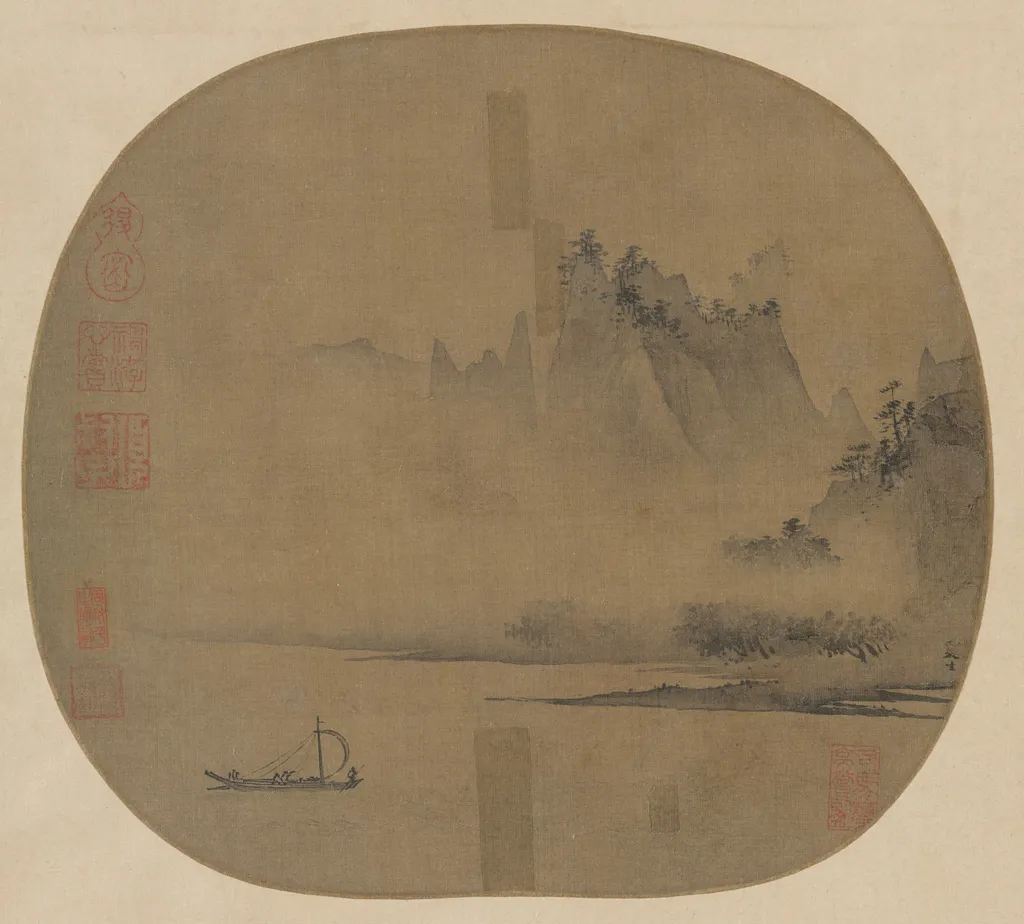
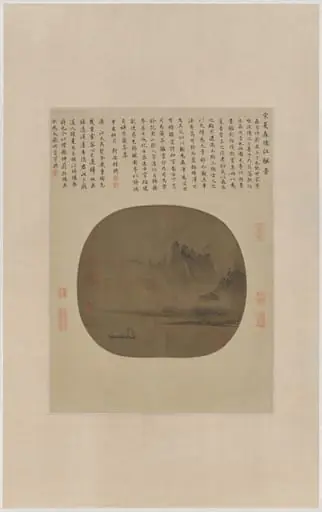
Full Sail on the Misty River is an unspecified painting by Unknown. It dates from 1239 and is held in the collection of the Cleveland Museum of Art. A tranquil river landscape rendered in muted tones, this painting captures a quiet moment along a winding waterway.
About this work
Overview
Subtle red seals on the left edge suggest the artist’s mark or a later collector’s ownership, consistent with East Asian artistic traditions.
A tranquil river landscape rendered in muted tones, this painting captures a quiet moment along a winding waterway. Mist softens the horizon where distant mountains fade into the atmosphere. A solitary boat drifts near the bank, surrounded by slender trees that frame the scene. Subtle red seals on the left edge suggest the artist’s mark or a later collector’s ownership, consistent with East Asian artistic traditions.
Subject & Meaning
The scene evokes stillness and solitude, common themes in East Asian ink painting. The drifting boat, neither moving toward nor away, suggests contemplation rather than journey. The mist obscures the mountains, implying the ineffable or unseen, while the quiet river reflects the natural order. No human figures are present, reinforcing a sense of harmony between land, water, and atmosphere.
Technique & Style
The painting employs diluted pigments to achieve soft gradients and hazy forms, particularly in the mist and distant hills. Brushwork is restrained, with delicate lines defining trees and shoreline. The color palette is subdued, favoring grays, blues, and earth tones, with only the red seals providing contrast. This approach aligns with literati painting traditions that prioritize mood over detail.
History & Provenance
The red seals indicate the work was likely owned or authenticated by a collector or artist in East Asia, though the specific identity remains unverified. No documented exhibition history or artist attribution is available. The painting’s condition suggests careful preservation, consistent with its use in private collections rather than public display.
Context
This work reflects the influence of Song and Yuan dynasty landscape traditions, where nature was depicted not as a literal place but as a space for inner reflection. Similar compositions appear in Chinese and Japanese albums, often created for intimate viewing. The emphasis on atmosphere over narrative aligns with Daoist and Chan Buddhist ideals of quietude and impermanence.
Legacy
Though not attributed to a known master, the painting exemplifies a widespread aesthetic in East Asian art that values restraint and suggestion. Its quiet composition continues to resonate in modern collections, particularly in institutions that emphasize contemplative art. It stands as a quiet testament to a tradition that finds depth in simplicity.
Artist & collection

 Domestic Scene
 Giacomo and Cardinal Marco, investing Andrea, Abbot of San Zeno, with his Benefice
 The Nymph of Fontainebleau
 Portrait of a Woman
 Madonna and Child with Saints in the Enclosed Garden
 Venus and Minerva
 Family Group of Four on Sofa
 Wall painting from Room H of the Villa of P. Fannius Synistor at Boscoreale
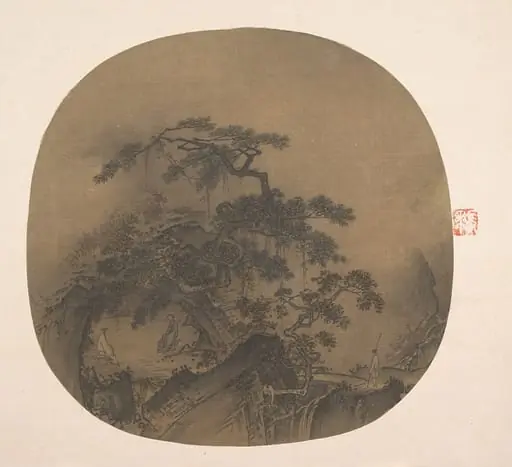 南宋 佚名 洞天論道圖 團扇|Conversation in a cave
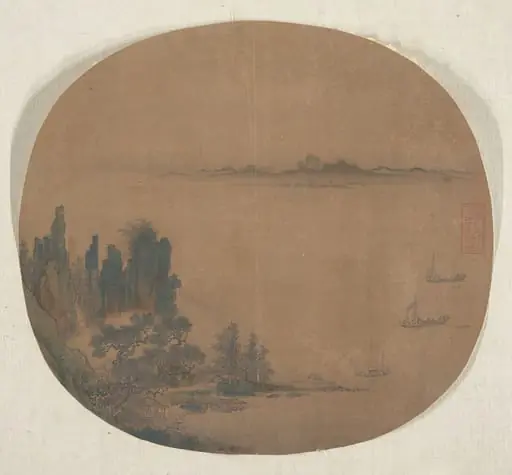 明 佚名 仿趙伯駒 春江行舟圖 團扇|Seascape
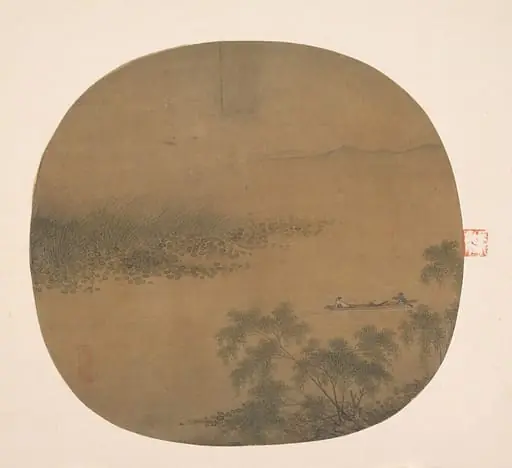 南宋 佚名 泛舟柳塘圖 團扇|Boating by a Willow Bank
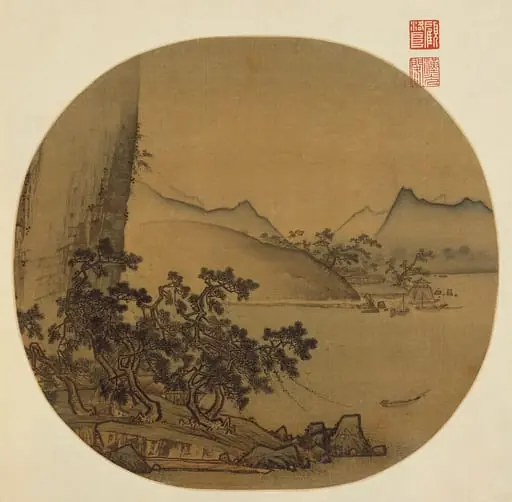 南宋 佚名 舊傳閻次于 風雨維舟圖 團扇|Boats Moored in Wind and Rain
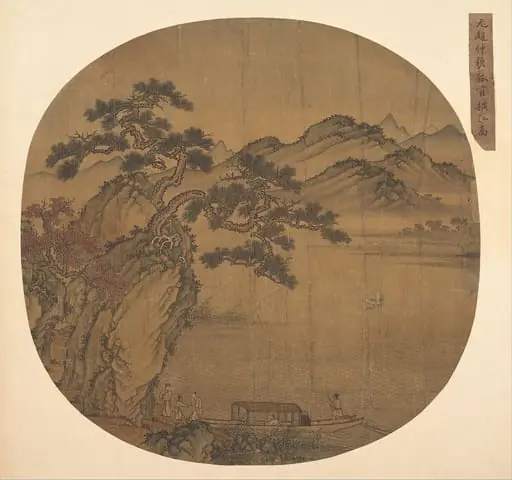 元/明 佚名 舊傳趙雍 倣盛懋 蘇軾後赤壁賦圖 團扇|元/明 佚名 後赤壁賦圖 扇|Illustration of Su Shi's "Second Ode on the Red Cliff"
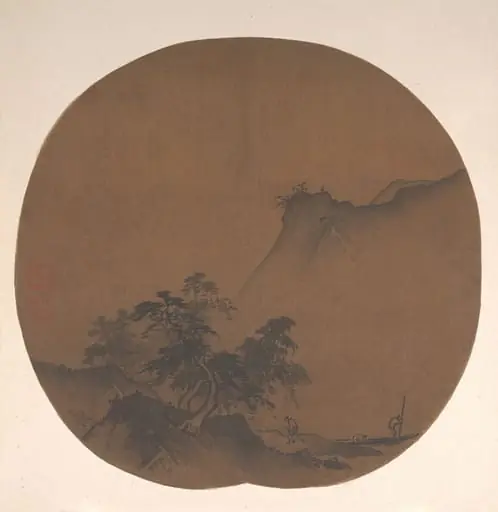 南宋 傳夏珪 澤畔疾風圖 團扇|Windswept lakeshore
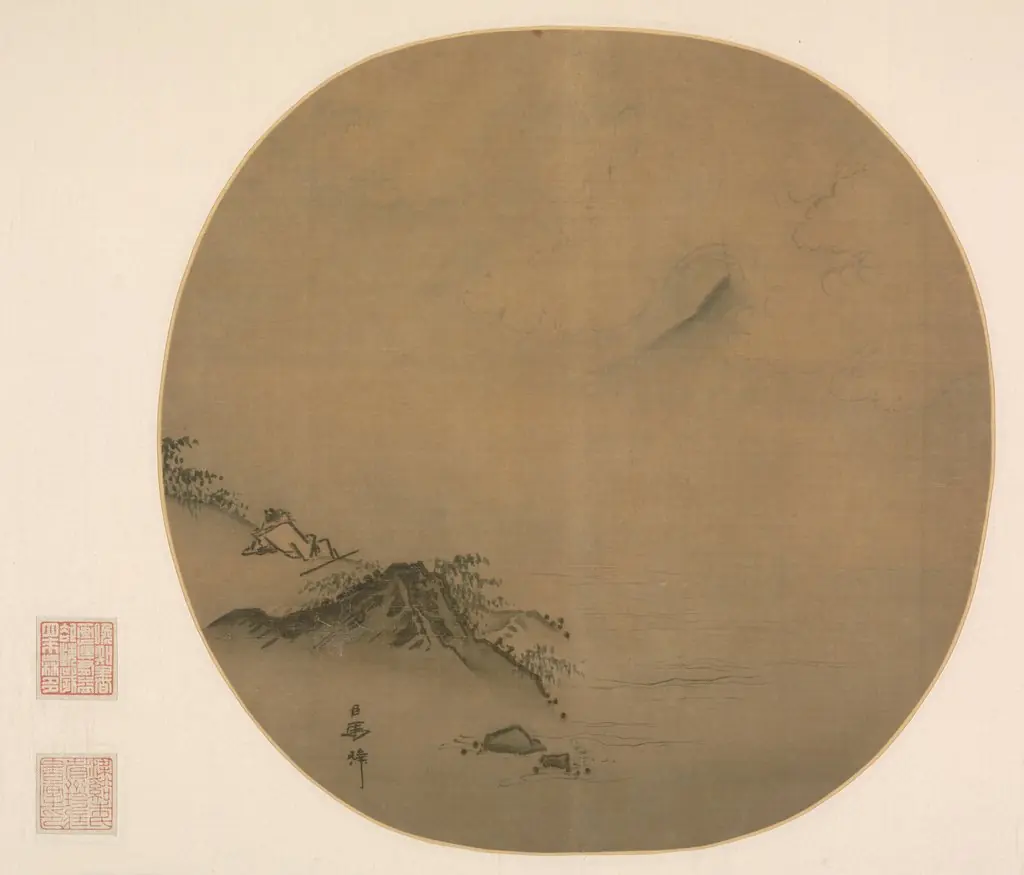 Scholar Reclining and Watching Rising Clouds; Poem by Wang Wei
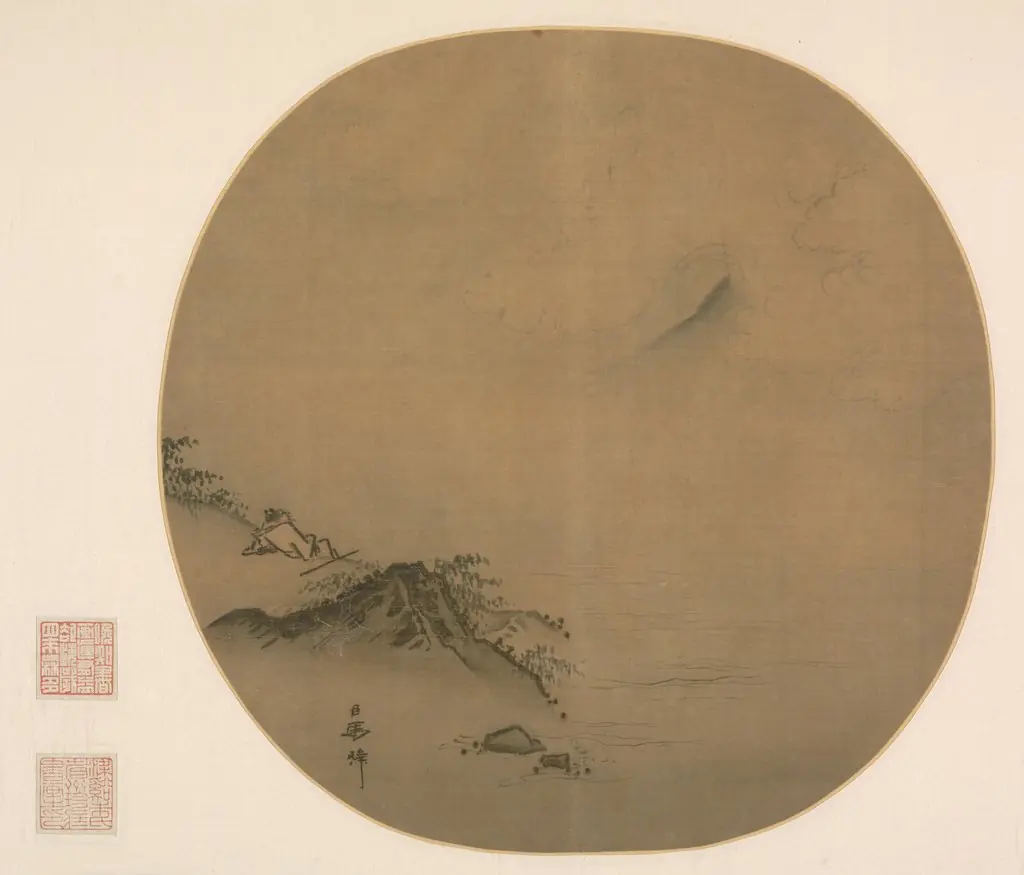 Scholar Reclining and Watching Rising Clouds, Poem by Wang Wei
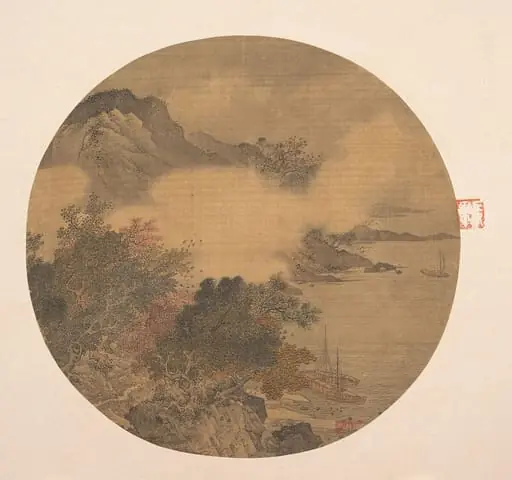 明 佚名 風雨艤舟圖 團扇|Misty Landscape
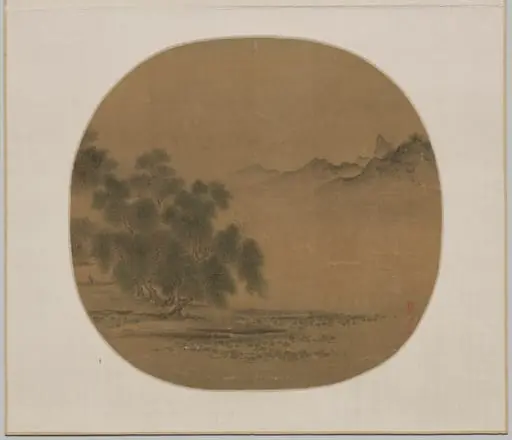 Willows
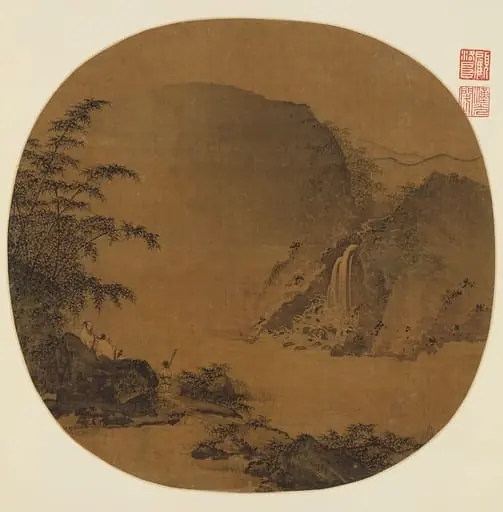 宋 佚名 觀瀑圖 團扇|Gentlemen gazing at a waterfall
 Full Sail on the Misty River