Artwork
Guy Little Theatrical Photograph
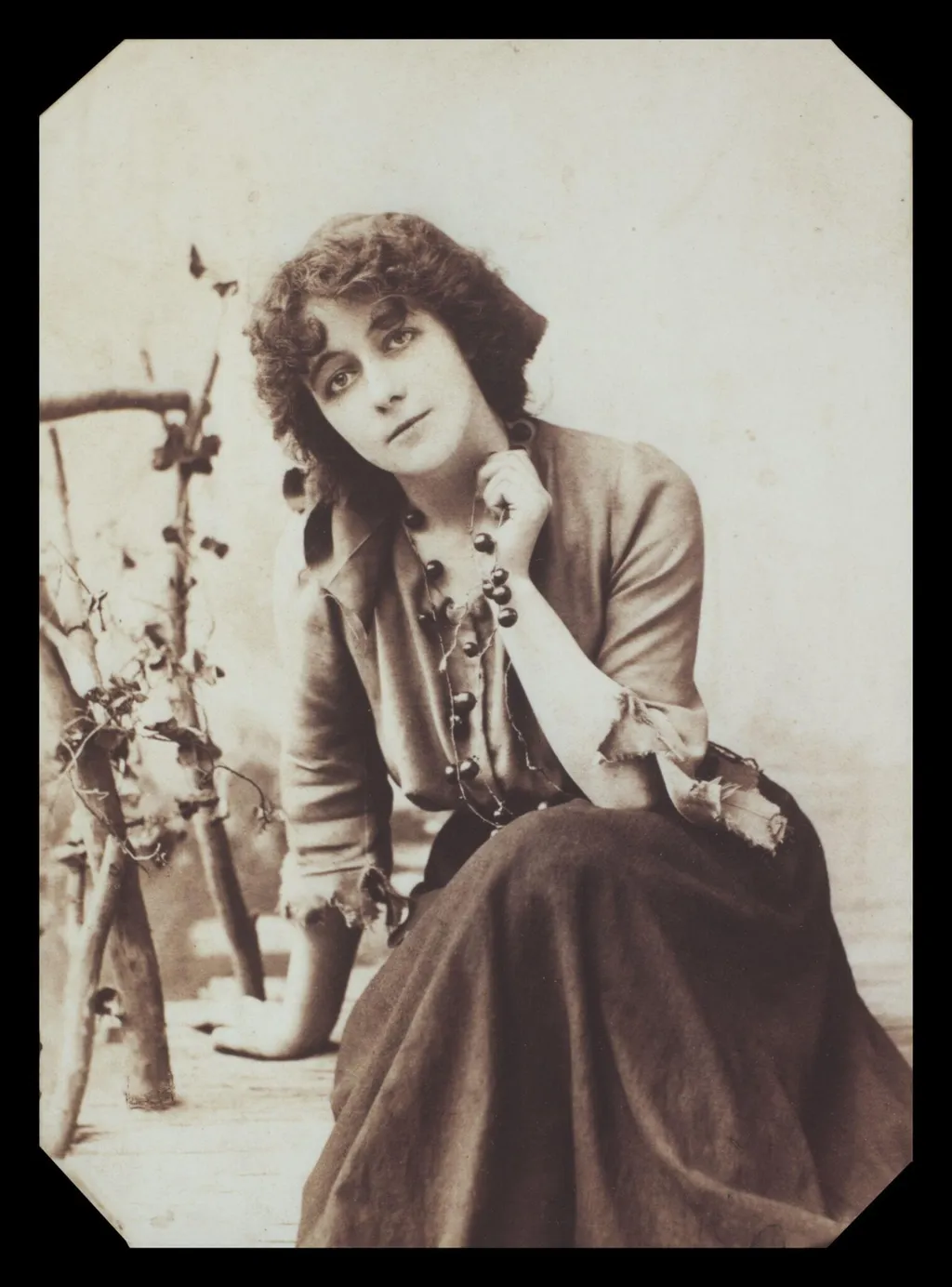
Guy Little Theatrical Photograph is a photographic photography by the Impressionist artist Unknown. It dates from 1897 and is held in the collection of the Victoria and Albert Museum.
About this work
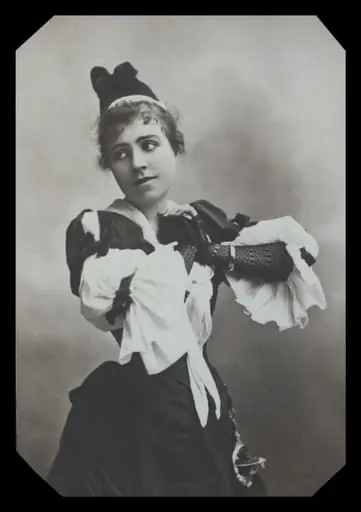
This photo shows an actress in costume as the Goose Girl. She wears a bonnet and holds a stick. The stage backdrop has a painted forest and sky.
Cecilia Loftus posed for this shot in 1897. The picture was sold as a small card called a “cartes de visite.” People collected these photos of stars like trading cards today.
Look up the Victoria and Albert Museum to see more theater photos.
Overview
This photograph depicts actress Cecilia Loftus in character as The Goose Girl from the play Children of the King, performed at the Royal Court Theatre in 1897. The image shows Loftus in costume, holding a stick and wearing a bonnet, set against a painted stage backdrop of a forest and sky.
Subject & Meaning
The subject, Cecilia Loftus, is captured in her theatrical role, reflecting the Victorian era's fascination with theatre and the emerging technology of photography. The photograph served as a 'carte de visite', a collectible item akin to modern trading cards, popular among fans and collectors.
Technique & Style
The photograph is an albumen print from a glass negative, mounted on stiff card backing, characteristic of 'cartes de visite' produced during the late 19th century. The composition and lighting are typical of studio theatrical portraits of the time, emphasizing the actor's character portrayal.
History & Provenance
Originally part of a 'carte de visite', this photograph was later removed from its backing and mounted in an album by collector Guy Tristram Little. Upon his death in 1953, the collection was bequeathed to the Victoria and Albert Museum (V&A), where it contributes to the theatre collections initiated by Mrs. Gabrielle Enthoven's bequest.
Context
Created in 1897, this photograph falls within the twilight of the 'carte de visite' era, which dominated the 1860s before being largely superseded by 'cabinet cards' in the late 1870s and eventually by postcards and direct studio portraits in the 1890s.
Artist & collection

 Domestic Scene
 Giacomo and Cardinal Marco, investing Andrea, Abbot of San Zeno, with his Benefice
 The Nymph of Fontainebleau
 Portrait of a Woman
 Madonna and Child with Saints in the Enclosed Garden
 Venus and Minerva
 Family Group of Four on Sofa
 Wall painting from Room H of the Villa of P. Fannius Synistor at Boscoreale