Artwork
Inner Courtyard
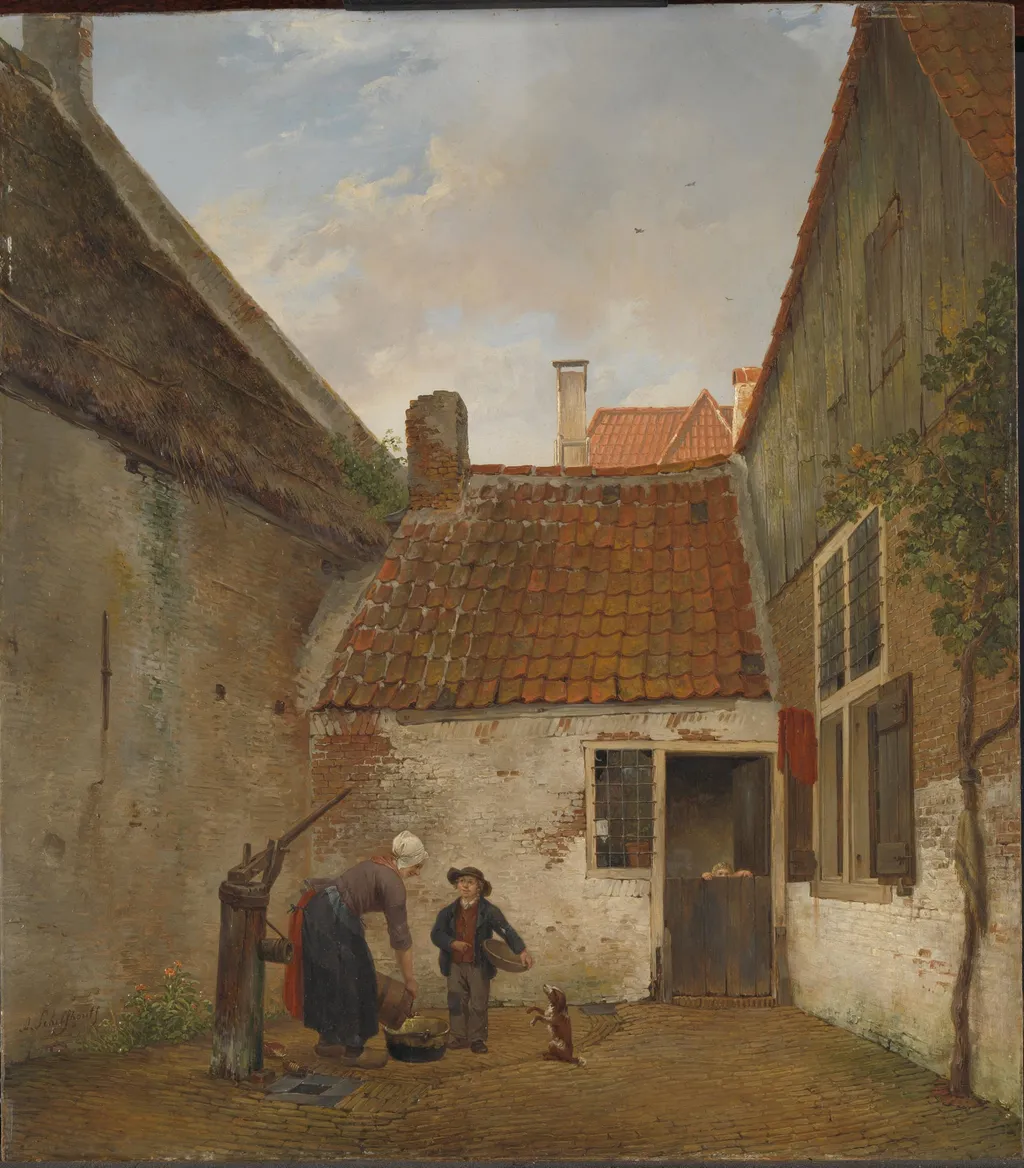
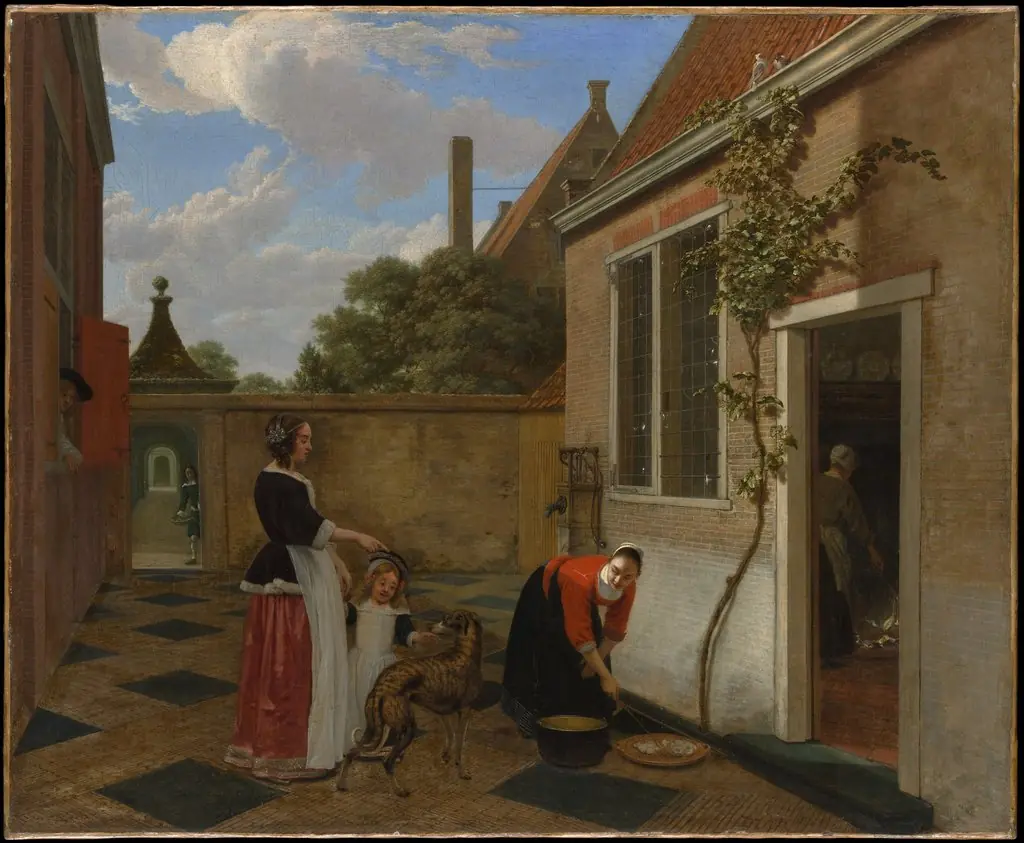
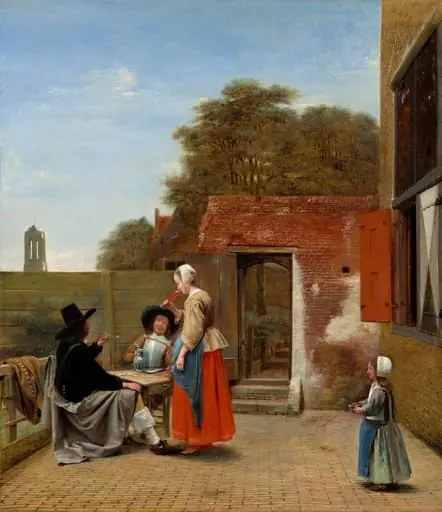
Inner Courtyard is an unspecified painting by the Biedermeier artist Unknown. It dates from 1825 and is held in the collection of the Rijksmuseum. This small oil painting depicts a quiet moment in a domestic courtyard, capturing everyday life in the Netherlands during the 17th century.
About this work
Overview
The scene lacks a known artist or title, yet its intimate atmosphere suggests it was painted by someone attuned to the rhythms of ordinary households.
This small oil painting depicts a quiet moment in a domestic courtyard, capturing everyday life in the Netherlands during the 17th century. A woman draws water from a rusted hand pump, while a boy stands beside her with a dog. A child observes from behind a low doorframe. The scene lacks a known artist or title, yet its intimate atmosphere suggests it was painted by someone attuned to the rhythms of ordinary households.
Subject & Meaning
The painting portrays routine domestic labor—filling water, tending to animals, and silent observation—without drama or moralizing. The figures are engaged in unremarkable acts, yet their presence feels authentic. The child peering over the half-door hints at curiosity or surveillance, while the dog’s relaxed posture suggests familiarity with the space. Together, they convey a sense of quiet continuity in daily life.
Technique & Style
The artist uses soft, naturalistic lighting to define forms, with the pump’s shadow falling precisely as if caught in morning sun. Brushwork is restrained; details like the dog’s ears are suggested rather than rendered, inviting the viewer to infer movement and sound. Colors are muted—ochres, grays, and earth tones—enhancing the scene’s realism and emotional stillness without embellishment.
History & Provenance
The painting’s origin remains undocumented; no signature, record of commission, or early ownership is known. It entered the Rijksmuseum’s collection as part of a broader grouping of Dutch genre scenes from the 1600s. Its anonymity reflects how many such works were once considered humble domestic records rather than art objects worthy of attribution.
Context
In 17th-century Dutch cities, inner courtyards were common in urban homes, serving as practical spaces for water, laundry, and animal care. Paintings like this emerged alongside a growing middle-class interest in scenes of domestic order and quiet virtue. Unlike grand historical or religious works, these images valued observation over narrative, reflecting societal shifts toward secular, everyday subjects.
Legacy
Though unsigned and uncelebrated in its time, the painting endures as an example of how Dutch artists found dignity in the mundane. Its quiet composition influenced later realist traditions, and its presence in the Rijksmuseum underscores the value placed on unadorned moments of daily life. It remains a quiet testament to the art of noticing.
Artist & collection

 Domestic Scene
 Giacomo and Cardinal Marco, investing Andrea, Abbot of San Zeno, with his Benefice
 The Nymph of Fontainebleau
 Portrait of a Woman
 Madonna and Child with Saints in the Enclosed Garden
 Venus and Minerva
 Family Group of Four on Sofa
 Wall painting from Room H of the Villa of P. Fannius Synistor at Boscoreale
 The Cottage Dooryard
 At my Neighbour
 Stadsgezicht
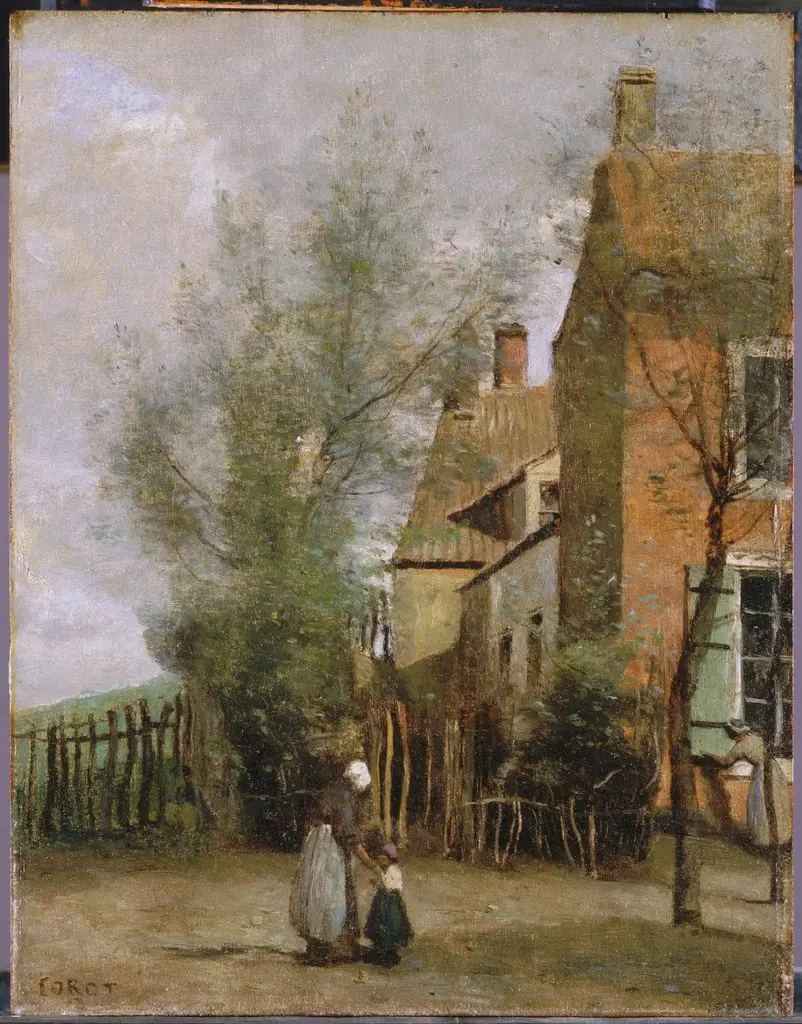 House in the Village of Saint-Martin, near Boulogne-sur-Mer
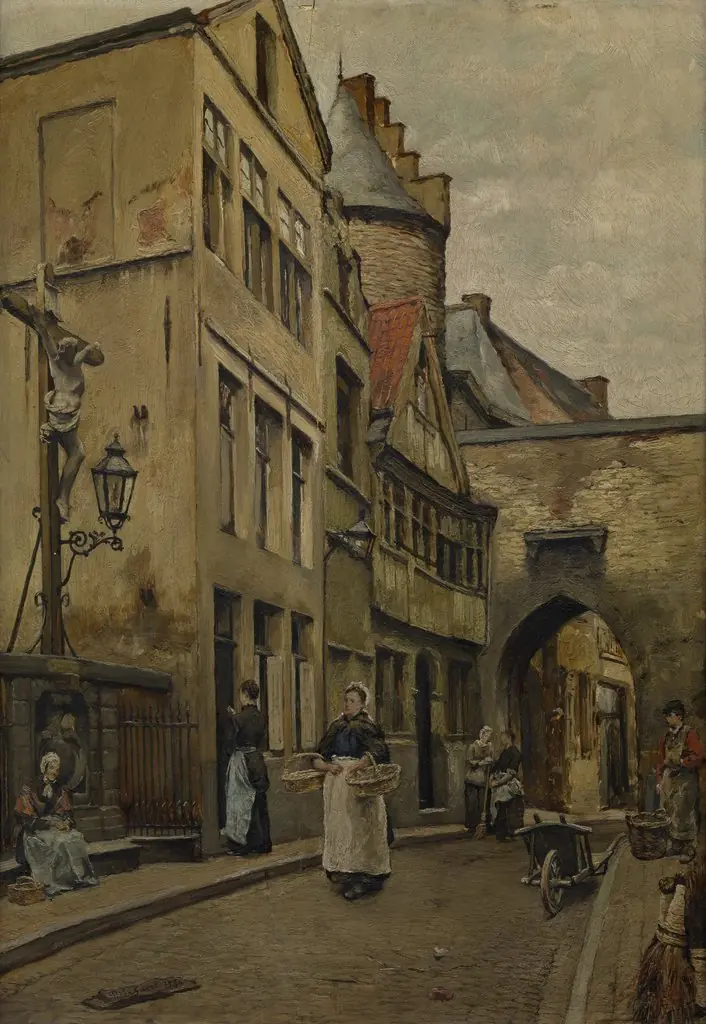 The Gevangenisbrug
 Amsterdam Street Scene
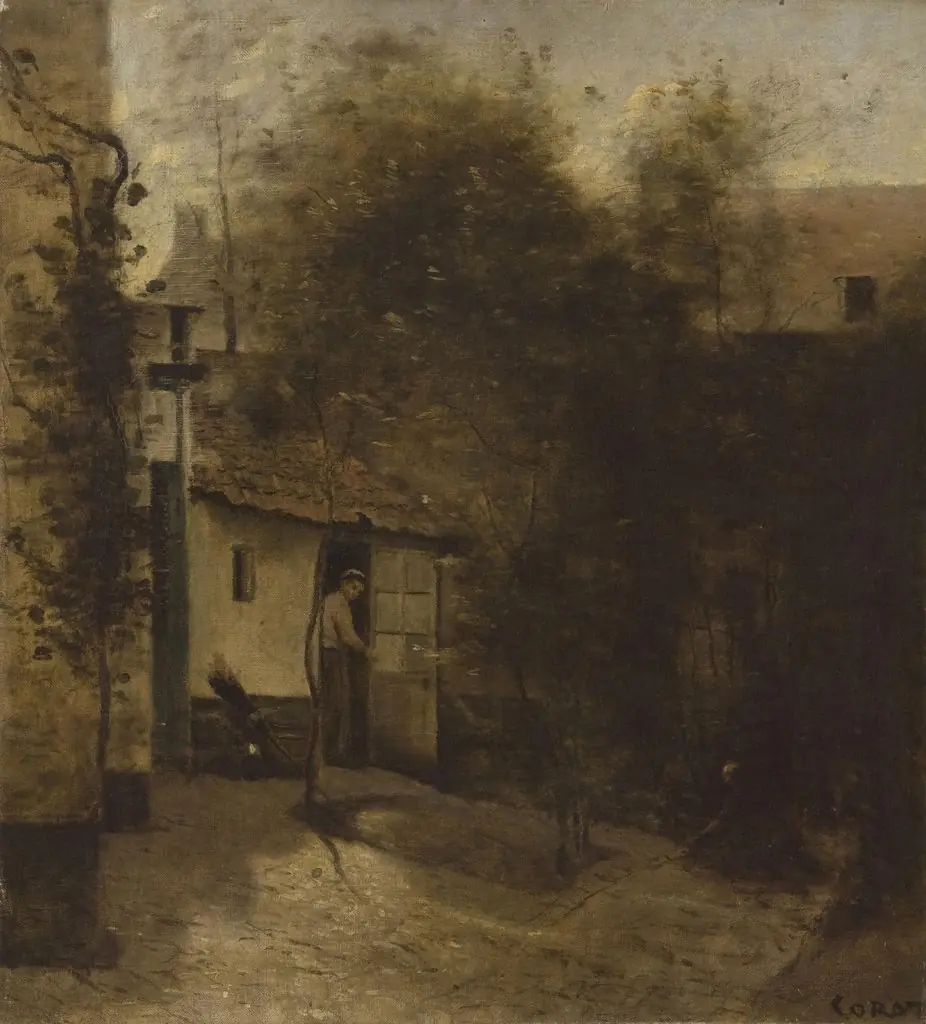 Douai, the House of Alfred Robaut
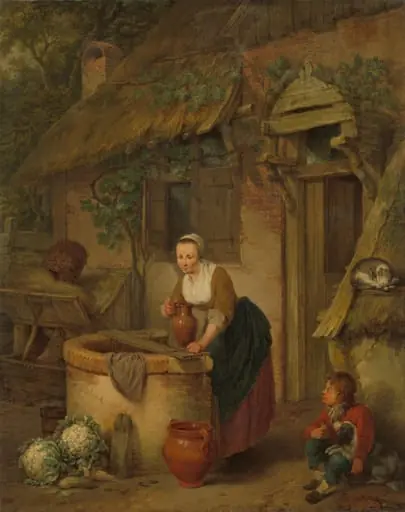 Woman Drawing Water from a Well
 Scene in a Courtyard
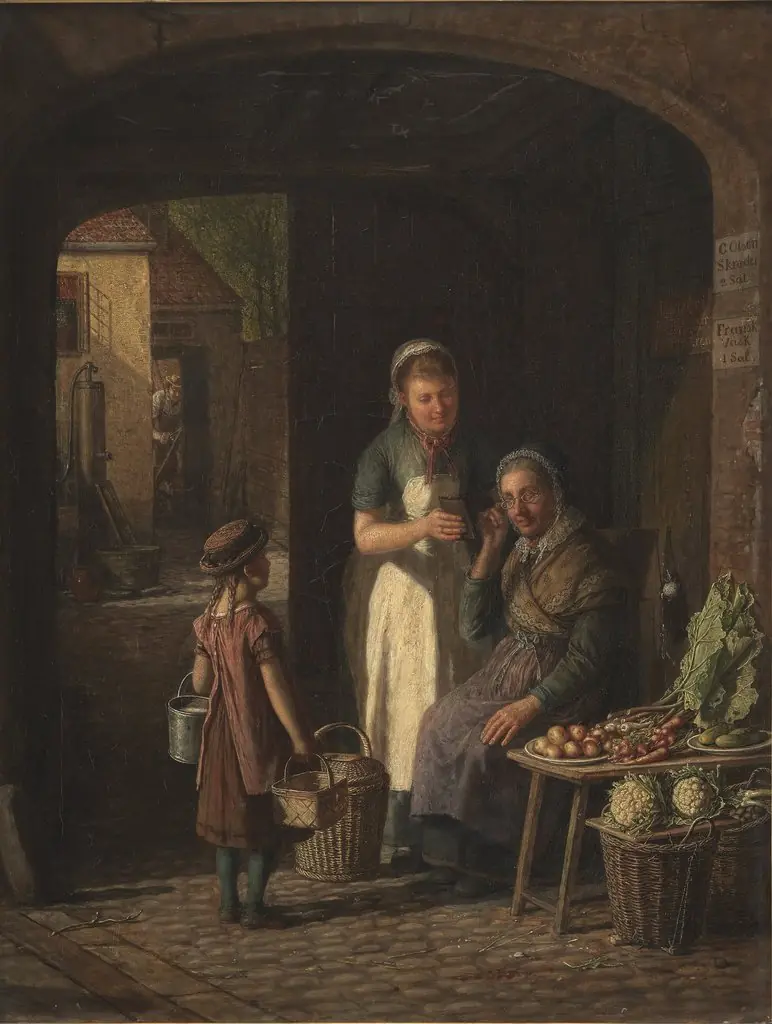 En tjenestepige viser sin kærestes portræt til en grønthandlerske
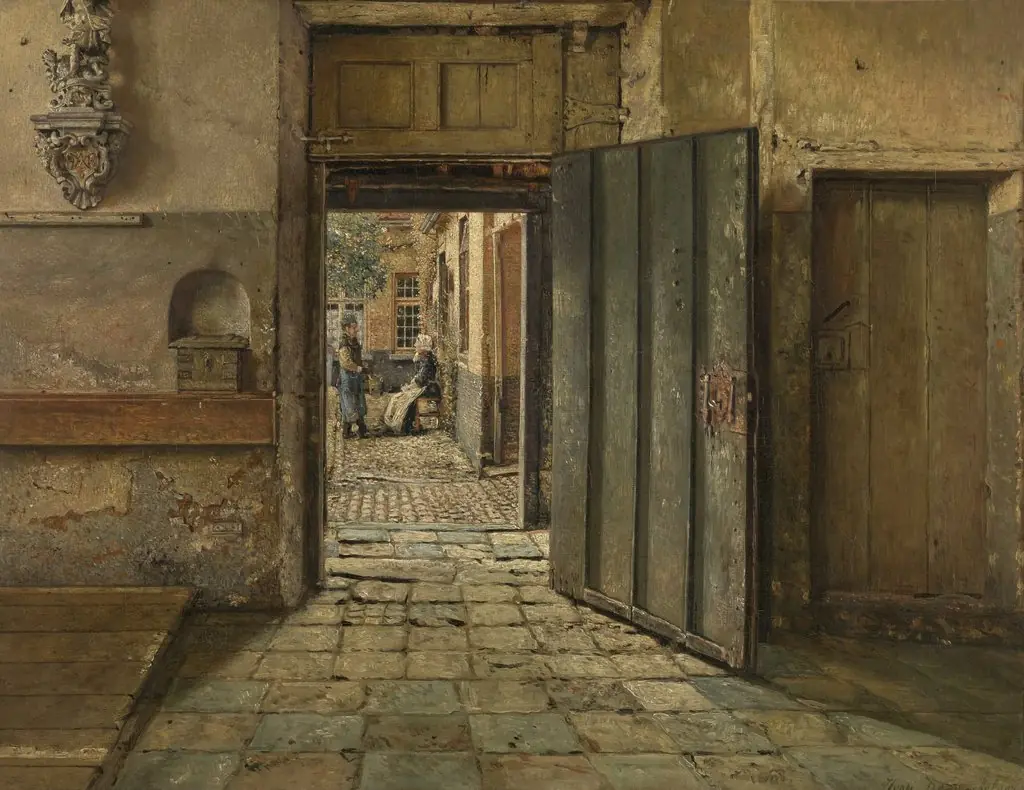 The Conversation
 A Dutch Courtyard