Artwork
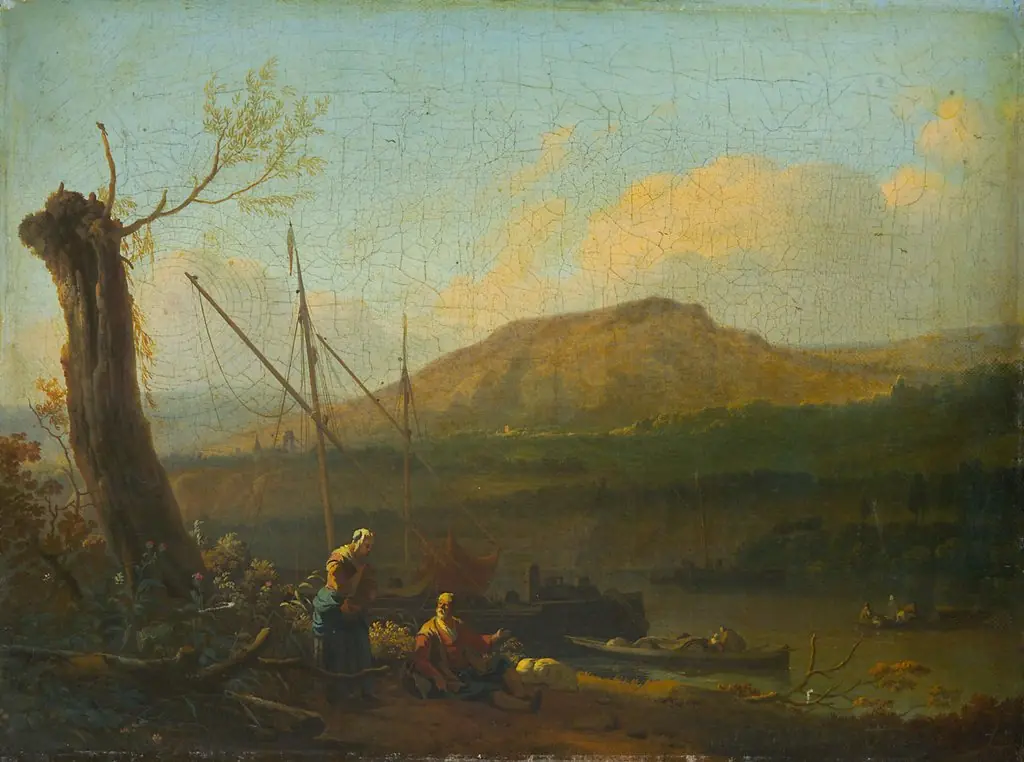
Italiaans rivierlandschap
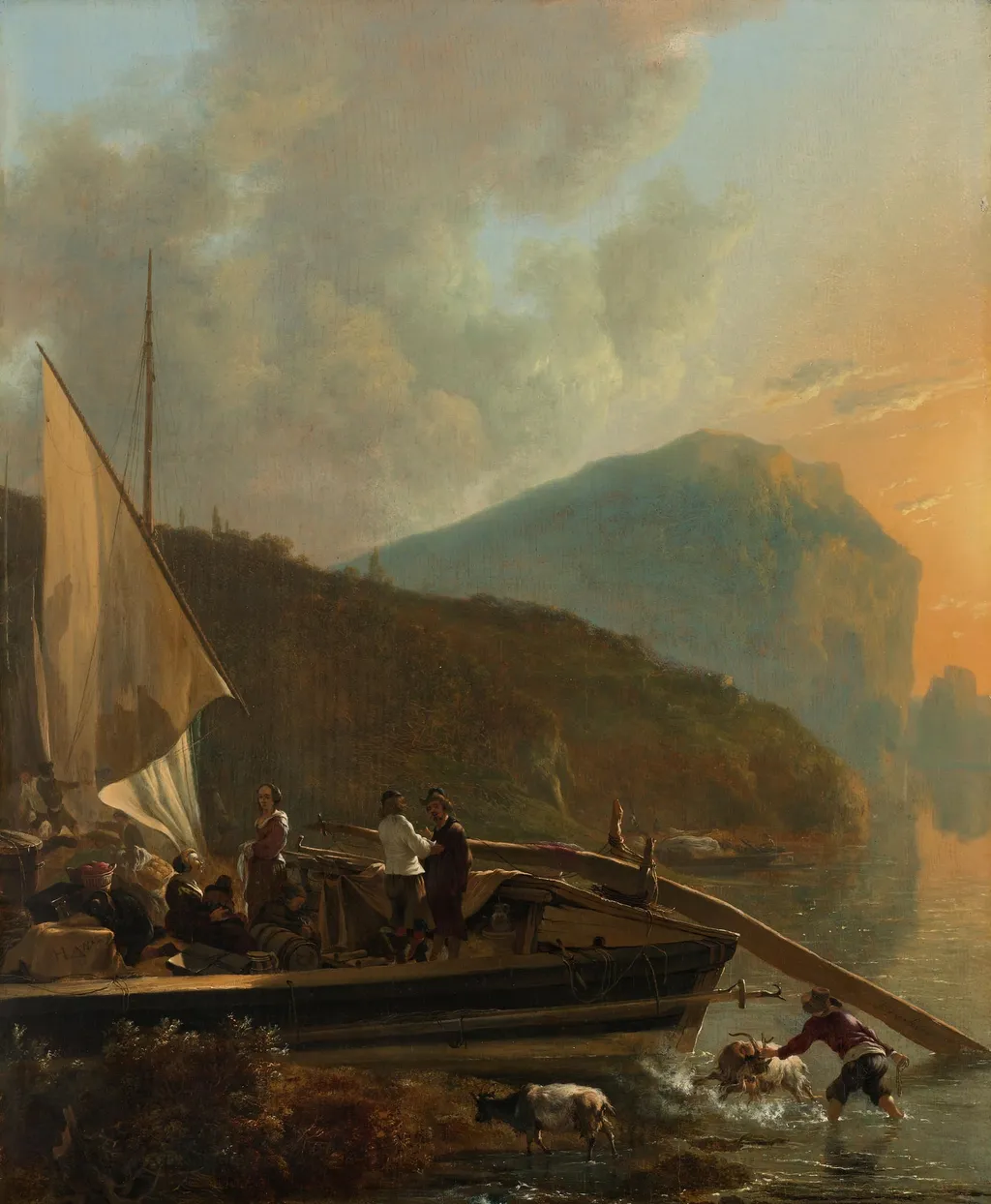
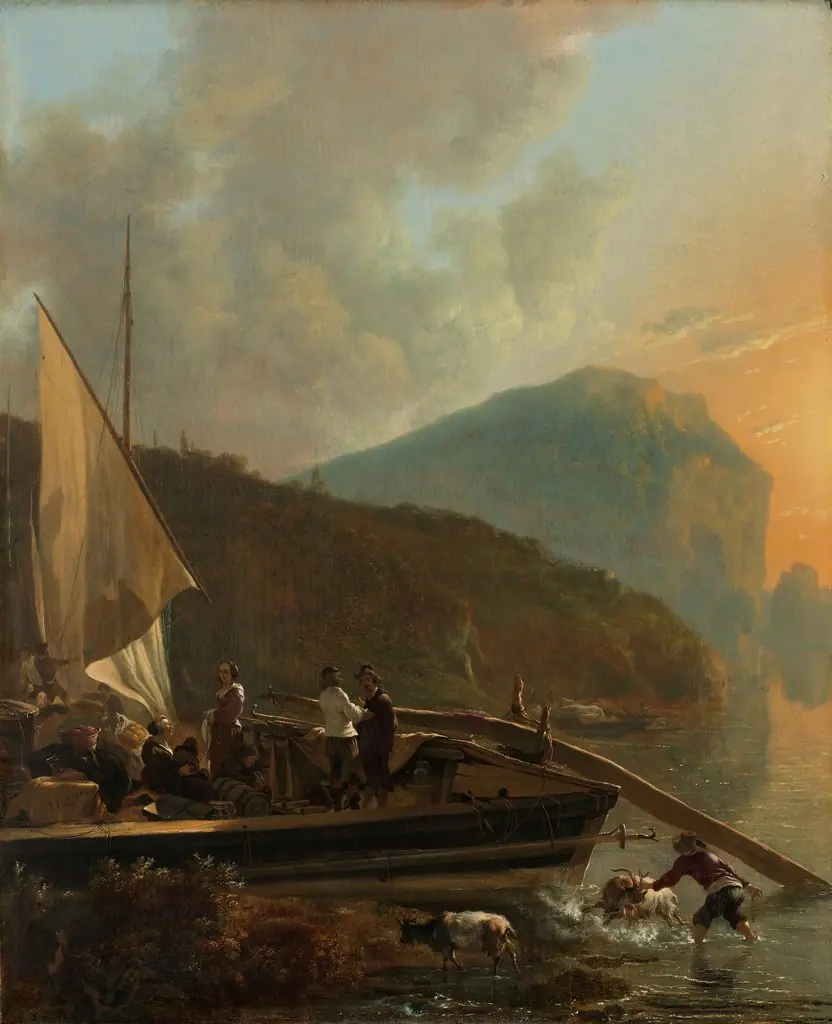
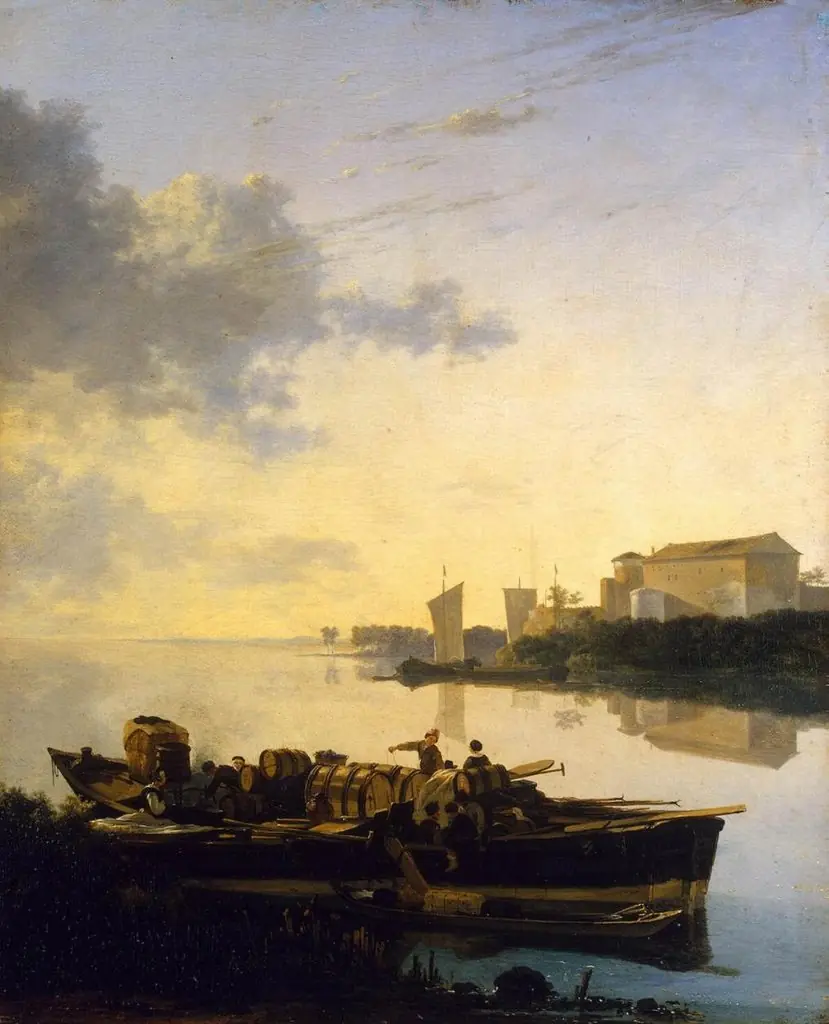
Italiaans rivierlandschap is an unspecified painting by the Early Baroque Italian artist Unknown. It dates from 1650 and is held in the collection of the Rijksmuseum.
About this work
Overview
The work, titled *Italiaans rivierlandschap*, is a landscape painting that portrays a serene river valley in Italy at the close of day. Soft, golden illumination suffuses the scene, while elongated shadows stretch across the water and hills, suggesting the transition from late afternoon to evening. The composition conveys a calm, warm atmosphere typical of a summer twilight.
Subject & Meaning
The image focuses on a gently rolling countryside, punctuated by a few scattered trees and a tranquil river that mirrors the fading light. The emphasis on quietude and the subtle play of light and shadow evokes a contemplative mood, inviting viewers to experience the peacefulness of an Italian summer evening.
Technique & Style
The painting employs a muted palette dominated by warm ochres and soft blues, with careful modulation of tone to render the luminous, Mediterranean glow. Broad, fluid brushwork defines the hills and foliage, while finer strokes delineate the reflective surface of the water and the lengthening shadows, reflecting a style associated with Dutch artists who painted Italian scenery after travel.
History & Provenance
After returning to the Netherlands from an extended stay in Italy, the Dutch painter Adam Pijnacker became known for works that captured southern landscapes bathed in golden light. Although this piece has been linked to Pijnacker because of its thematic and stylistic affinities, its attribution remains uncertain, and the artist’s identity has not been definitively confirmed.
Artist & collection

 Domestic Scene
 Giacomo and Cardinal Marco, investing Andrea, Abbot of San Zeno, with his Benefice
 The Nymph of Fontainebleau
 Portrait of a Woman
 Madonna and Child with Saints in the Enclosed Garden
 Venus and Minerva
 Family Group of Four on Sofa
 Wall painting from Room H of the Villa of P. Fannius Synistor at Boscoreale