Artwork
Italian Landscape
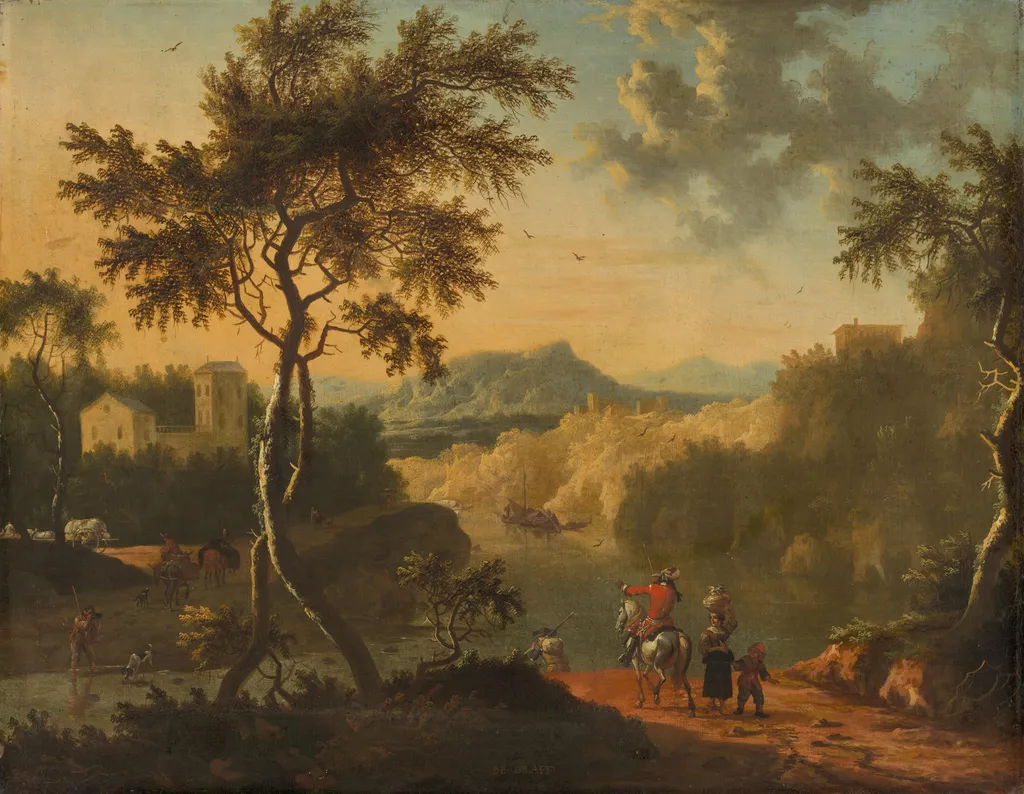
Italian Landscape is an unspecified painting by the Rococo painting artist Unknown. It dates from 1700 and is held in the collection of the Rijksmuseum.
About this work
Overview
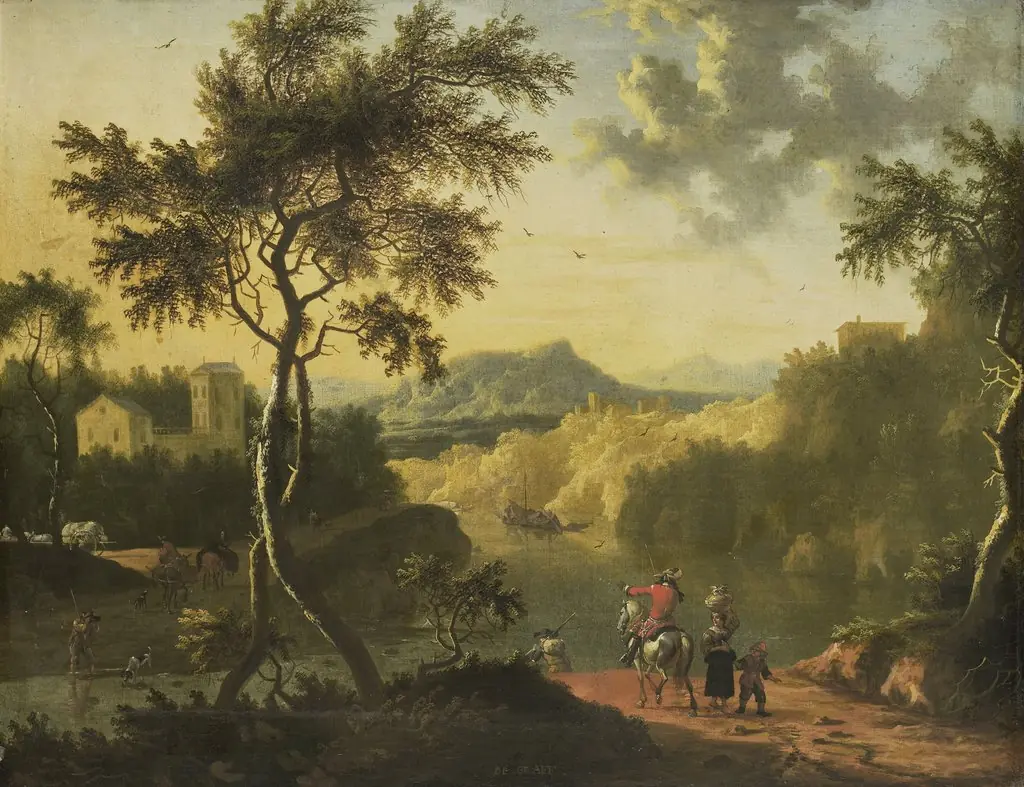
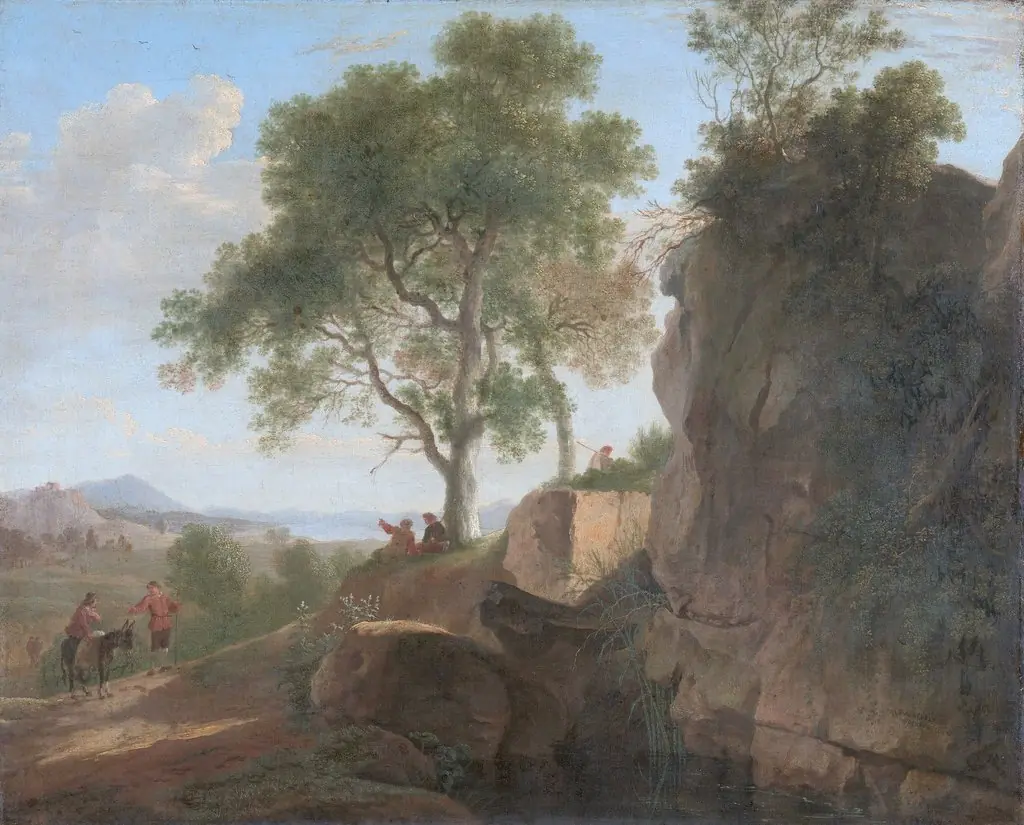
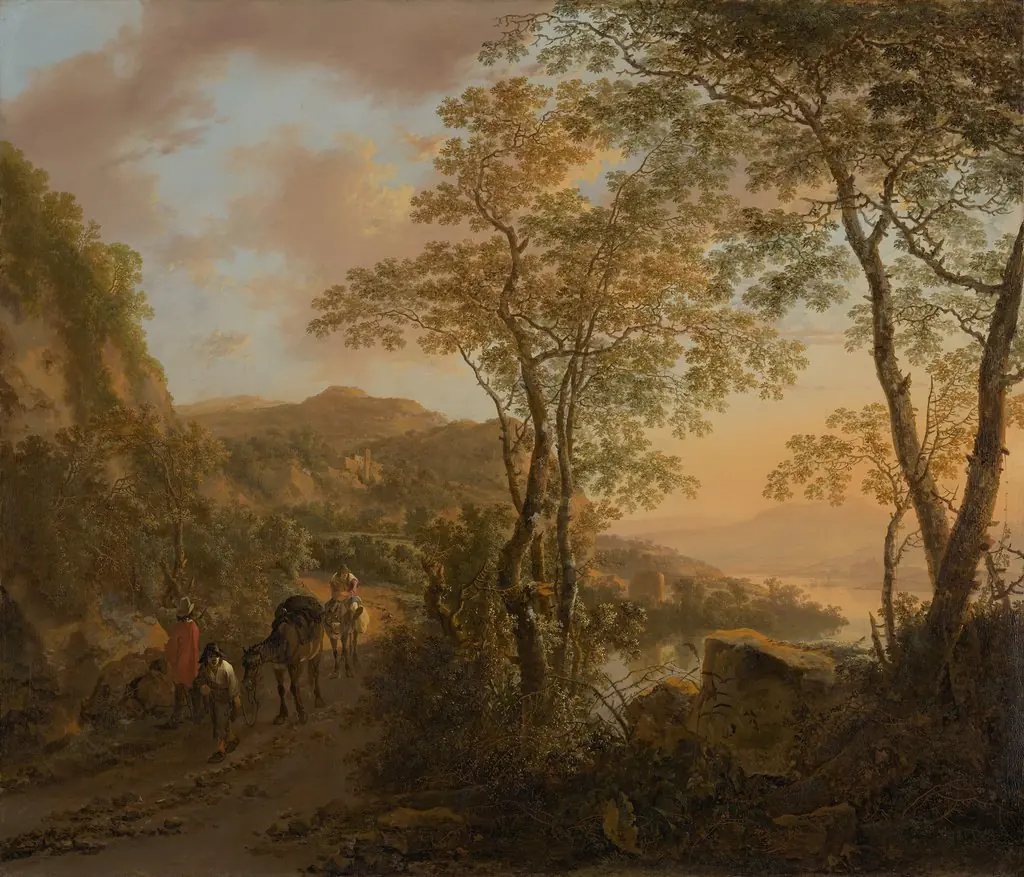
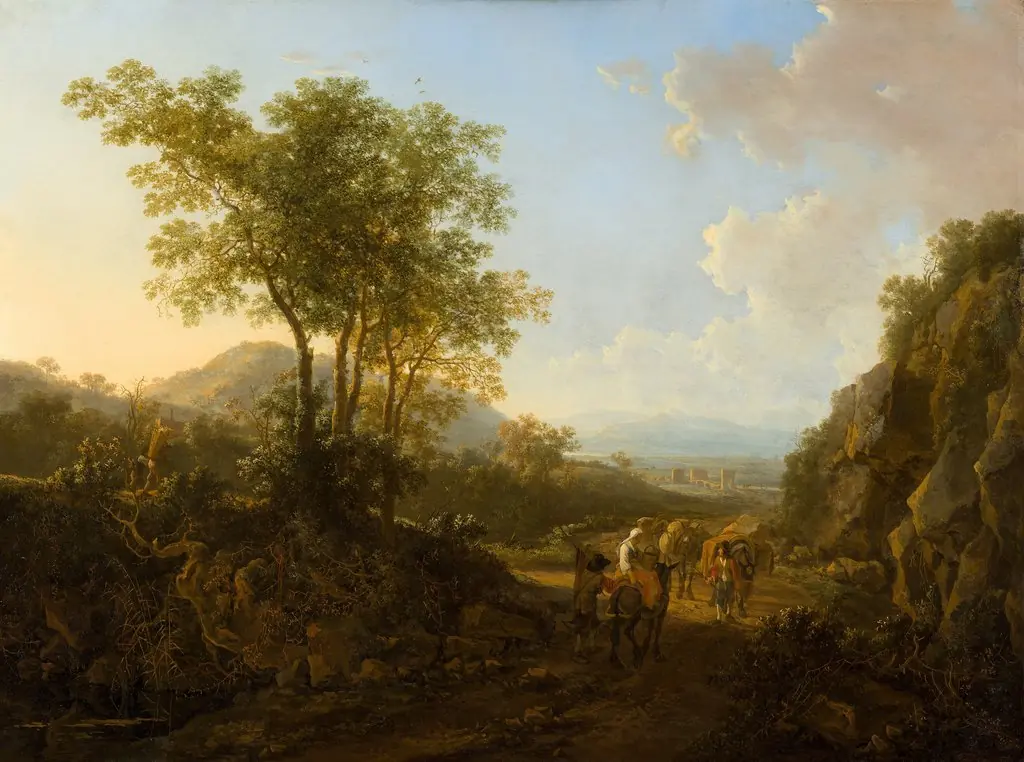
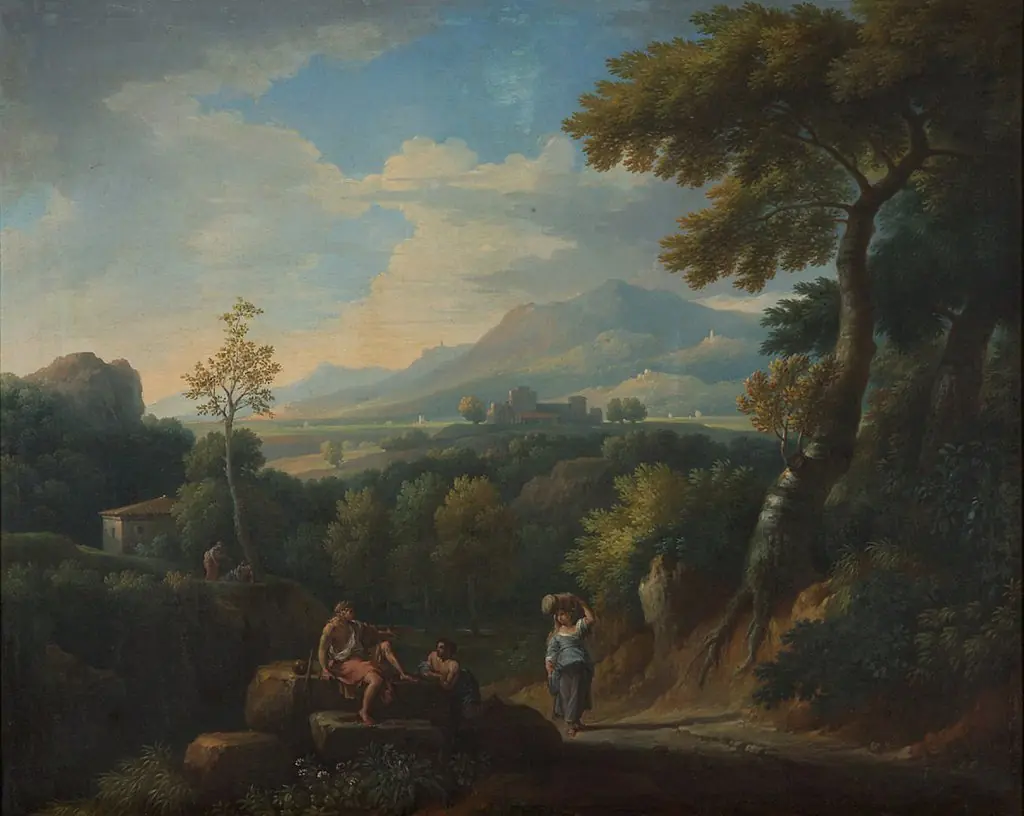
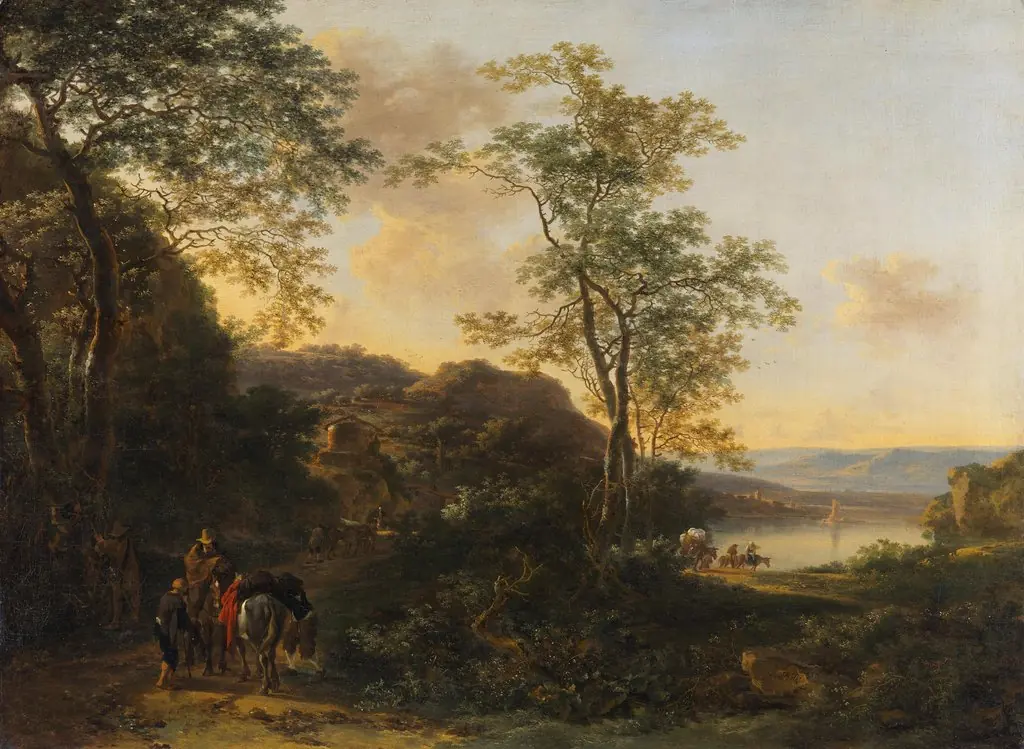
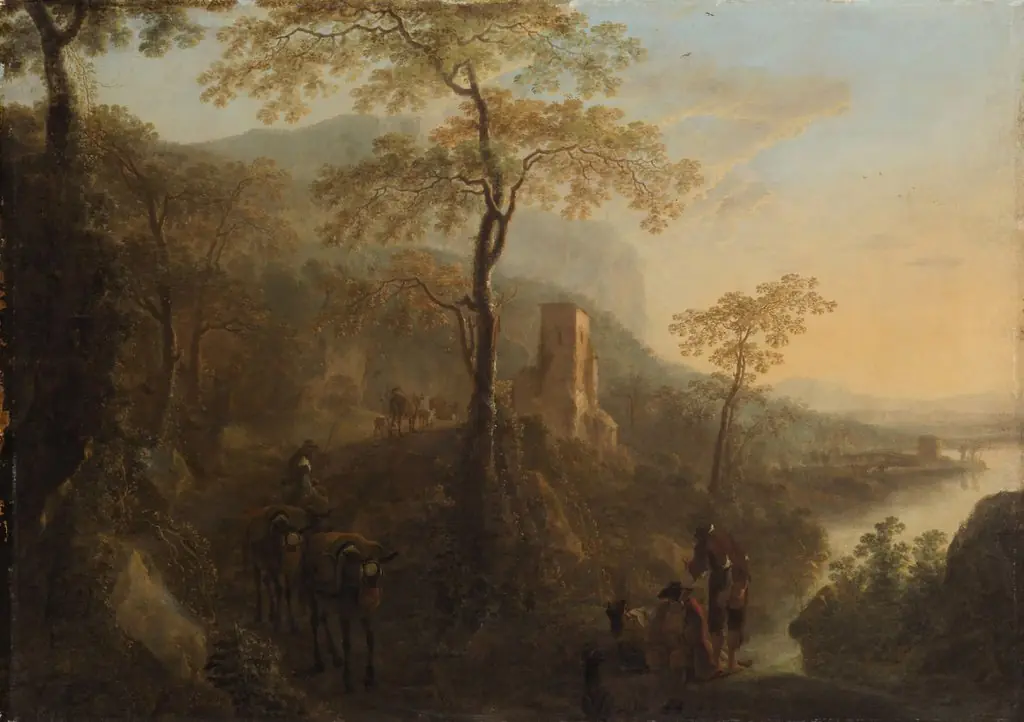
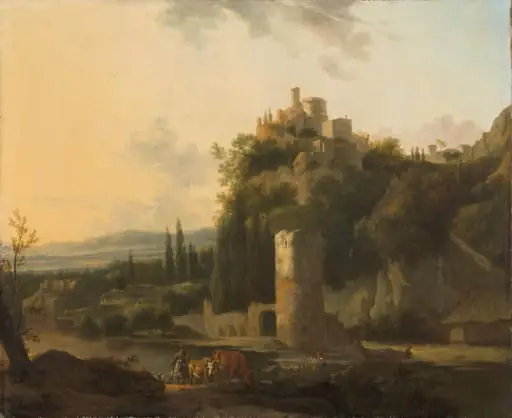
The work depicts a winding dirt track that follows a riverbank, populated by a small group of travelers: pedestrians, a rider on horseback, and a cart drawn by animals. The composition is anchored by the gentle curve of the road and the reflective water, creating a tranquil, pastoral scene typical of late‑seventeenth‑century Italian landscape painting.
Subject & Meaning
Figures in the painting perform everyday gestures—a man tips his hat, a dog scampers beside the cart—infusing the otherwise generic vista with a sense of movement and human presence. These modest details suggest a narrative of travel and commerce, emphasizing the road as a conduit for exchange between people and places.
Technique & Style
Executed with rapid brushwork characteristic of workshop production, the piece employs a muted palette of earth tones and soft blues to render the countryside.
Executed with rapid brushwork characteristic of workshop production, the piece employs a muted palette of earth tones and soft blues to render the countryside. Atmospheric perspective is achieved through progressively lighter tones in the background, while the foreground figures are rendered with finer detail, highlighting the artist’s focus on narrative elements within a broadly composed landscape.
History & Provenance
Created in Italy during the late 1600s, the painting was intended for the burgeoning market of Grand Tour travelers seeking visual souvenirs of their journeys. Produced in a workshop environment, the artist’s identity remains unknown, as many such works were signed only with generic workshop marks or left unsigned.
Context
The image belongs to a genre of Italianate landscapes that catered to Northern European visitors, offering idealized yet recognizable scenes of the Italian countryside. Comparable works by Dutch painters of the same period often introduced more personalized interpretations, contrasting with the straightforward, market‑driven approach evident here.
Artist & collection

 Domestic Scene
 Giacomo and Cardinal Marco, investing Andrea, Abbot of San Zeno, with his Benefice
 The Nymph of Fontainebleau
 Portrait of a Woman
 Madonna and Child with Saints in the Enclosed Garden
 Venus and Minerva
 Family Group of Four on Sofa
 Wall painting from Room H of the Villa of P. Fannius Synistor at Boscoreale