Artwork
Jenny Lind, the Swedish Nightingale
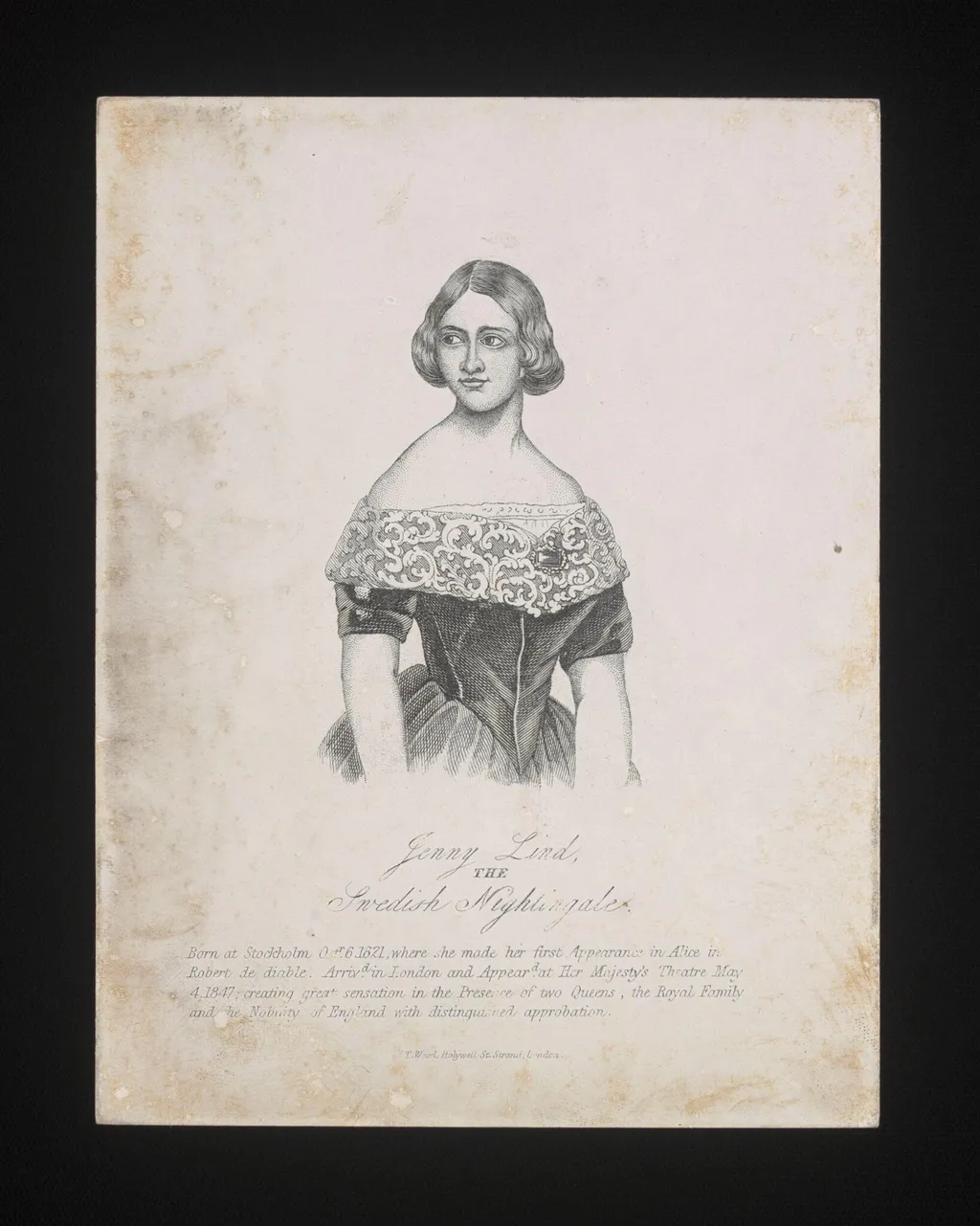
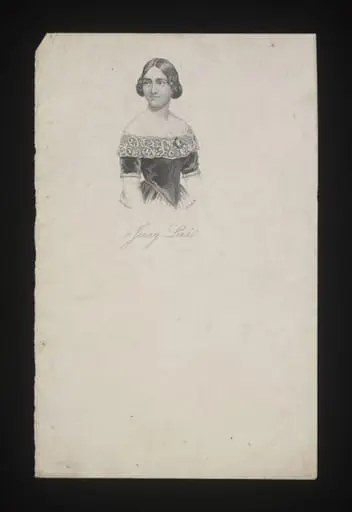
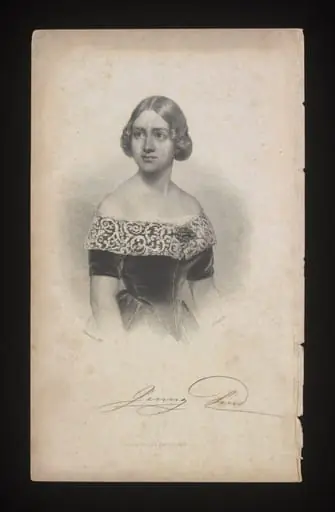
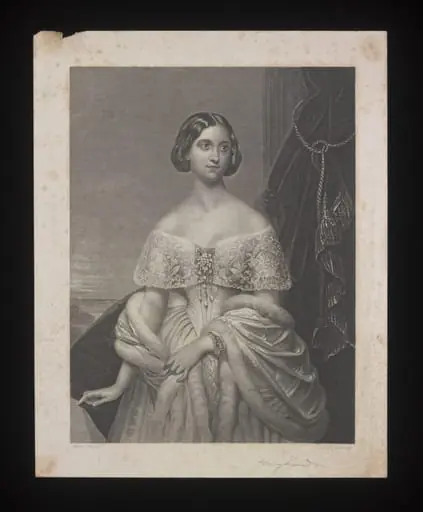
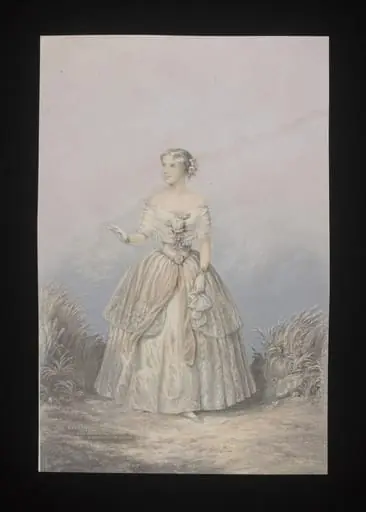
Jenny Lind, the Swedish Nightingale is a print by Unknown. It dates from 1850 and is held in the collection of the Victoria and Albert Museum. A mid-19th-century print of the Swedish soprano Jenny Lind, produced by London publisher J.
About this work
Overview
Its presence in a curated collection indicates its role as a cultural artifact tied to Victorian-era musical fandom.
A mid-19th-century print of the Swedish soprano Jenny Lind, produced by London publisher J. T. Wood, resides in the Harry Beard Collection. The work reflects the era’s popular demand for celebrity imagery, capturing Lind’s public persona through a standardized reproductive format rather than an original painting. Its presence in a curated collection indicates its role as a cultural artifact tied to Victorian-era musical fandom.
Subject & Meaning
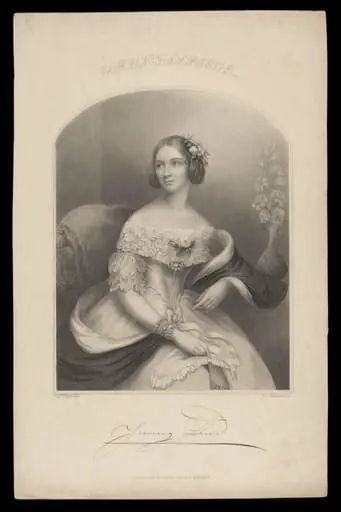
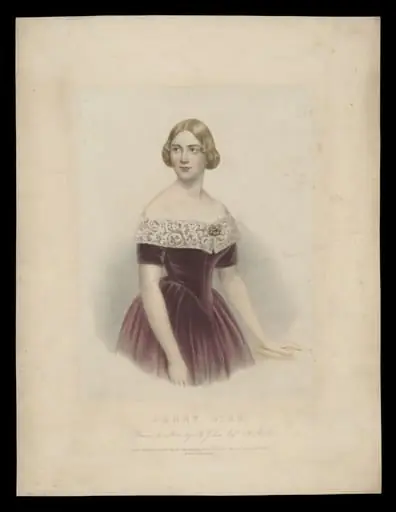
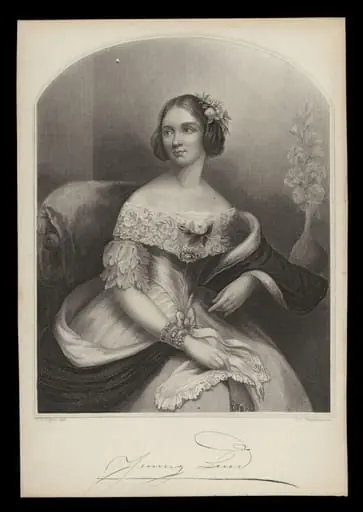
Jenny Lind, celebrated as the 'Swedish Nightingale,' was renowned for her vocal purity and charitable concert tours. This print portrays her in elegant attire with a serene expression, emphasizing her grace and moral stature rather than theatrical flair. The image served to reinforce her reputation as a refined, virtuous artist, aligning her public image with Victorian ideals of femininity and artistic integrity.
Technique & Style
The print employs line engraving or lithographic methods typical of commercial portraiture in mid-century Britain. Details are rendered with precision but lack individualized brushwork, prioritizing clarity and reproducibility. The composition is formal and centered, with minimal background detail, directing focus to Lind’s poised countenance and attire, consistent with mass-produced celebrity portraits of the time.
History & Provenance
Produced by J. T. Wood, a known London publisher of theatrical and musical prints, the work circulated widely among middle-class households. It entered the Harry Beard Collection, a significant assemblage of theatrical memorabilia later acquired by the Victoria and Albert Museum. Its preservation there underscores its value as documentation of 19th-century popular culture and performance history.
Context
During the 1850s, Lind’s tours in Britain and America generated unprecedented public enthusiasm, fueled by promotional campaigns and media coverage. Prints like this one were affordable souvenirs, allowing fans to own a visual token of their idol. Such imagery was part of a broader trend in which music and theater figures became subjects of mass-produced visual culture, bridging elite art and popular taste.
Legacy
The print survives as evidence of how celebrity was constructed and consumed before photography dominated visual culture. Its inclusion in institutional collections highlights its role in preserving the social history of performance. While Lind’s fame has faded from mainstream memory, such artifacts continue to inform scholarly understanding of 19th-century audience engagement and media practices.
Artist & collection

 Domestic Scene
 Giacomo and Cardinal Marco, investing Andrea, Abbot of San Zeno, with his Benefice
 The Nymph of Fontainebleau
 Portrait of a Woman
 Madonna and Child with Saints in the Enclosed Garden
 Venus and Minerva
 Family Group of Four on Sofa
 Wall painting from Room H of the Villa of P. Fannius Synistor at Boscoreale