Artwork
Josoda, Krishna and Balarama
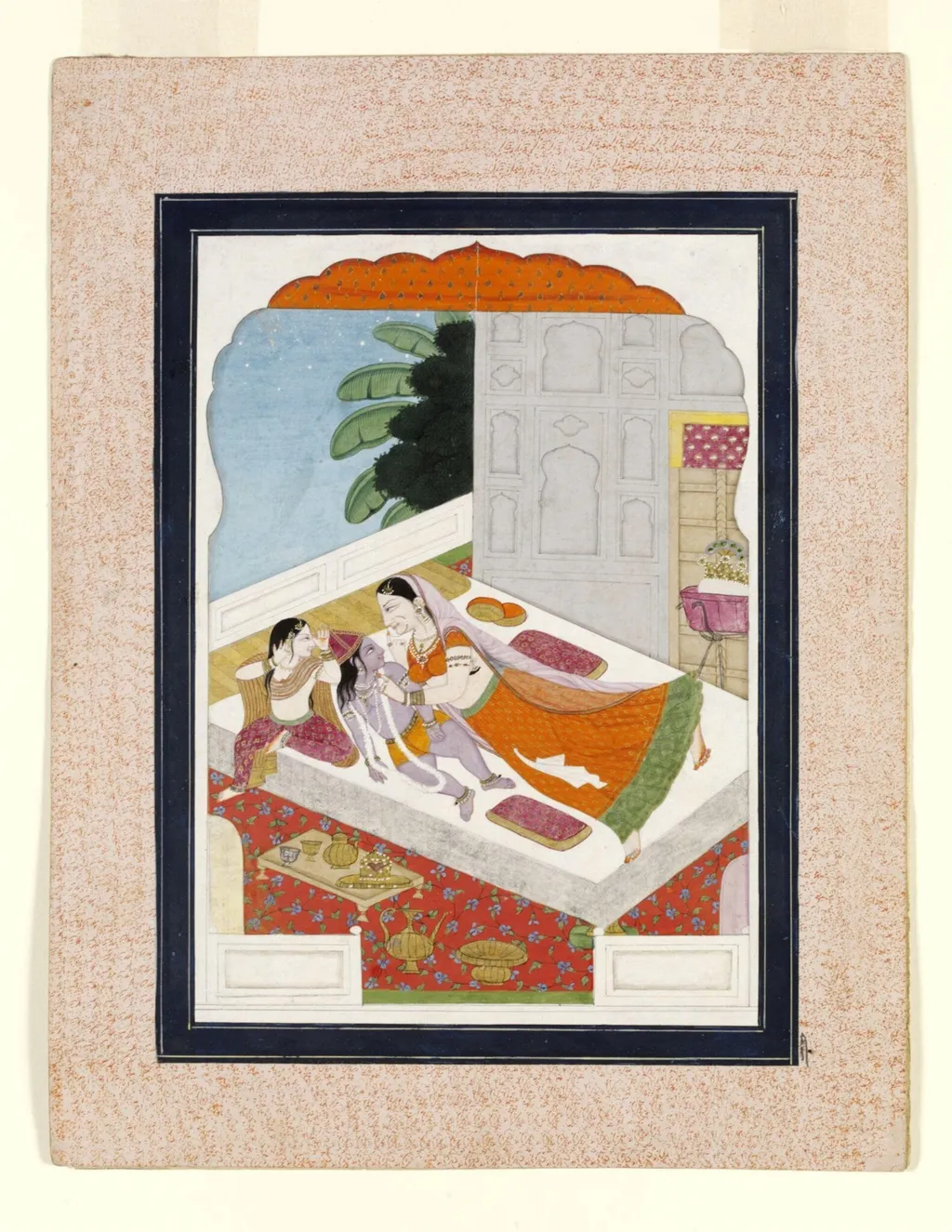
Josoda, Krishna and Balarama is a paint painting by the Mughal Painting artist Unknown. It dates from 1820 and is held in the collection of the Victoria and Albert Museum. This opaque watercolour on paper, dated around 1820, portrays a domestic moment involving three figures: a woman, a man, and a child.
About this work
Overview
This opaque watercolour on paper, dated around 1820, portrays a domestic moment involving three figures: a woman, a man, and a child.
This opaque watercolour on paper, dated around 1820, portrays a domestic moment involving three figures: a woman, a man, and a child. The scene is rendered with delicate brushwork and muted, harmonious tones, suggesting a quiet, intimate setting. Though labeled as depicting Yashoda, Krishna, and Balarama, the figures are presented without overt divine symbolism, emphasizing instead a tender, everyday atmosphere.
Subject & Meaning
The figures are traditionally identified as Yashoda, Krishna, and Balarama, figures from Hindu devotional lore. Yet the painting avoids mythological grandeur, focusing instead on familial tenderness. The seated arrangement, shared space, and simple offerings suggest a nurturing household, aligning the divine with the domestic. This quiet humanity may reflect regional devotional practices that emphasized closeness over spectacle.
Technique & Style
Executed in opaque watercolour on paper, the work employs fine, controlled lines and flat areas of colour with minimal shading. The palette is restrained—soft oranges, greens, yellows, and purples—creating visual harmony. Background elements like the doorway and trees are rendered with suggestive economy, reinforcing a sense of calm. The style reflects Pahari or early Rajasthani miniature traditions, prioritizing clarity and decorative detail over illusionistic depth.
History & Provenance
The painting originates from northern India, likely produced in a court or temple-associated atelier during the early 19th century. Its preservation in good condition suggests it was carefully maintained, possibly within a private or religious collection. No documented ownership prior to the 20th century is known, though its stylistic features align with works from the Kangra or Basohli schools of painting.
Context
Produced during a period when regional painting traditions flourished under declining Mughal influence, this work reflects a shift toward intimate, emotionally resonant subjects. Devotional art of the time increasingly favored personal connection over ritual grandeur. The inclusion of domestic objects—food, textiles, a doorway—mirrors broader trends in Indian painting that grounded sacred narratives in familiar, lived environments.
Legacy
This painting contributes to the understanding of how Hindu devotional themes were adapted into subtle, human-centered compositions during the colonial era. It stands as an example of how spiritual narratives were rendered accessible through domestic realism, influencing later regional artists who sought to balance tradition with naturalism. Its quiet composition continues to inform contemporary readings of Indian miniature painting beyond mythological spectacle.
Artist & collection

 Domestic Scene
 Giacomo and Cardinal Marco, investing Andrea, Abbot of San Zeno, with his Benefice
 The Nymph of Fontainebleau
 Portrait of a Woman
 Madonna and Child with Saints in the Enclosed Garden
 Venus and Minerva
 Family Group of Four on Sofa
 Wall painting from Room H of the Villa of P. Fannius Synistor at Boscoreale
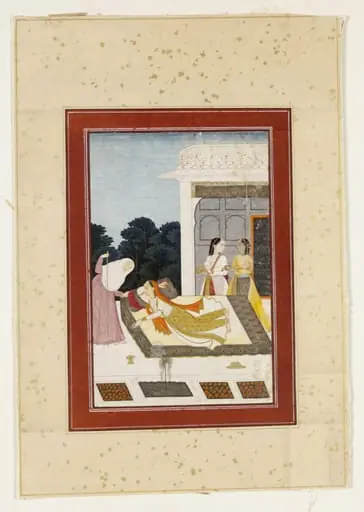 Prositapatika Nayika
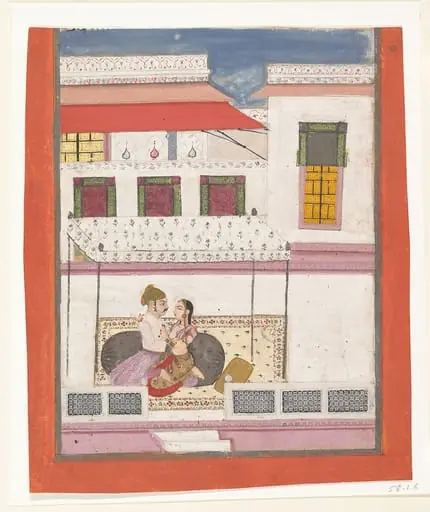 Untitled
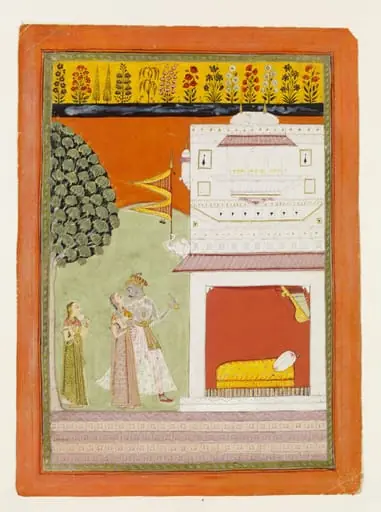 Malavi Ragini
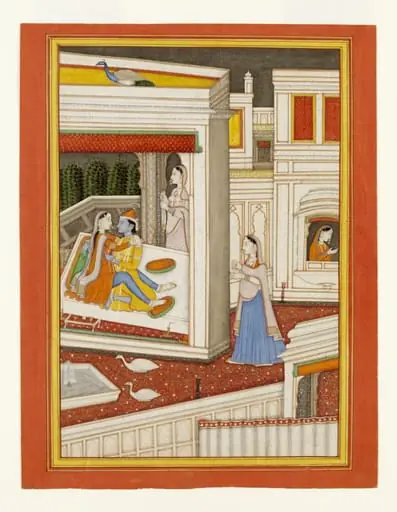 Untitled
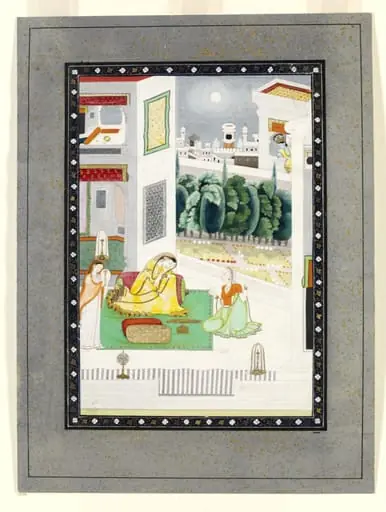 Prositapatika Nayika
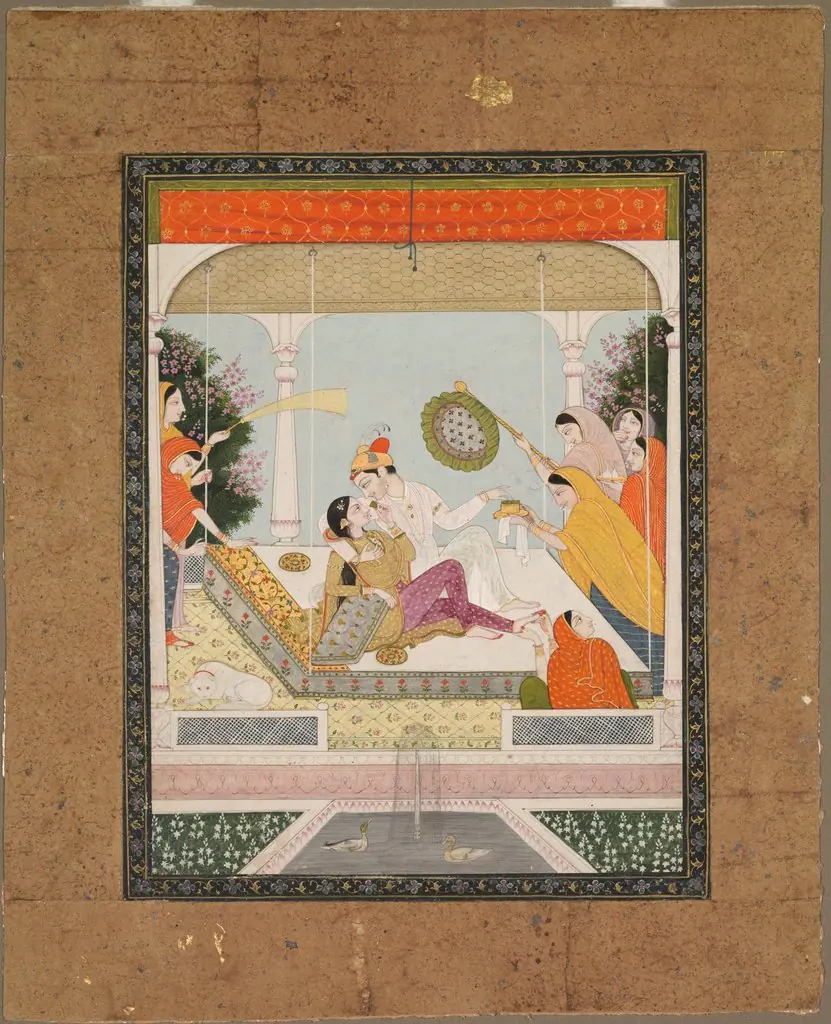 Raja with his Beloved
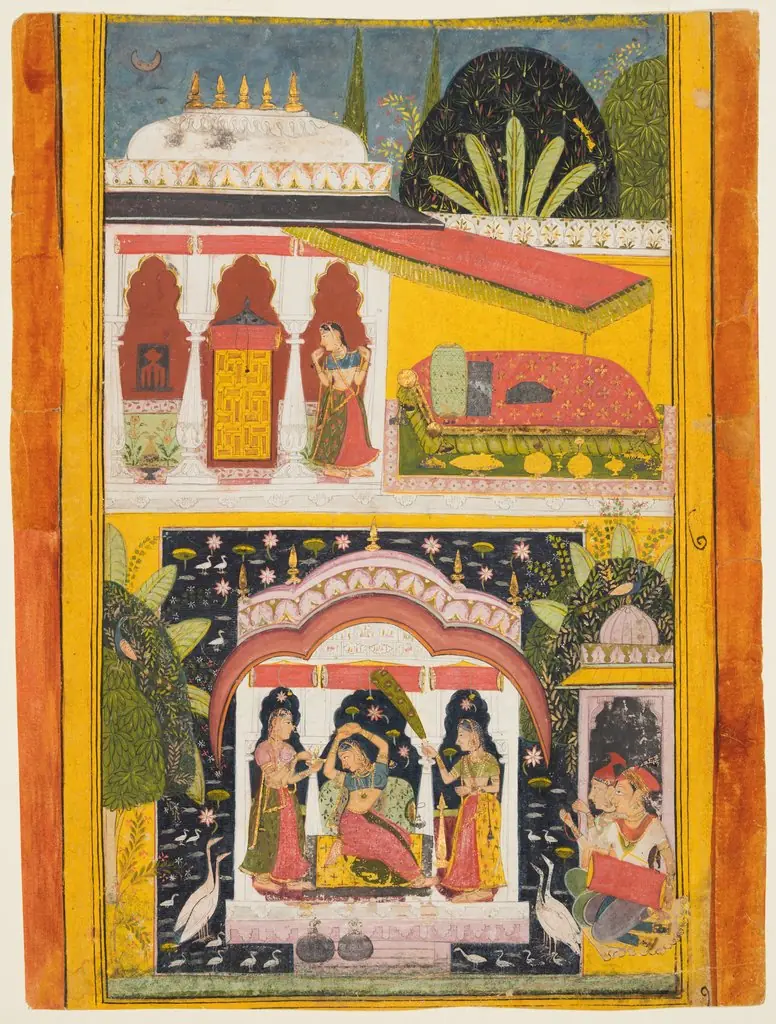 A Royal Woman in a Pavilion: Desavarari Ragini of Dipak, from a Ragamala
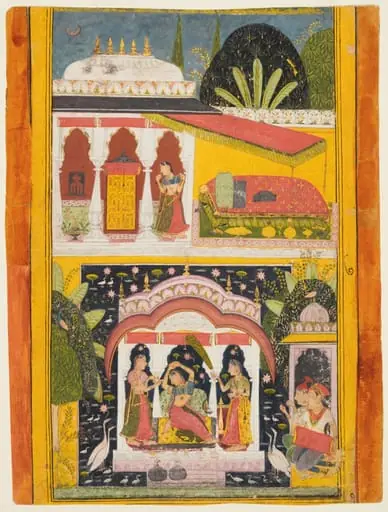 A Royal Woman in a Pavilion: Desavarari Ragini of Dipak, from a Ragamala
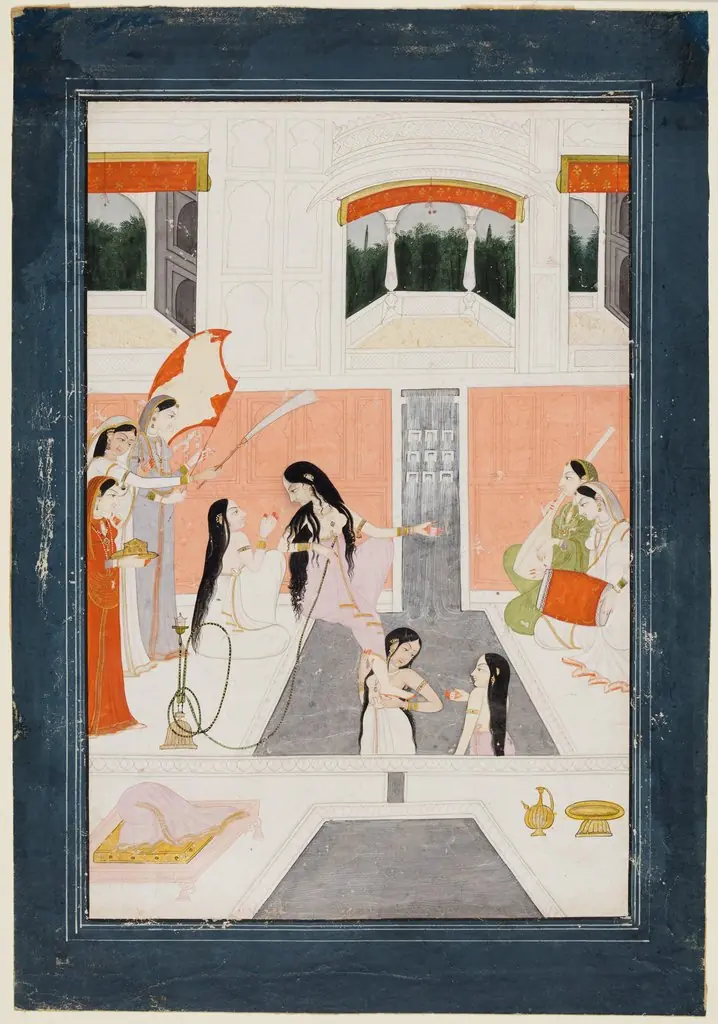 Palace Women Enjoy Music by the Side of a Water Cascade
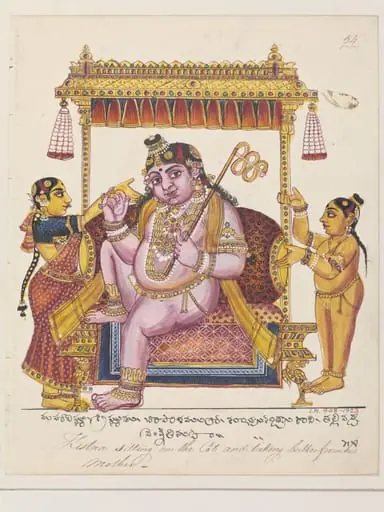 Krishna and Yasoda with Balarama.