Artwork
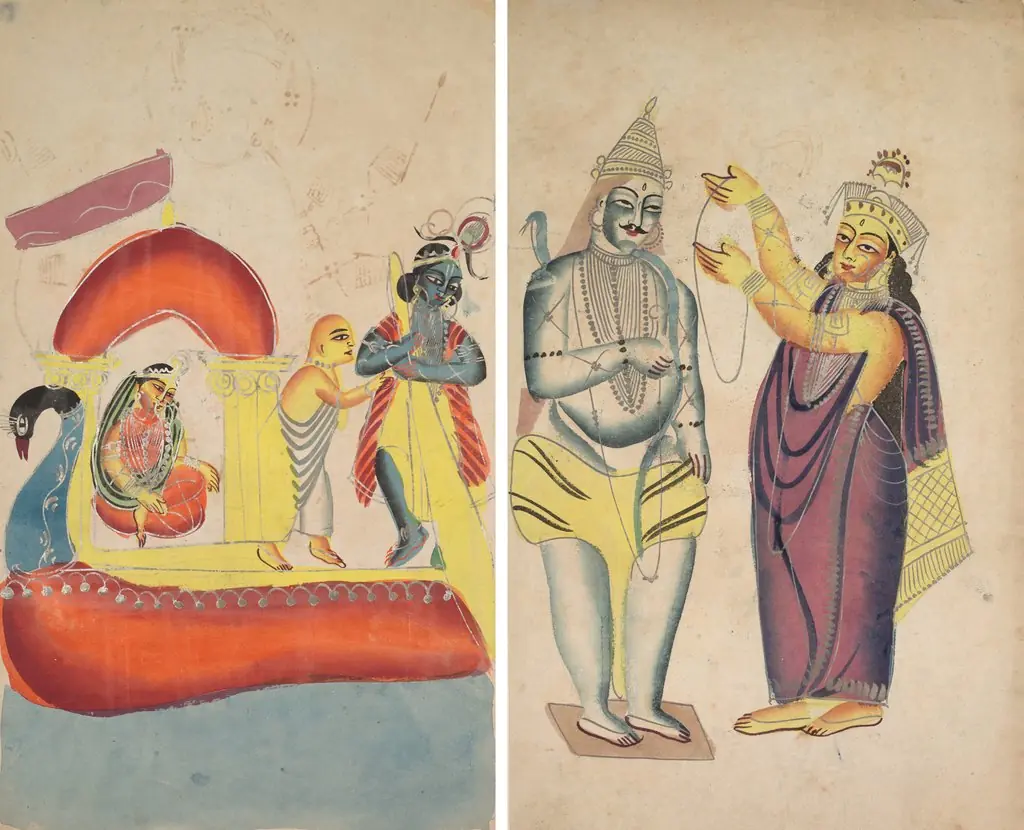
Krishna Ferrying Radha Across the Yamuna River (recto); Parivati Placing a Wedding Garland on Shiva (verso)
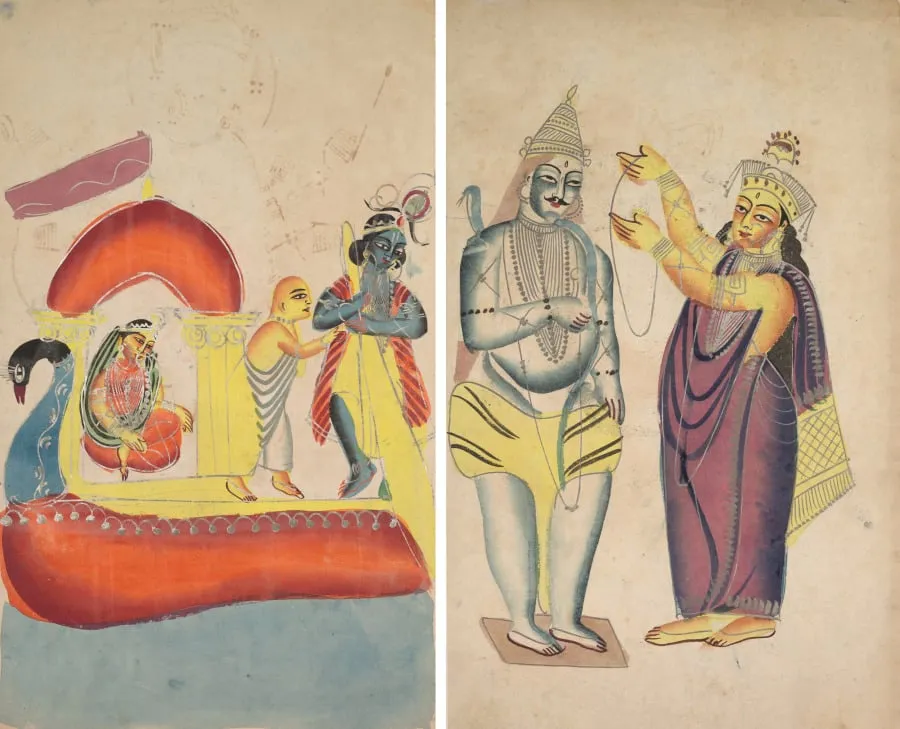
Krishna Ferrying Radha Across the Yamuna River (recto); Parivati Placing a Wedding Garland on Shiva (verso) is an unspecified painting by the Impressionist artist Unknown. It dates from 1890 and is held in the collection of the Cleveland Museum of Art. The sheet presents a dual composition typical of 19th‑century Kolkata devotional prints.
About this work
Overview
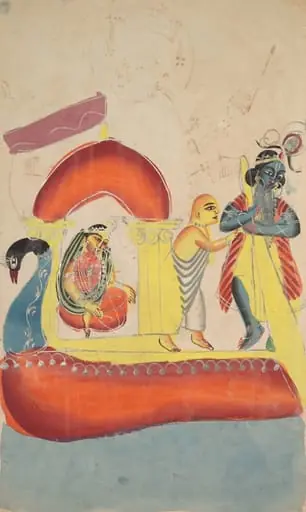
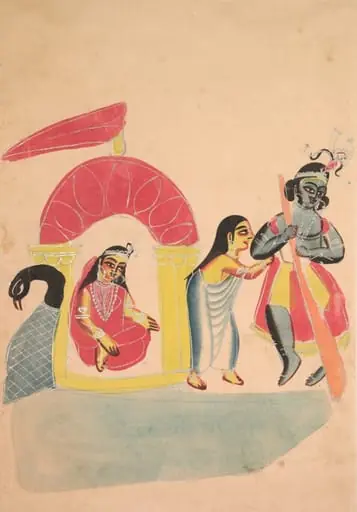
The sheet presents a dual composition typical of 19th‑century Kolkata devotional prints. On the recto, a blue‑hued Krishna rows a boat, transporting the modest Radha across the Yamuna; the verso shows the goddess Parvati adorning the seated Shiva with a wedding garland. Both episodes are rendered in a compact format intended for popular consumption.
Subject & Meaning
The river scene draws on the well‑known myth of Krishna’s playful disguise as a boatman, symbolising the yearning and reunion of divine lovers. The opposite side illustrates Parvati’s role in sanctifying Shiva’s union, emphasizing themes of marital devotion and the harmonious balance of masculine and feminine energies within Hindu theology.
Technique & Style
Executed in the Kalighat school’s characteristic manner, the work features brisk, confident line work and a vivid palette of reds, blues, and golds. The figures are outlined in strong black strokes, allowing the images to be reproduced quickly for sale to pilgrims. The flat decorative background and stylised gestures reflect the genre’s emphasis on narrative clarity over naturalistic detail.
History & Provenance
Produced in the 1800s, the painting was likely sold by itinerant vendors outside a temple precinct in Kolkata, catering to worshippers seeking affordable religious imagery after prayer. Such prints were mass‑produced by local artisans, making them accessible to a broad urban audience rather than confined to elite patronage.
Context
The scenes derive from popular theatrical performances and oral retellings of the Bhagavata Purana, which circulated widely in Bengal’s cultural life. Kalighat artists responded to this demand by creating portable visual summaries of beloved myths, thereby reinforcing devotional practices through everyday visual culture.
Artist & collection

 Domestic Scene
 Giacomo and Cardinal Marco, investing Andrea, Abbot of San Zeno, with his Benefice
 The Nymph of Fontainebleau
 Portrait of a Woman
 Madonna and Child with Saints in the Enclosed Garden
 Venus and Minerva
 Family Group of Four on Sofa
 Wall painting from Room H of the Villa of P. Fannius Synistor at Boscoreale
 Krishna Ferrying Radha Across the Yamuna River (recto); Parivati Placing a Wedding Garland on Shiva (verso)
 Krishna Ferrying Radha Across the Yamuna River (recto)
 Krishna Ferrying Radha Across the Yamuna River
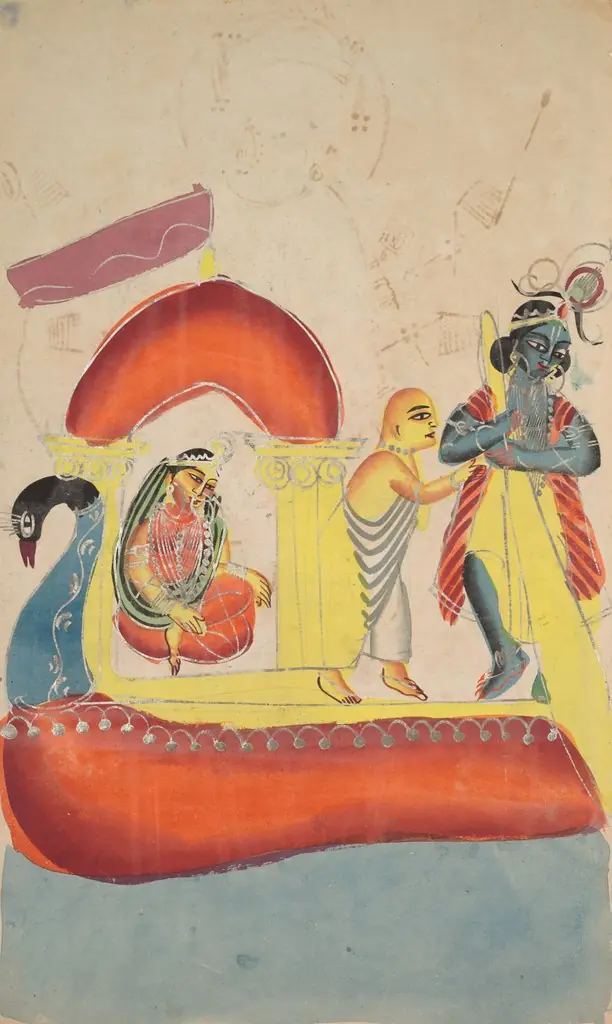 Krishna Ferrying Radha Across the Yamuna River (recto)
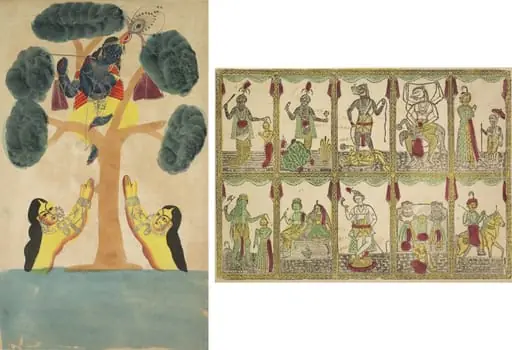 Leaf from a Kalighat album: Krishna Steals the Clothes of the Cowgirls (Gopis) (recto); Das Avataras, Ten Incarnations of Vishnu (verso)
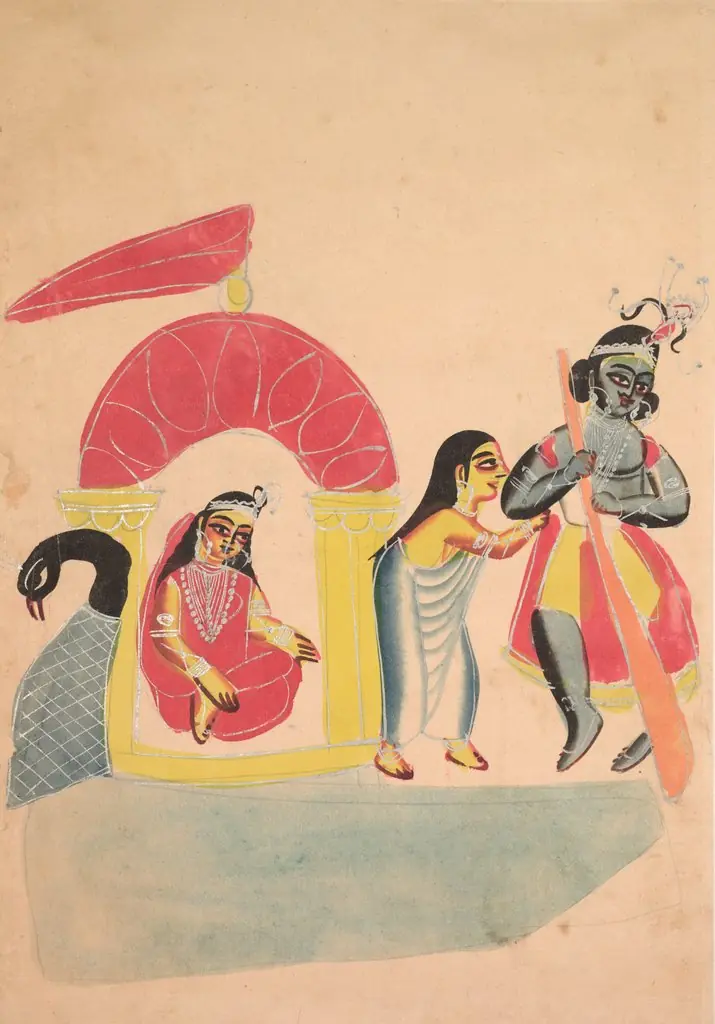 Krishna Ferrying Radha Across the Yamuna River
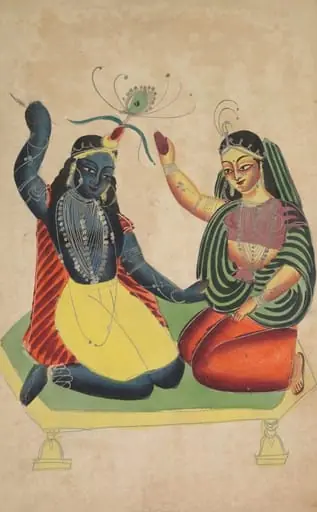 Radha and Krishna (verso), from a Kalighat album