Artwork
Lubbee pedlars
Lubbee pedlars is a paint painting by the Rococo painting artist Unknown. It dates from 1780 and is held in the collection of the Victoria and Albert Museum. This painting is one of six illustrations documenting caste and occupational roles in 19th-century India.
About this work
Overview
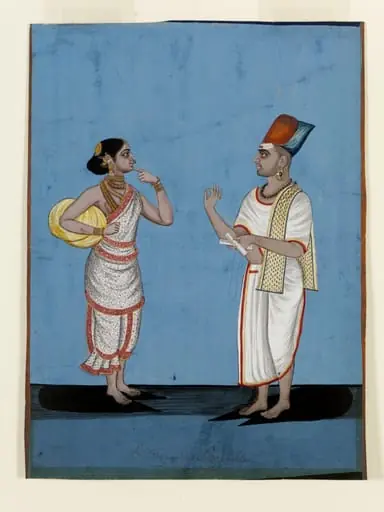
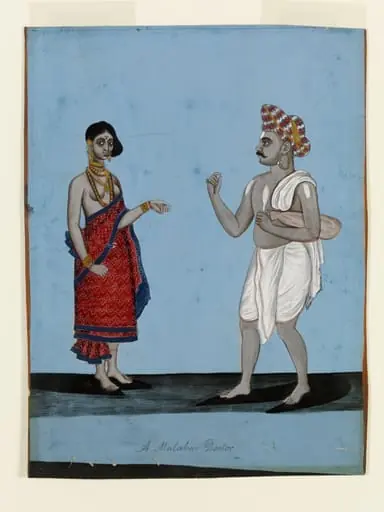
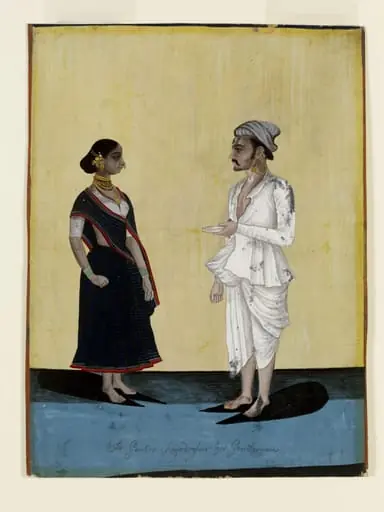
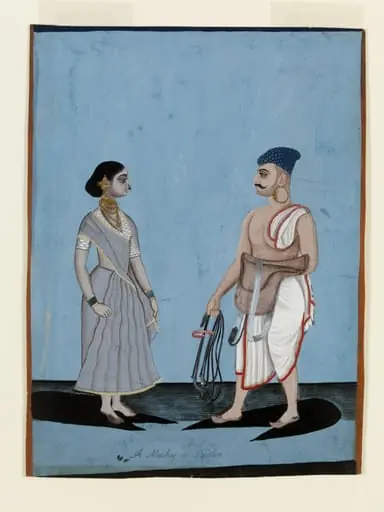
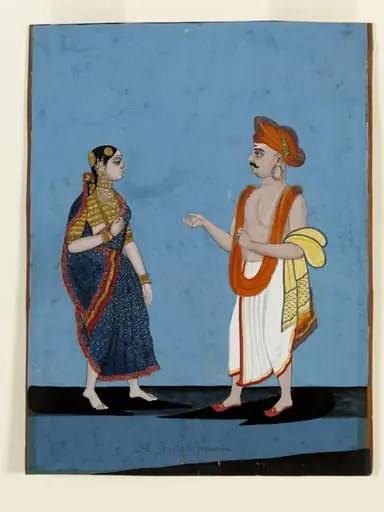
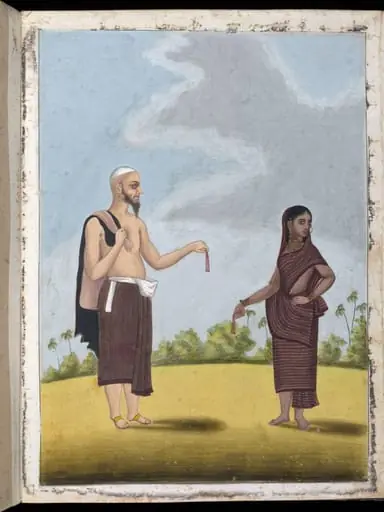
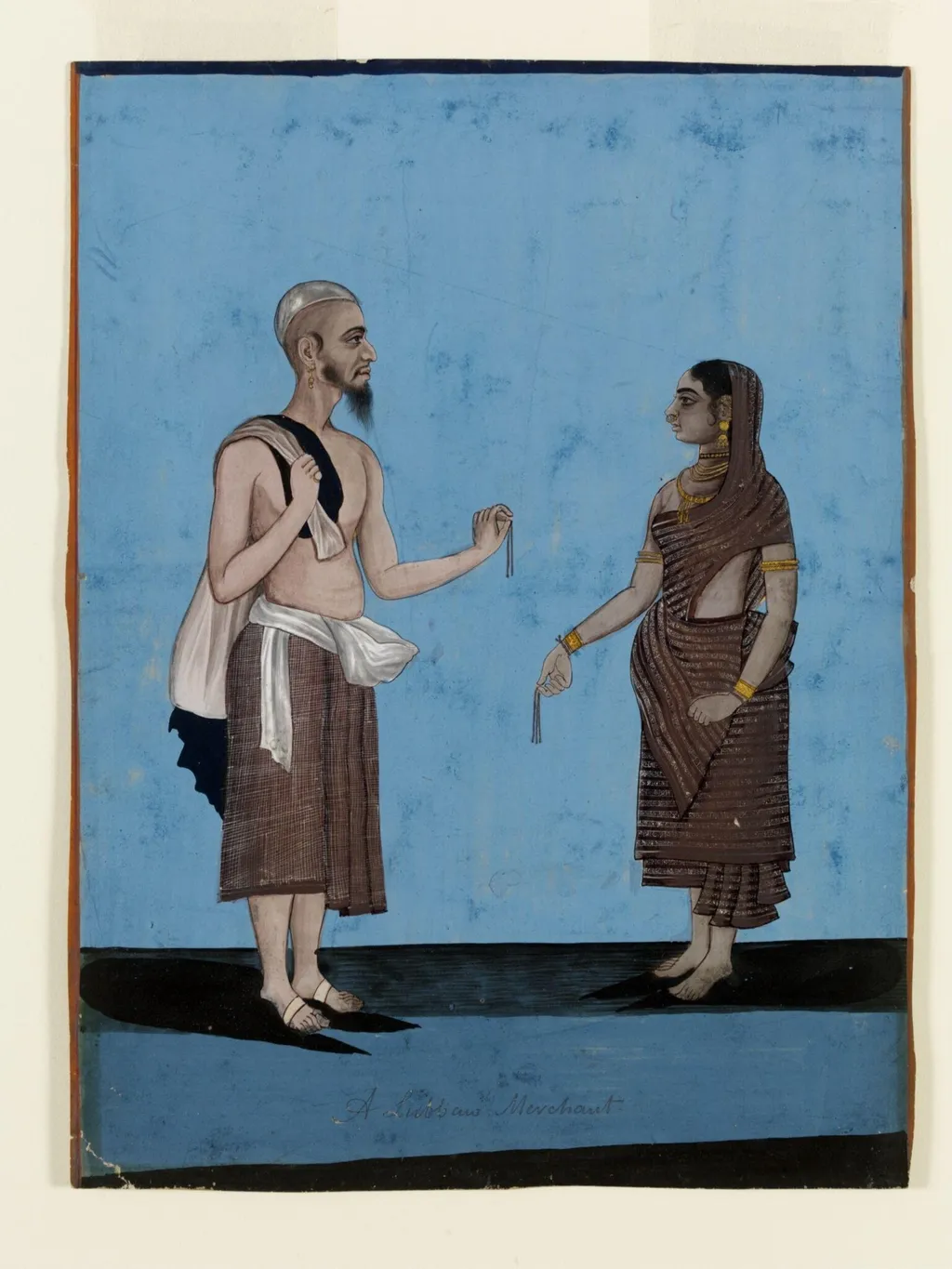
It portrays two figures identified as Lubbee pedlars, depicted with minimal background and flat, unmodulated color.
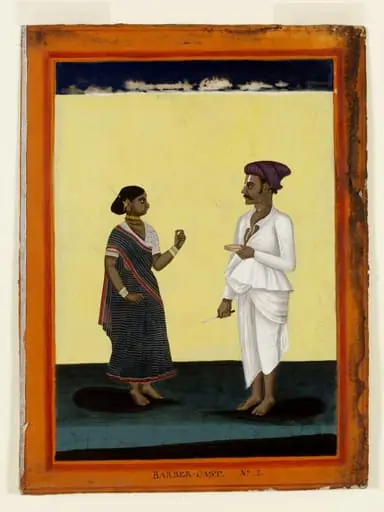
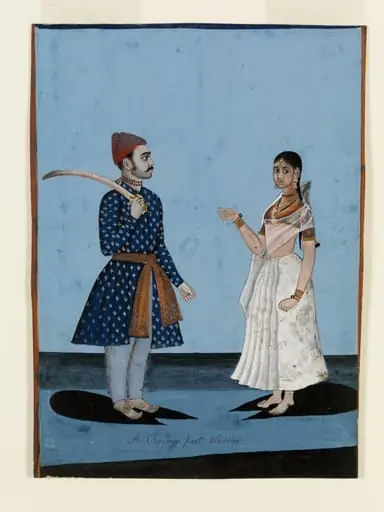
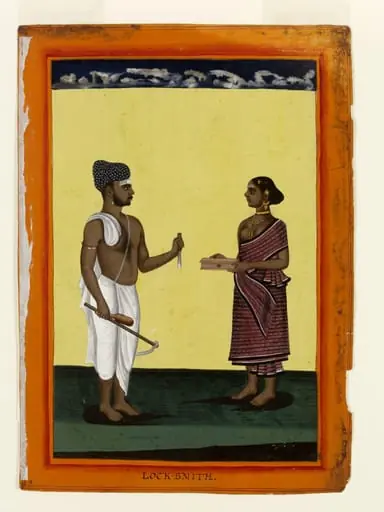
This painting is one of six illustrations documenting caste and occupational roles in 19th-century India. It portrays two figures identified as Lubbee pedlars, depicted with minimal background and flat, unmodulated color. The work was part of a collected set of costume studies, originally presented to the India Museum by P.F. Campbell-Johnston and later transferred to the Victoria and Albert Museum in 1879, formally recorded in 1880.
Subject & Meaning
The two figures represent Lubbee itinerant traders, likely selling small goods such as cords or tools. The man carries a bundle, while the woman holds a small object resembling a key or measuring tool, suggesting their trade involved portable wares. Their attire and bare feet reflect regional working-class dress, and the composition emphasizes their roles through symbolic props rather than narrative action.
Technique & Style
The artist employed flat planes of color, clean outlines, and no shading to create a stylized, decorative effect. The blue ground lacks perspective, flattening space and directing focus to the figures. Gold accents on the woman’s dress and jewelry are rendered with precision, contrasting with the muted browns of the clothing. The style prioritizes clarity and cultural documentation over naturalism.
History & Provenance
The painting was part of a set of six illustrated costume studies compiled in the mid-19th century. Donated to the India Museum by P.F. Campbell-Johnston, it was transferred to the Victoria and Albert Museum in 1879 and cataloged in 1880 as part of two framed collections. Its preservation reflects colonial-era interest in ethnographic record-keeping, though the artist’s identity remains unrecorded.
Context
These illustrations emerged during a period when British administrators and collectors systematically documented Indian social structures. Costume and occupation studies like this were intended as ethnographic references, often produced by local artists under colonial patronage. The Lubbee pedlars, a mobile trading group, were among many occupational castes recorded to categorize Indian society for administrative purposes.
Legacy
The painting survives as part of a broader archive of colonial-era visual ethnography. While its original intent was classification, it now serves as a record of material culture and social roles in 19th-century India. Its preservation in the Victoria and Albert Museum allows ongoing study of how identity, labor, and dress were visually represented during a time of imperial documentation.
Artist & collection

 Domestic Scene
 Giacomo and Cardinal Marco, investing Andrea, Abbot of San Zeno, with his Benefice
 The Nymph of Fontainebleau
 Portrait of a Woman
 Madonna and Child with Saints in the Enclosed Garden
 Venus and Minerva
 Family Group of Four on Sofa
 Wall painting from Room H of the Villa of P. Fannius Synistor at Boscoreale