Artwork
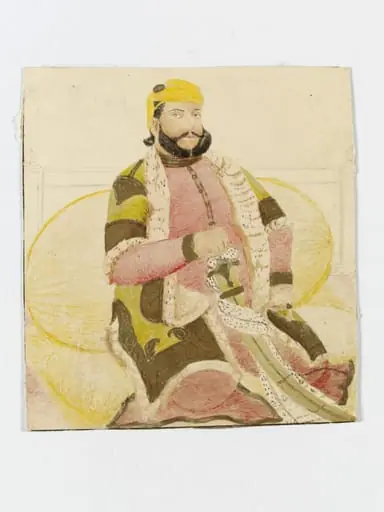
Maharaja Sawai Isri Singh
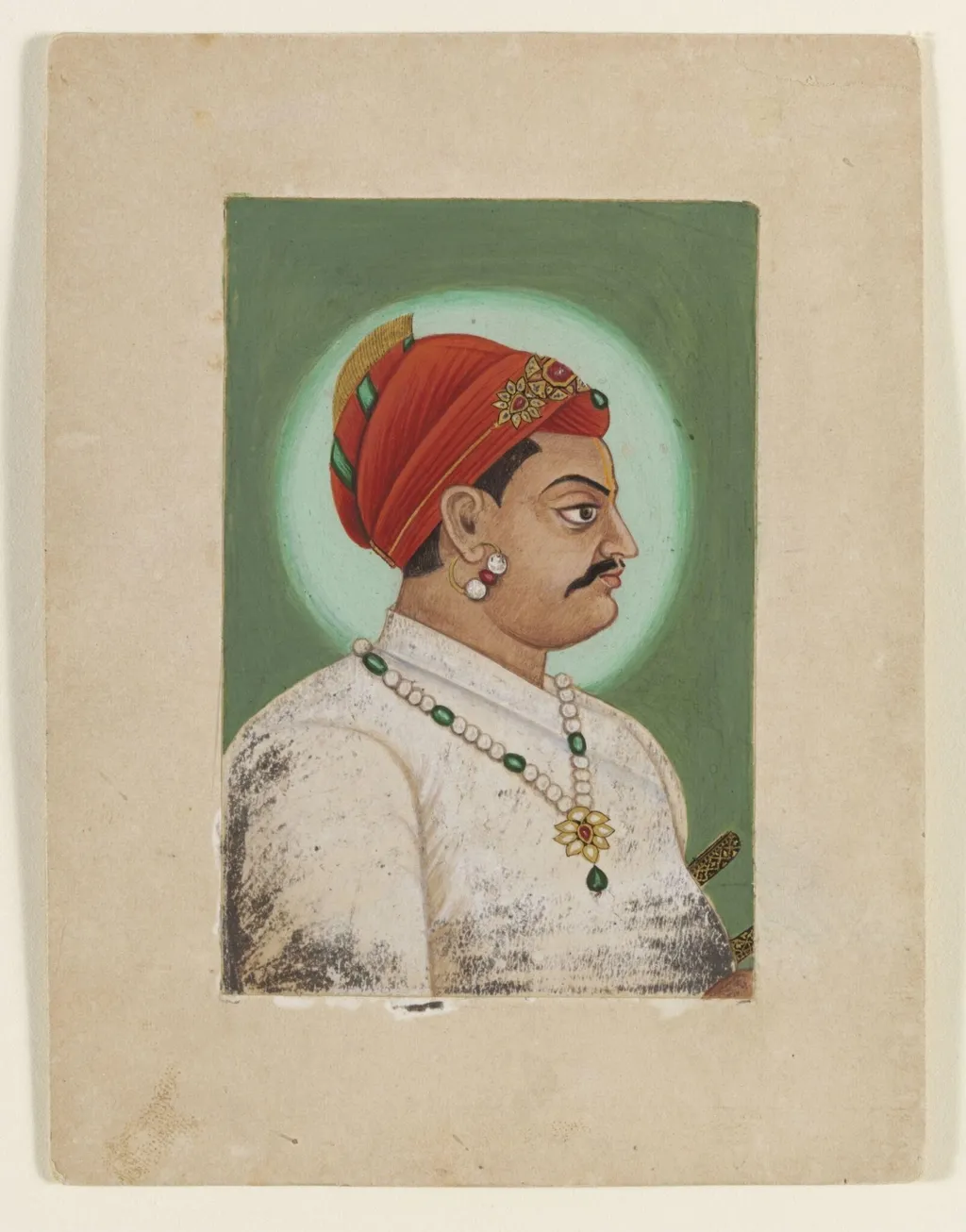
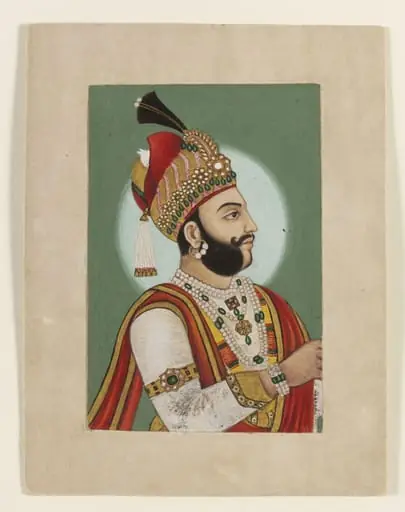
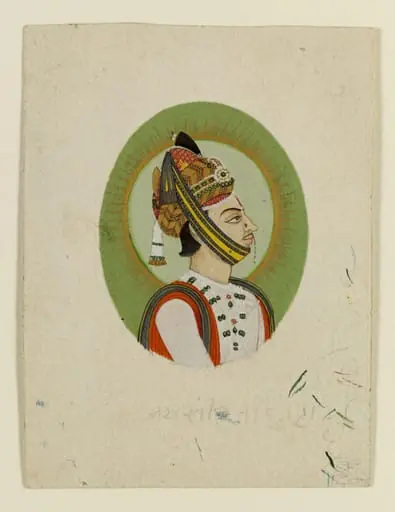
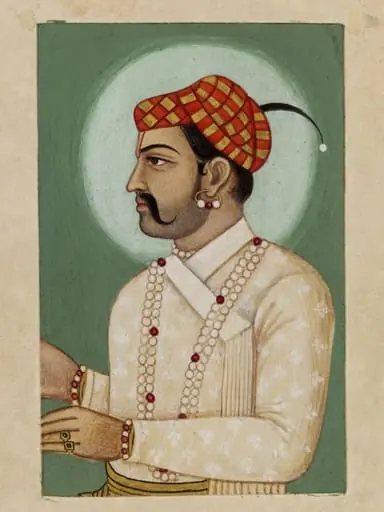
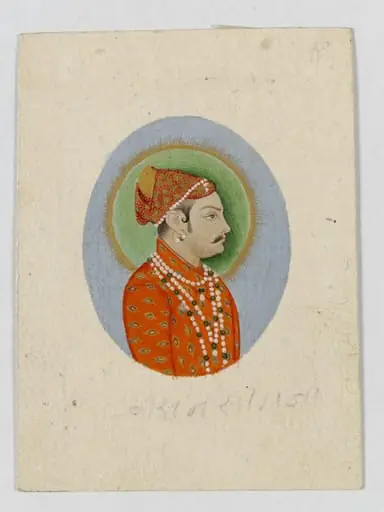
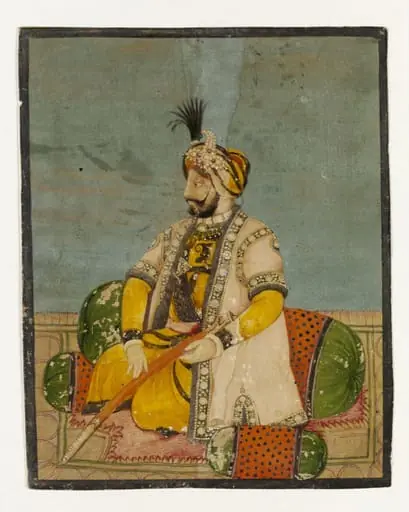
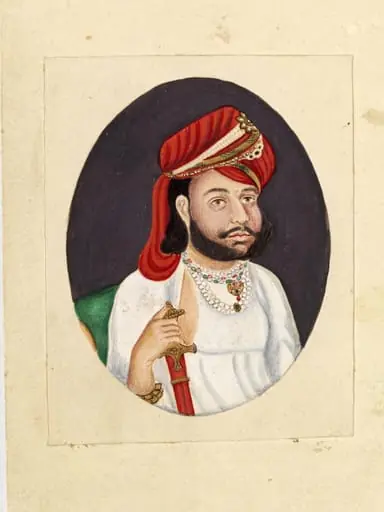
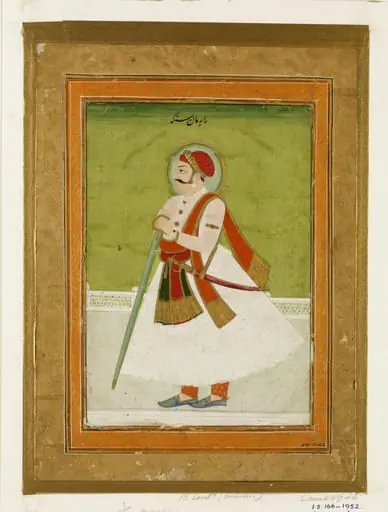
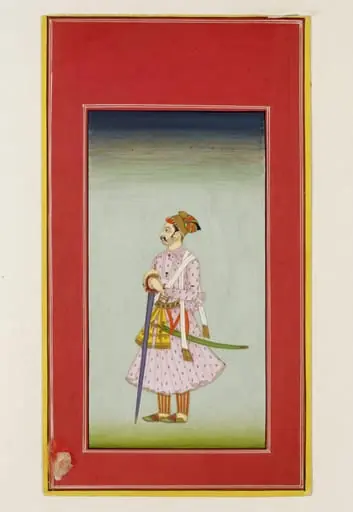
Maharaja Sawai Isri Singh is a paint painting by the Patna School of Painting artist Unknown. It dates from 1850 and is held in the collection of the Victoria and Albert Museum.
About this work
Overview
The composition emphasizes regal adornment through precise detail and rich materials, reflecting the conventions of late Mughal and Rajput court portraiture.
This portrait depicts Maharaja Sawai Isri Singh, a Rajput ruler, painted in opaque watercolor and gold on paper, then mounted on cardboard. The composition emphasizes regal adornment through precise detail and rich materials, reflecting the conventions of late Mughal and Rajput court portraiture. The figure faces right against a soft green background, with no narrative elements to distract from his presence.
Subject & Meaning
The portrait presents the ruler as a figure of authority through symbolic attire: a red turban, white garments, and elaborate jewelry including a large gold pendant with a green stone, earrings, and a headpiece. These elements signify status, lineage, and divine favor rather than individual personality. The stillness and frontal gaze reinforce his role as a sovereign, not a private individual.
Technique & Style
The painting employs fine brushwork to render textures of fabric, metal, and gemstones with clarity. Gold leaf highlights jewelry and embroidery, while opaque watercolor builds layered tones without shading. The flat, even background and lack of chiaroscuro align with Indian miniature traditions, prioritizing symbolic detail over illusionistic depth.
History & Provenance
Created during the 18th century in a Rajput court, likely in Jaipur or a related center, the work was probably commissioned to affirm the Maharaja’s legitimacy and prestige. Its preservation on cardboard suggests it was part of a personal album or royal archive, intended for private viewing rather than public display.
Context
This portrait belongs to a broader tradition of Indian court painting where rulers were depicted with standardized regalia to convey power and continuity. Unlike European portraiture, it avoids psychological depth, instead focusing on visible markers of rank. Similar works were exchanged as diplomatic gifts or used in ceremonial contexts to reinforce hierarchy.
Legacy
The painting exemplifies the refinement of Rajput miniature art in the post-Mughal era, preserving stylistic elements while adapting to regional tastes. Though not widely known outside specialized collections, it remains a key example of how Indian rulers used visual culture to assert authority through controlled symbolism and material luxury.
Artist & collection

 Domestic Scene
 Giacomo and Cardinal Marco, investing Andrea, Abbot of San Zeno, with his Benefice
 The Nymph of Fontainebleau
 Portrait of a Woman
 Madonna and Child with Saints in the Enclosed Garden
 Venus and Minerva
 Family Group of Four on Sofa
 Wall painting from Room H of the Villa of P. Fannius Synistor at Boscoreale