Artwork
Malava Raga
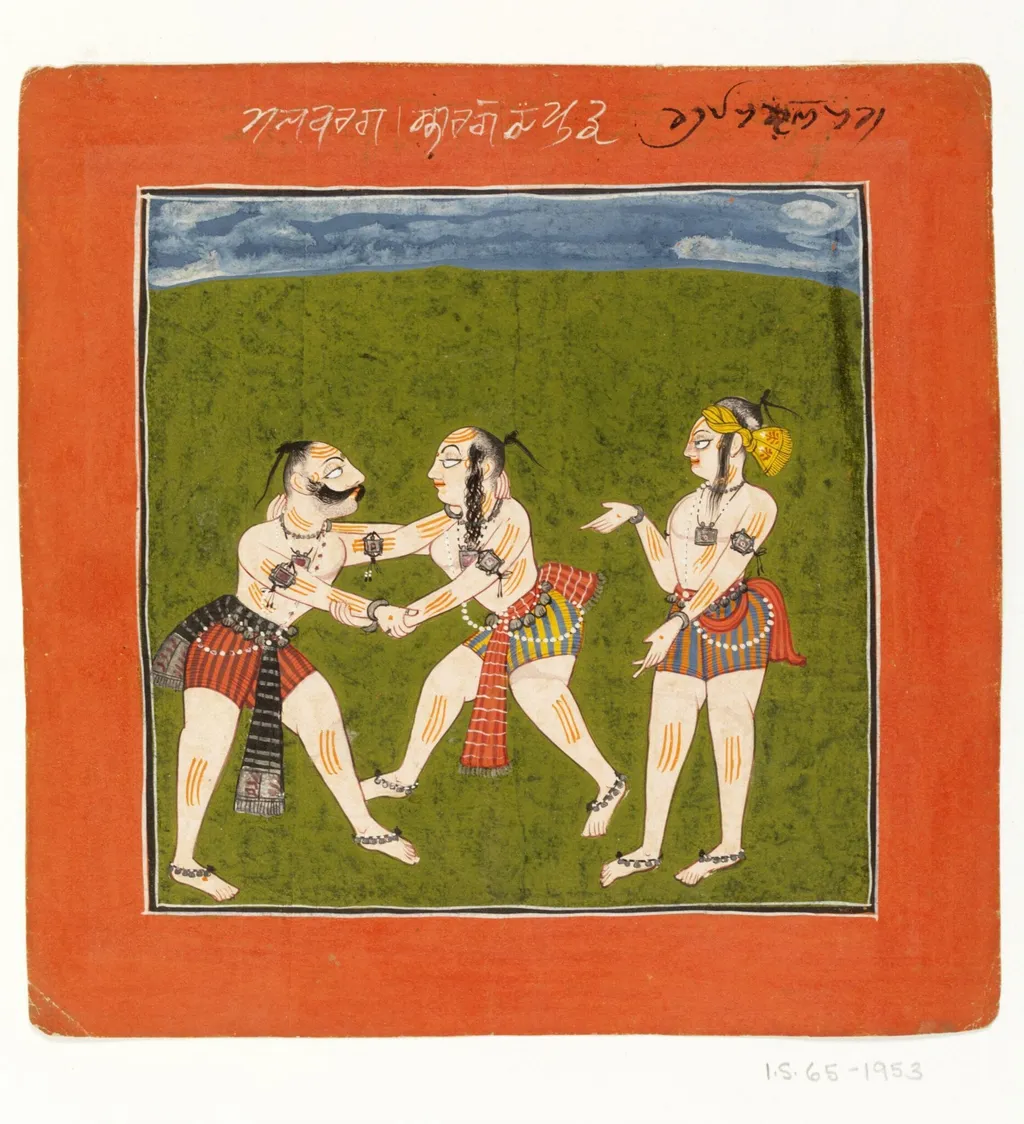
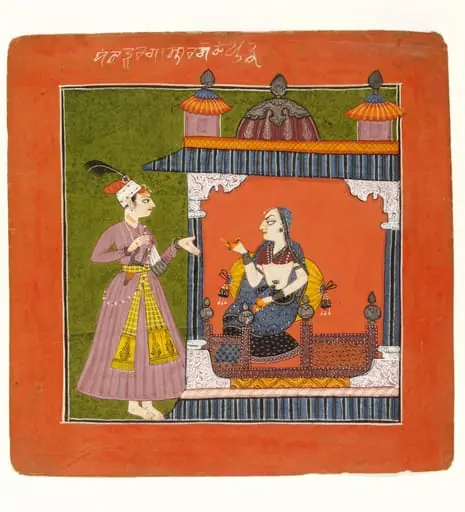
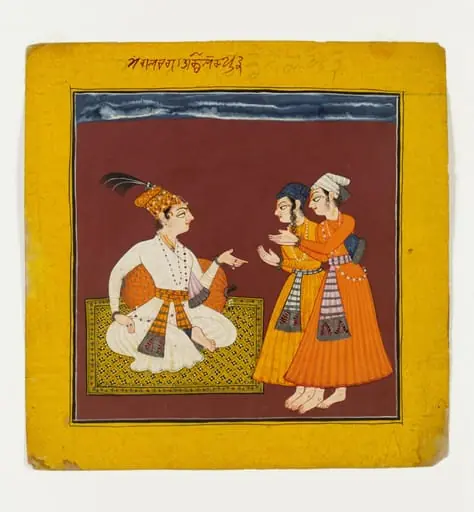
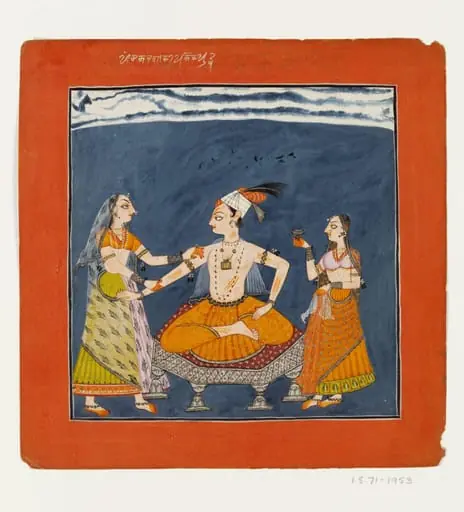
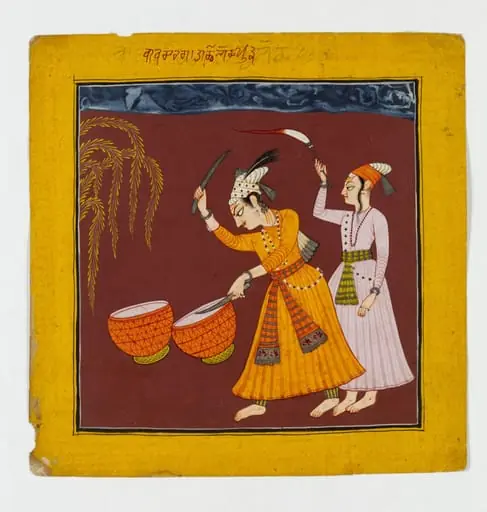
Malava Raga is a paint painting by the Baroque artist Unknown. It dates from 1700 and is held in the collection of the Victoria and Albert Museum. This opaque watercolour on paper, dated around 1700, illustrates the raga Malava, a musical mode from the Indian ragamala tradition.
About this work
Overview
This opaque watercolour on paper, dated around 1700, illustrates the raga Malava, a musical mode from the Indian ragamala tradition.
This opaque watercolour on paper, dated around 1700, illustrates the raga Malava, a musical mode from the Indian ragamala tradition. The scene portrays three shirtless men in a grassy landscape, two in dynamic physical engagement and one standing apart as observer. The composition reflects the fusion of musical abstraction and visual narrative common in Rajput painting, rendered in vivid pigments against a flat, stylized backdrop.
Subject & Meaning
The depiction of wrestlers in motion symbolizes the energetic and disciplined character of Malava Raga, traditionally associated with late afternoon and a sense of fervent devotion. The third figure, watching with arms extended, may represent the listener or the raga’s emotional resonance. The absence of narrative context invites interpretation rooted in musical metaphor rather than literal storytelling, aligning with the poetic nature of ragamala imagery.
Technique & Style
Executed in mineral and vegetable pigments, the painting uses bold, unmodulated colours—reds, blues, and golds—to define the figures’ waist cloths and the landscape. Forms are outlined with fine brushwork, and the background lacks perspective, emphasizing pattern and rhythm over spatial depth. The flat green hill and pale sky reinforce the symbolic, non-naturalistic approach typical of early 18th-century Rajput court painting.
History & Provenance
The work was once in the collection of Michael Rothenstein, a British artist and collector with an interest in South Asian art. It entered the Victoria and Albert Museum’s holdings in 1953 as part of IS.46 to 73-1953, acquired for £300. Its journey from private ownership to institutional care reflects broader 20th-century efforts to preserve and contextualize Indian miniature traditions within Western museum frameworks.
Context
Ragamala paintings emerged in North India during the 16th to 18th centuries as visual interpretations of musical modes, often commissioned by Rajput and Mughal patrons. Each raga was linked to a time of day, season, or emotional state, and depicted through allegorical figures. Malava Raga, associated with the heat and intensity of late afternoon, was frequently rendered with martial or athletic imagery, reflecting its perceived mood.
Legacy
This painting contributes to a broader corpus of ragamala works that bridge music, poetry, and visual art in pre-colonial India. Its preservation in a major museum collection ensures continued scholarly access and public awareness of a genre that once served as both devotional aid and courtly entertainment. It remains a key example of how Indian artistic traditions encoded abstract concepts through embodied form.
Artist & collection

 Domestic Scene
 Giacomo and Cardinal Marco, investing Andrea, Abbot of San Zeno, with his Benefice
 The Nymph of Fontainebleau
 Portrait of a Woman
 Madonna and Child with Saints in the Enclosed Garden
 Venus and Minerva
 Family Group of Four on Sofa
 Wall painting from Room H of the Villa of P. Fannius Synistor at Boscoreale