Artwork
Mary Cruikshank (1769–1853), wife of Isaac Cruikshank, mother of George Cruikshank
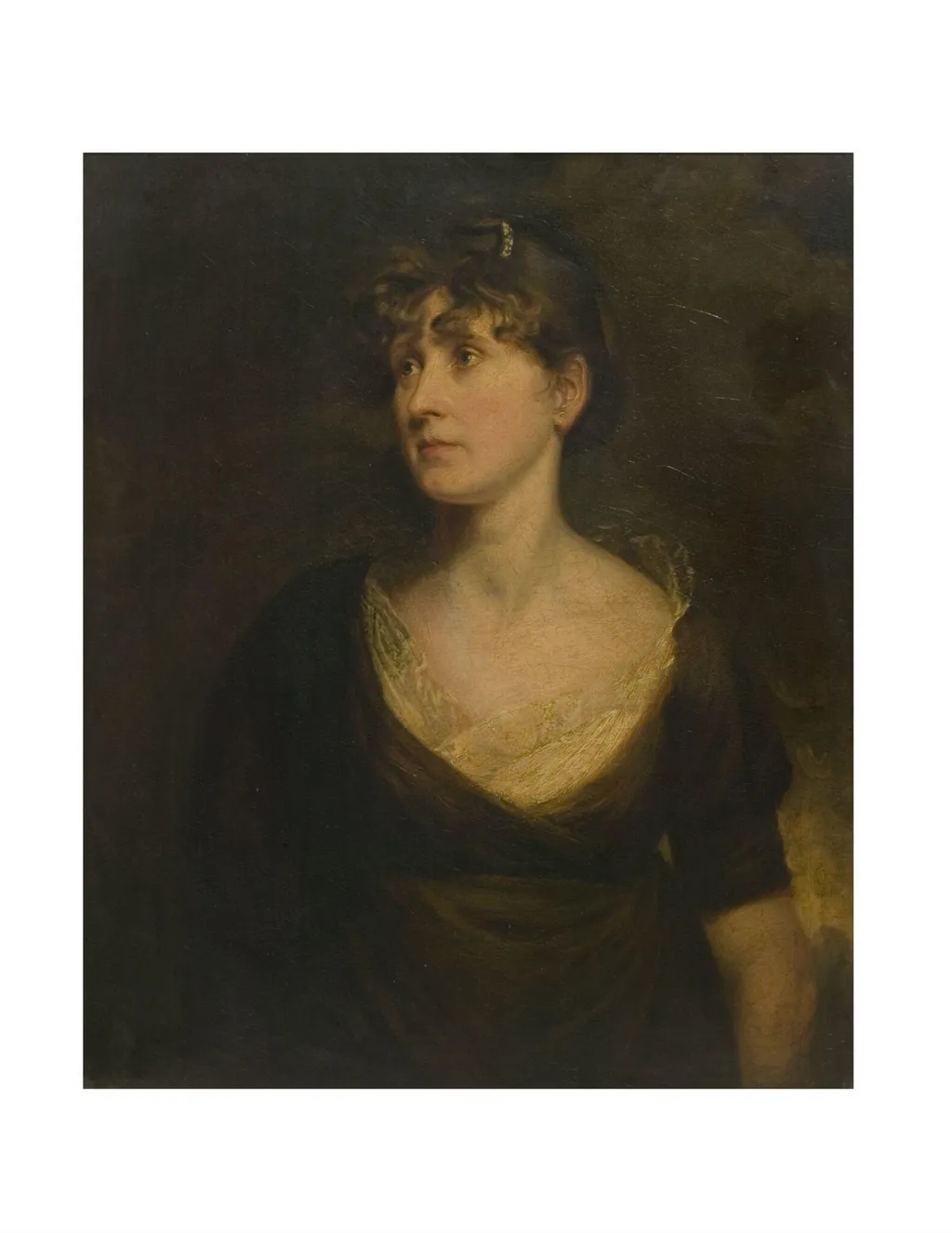
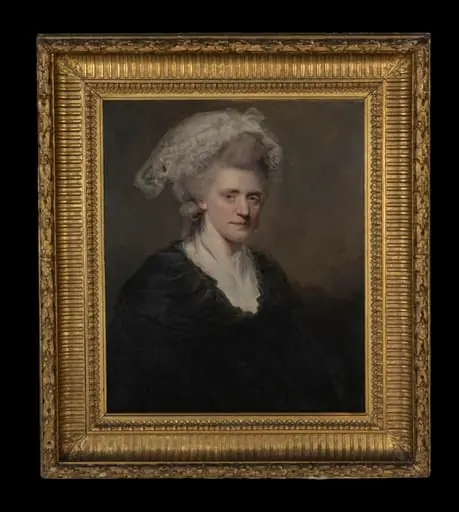
Mary Cruikshank (1769–1853), wife of Isaac Cruikshank, mother of George Cruikshank is an oil painting by the British Romanticist artist Unknown. It dates from 1815 and is held in the collection of the Victoria and Albert Museum. This oil portrait depicts Mary Cruikshank, wife of the satirical artist Isaac Cruikshank and mother of the illustrator George Cruikshank.
About this work
The artist likely painted her this way because she was in mourning, which was a common practice at the time, especially after the loss of a spouse.
This painting shows a woman wearing dark, plain clothes.
She looks serious and a bit sad.
The artist likely painted her this way because she was in mourning, which was a common practice at the time, especially after the loss of a spouse.
The fact that she's wearing unfashionably dark clothes suggests that the painting was done after her husband's death in 1811.
This detail gives us a hint about the time period and the circumstances surrounding the painting.
You can learn more about this style by looking into the technique of chiaroscuro.
Overview
This oil portrait depicts Mary Cruikshank, wife of the satirical artist Isaac Cruikshank and mother of the illustrator George Cruikshank. Painted during the early 19th century, it captures her in somber attire, reflecting a period of personal grief. The work is notable for its restrained composition and the quiet dignity with which the subject is rendered, offering insight into domestic life amid artistic circles of the era.
Subject & Meaning
Mary Cruikshank is portrayed with a solemn expression and minimal adornment, consistent with the customs of widowhood in post-1811 Britain. Her clothing, deliberately plain and dark, signals mourning rather than fashion, suggesting the painting was executed after her husband’s death. The absence of decorative elements emphasizes her role as a grieving widow, aligning with societal norms that valued modesty and restraint during bereavement.
Technique & Style
The artist employs a muted palette and soft modeling to convey emotional gravity. Light falls gently across the face and hands, creating subtle contrasts that draw attention to the sitter’s expression without theatricality. The brushwork is controlled and precise, avoiding embellishment, which reinforces the portrait’s intimate, unadorned character and aligns with the restrained aesthetic of mourning portraiture.
History & Provenance
The painting’s origins are tied to the Cruikshank family, prominent in British print culture. While the artist’s identity is unconfirmed, the work likely emerged from within their circle. It remained in family hands for generations before entering public collections. Its survival offers rare visual documentation of a woman whose influence extended through her husband’s satire and son’s illustrative legacy.
Context
In early 19th-century England, widows often wore black for extended periods as a public sign of loss, particularly among the middle and upper classes. Mary’s attire reflects this cultural expectation, which was both personal and performative. The portrait thus functions not only as a likeness but as a record of social ritual, situating her within broader norms of gender, grief, and domestic identity.
Legacy
Though not widely exhibited, the portrait preserves the image of a woman connected to two significant figures in British visual culture. It contributes to the historical understanding of women’s roles behind the scenes of artistic production. Its quiet realism offers a counterpoint to the more flamboyant caricatures of the era, underscoring the personal lives that underpinned public satire.
Artist & collection

 Domestic Scene
 Giacomo and Cardinal Marco, investing Andrea, Abbot of San Zeno, with his Benefice
 The Nymph of Fontainebleau
 Portrait of a Woman
 Madonna and Child with Saints in the Enclosed Garden
 Venus and Minerva
 Family Group of Four on Sofa
 Wall painting from Room H of the Villa of P. Fannius Synistor at Boscoreale
 Mrs. Thornton
 Mrs. Irvine J. Boswell
 Lady Anne Torphichen
 Miss Davidson Reid
 Amelia Alderson, the Artist's second Wife
 Lady Maitland (Catherine Connor, died 1865)
 Head of a Woman
 Mrs. James Pulham Sr. (Frances Amys, ca. 1766–1856)
 Portrait of Mrs. Henry Beaufoy
 Mrs. George Horsley (Charlotte Mary Talbot, died 1828)
 Mrs. Whaley (died 1798, Isle of Man)
 Sarah Wedgwood