Artwork
Mifs Nancy Dawson
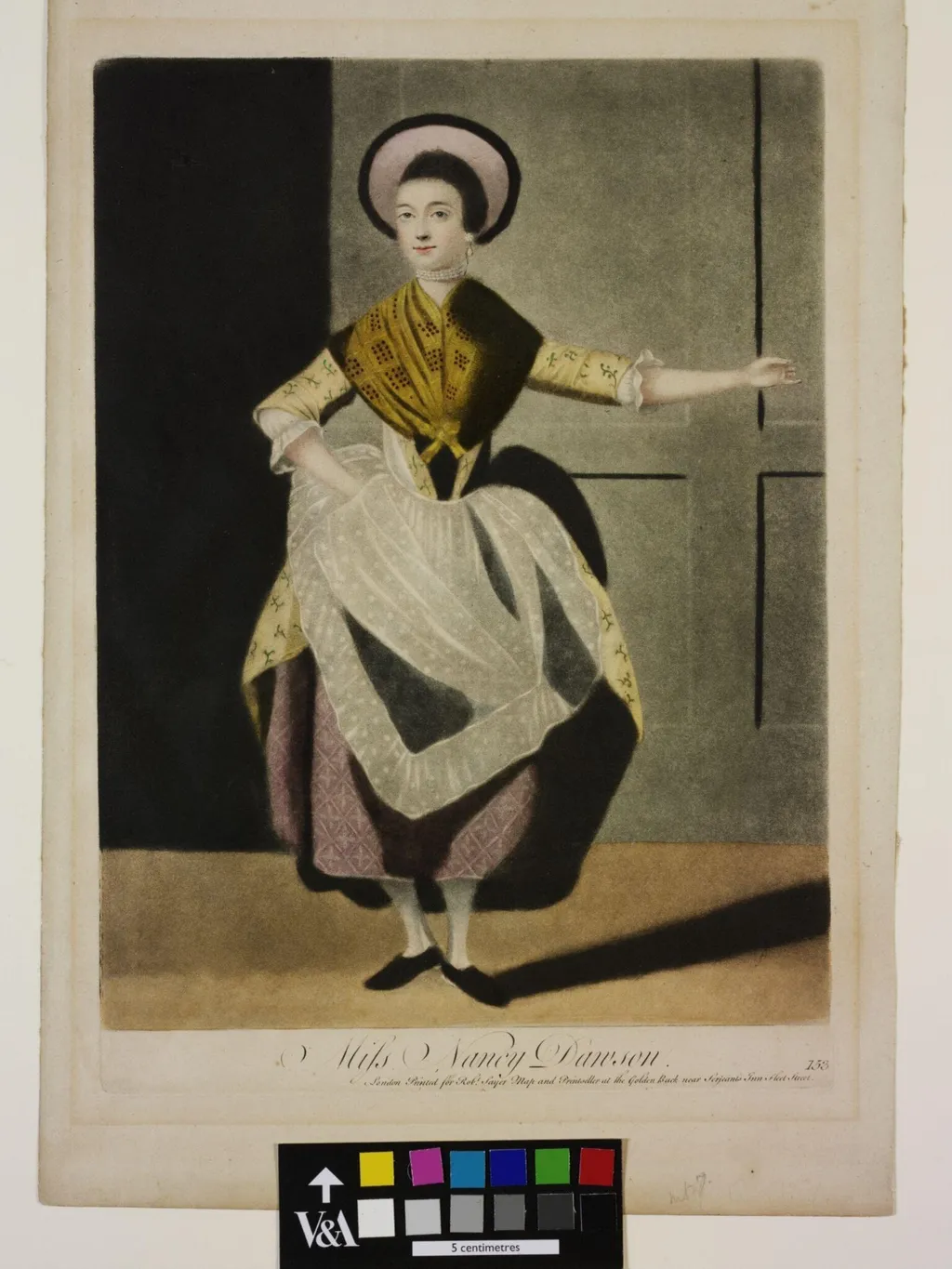
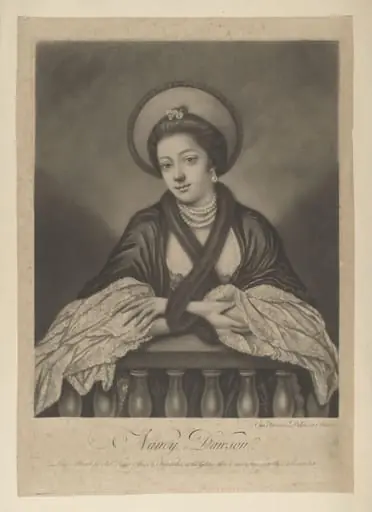
Mifs Nancy Dawson is a print by Unknown. It dates from 1850 and is held in the collection of the Victoria and Albert Museum. This print depicts Nancy Dawson, a popular 18th-century performer known for her hornpipe dance.
About this work
Overview
Unlike contemporaneous prints that celebrated ballet dancers, this image captures a working-class entertainer in a moment of lively motion.
This print depicts Nancy Dawson, a popular 18th-century performer known for her hornpipe dance. Unlike contemporaneous prints that celebrated ballet dancers, this image captures a working-class entertainer in a moment of lively motion. The print’s medium—lithography—dates it to the early 19th century, long after Dawson’s death in 1767, suggesting its production was a retrospective tribute to her enduring public appeal.
Subject & Meaning
Nancy Dawson’s fame stemmed from a single, energetic dance routine—the hornpipe—that resonated with broad audiences rather than elite theatergoers. Her portrayal here emphasizes accessibility: she wears modest, everyday attire—a shawl, plain skirt, and hat—rather than theatrical costume. This grounded depiction reflects her connection to common public taste and the cultural shift toward celebrating non-aristocratic performers in popular imagery.
Technique & Style
The image is rendered in lithography, a printing method developed in the late 18th century and widely adopted in the 1820s. The technique allowed for fluid lines and tonal variation, capturing the dynamism of Dawson’s pose and the texture of her clothing. The composition focuses on movement, with the skirt’s folds and tilted hat suggesting motion, while the background remains sparse, directing attention to the dancer’s form.
History & Provenance
Nancy Dawson died in 1767, yet this print was made decades later, indicating it was produced as a nostalgic or commercial reproduction. Lithography’s emergence in the early 19th century enabled mass reproduction of popular figures, and Dawson’s image likely circulated as a keepsake or novelty. The delay between her death and the print’s creation underscores her lasting, if fleeting, cultural footprint.
Context
In 18th-century Britain, dance imagery typically centered on ballet, associated with aristocratic theaters. Dawson’s representation breaks this pattern, reflecting the rise of public entertainment venues and the growing market for prints of popular performers outside the elite sphere. Her image aligns with broader trends in visual culture that began to document everyday figures with the same attention once reserved for nobility or trained dancers.
Legacy
Though Dawson’s career was brief, her image endured through repeated printings, becoming a symbol of popular performance in an era dominated by formal dance. The survival of this lithograph highlights how public memory could outlive individual fame, especially when tied to a distinctive, widely recognized act. Her depiction remains a rare example of a non-ballet dancer preserved in visual culture of the period.
Artist & collection

 Domestic Scene
 Giacomo and Cardinal Marco, investing Andrea, Abbot of San Zeno, with his Benefice
 The Nymph of Fontainebleau
 Portrait of a Woman
 Madonna and Child with Saints in the Enclosed Garden
 Venus and Minerva
 Family Group of Four on Sofa
 Wall painting from Room H of the Villa of P. Fannius Synistor at Boscoreale
 H Beard Print Collection
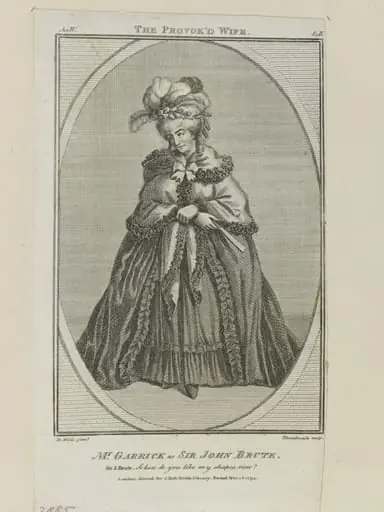 Mr. Garrick as Sir John Brute
 H Beard Print Collection
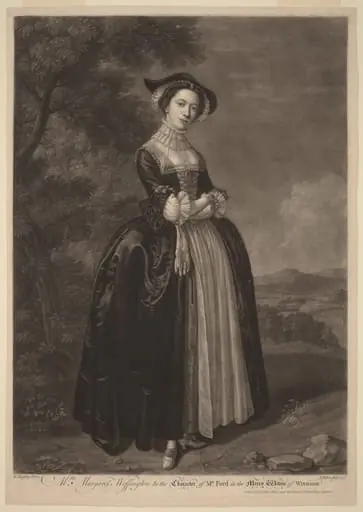 Mrs. Margaret Woffington in the Character of Mrs. Ford in the Merry Wives of Windsor
 H Beard Print Collection
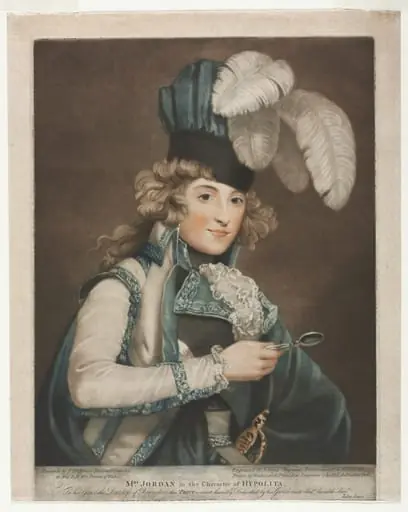 Dorothy Jordan
 H Beard Print Collection
 Mrs. Pelham
 Miss Anne Bingham
 H Beard Print Collection
 H Beard Print Collection
 H Beard Print Collection