Artwork
Page from the Late Shah Jahan Album: Persian Calligraphy framed by an ornamental border of flowers, birds, and deer
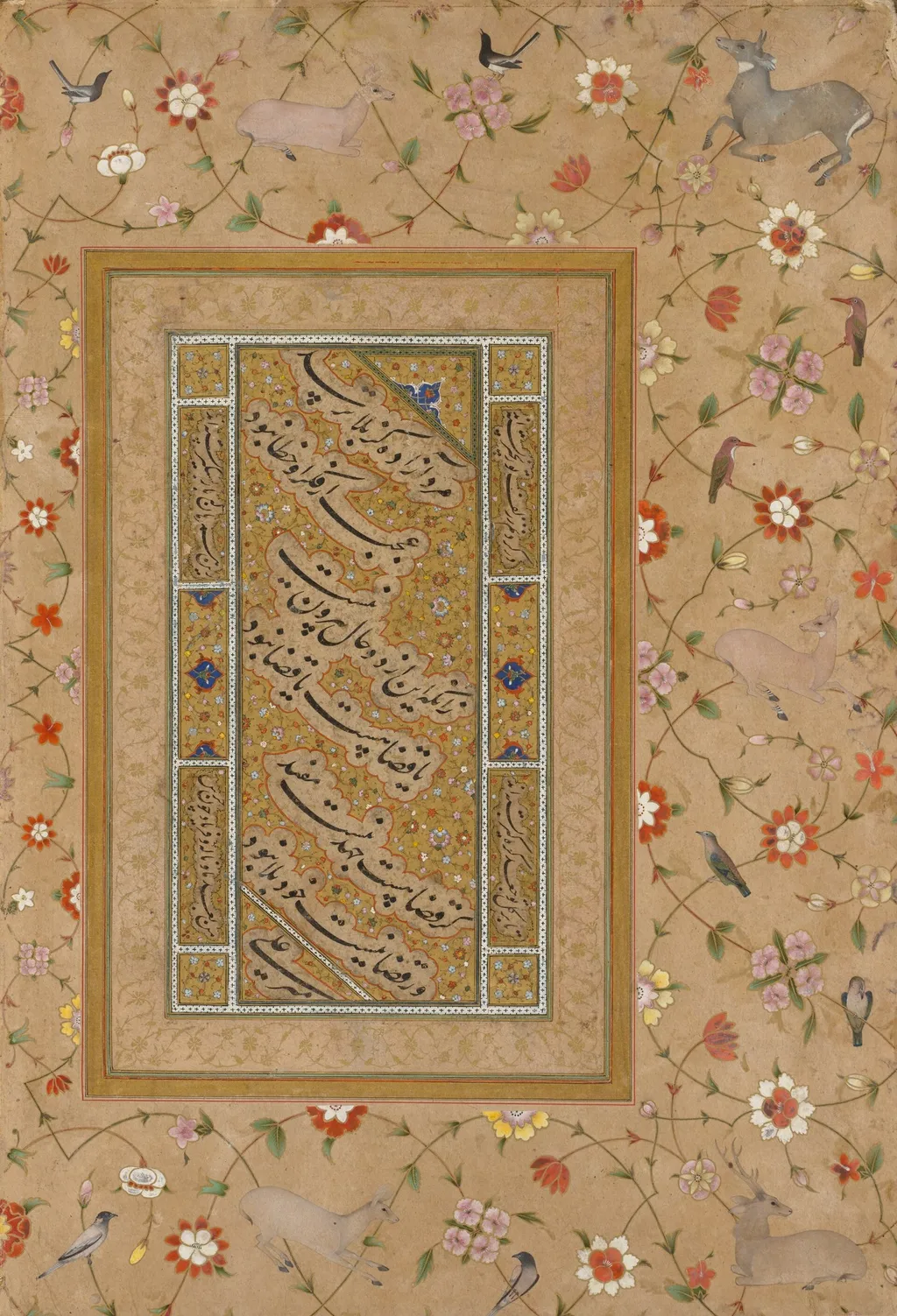
Page from the Late Shah Jahan Album: Persian Calligraphy framed by an ornamental border of flowers, birds, and deer is an unspecified painting. It dates from 1520 and is held in the collection of the Cleveland Museum of Art. This miniature page originates from a late Shah Jahan album, a type of Mughal manuscript.
About this work
Overview
The central area contains Persian calligraphic text rendered in black ink on a gold ground, encircled by an elaborate decorative border.
This miniature page originates from a late Shah Jahan album, a type of Mughal manuscript. The central area contains Persian calligraphic text rendered in black ink on a gold ground, encircled by an elaborate decorative border. The surrounding field is populated with stylized deer, birds and a profusion of floral motifs, executed in a palette of subdued earth tones punctuated by touches of blue and green.
Subject & Meaning
The focal inscription, though difficult to decipher, reflects the courtly practice of embedding poetry or devotional verses within visual compositions. The surrounding fauna—deer in motion and birds perched among vines—symbolize pastoral serenity and the Mughal affinity for nature, while the luxuriant blossoms reinforce themes of abundance and refined taste.
Technique & Style
The page exemplifies Mughal miniature techniques: fine brushwork for intricate line work, a delicate application of gold leaf for the background, and layered washes of mineral pigments to achieve muted, naturalistic hues. Repetitive vine patterns frame the composition, and the animal figures are rendered with a blend of stylization and observation characteristic of late 17th‑century court art.
History & Provenance
Created during the later period of Emperor Shah Jahan’s reign (1628‑1658), the page was likely part of a personal album compiled for elite patronage. It entered the collection of the Cleveland Museum of Art in the 20th century, where it has been conserved and displayed as an example of Mughal manuscript illumination.
Context
Mughal albums, or muraqqas, served as repositories for calligraphy, poetry, and ornamental designs, reflecting the synthesis of Persian artistic traditions with Indian sensibilities. The inclusion of natural motifs aligns with contemporary imperial gardens and the court’s fascination with documenting the subcontinent’s flora and fauna in miniature form.
Artist & collection
