Artwork
Portrait of a Child of the Harmon Family
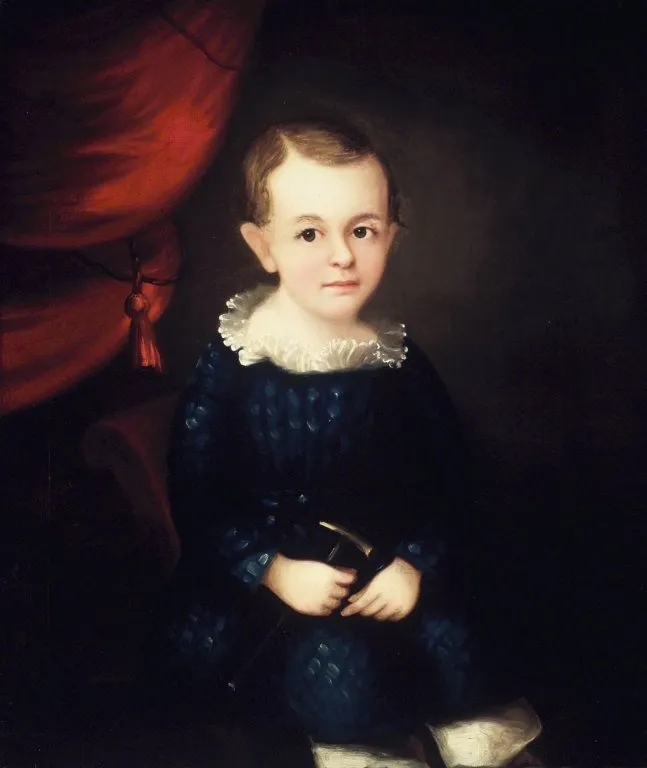
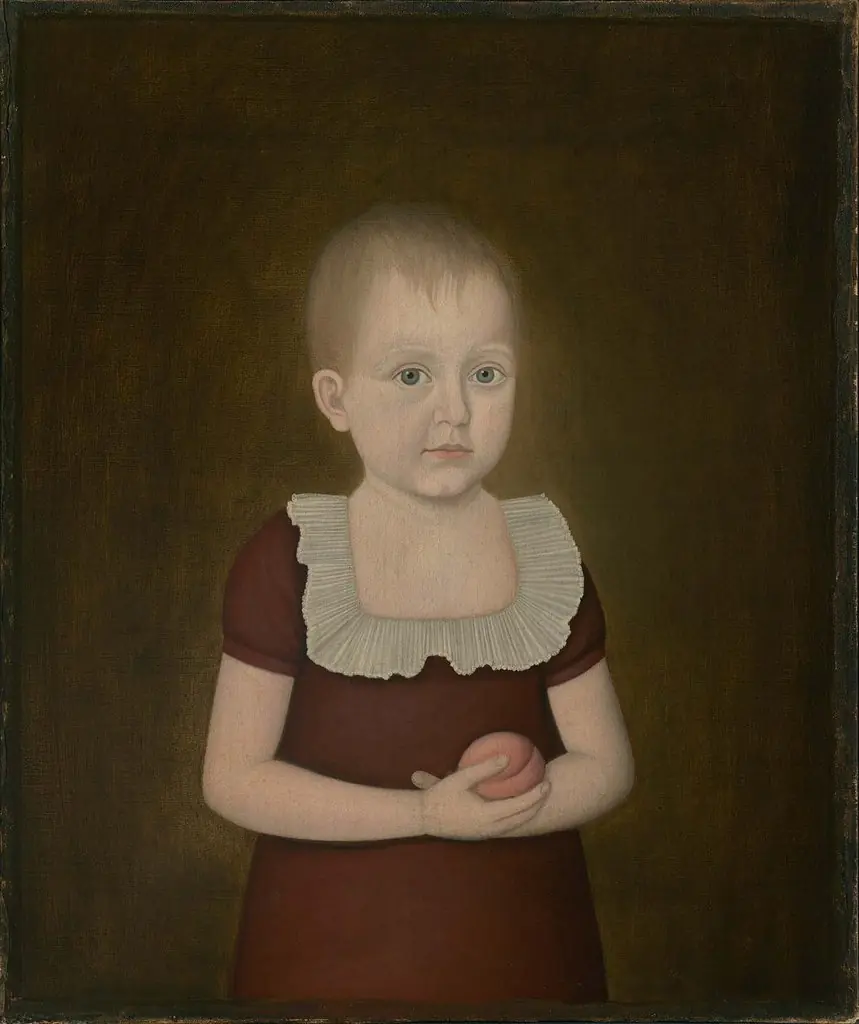
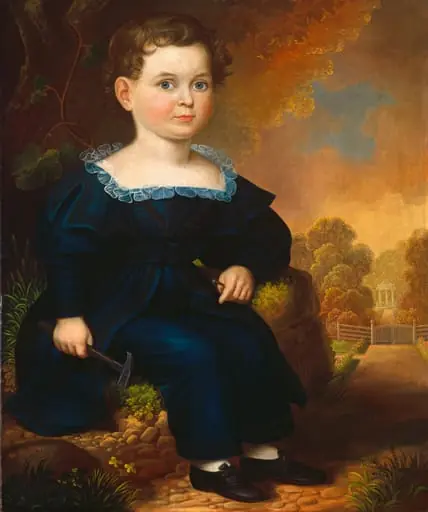
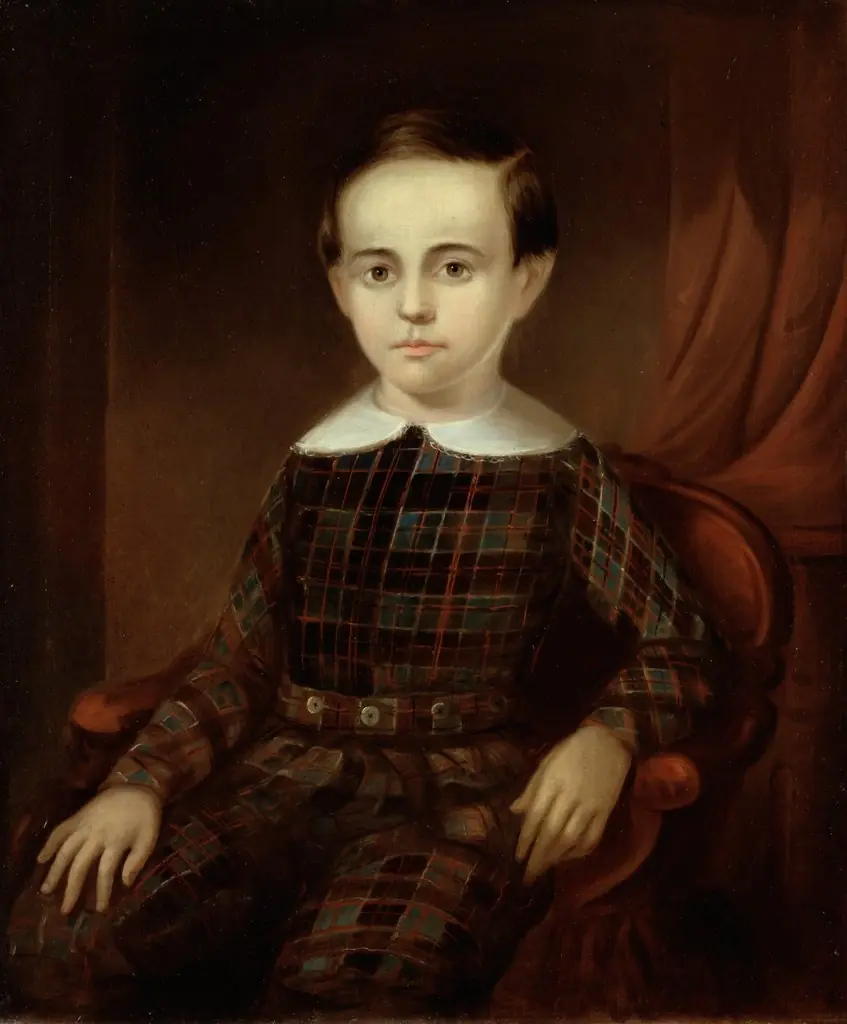
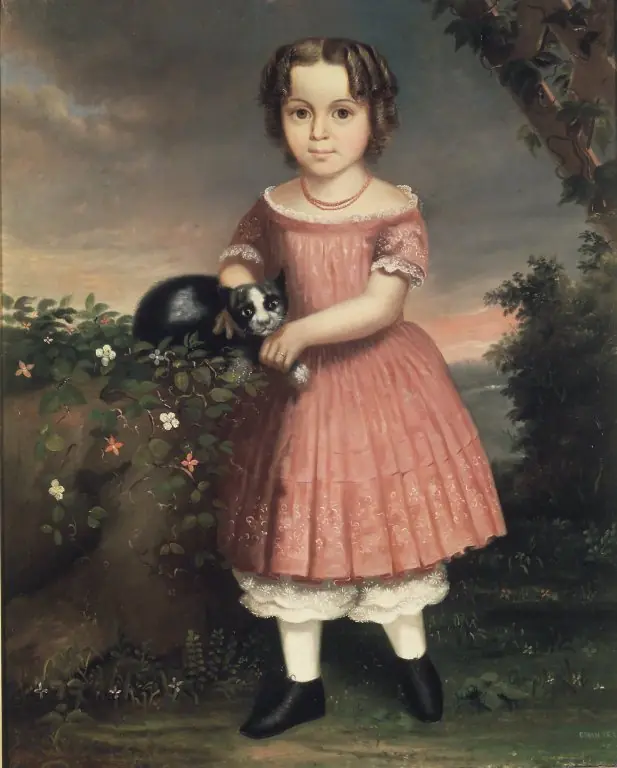
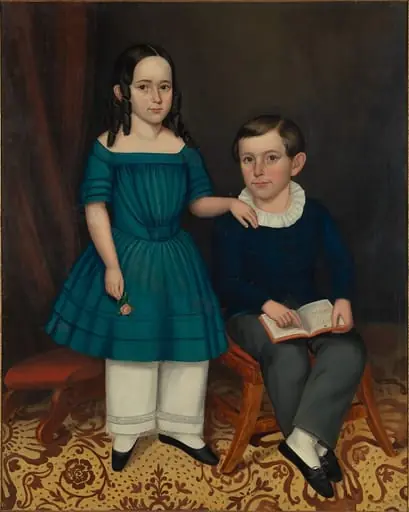
Portrait of a Child of the Harmon Family is an oil painting by the American Folk Art artist Unknown. It dates from 1840 and is held in the collection of the Brooklyn Museum. This oil painting depicts a young child from the Harmon family, rendered with quiet precision.
About this work
Overview
The figure is positioned centrally against a dark background, accented by a red curtain to the left.
This oil painting depicts a young child from the Harmon family, rendered with quiet precision. The figure is positioned centrally against a dark background, accented by a red curtain to the left. The child’s direct gaze and still posture convey a sense of solemnity, while the modest attire and held book suggest an emphasis on education or moral seriousness characteristic of early 19th-century portraiture.
Subject & Meaning
The child, dressed in a dark blue dress with a white ruffled collar, holds a book as a symbol of learning or piety. The neutral expression and unadorned setting reflect a cultural preference for restraint and moral gravity in depictions of youth during this period. The painting likely served as a familial record, emphasizing the child’s place within a values-driven domestic sphere rather than celebrating frivolity or play.
Technique & Style
The artist employed muted tones and soft modeling to define the child’s form, with careful attention to the texture of fabric and the subtle play of light on the collar. The dark background isolates the figure, enhancing focus on posture and expression. Brushwork is controlled and unembellished, avoiding dramatic flourishes in favor of a restrained, almost documentary approach to likeness.
History & Provenance
The painting has been in the collection of the Brooklyn Museum since at least the mid-20th century, though its earlier ownership history remains undocumented. It is attributed to an anonymous artist, likely active in the northeastern United States during the early 1800s. The Harmon family’s identity has not been fully established, limiting contextual biographical detail.
Context
Created during a time when portraiture for children was increasingly common among middle-class families, this work reflects shifting attitudes toward childhood as a period worthy of dignified representation. Unlike earlier idealized depictions, this portrait favors realism and emotional restraint, aligning with broader cultural trends emphasizing moral instruction and quiet virtue.
Legacy
As a representative example of early American domestic portraiture, the painting contributes to understanding how families visually articulated values through image-making. Its preservation in a major public collection ensures continued access for study, offering insight into the visual culture of everyday life in the early 19th century.
Artist & collection

 Domestic Scene
 Giacomo and Cardinal Marco, investing Andrea, Abbot of San Zeno, with his Benefice
 The Nymph of Fontainebleau
 Portrait of a Woman
 Madonna and Child with Saints in the Enclosed Garden
 Venus and Minerva
 Family Group of Four on Sofa
 Wall painting from Room H of the Villa of P. Fannius Synistor at Boscoreale