Artwork
Portrait of a Man
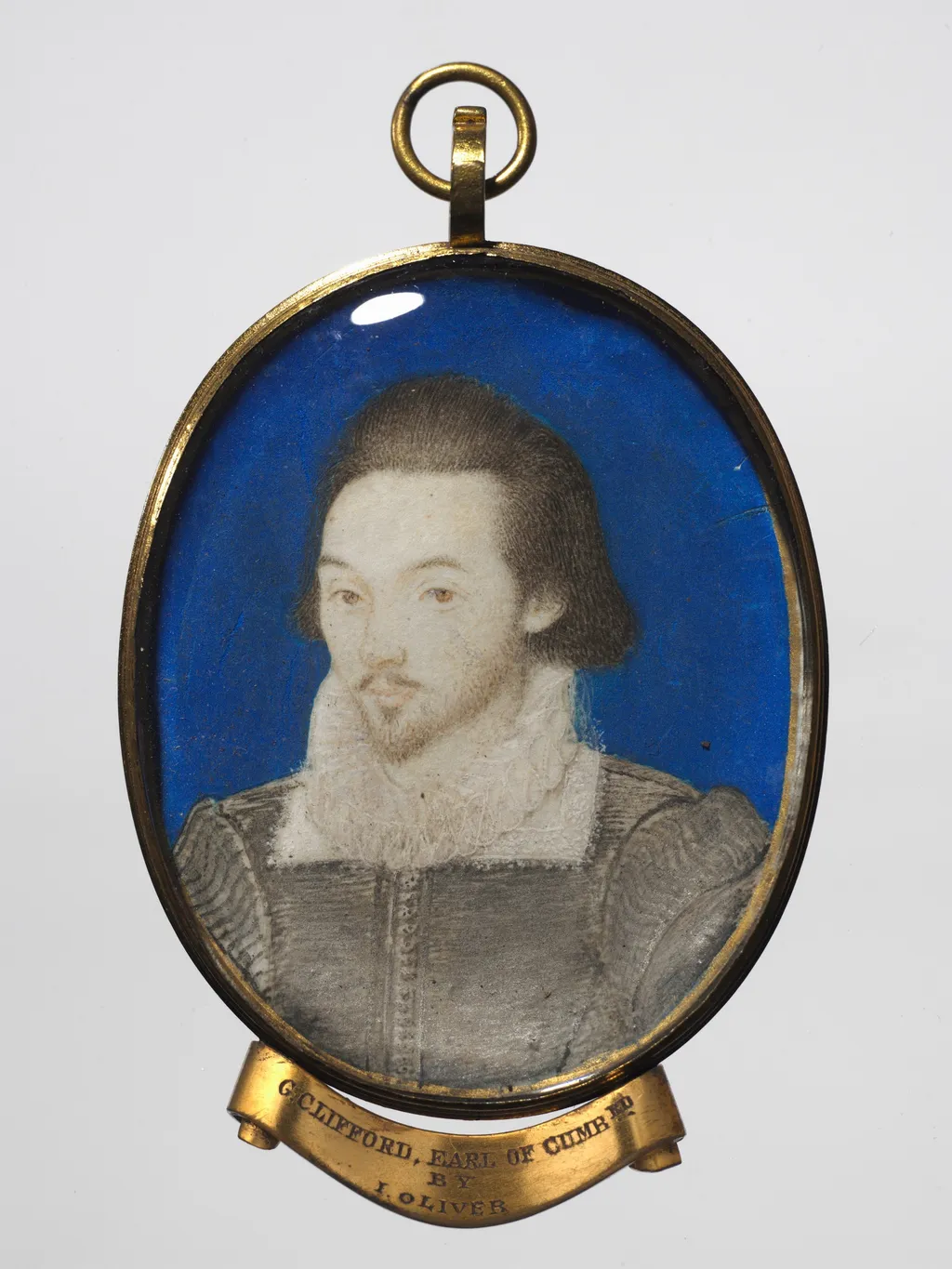
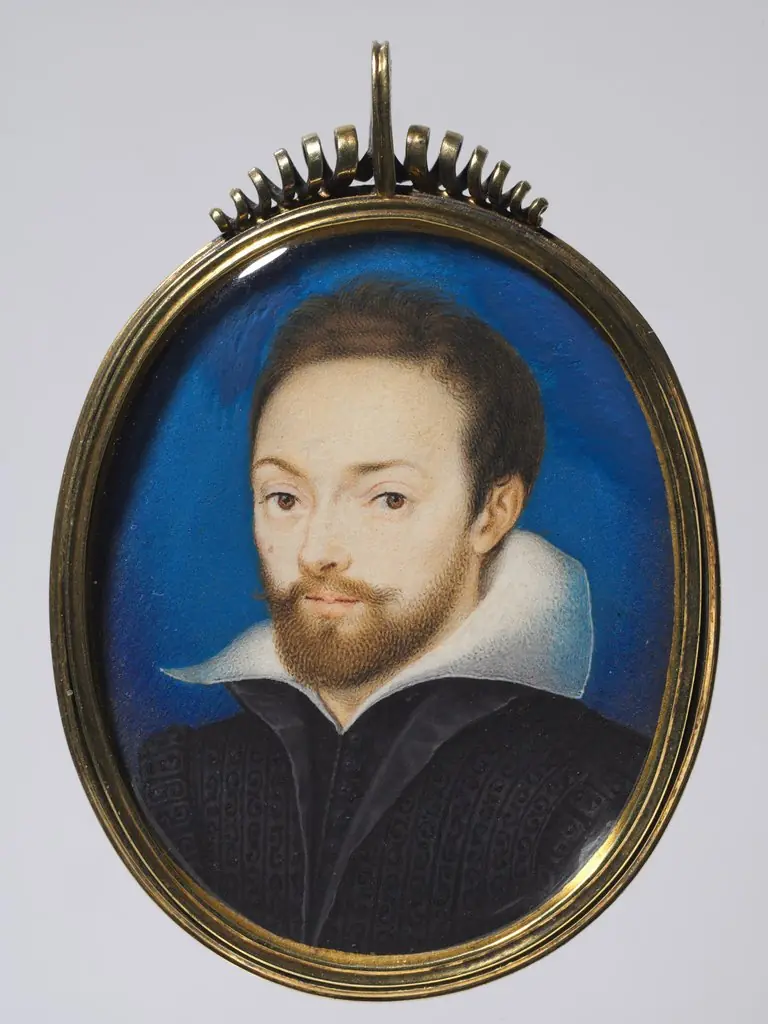
Portrait of a Man is an unspecified painting. It dates from 1600 and is held in the collection of the Cleveland Museum of Art. This oval painting presents a formal depiction of a man, identified by an inscription as Clifford, Earl of Cumberland.
About this work
Overview
The sitter is portrayed with dark hair and a short beard, wearing a dark doublet with a high neckline, complemented by a stiff ruff collar.
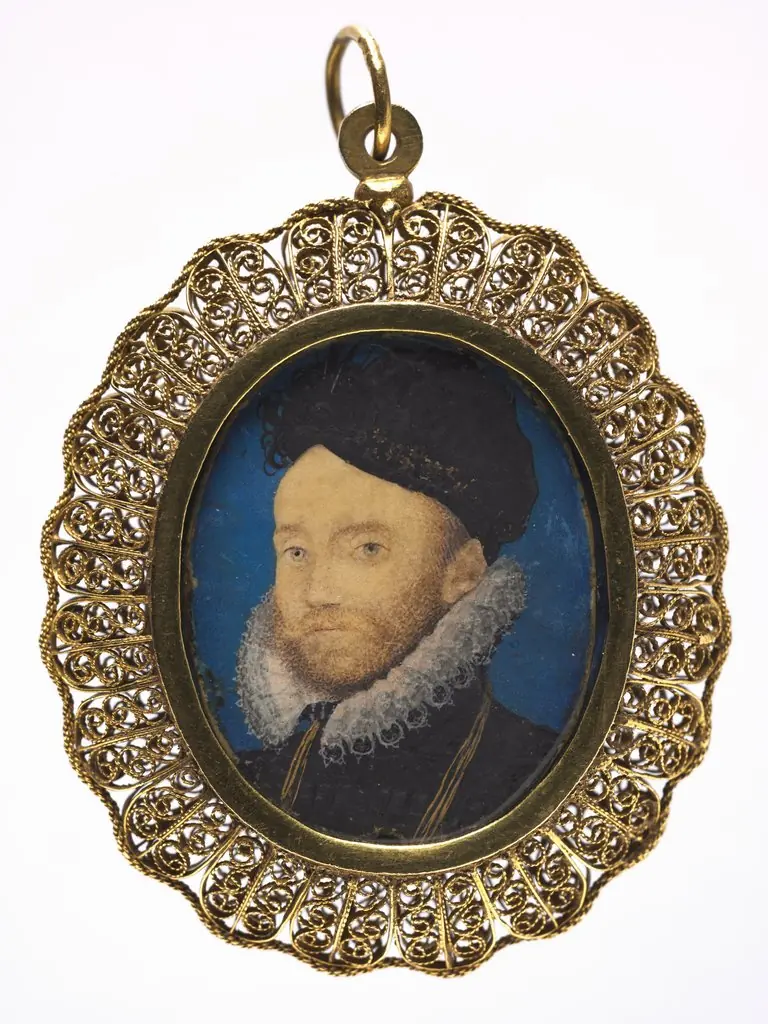
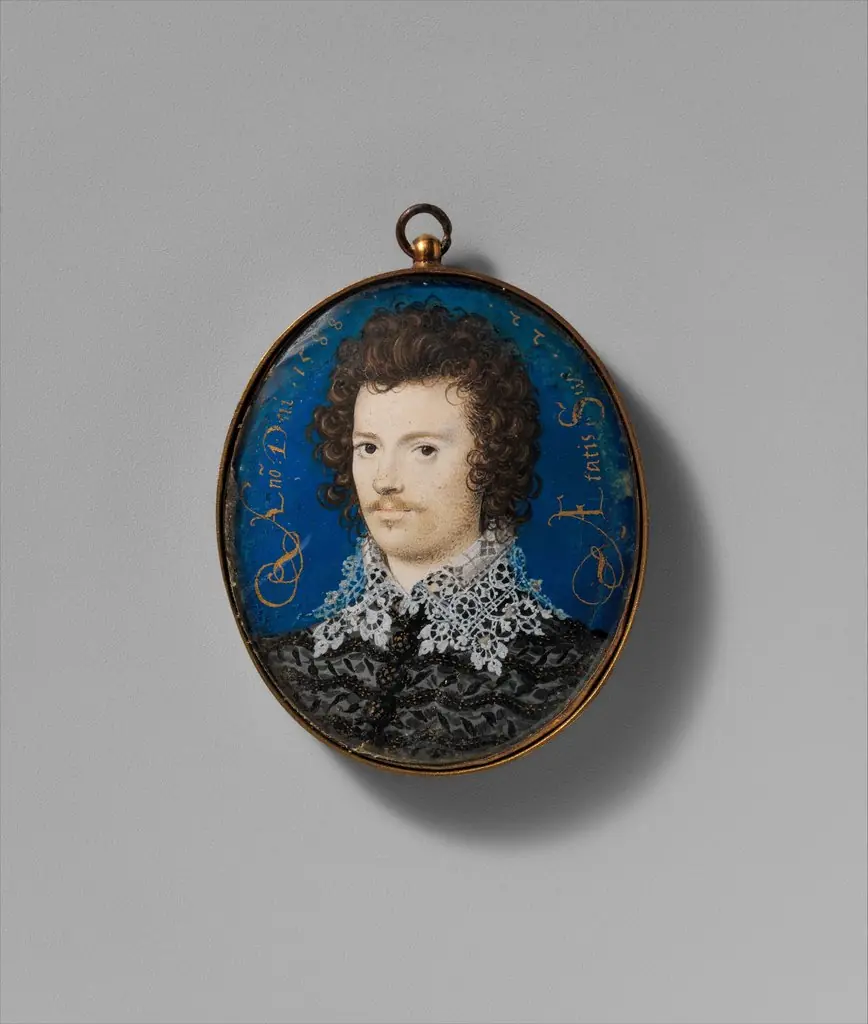
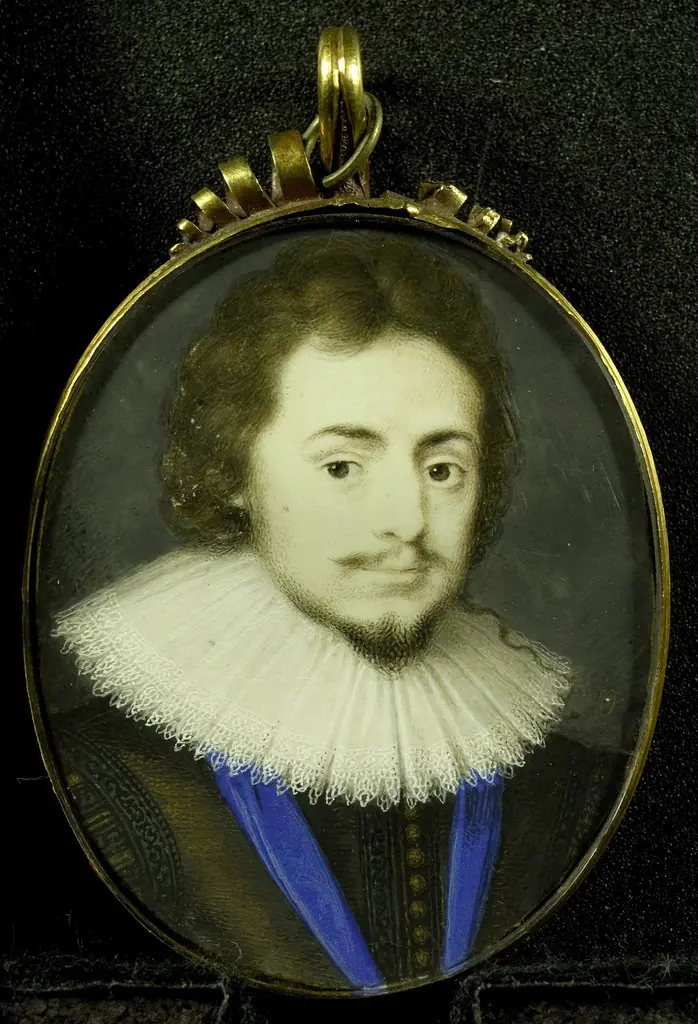
This oval painting presents a formal depiction of a man, identified by an inscription as Clifford, Earl of Cumberland. The sitter is portrayed with dark hair and a short beard, wearing a dark doublet with a high neckline, complemented by a stiff ruff collar. He is positioned against a plain blue background, with the portrait encased in a frame featuring gilded edges. The composition emphasizes the sitter's features through its direct presentation.
Subject & Meaning
The subject of this portrait is identified by a gold inscription at the bottom as "Clifford, Earl of Cumberland." This direct labeling serves to establish the identity of the sitter, a common practice in portraiture of the period to record and commemorate individuals of status. The painting thus functions primarily as a record of a specific noble figure from the late 16th or early 17th century.
Technique & Style
The artist employed a straightforward approach, utilizing simple colors and a flat, even illumination that sharply delineates the sitter's face. This lighting choice minimizes dramatic contrasts, allowing the details of the man's features and the crisp structure of his ruff collar to emerge clearly. The stiff, prominent ruff is characteristic of fashion trends prevalent during the late 1500s and early 1600s, anchoring the work within that specific historical aesthetic.
Context
The sartorial elements within the portrait, particularly the high neckline and the rigid ruff collar, firmly place the work within the late 16th or early 17th century. Such elaborate collars were a defining feature of European aristocratic fashion during this era, signifying social standing and adherence to contemporary styles. The portrait serves as a visual document of the period's dress codes and the conventions of depicting notable individuals.
Artist & collection