Artwork
Portrait of a Young Woman
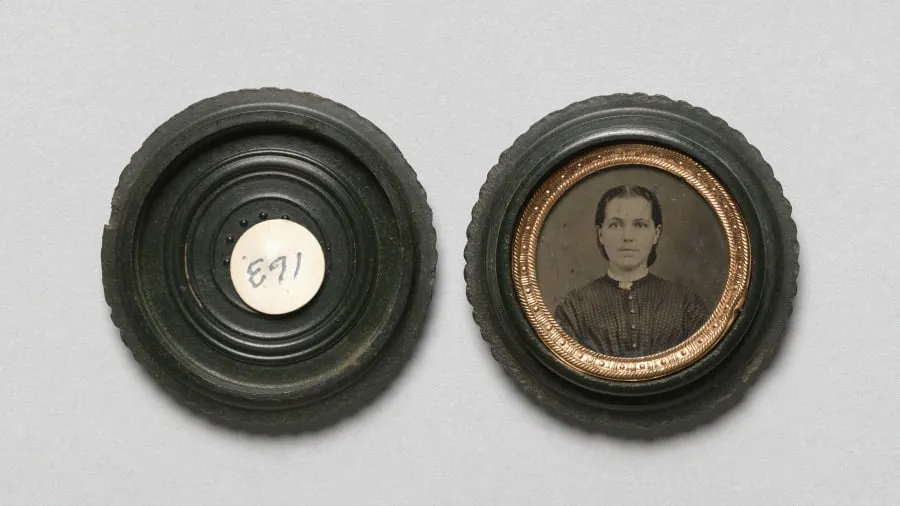
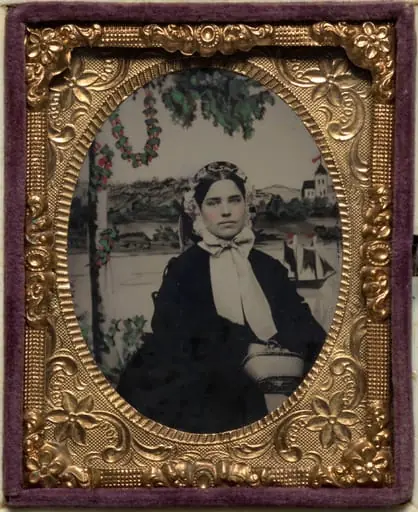
Portrait of a Young Woman is a photography by the Impressionist artist Unknown. It dates from 1858 and is held in the collection of the Cleveland Museum of Art.
About this work
Overview
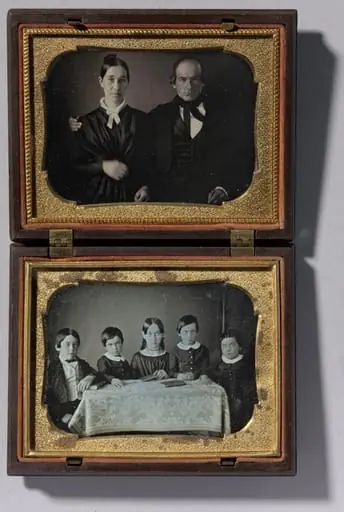
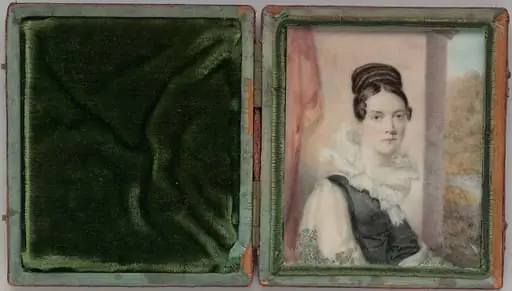
Housed in a decorative thermoplastic case, it was designed for intimate display or transport, serving as a private memento rather than a public statement.
This small photographic portrait of a young woman, dated to the mid-1850s, reflects the growing accessibility of personal imagery in antebellum America. Produced by commercial studios rather than fine artists, it was one of many affordable likenesses made possible by new photographic processes. Housed in a decorative thermoplastic case, it was designed for intimate display or transport, serving as a private memento rather than a public statement.
Subject & Meaning
The sitter, dressed in dark, modest clothing with her hair neatly parted, gazes directly at the viewer with quiet composure. Her expression is neither theatrical nor idealized, suggesting a desire for honest representation. Such portraits fulfilled a cultural need among the middle class to preserve the presence of family members, especially in an era of high mortality and geographic mobility.
Technique & Style
The image was likely a daguerreotype or ambrotype, rendered on a metal or glass plate and sealed behind glass within a protective case. The plain background and even lighting emphasize the subject’s face, minimizing distraction. The case, adorned with tooled patterns and velvet lining, contrasts with the photograph’s simplicity, elevating the object through craftsmanship rather than artistic flair.
History & Provenance
Produced by an unknown studio photographer, likely in a small town or itinerant operation, this portrait was part of a vast commercial industry that met rising demand for personal imagery. Thousands of similar cases were sold annually between 1840 and 1860, often as gifts or keepsakes. Its survival suggests it was cherished by its original owner, passed down through generations before entering institutional collection.
Context
In the 1850s, photography began to democratize portraiture, making likenesses available to those who could never afford painted miniatures. While elite families commissioned oil portraits, middle-class households turned to photographic studios for affordable, rapid results. The ornate cases mirrored the Victorian taste for decorative domestic objects, blending utility with sentimental display.
Legacy
This portrait exemplifies how technology reshaped personal memory in 19th-century America. It stands as evidence of a cultural shift toward valuing ordinary lives through visual record. Though unsigned and uncelebrated in its time, such images now offer invaluable insight into the daily lives, aesthetics, and emotional priorities of non-elite Americans.
Artist & collection

 Domestic Scene
 Giacomo and Cardinal Marco, investing Andrea, Abbot of San Zeno, with his Benefice
 The Nymph of Fontainebleau
 Portrait of a Woman
 Madonna and Child with Saints in the Enclosed Garden
 Venus and Minerva
 Family Group of Four on Sofa
 Wall painting from Room H of the Villa of P. Fannius Synistor at Boscoreale