Artwork
Portrait of Charles Howard, 2nd Baron Howard of Effingham, later 1st Earl of Nottingham
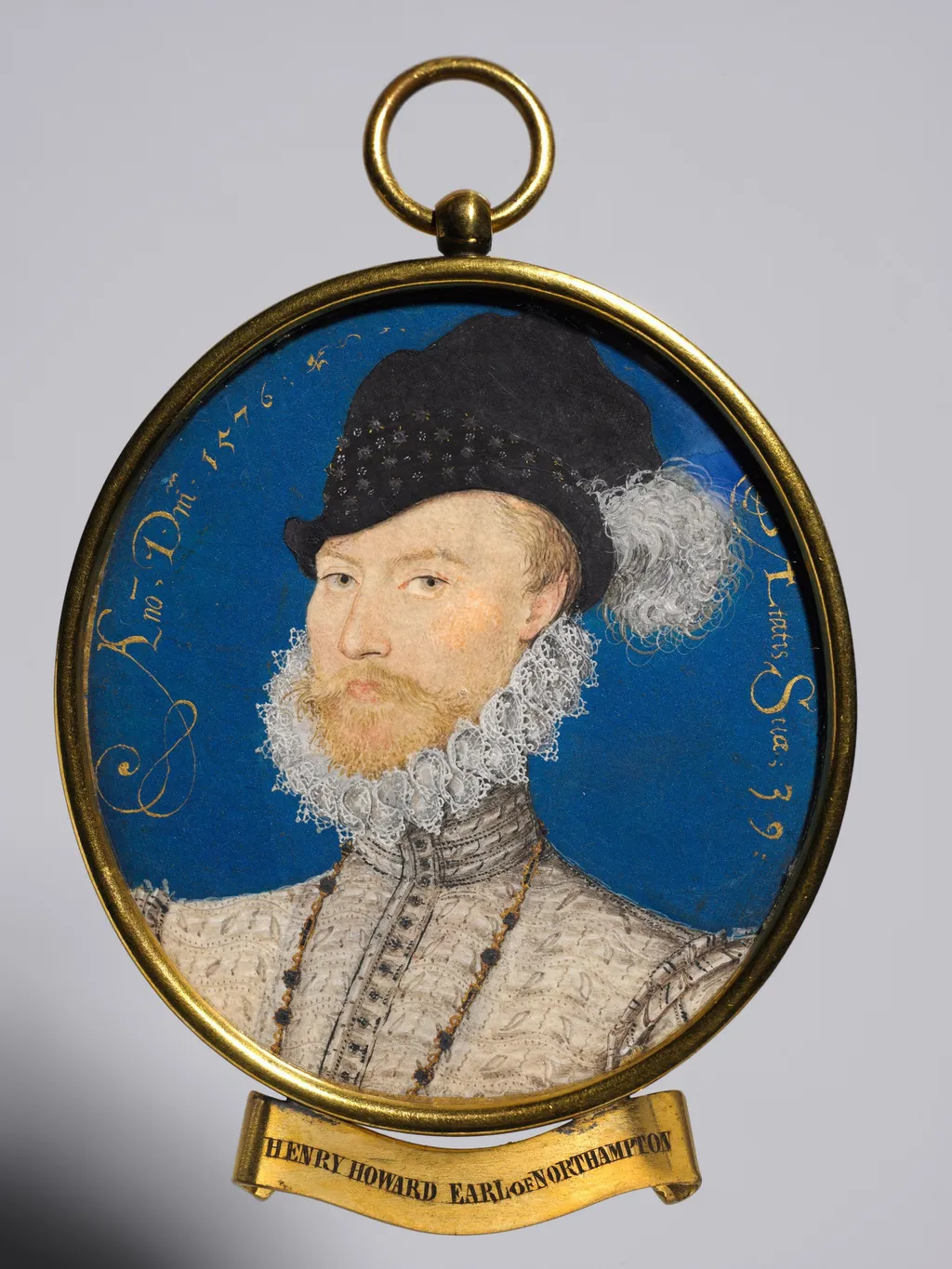
Portrait of Charles Howard, 2nd Baron Howard of Effingham, later 1st Earl of Nottingham is an unspecified painting. It dates from 1588 and is held in the collection of the Cleveland Museum of Art.
About this work
If you're interested in learning more about portraits from this time period, you might want to explore the work of artist Unknown.
This portrait features a man with a fair complexion and a red beard, wearing a black hat adorned with white feathers. He is dressed in a white shirt with a high collar and a white lace ruff, complemented by a white and black patterned doublet. The background of the portrait is a solid blue color.
The man's attire and the style of the portrait suggest that it was created during the 16th century. The level of detail and the use of color in the portrait indicate that it was painted by a skilled artist.
If you're interested in learning more about portraits from this time period, you might want to explore the work of artist Unknown.
Overview
The painting depicts Charles Howard, who held the title of 2nd Baron Howard of Effingham before being elevated to the 1st Earl of Nottingham. He is presented with a fair complexion, a red beard, and a black hat trimmed with white feathers. His attire includes a high‑collared white shirt, a lace ruff, and a patterned doublet, set against a uniform blue background.
Subject & Meaning
Howard’s portrait emphasizes his status and martial connections, evident in the elaborate headwear and richly detailed clothing. The use of white lace and the striking contrast of black and white in the doublet underline his noble rank, while the calm, frontal pose conveys authority and composure typical of Tudor-era English aristocracy.
Technique & Style
Executed in the late 16th‑century English portrait tradition, the work displays meticulous brushwork in the rendering of fabric textures and facial features. The limited palette—dominant blues, blacks, and whites—focuses attention on the sitter’s expression, while the flat background reflects contemporary conventions that prioritize the figure over setting.
History & Provenance
The artist of the portrait remains unidentified, a common circumstance for many courtly commissions of the period. The painting has been associated with collections of English nobility and later entered museum holdings, where it serves as a visual record of Howard’s rise from baron to earl during the Elizabethan era.
Context
Created during a time when portraiture functioned as a means of political self‑presentation, the image aligns with the visual culture of the Tudor court. Howard, a prominent naval commander, would have required a likeness that affirmed his loyalty to the crown and his emerging prominence in national affairs.
Artist & collection