Artwork
Portrait of Lady Grace Anna Newenham
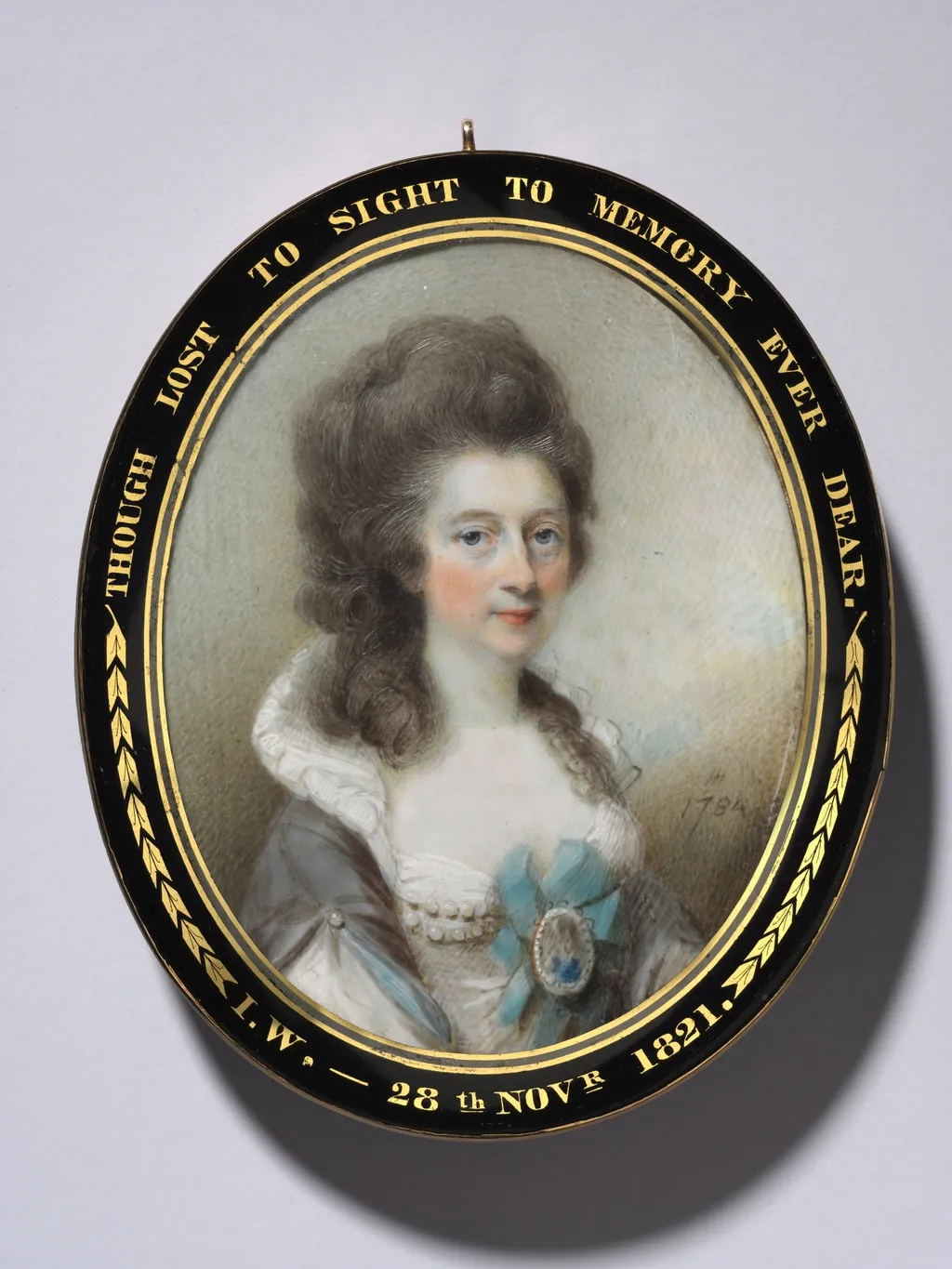
Portrait of Lady Grace Anna Newenham is an unspecified painting. It dates from 1792 and is held in the collection of the Cleveland Museum of Art.
About this work
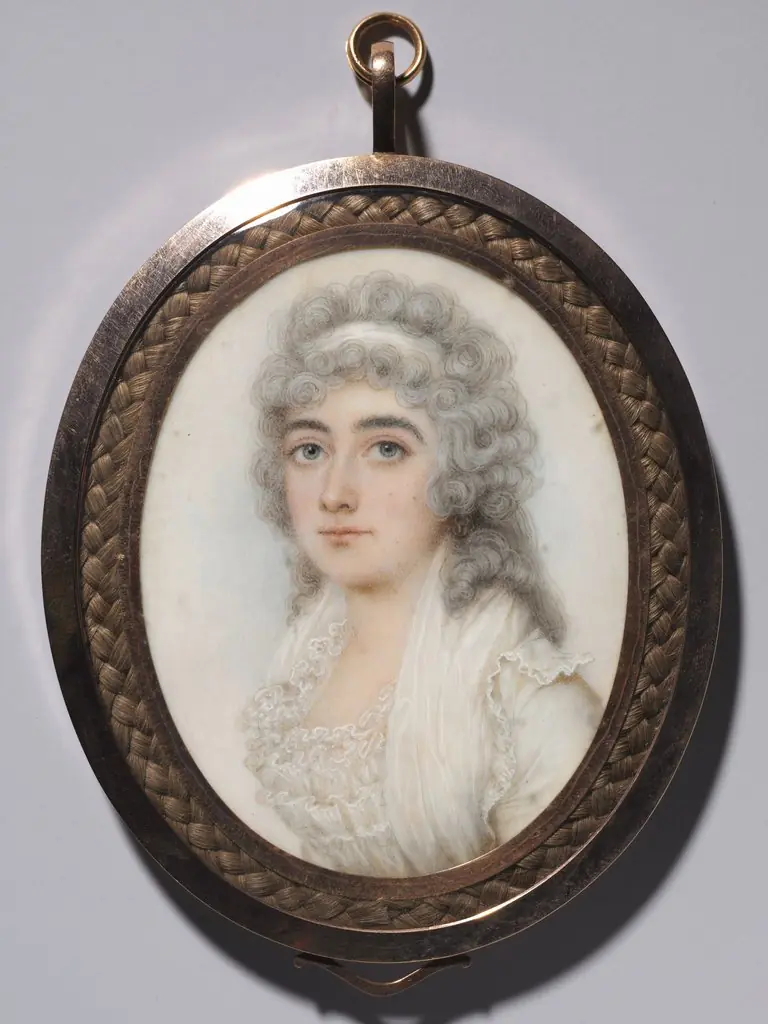
The painting is set against a light-colored background, with the subject's face and upper body prominently displayed.
This oval portrait features a woman with dark, curly hair and a white dress adorned with a blue ribbon. The painting is set against a light-colored background, with the subject's face and upper body prominently displayed. The woman's attire is embellished with pearls and a brooch, adding to her elegant appearance.
A black border surrounds the portrait, featuring gold text that reads "LOST TO SIGHT TO MEMORY EVER DEAR" at the top and "THOUGH LOST TO SIGHT TO MEMORY EVER DEAR" at the bottom. The border also includes the initials "I.W." and the date "28th NOVR 1821." These details suggest that the portrait may have been created as a memorial or tribute to the subject.
To learn more about the artistic techniques used in this portrait, explore the concept of chiaroscuro.
Overview
The Portrait of Lady Grace Anna Newenham presents a formal depiction of its subject within an oval frame. Dated November 28, 1821, and featuring a poignant inscription, the work functions as both a likeness and a commemorative object. The details surrounding the central image indicate its probable creation as a tribute, marking a significant personal remembrance rather than merely a standard portrait.
Subject & Meaning
The subject, Lady Grace Anna Newenham, is portrayed in a manner suggesting refinement and status. The most distinctive feature is the black border, which bears the inscription "LOST TO SIGHT TO MEMORY EVER DEAR" in gold lettering. This phrase, repeated at both the top and bottom, strongly indicates the portrait's function as a memorial. It transforms the image into a lasting tribute, likely commissioned to honor her memory after her death.
Technique & Style
The central image focuses on the woman's face and upper body, rendered with attention to detail. She is depicted with dark, curly hair and wears a white dress accented by a blue ribbon. Further embellishments include pearls and a brooch, contributing to an overall impression of elegance. The figure is set against a light-colored background, which allows the subject to stand out prominently within the oval composition.
Context
Beyond the inscription, the black border also includes the initials "I.W." and the precise date "28th NOVR 1821." These specific details provide further insight into the portrait's origins and purpose. The inclusion of a date and initials suggests a personal dedication, likely marking the occasion of its creation or the specific event it commemorates, reinforcing its role as a deeply personal and enduring remembrance.
Artist & collection