Artwork
Posthumous Portrait of Aucke Stellingwerff, Admiral of Friesland, Killed in 1665 at Lowestoft by a Cannonball
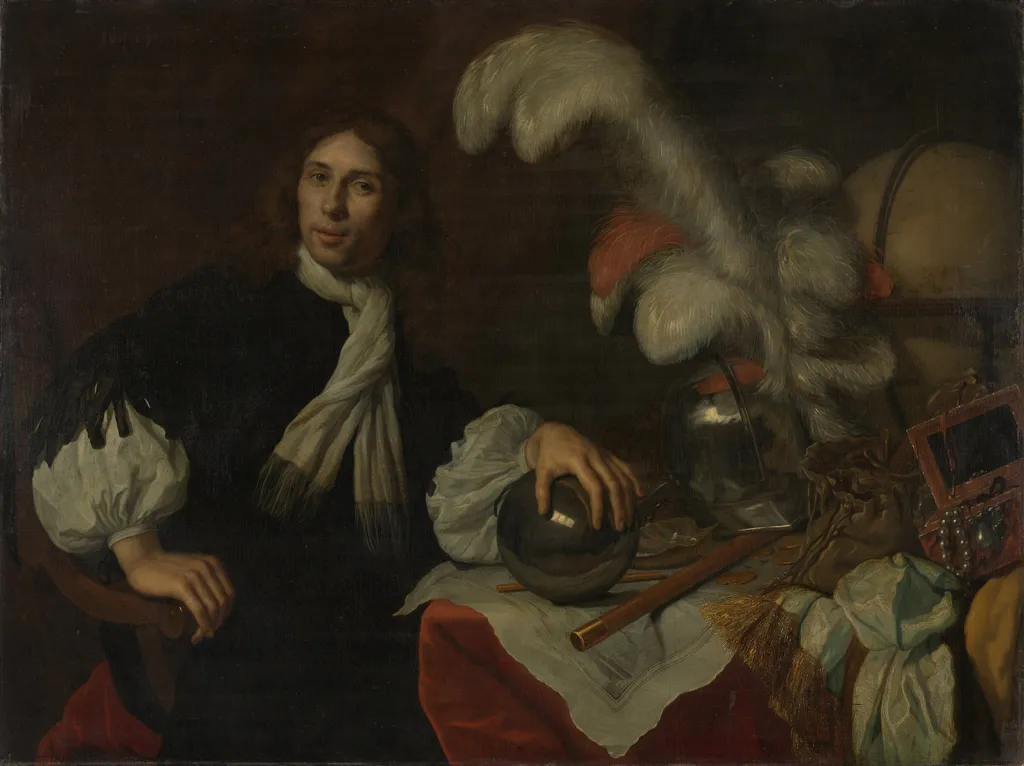
Posthumous Portrait of Aucke Stellingwerff, Admiral of Friesland, Killed in 1665 at Lowestoft by a Cannonball is an unspecified painting by the Baroque artist Unknown. It dates from 1670 and is held in the collection of the Rijksmuseum.
About this work
Overview
The work presents a seated figure dressed in a dark coat with a light scarf, his expression composed and his right hand resting on a curved object. A wig adorned with red ribbons, a hat and assorted items lie on a table behind him, while the backdrop is a plain, shadowed surface that draws attention to the sitter and the nearby objects.
Subject & Meaning
The portrait depicts Aucke Stellingwerff, who held the rank of Admiral of Friesland and fell in battle at Lowestoft in 1665. The inclusion of personal effects such as the wig and hat, along with the calm demeanor, suggests a commemorative intent, presenting the deceased as dignified and serene despite his violent death.
Technique & Style
The artist employs a strong chiaroscuro contrast, illuminating the figure’s face and upper body while the surrounding space recedes into darkness. This use of light and shadow creates a three‑dimensional effect, emphasizing texture on the coat and scarf and giving the curved object a tactile presence. The composition is restrained, focusing on the sitter rather than elaborate background details.
History & Provenance
Identified as a posthumous portrait, the painting was likely produced shortly after Stellingwerff’s death to honor his service. Its exact origin and the hand of the painter remain uncertain, but the work has been documented in collections of Dutch maritime portraiture and is referenced in studies of 17th‑century commemorative art.
Context
Created in the mid‑17th century, the portrait reflects the Dutch Republic’s practice of memorializing naval officers after notable battles.
Created in the mid‑17th century, the portrait reflects the Dutch Republic’s practice of memorializing naval officers after notable battles. The sober palette and emphasis on personal regalia align with contemporary conventions for portraying military figures, while the inclusion of a wig—a fashionable accessory of the period—situates the work within the broader cultural milieu of Dutch aristocracy.
Artist & collection

 Domestic Scene
 Giacomo and Cardinal Marco, investing Andrea, Abbot of San Zeno, with his Benefice
 The Nymph of Fontainebleau
 Portrait of a Woman
 Madonna and Child with Saints in the Enclosed Garden
 Venus and Minerva
 Family Group of Four on Sofa
 Wall painting from Room H of the Villa of P. Fannius Synistor at Boscoreale
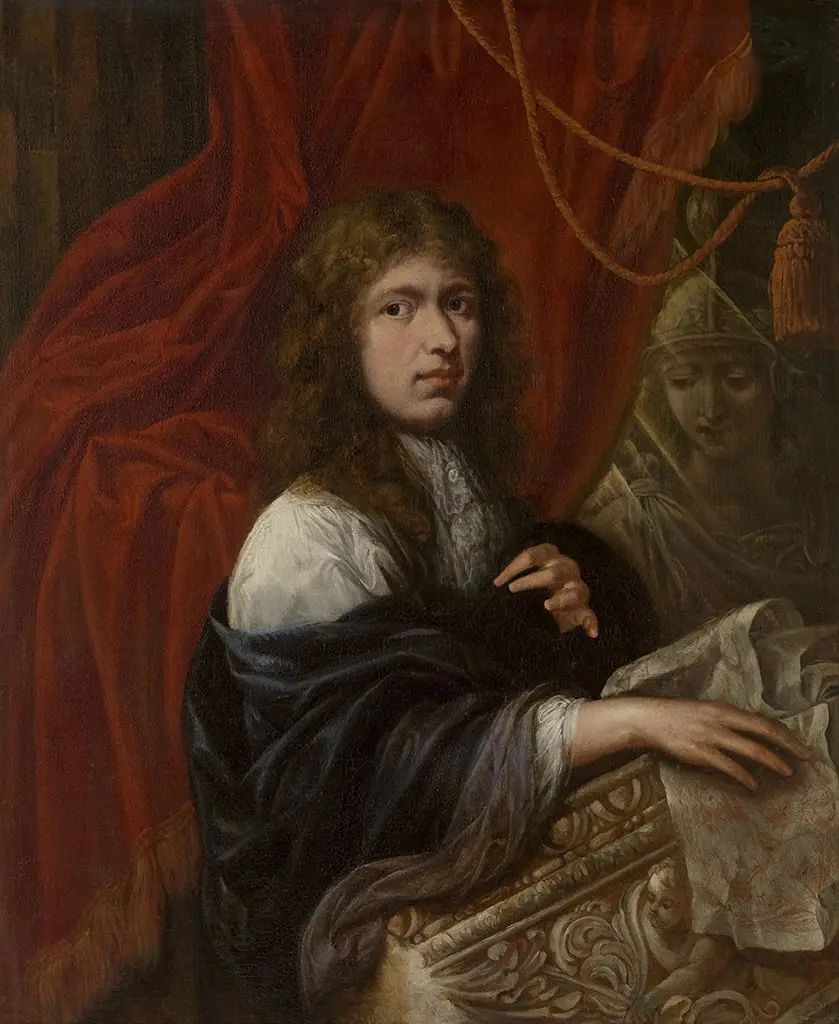 Self-Portrait
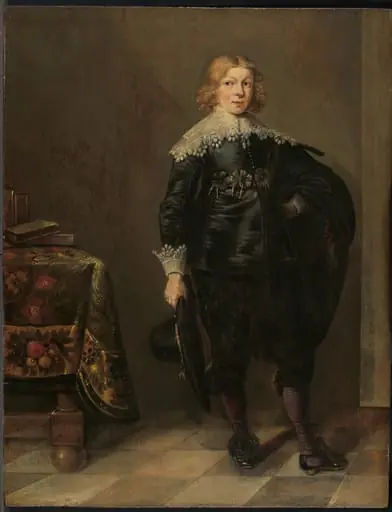 Portrait of a Boy
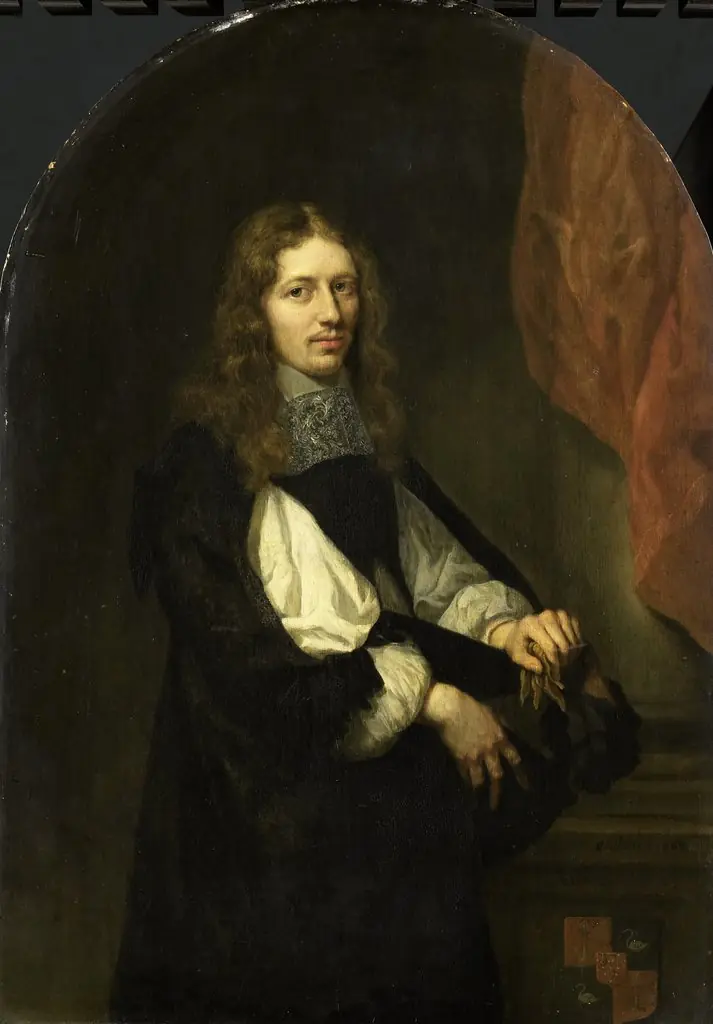 Portrait of Pieter de Graeff (1638-1707), lord of Zuid-Polsbroek, Purmerland, and Ilpendam. Alderman of Amsterdam
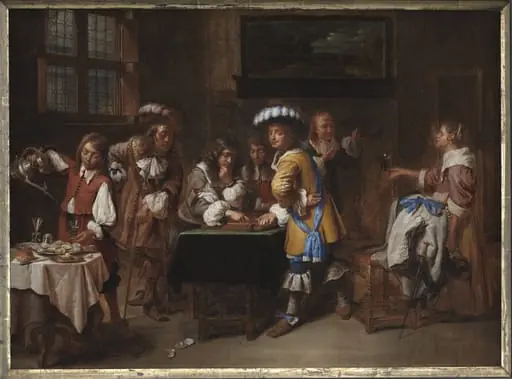 Trictrac Players
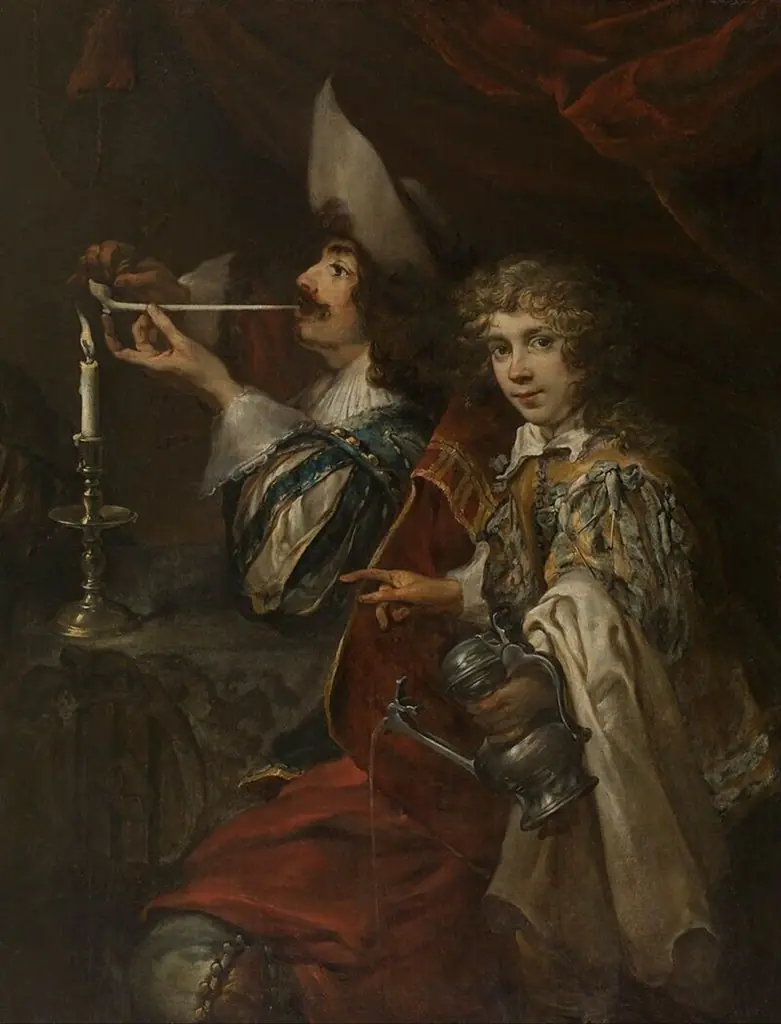 The Smoker
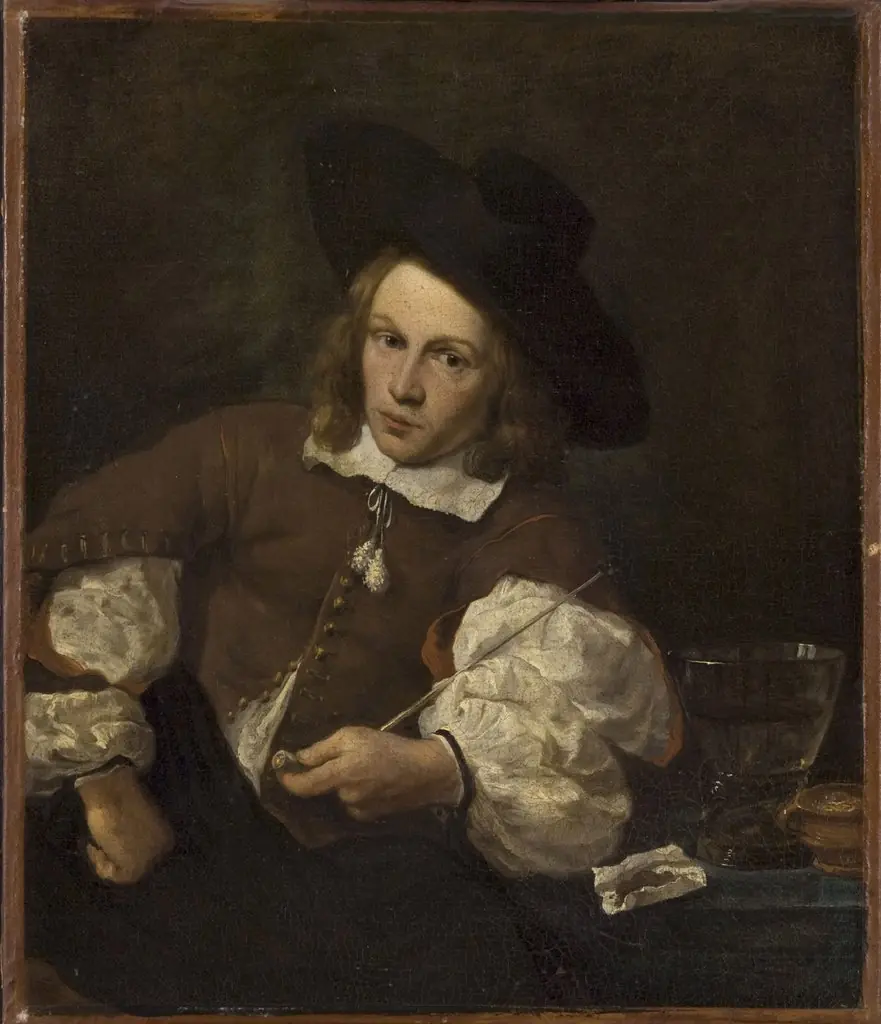 Portrait of a Young Man Seated Smoking
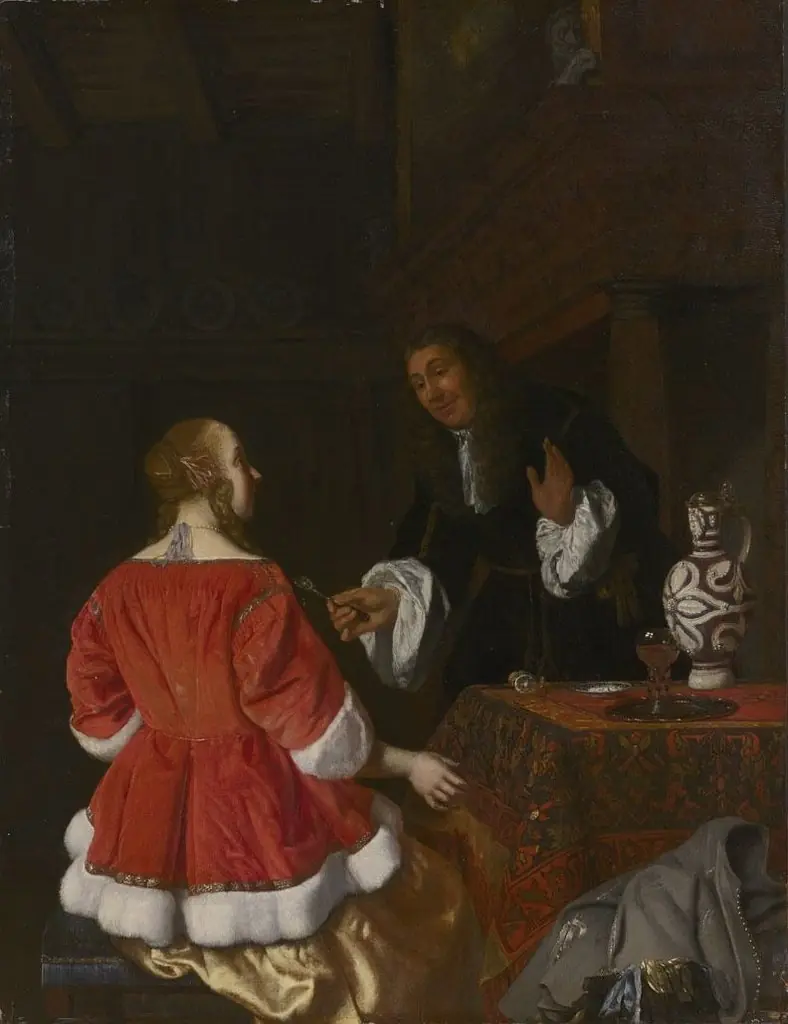 The lemon slice
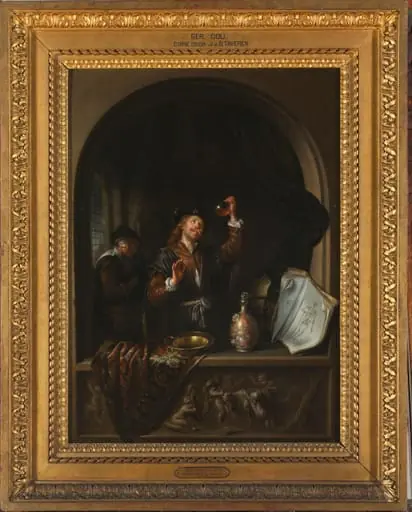 The Doctor
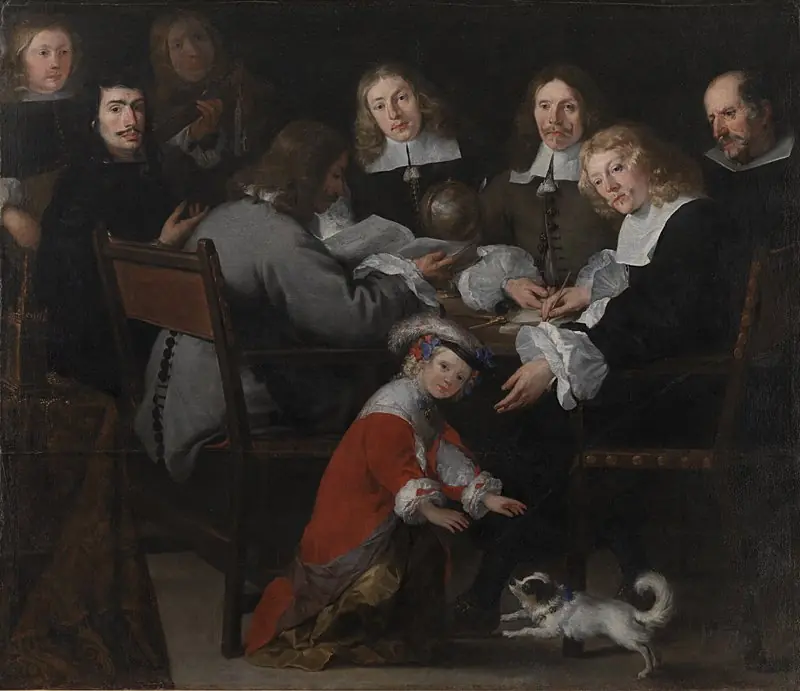 Ambassador C. Pedersen Lerche with his Staff
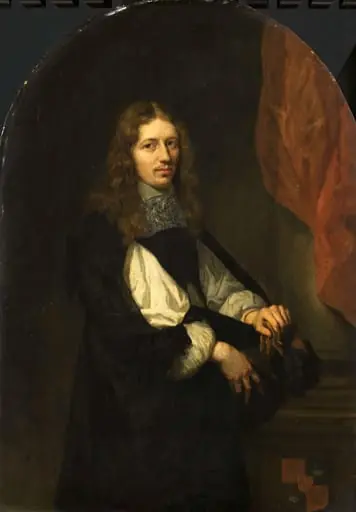 Portrait of Pieter de Graeff (1638-1707), lord of Zuid-Polsbroek, Purmerland, and Ilpendam. Alderman of Amsterdam