Artwork
Radha and Krishna
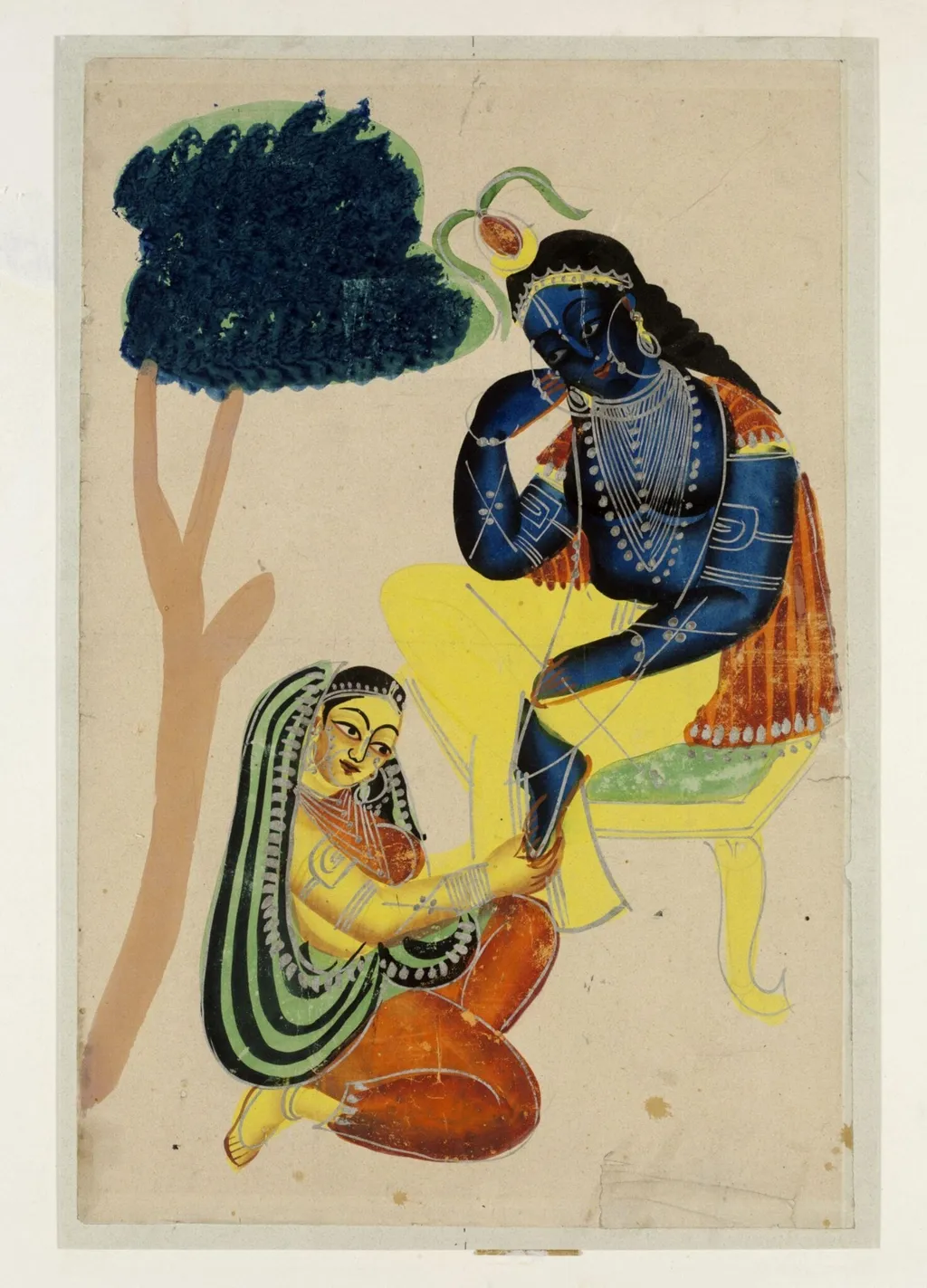
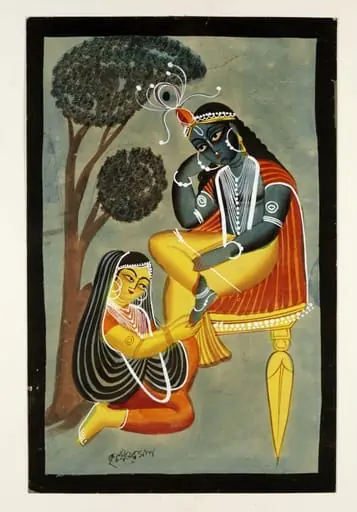
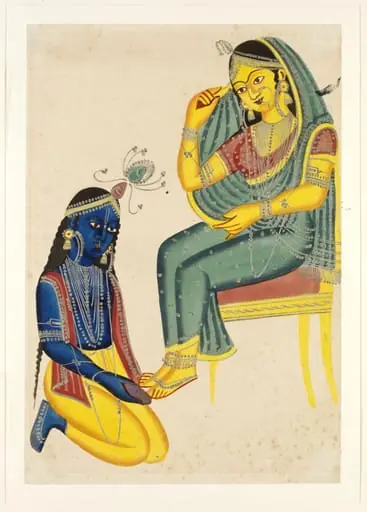
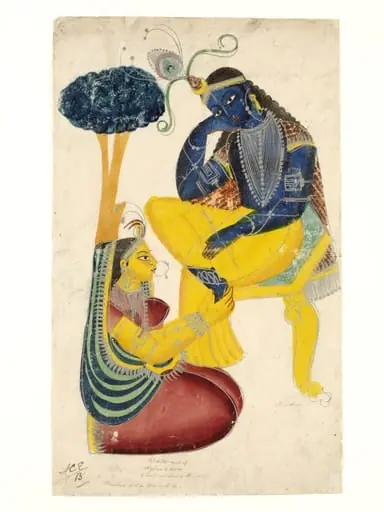
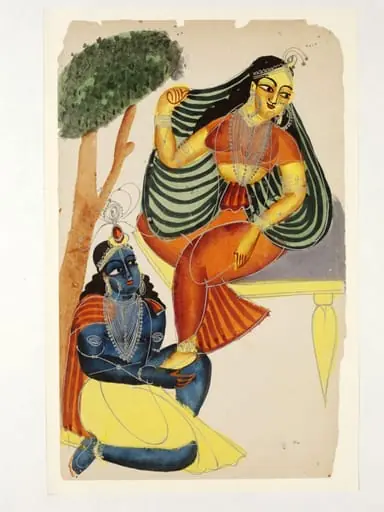
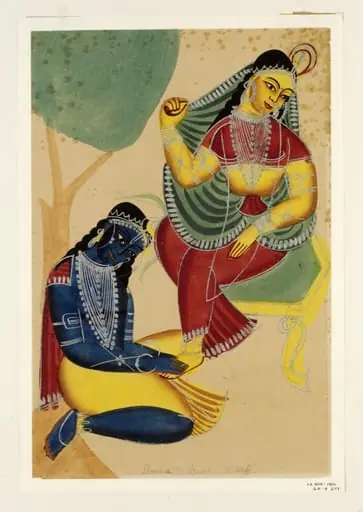
Radha and Krishna is a paint painting by the Impressionist artist Unknown. It dates from 1880 and is held in the collection of the Victoria and Albert Museum.
About this work
Overview
The work originates from the Kalighat tradition, known for its vivid pigments and simplified forms.
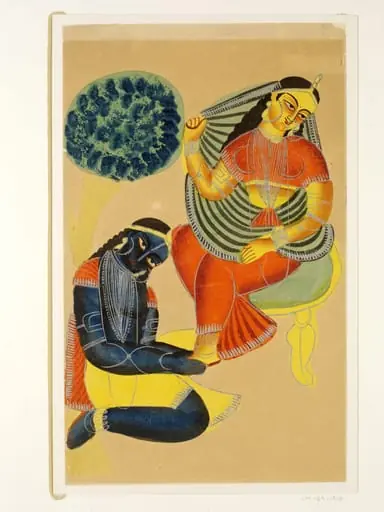
Created in 1880, this opaque watercolor on paper portrays Radha and Krishna beneath a dense tree. The work originates from the Kalighat tradition, known for its vivid pigments and simplified forms. Though the artist remains unidentified, the piece reflects the commercial and devotional painting practices of 19th-century Bengal, produced for pilgrims and collectors seeking portable religious imagery.
Subject & Meaning
The scene captures Radha seated at Krishna’s feet, a gesture of devotion and intimate connection central to their mythological relationship. Krishna, identified by his blue skin and crown, embodies divine grace, while Radha, adorned in patterned yellow, holds a red object—possibly a flower or fruit—symbolizing offering. Their mutual gaze suggests quiet communion, reflecting the bhakti ideal of soulful surrender to the divine.
Technique & Style
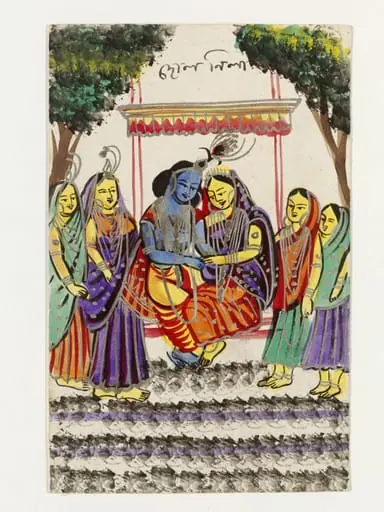
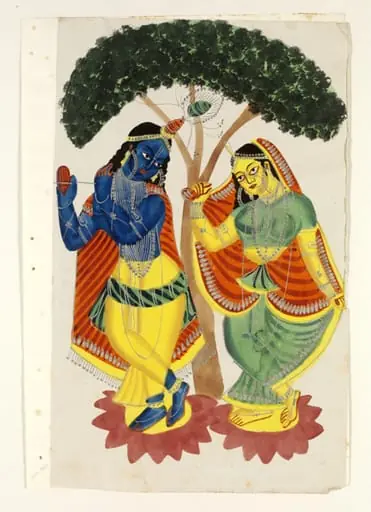
The painting employs bold, flat areas of color with minimal shading, characteristic of Kalighat art. Outlines are crisp, forms are stylized, and details like fabric patterns are rendered with rhythmic precision. The light background enhances the vibrancy of the figures, while the dark foliage frames them without depth or perspective, prioritizing symbolic presence over naturalism.
History & Provenance
Produced in Calcutta during the late 19th century, this work likely emerged from a Kalighat studio near the Kalighat temple, where artists catered to pilgrims with affordable devotional images. Many such paintings entered European collections through colonial trade. The piece now resides in the Victoria and Albert Museum, part of a broader archive of South Asian popular art collected in the Victorian era.
Context
Kalighat paintings responded to urbanization and changing religious practices in colonial Bengal. As temple rituals evolved, artists adapted traditional Hindu narratives into accessible, mass-produced images. Radha and Krishna were frequent subjects, resonating with both devotional audiences and emerging middle-class patrons seeking cultural identity amid British influence.
Legacy
This painting exemplifies how folk traditions sustained religious storytelling in modern India. Though dismissed by early Western collectors as crude, Kalighat works are now recognized for their expressive economy and cultural insight. The Radha-Krishna motif continues to influence contemporary Indian art, preserving a visual language rooted in devotion and everyday aesthetics.
Artist & collection

 Domestic Scene
 Giacomo and Cardinal Marco, investing Andrea, Abbot of San Zeno, with his Benefice
 The Nymph of Fontainebleau
 Portrait of a Woman
 Madonna and Child with Saints in the Enclosed Garden
 Venus and Minerva
 Family Group of Four on Sofa
 Wall painting from Room H of the Villa of P. Fannius Synistor at Boscoreale