Artwork
Radha
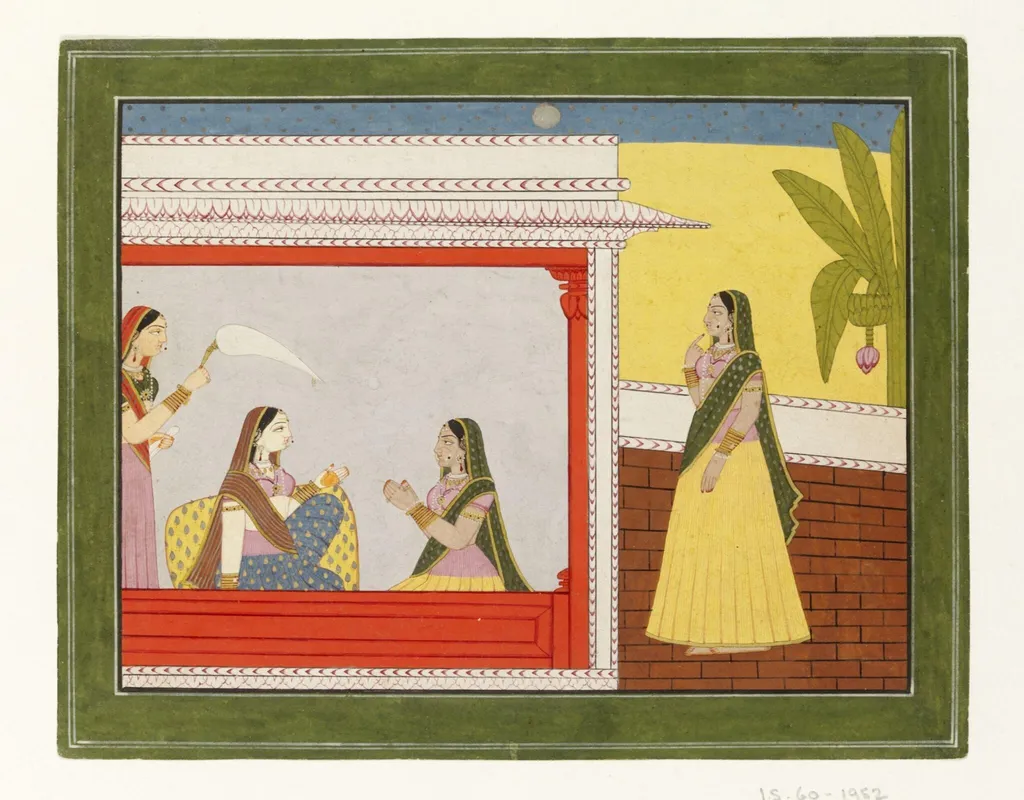
Radha is a paint painting by the Romanticist artist Unknown. It dates from 1790 and is held in the collection of the Victoria and Albert Museum.
About this work
Overview
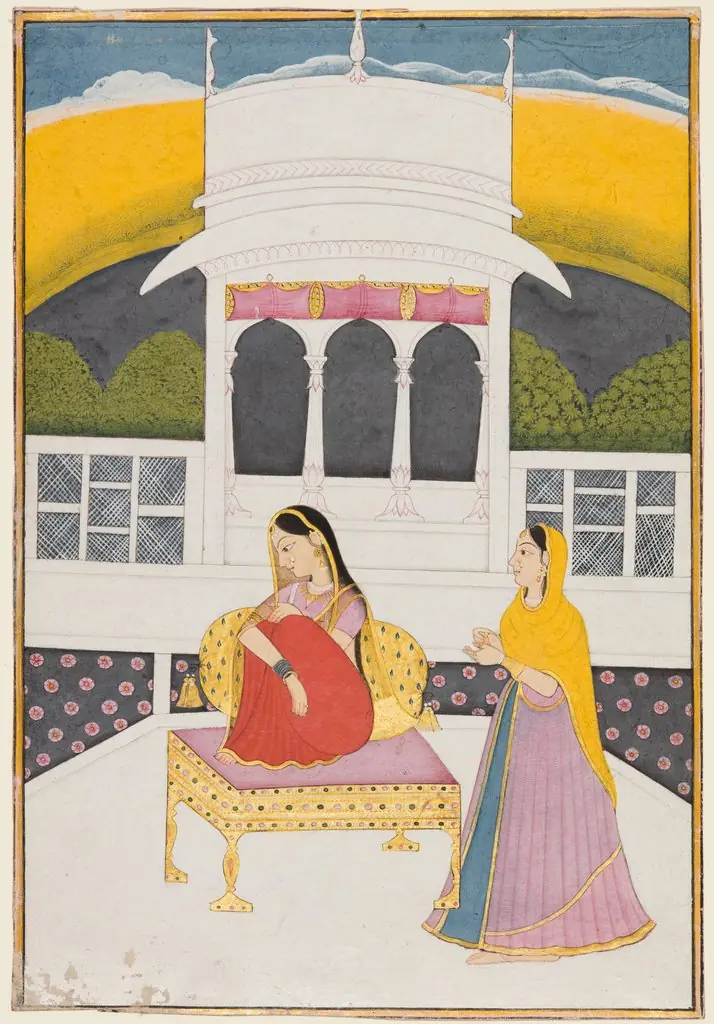
The composition is intimate, with figures arranged around a red balustrade, their gestures and positioning suggesting emotional support.
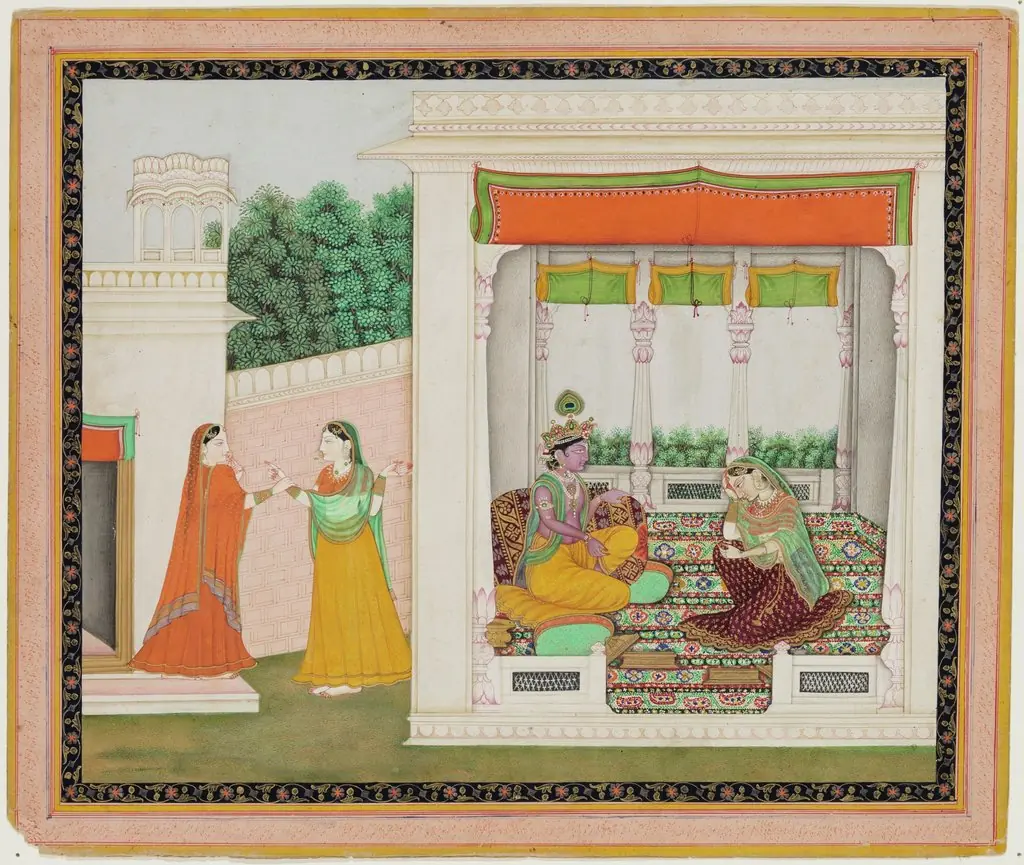
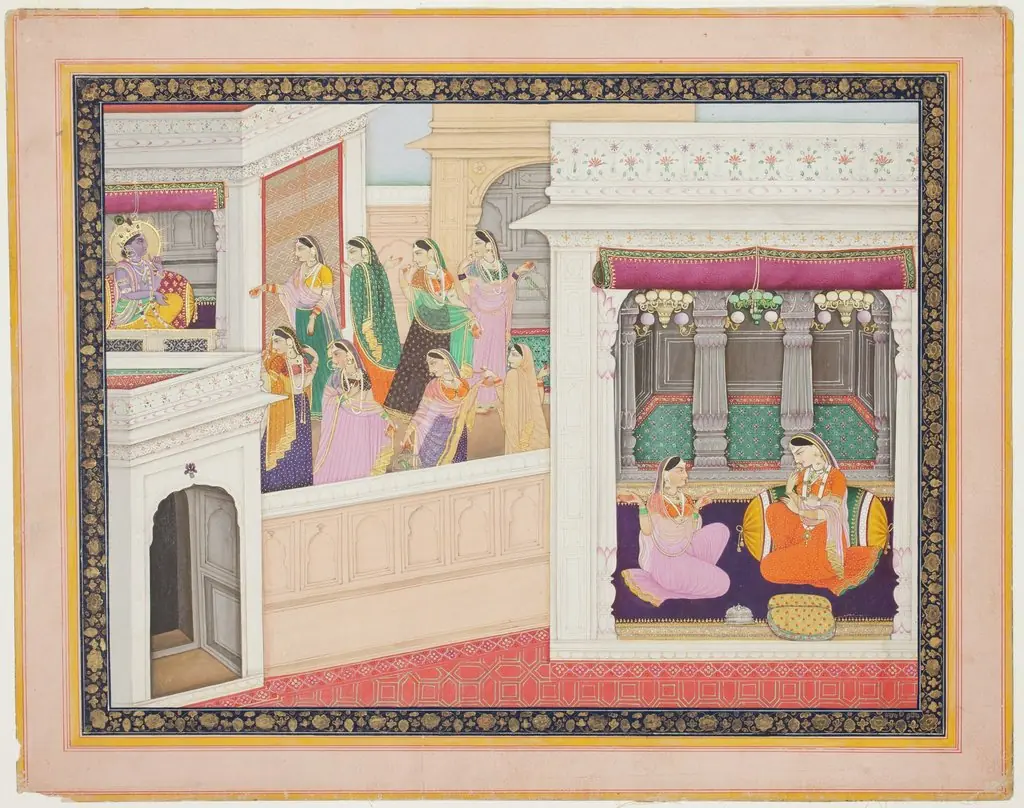
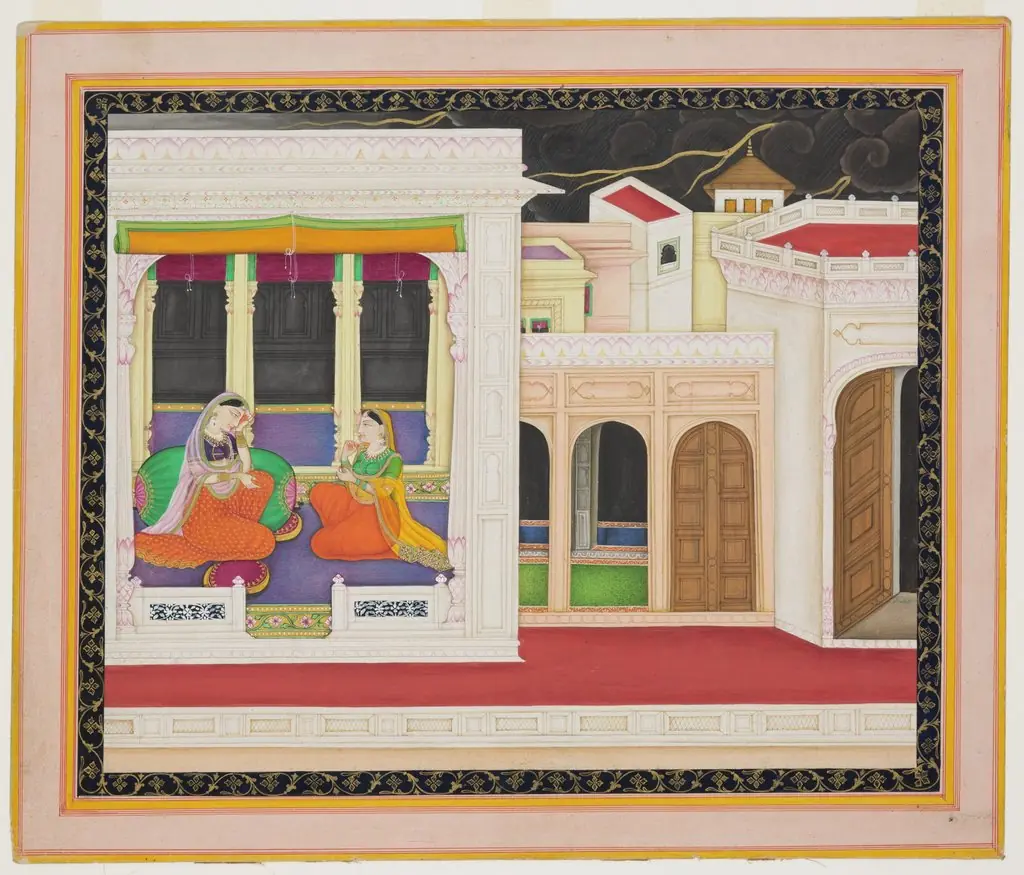
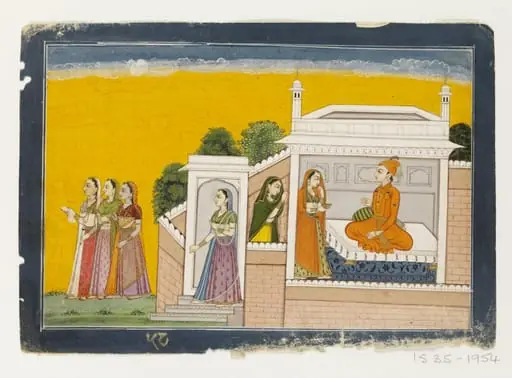
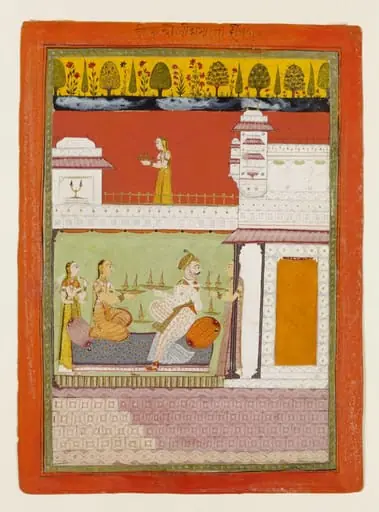
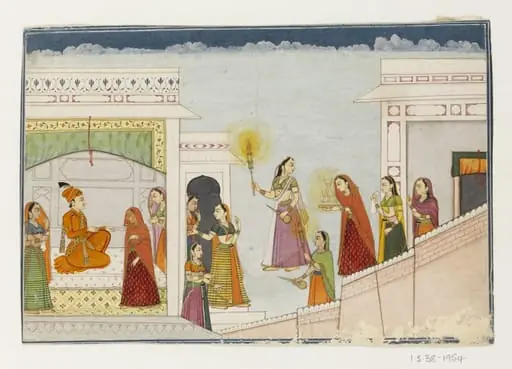
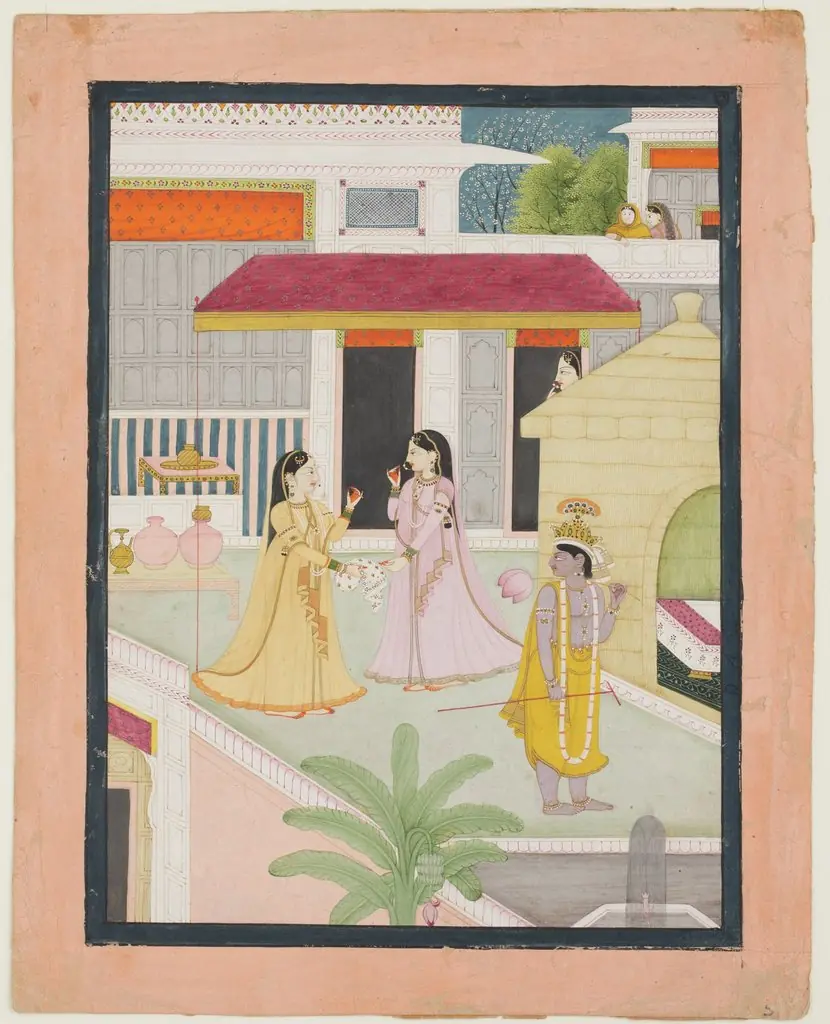
This opaque watercolour on paper portrays Radha in a private courtyard setting, surrounded by attendants. Part of a series illustrating the Gita Govinda, it captures a quiet interlude rather than a dramatic event. The composition is intimate, with figures arranged around a red balustrade, their gestures and positioning suggesting emotional support. The use of bold pigments and intricate patterns reflects the regional style of Pahari painting from the late 18th century.
Subject & Meaning
Radha, depicted in a moment of emotional vulnerability, is attended by her confidantes, one fanning her with a fly-whisk. The scene alludes to a passage in the Gita Govinda where Radha is comforted after separation from Krishna. The presence of multiple women underscores themes of companionship and emotional nuance, central to the devotional poetry. The setting, neither sacred nor public, emphasizes the personal dimension of divine love.
Technique & Style
Rendered in opaque watercolour, the painting employs flat planes of vivid colour—crimson, cobalt, and saffron—against minimal background detail. Figures are outlined with fine brushwork, and textiles are decorated with delicate patterns. The architecture is stylized, with a red balustrade framing the scene. The artist prioritizes expressive gesture and ornamental richness over spatial realism, characteristic of Pahari miniature traditions.
History & Provenance
The painting originates from a manuscript illustrating Jayadeva’s Gita Govinda, likely produced in the Kangra region around 1780–1790. It belongs to a known series of illustrations, including IS. 58-1952, which were collected and catalogued in the 20th century. Its survival in good condition reflects careful preservation within royal or aristocratic collections before entering institutional holdings.
Context
This work emerged during a period when Pahari courts patronized illustrated manuscripts of devotional poetry. The Gita Govinda’s themes of longing and divine union resonated with regional aesthetics that valued emotional subtlety and lyrical detail. Artists translated poetic imagery into intimate scenes, blending spiritual narrative with everyday elegance, often using courtly women as models for celestial figures.
Legacy
As part of a cohesive manuscript series, this painting contributes to the understanding of how devotional texts were visually interpreted in North India. Its emphasis on female agency and quiet emotion influenced later regional styles. Today, it remains a key example of how miniature painting conveyed complex emotional states through restrained composition and refined detail, preserving a literary tradition in visual form.
Artist & collection

 Domestic Scene
 Giacomo and Cardinal Marco, investing Andrea, Abbot of San Zeno, with his Benefice
 The Nymph of Fontainebleau
 Portrait of a Woman
 Madonna and Child with Saints in the Enclosed Garden
 Venus and Minerva
 Family Group of Four on Sofa
 Wall painting from Room H of the Villa of P. Fannius Synistor at Boscoreale