Artwork
Seated boy in tasseled cap
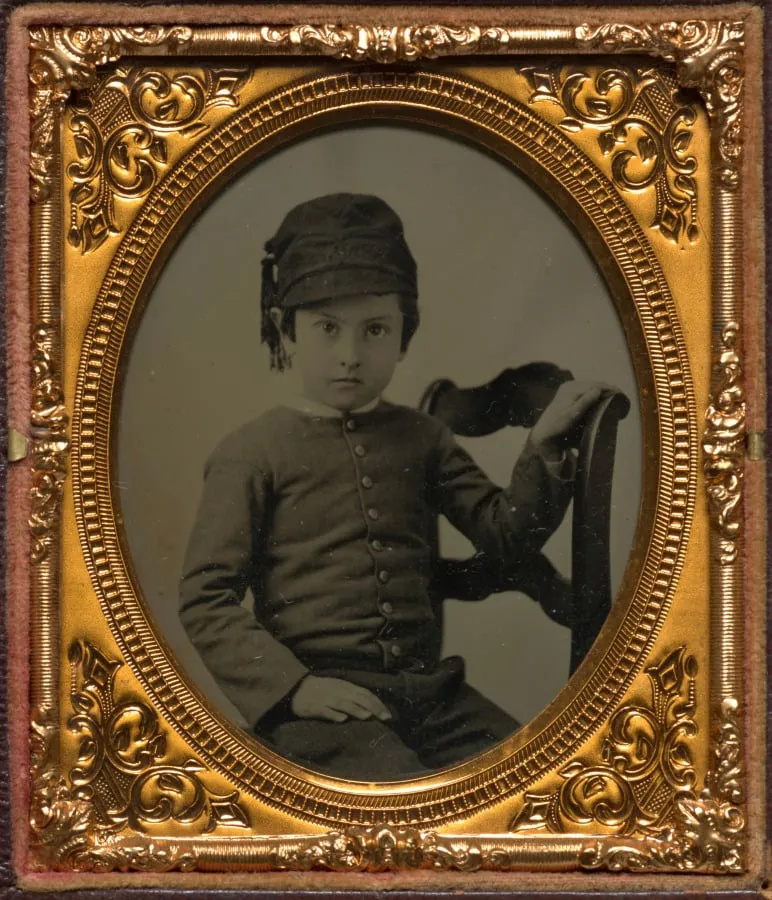
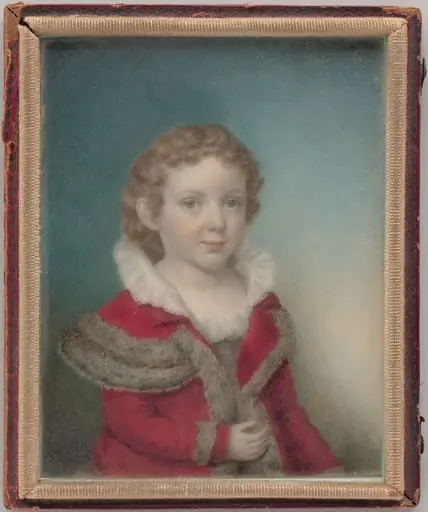
Seated boy in tasseled cap is a photography by the Impressionist artist Unknown. It dates from 1860 and is held in the collection of the Cleveland Museum of Art. This sepia-toned photograph captures a young boy seated in a simple chair, dressed in a dark jacket and a tasseled cap.
About this work
Overview
The gold frame, elaborately decorated, frames the image with a quiet formality, enhancing its dignity without overwhelming it.
This sepia-toned photograph captures a young boy seated in a simple chair, dressed in a dark jacket and a tasseled cap. The plain background isolates the subject, emphasizing his posture and expression. His right arm rests on the chair’s back, left arm on his lap, conveying stillness. The gold frame, elaborately decorated, frames the image with a quiet formality, enhancing its dignity without overwhelming it.
Subject & Meaning
The boy’s serious gaze and composed posture suggest a deliberate, perhaps ceremonial, moment. The tasseled cap and buttoned jacket imply modest formality, common in early photographic portraiture for children of working or lower-middle-class families. His stillness reflects the long exposure times of the era, but also conveys a sense of quiet dignity, resisting caricature or sentimentality.
Technique & Style
Rendered in soft sepia tones, the photograph relies on controlled lighting to define the boy’s features and clothing texture. The lack of decorative elements in the background directs focus to the subject’s presence. The sharpness of the cap’s tassels and jacket buttons contrasts with the gentle gradations of shadow, demonstrating careful composition within technical limitations of early photography.
History & Provenance
The photograph likely dates to the mid-to-late 19th century, when portrait studios became accessible beyond the elite. The ornate gold frame suggests the image was intended for domestic display, possibly commissioned by the boy’s family to mark a significant occasion. Its preservation indicates it was valued as a personal artifact rather than a commercial product.
Context
During this period, photographic portraits of children were increasingly common, serving as mementos in an era of high child mortality. Unlike painted portraits, photographs offered a direct record of appearance, making them emotionally resonant. The boy’s attire and pose align with conventions of respectability, reflecting societal ideals of childhood propriety.
Legacy
This image exemplifies how early photography transformed personal memory-making. Its restrained aesthetic—free from theatricality—offers insight into how ordinary families engaged with new visual technology. The photograph endures not for its fame, but for its quiet authenticity, preserving a moment of childhood within the constraints of its time.
Artist & collection

 Domestic Scene
 Giacomo and Cardinal Marco, investing Andrea, Abbot of San Zeno, with his Benefice
 The Nymph of Fontainebleau
 Portrait of a Woman
 Madonna and Child with Saints in the Enclosed Garden
 Venus and Minerva
 Family Group of Four on Sofa
 Wall painting from Room H of the Villa of P. Fannius Synistor at Boscoreale
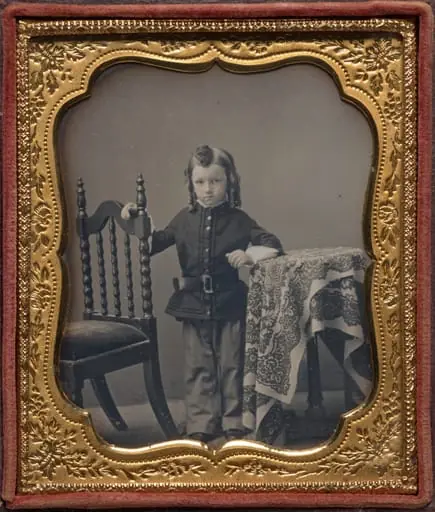 Standing boy with bottle curls
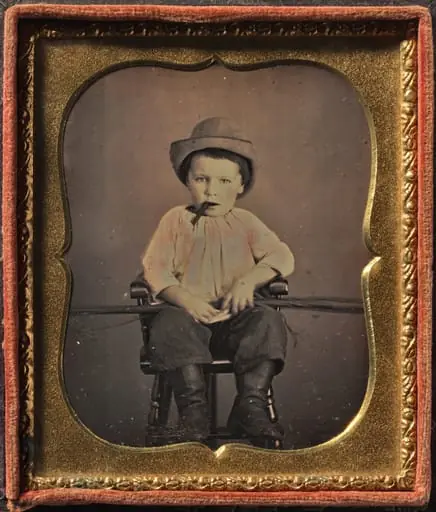 Boy with Cigar
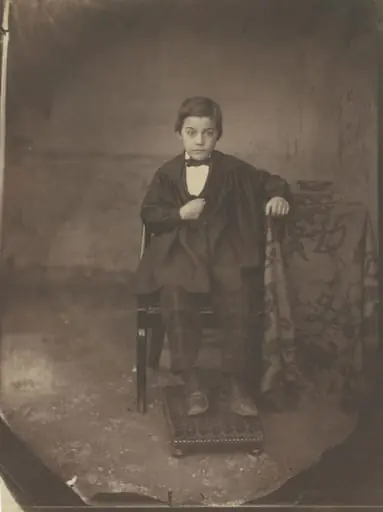 Portrait of a Young Boy
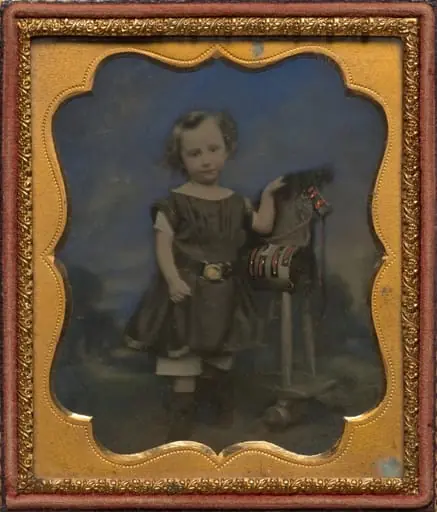 Boy with hobby horse
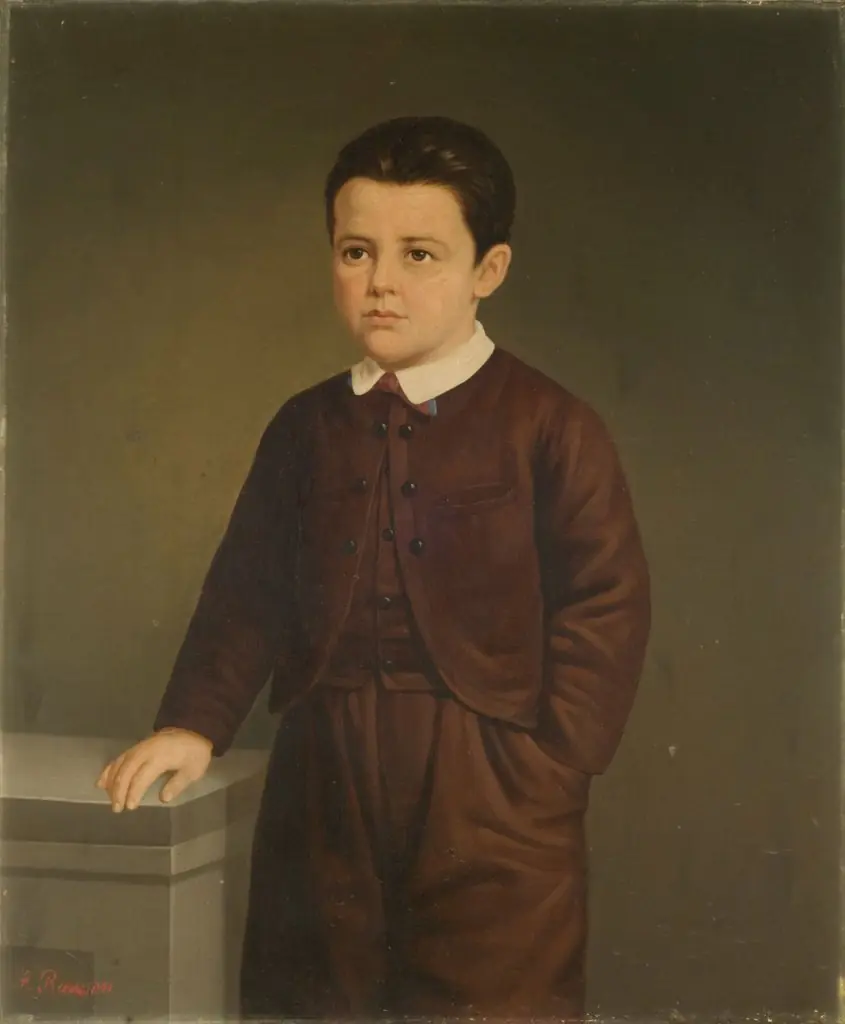 Portrait of Juan Ramon Burzaco Tamini
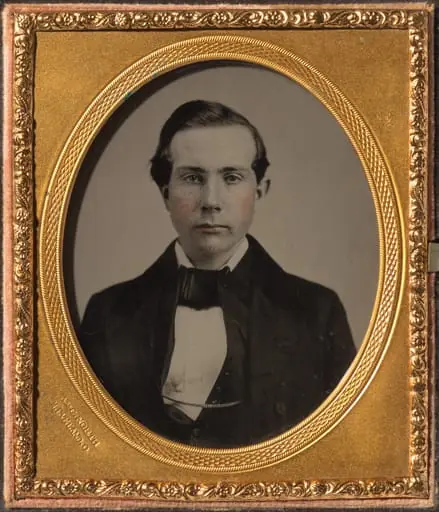 Portrait of John D. Rockefeller
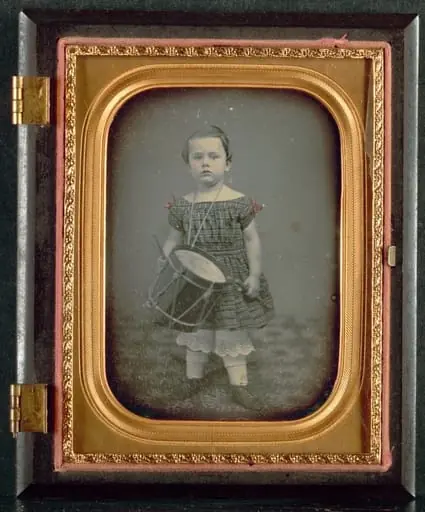 Child with Drum
 Girl with Doll
 William Berthelet
 Workman in Red Flannel Shirt and Suspenders
 Bust portrait of Alfred Lowell Putnam
 Edward Blake Parkman