Artwork
Sf. Ierarh Nicoale
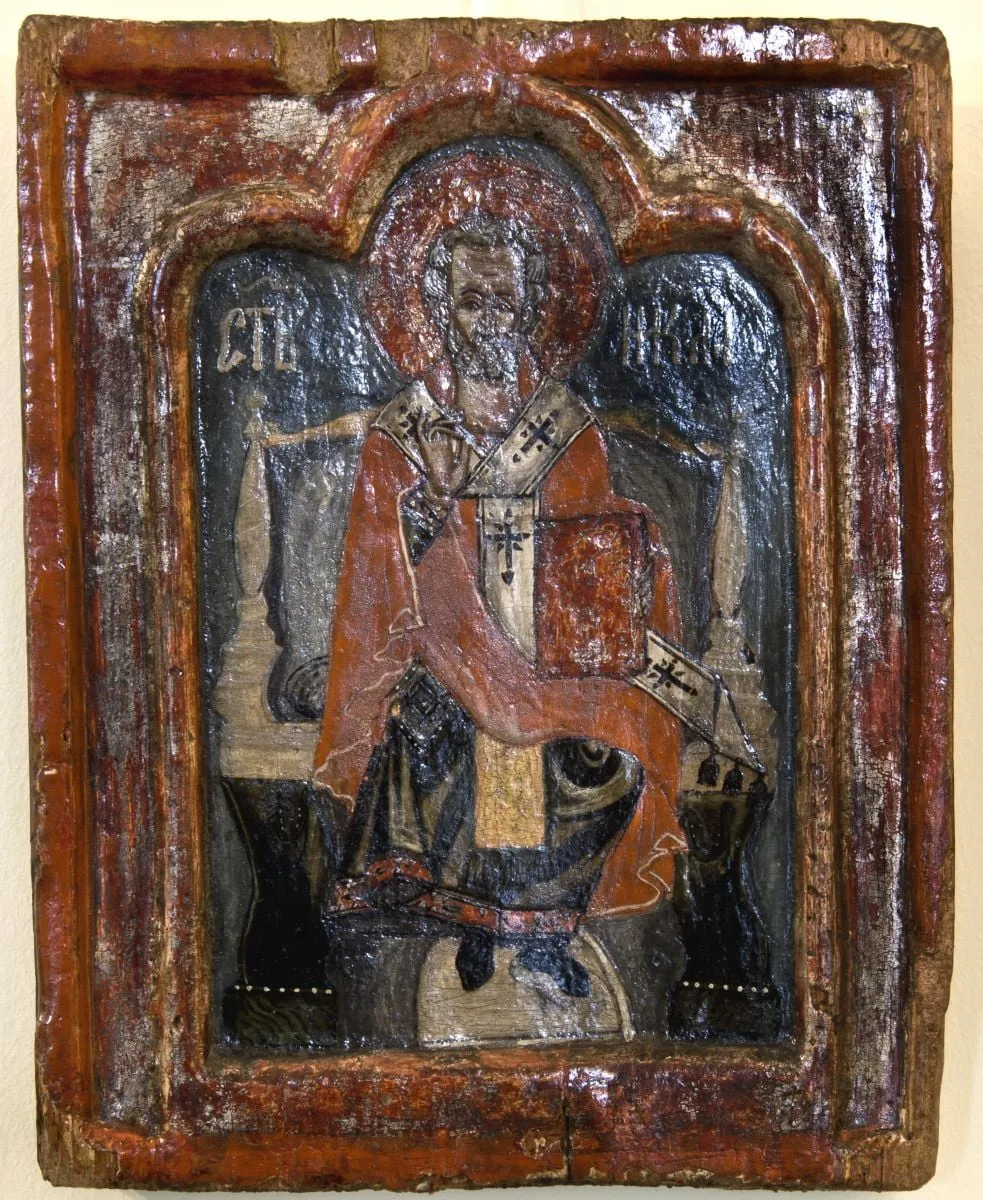
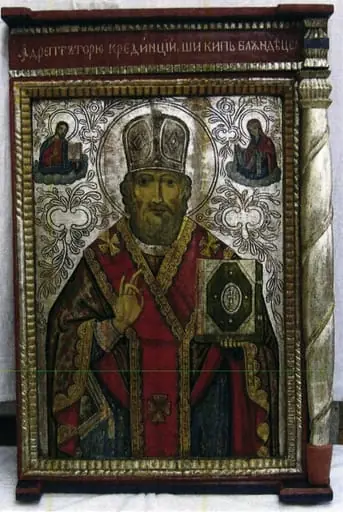
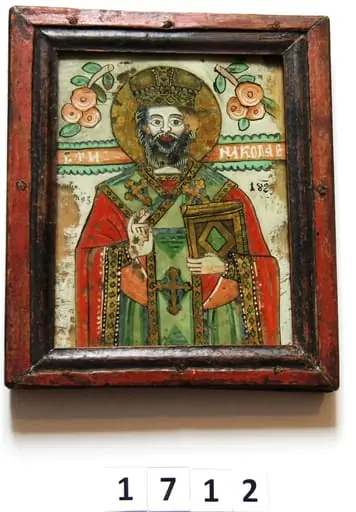
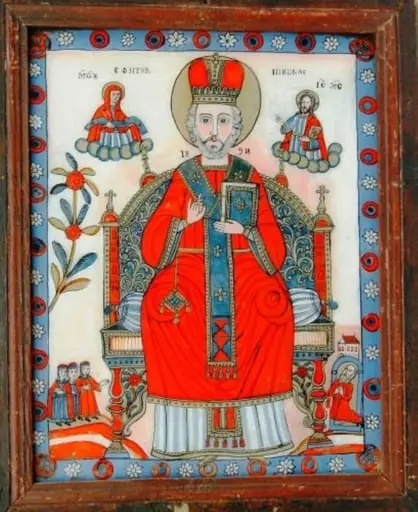
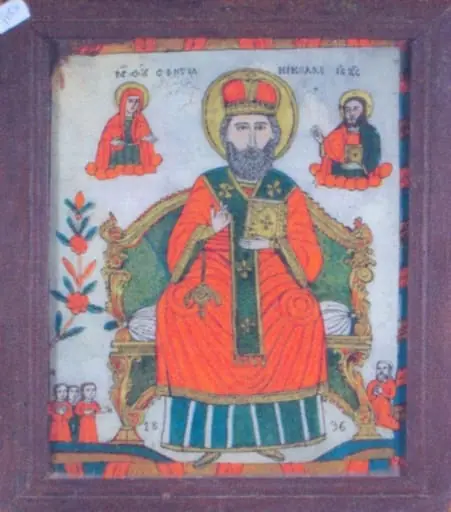
Sf. Ierarh Nicoale is a drawing by Unknown. It dates from 1850 and is held in the collection of the National Museum of Art of Romania. This faintly rendered image depicts a religious figure in simple, worn robes, standing on a low platform.
About this work
Overview
This faintly rendered image depicts a religious figure in simple, worn robes, standing on a low platform.
This faintly rendered image depicts a religious figure in simple, worn robes, standing on a low platform. The drawing, executed in a restrained linear style, shows signs of prolonged use and age—faded pigments, frayed edges, and a coarse brown border suggest it was handled frequently over decades or centuries. Its modest scale and unadorned presentation point to a devotional rather than ceremonial function.
Subject & Meaning
The figure, identified as Saint Nicholas, holds a book and a scroll, symbols of spiritual authority and scriptural knowledge. The cross on his chest and his long beard align with traditional iconography of Eastern Christian saints. The worn condition of the garment implies humility and asceticism, reinforcing his role as a pious intercessor. The dark background focuses attention on the figure as a silent witness to faith.
Technique & Style
Rendered with minimal detail and muted tones, the drawing employs a flat, linear approach typical of folk or provincial religious art. The lack of shading or perspective, combined with coarse outlines, reflects a hand-trained in local traditions rather than academic methods. The use of simple ink or wash on fragile material contributes to its fragile, intimate character.
History & Provenance
The object’s physical state—frayed edges, faded pigments, and a weathered frame—indicates long-term domestic or chapel use, likely in a rural Orthodox community. Its survival suggests it was preserved as a personal or communal relic, passed down through generations. No documented origin is known, but its materials and style align with 18th- to 19th-century Balkan or Anatolian devotional practices.
Context
In regions where formal iconography was inaccessible, such hand-drawn images served as accessible aids to prayer and veneration. Saint Nicholas, revered for his compassion and miracles, was a common subject in household devotion. This piece reflects a tradition where religious imagery was not merely decorative but integral to daily spiritual life, often made and maintained by lay hands.
Legacy
Though unattributed and modest in execution, the drawing preserves a quiet continuity of faith through material culture. Its survival offers insight into how religious identity was maintained outside institutional channels. It stands as an example of vernacular piety, where devotion was expressed through endurance, repetition, and care rather than grandeur.
Artist & collection

 Domestic Scene
 Giacomo and Cardinal Marco, investing Andrea, Abbot of San Zeno, with his Benefice
 The Nymph of Fontainebleau
 Portrait of a Woman
 Madonna and Child with Saints in the Enclosed Garden
 Venus and Minerva
 Family Group of Four on Sofa
 Wall painting from Room H of the Villa of P. Fannius Synistor at Boscoreale