Artwork
Still Life with Flowers
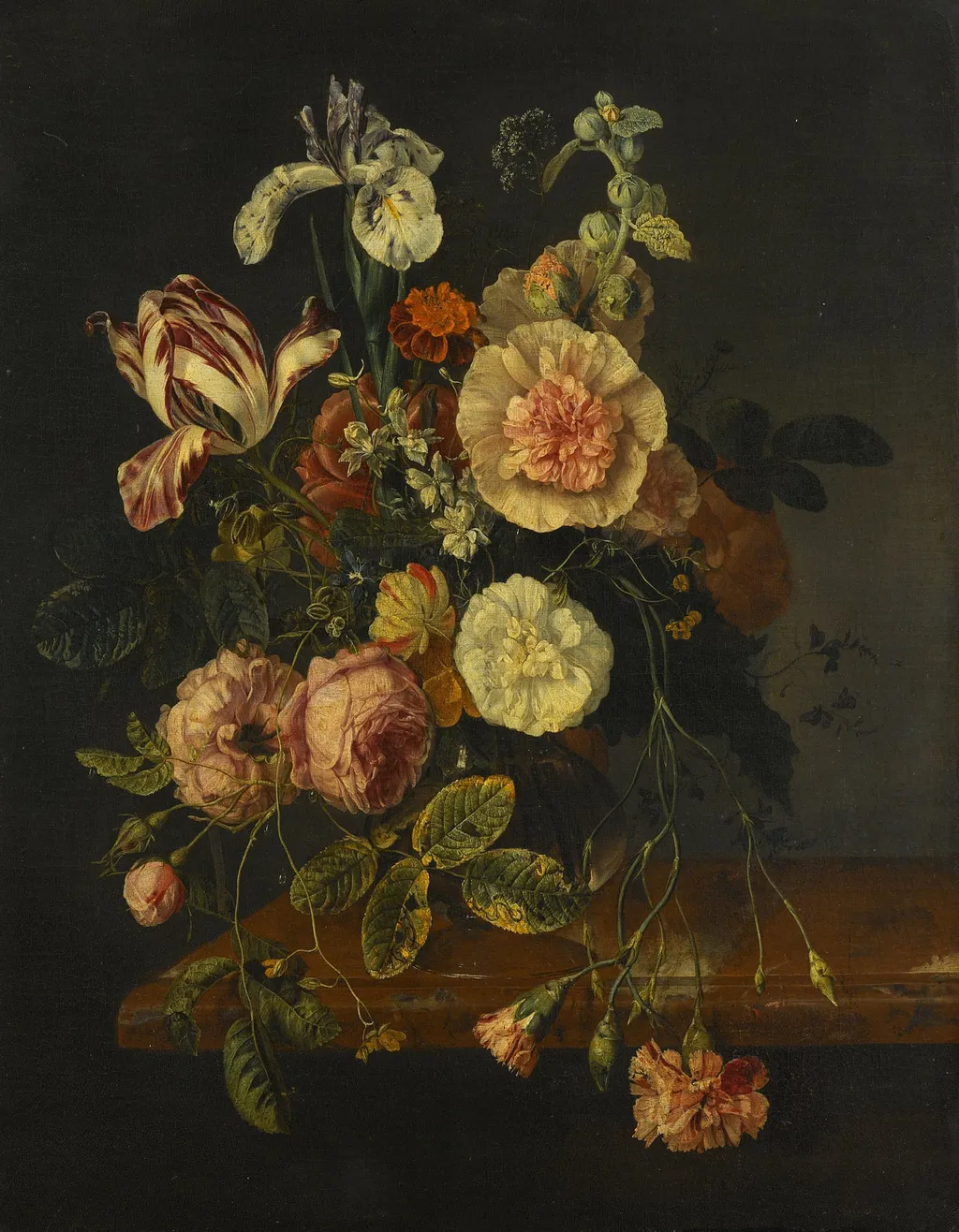
Still Life with Flowers is an unspecified painting by the Dutch Golden Age artist Unknown. It dates from 1698 and is held in the collection of the Rijksmuseum.
About this work
Overview
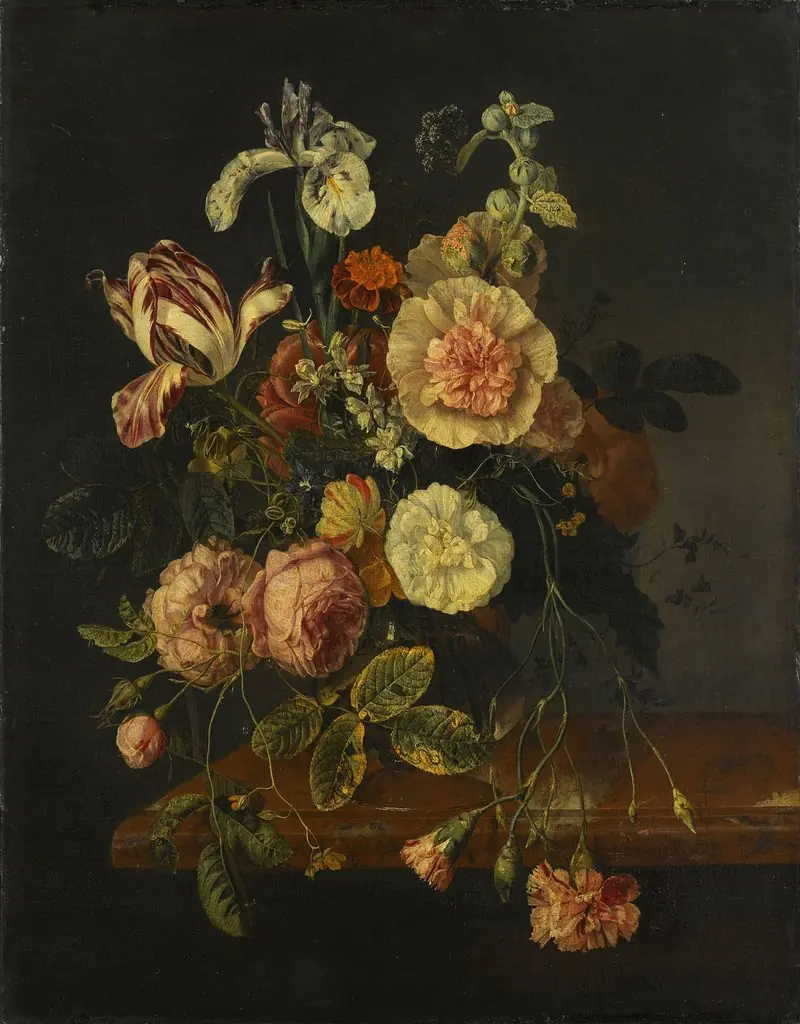
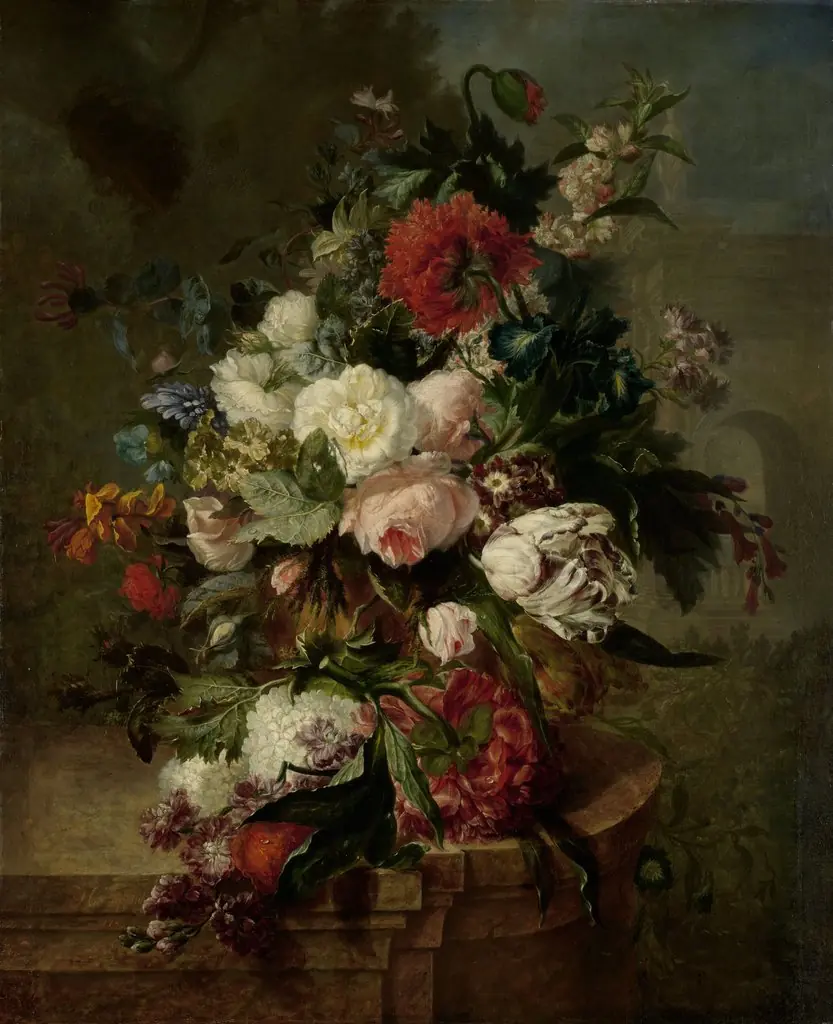
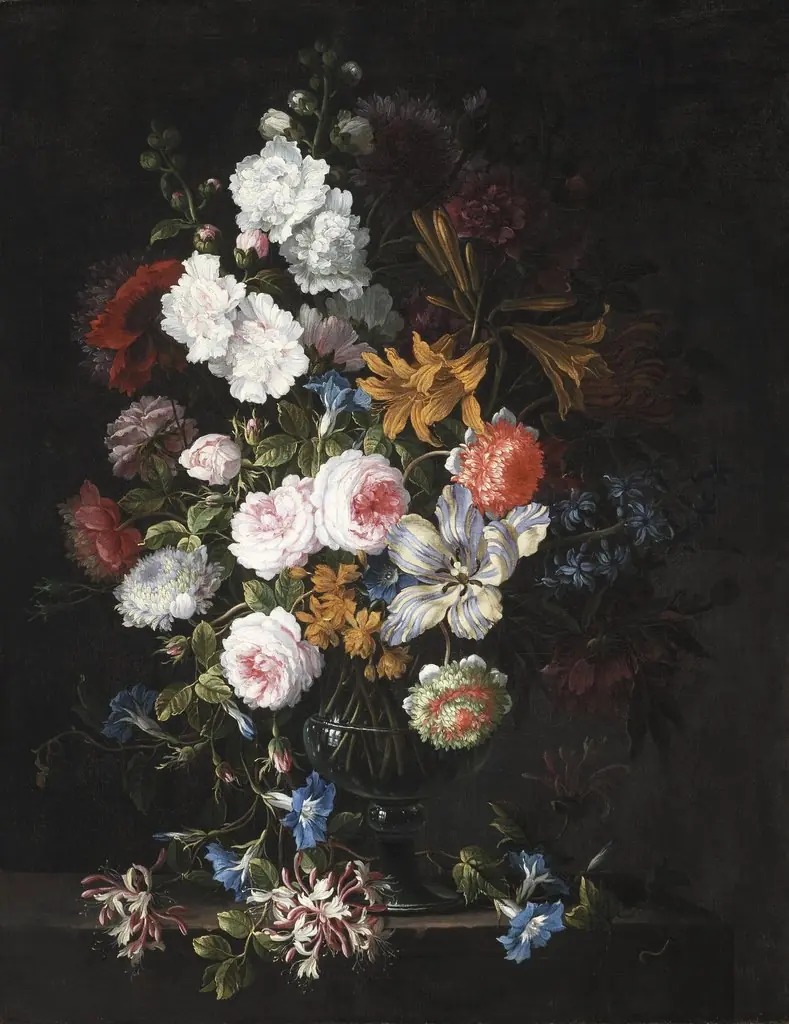
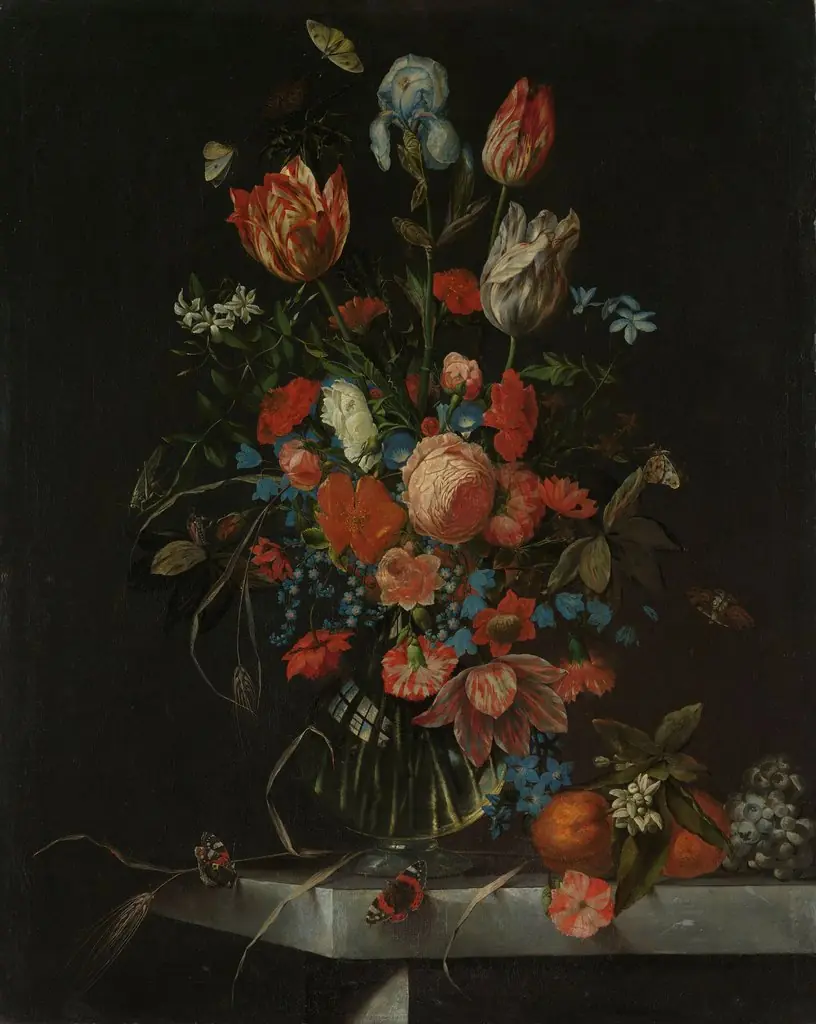
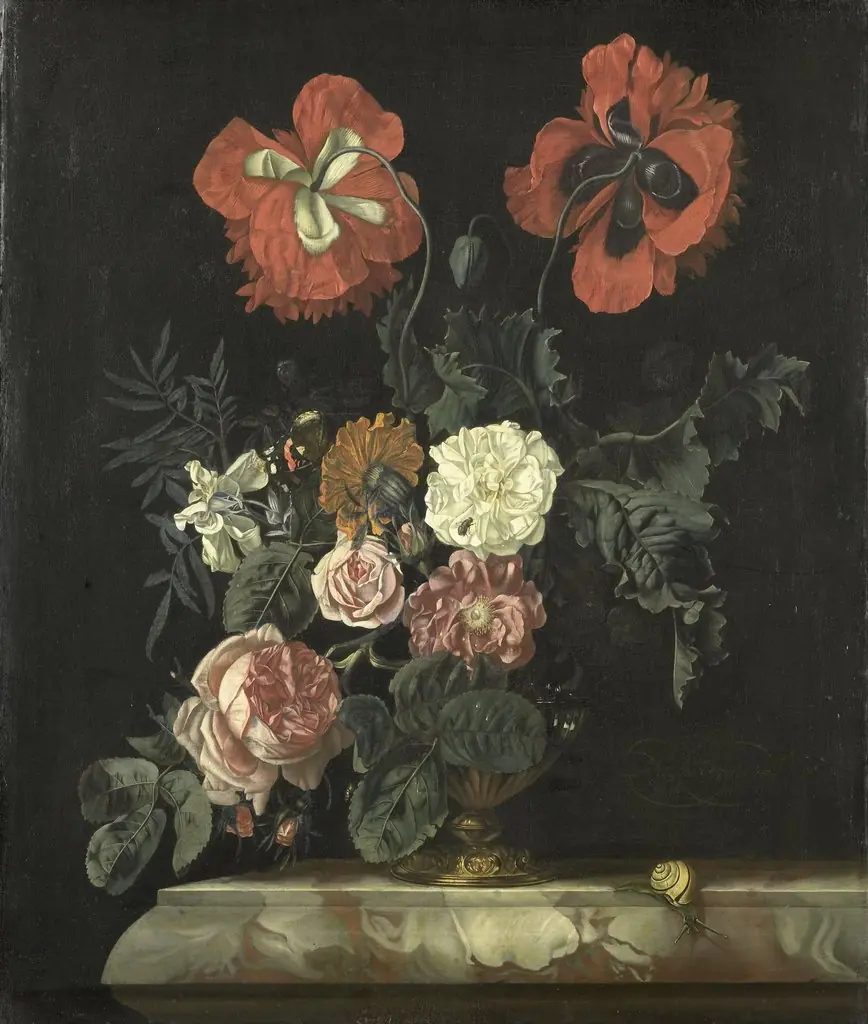
This still life depicts a glass vase filled with a dense arrangement of spring flowers, including tulips, irises, roses, hollyhocks, and carnations.
This still life depicts a glass vase filled with a dense arrangement of spring flowers, including tulips, irises, roses, hollyhocks, and carnations. Though meticulously rendered, the painting lacks a signature, an unusual omission for a work of such detail in its period. The contrast between the refined treatment of the blooms and the minimal rendering of the vase suggests a deliberate artistic choice, prioritizing botanical accuracy over decorative completeness.
Subject & Meaning
The bouquet combines flowers that bloom at different times of year, indicating an idealized, rather than observed, arrangement. This synthesis may reflect the 17th-century fascination with nature’s transience and the human desire to preserve beauty. The curling petals hint at decay, subtly reinforcing themes of impermanence common in Dutch still lifes, though without overt moralizing symbols like skulls or hourglasses.
Technique & Style
The flowers are painted with precise, layered brushwork that captures the texture of petals and the sheen of dew, creating a lifelike presence. In contrast, the glass vase is rendered with loose, almost sketchy strokes, suggesting the artist focused attention solely on the flora. This selective realism—intense detail where it matters, economy elsewhere—points to a prioritization of naturalism over illusionistic completeness.
History & Provenance
The painting’s origin remains unidentified; no artist has been conclusively linked to it, and its early ownership history is undocumented. Its anonymity contrasts with the typical practice of signed still lifes from the same era, raising questions about its commission, audience, or whether it was a study rather than a finished sale piece. It survives as a quiet enigma among more documented works of its type.
Context
Created during the Dutch Golden Age, the painting aligns with a flourishing market for floral still lifes, driven by public interest in horticulture and exotic blooms. Tulips, in particular, carried cultural weight after the tulip mania of the 1630s. Yet this work avoids overt symbolism of wealth or speculation, instead offering a quiet, intimate study of botanical forms within a domestic setting.
Legacy
Though unsigned and unattributed, the painting contributes to the broader understanding of how artists balanced realism with compositional focus. Its selective rendering of the vase has prompted scholarly interest in the role of negative space and implied form in Dutch still life. It stands as an example of artistic restraint, where omission can be as intentional as detail.
Artist & collection

 Domestic Scene
 Giacomo and Cardinal Marco, investing Andrea, Abbot of San Zeno, with his Benefice
 The Nymph of Fontainebleau
 Portrait of a Woman
 Madonna and Child with Saints in the Enclosed Garden
 Venus and Minerva
 Family Group of Four on Sofa
 Wall painting from Room H of the Villa of P. Fannius Synistor at Boscoreale