Artwork
Still life with meat and dead birds
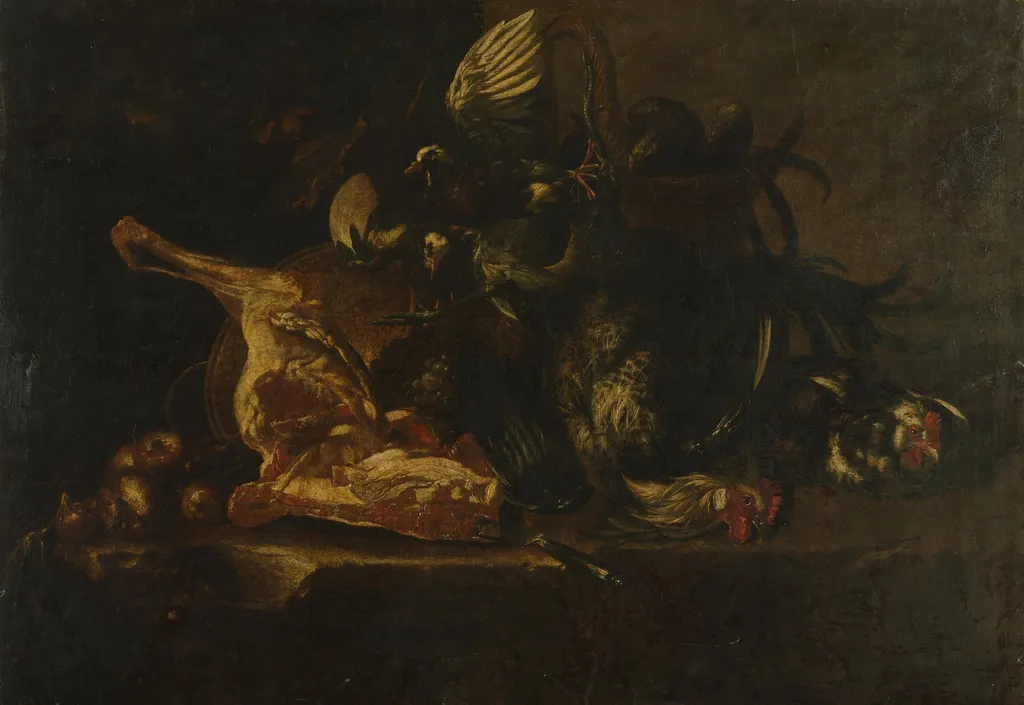
Still life with meat and dead birds is an unspecified painting by the Dutch Golden Age artist Unknown. It dates from 1666 and is held in the collection of the Rijksmuseum.
About this work
Overview
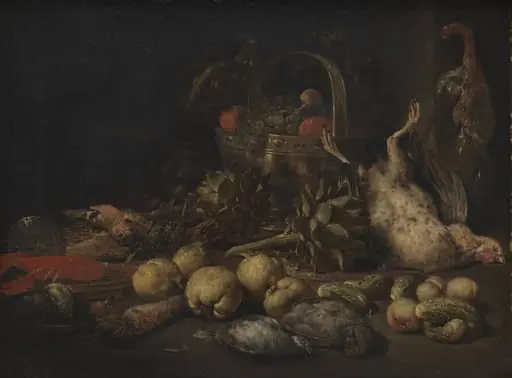
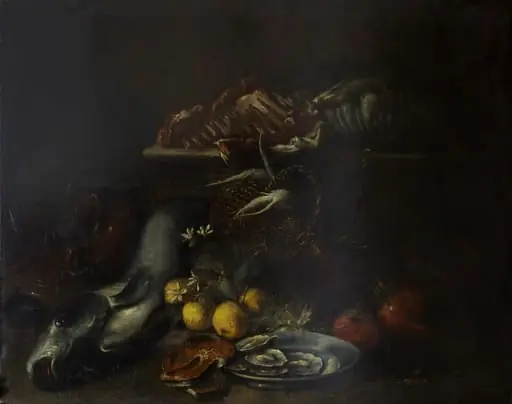
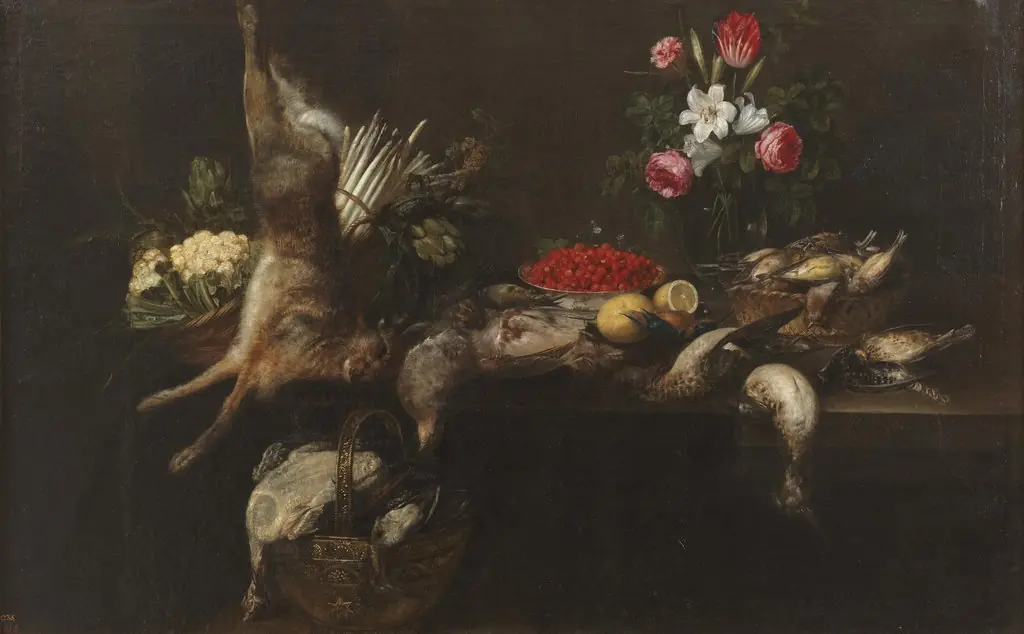
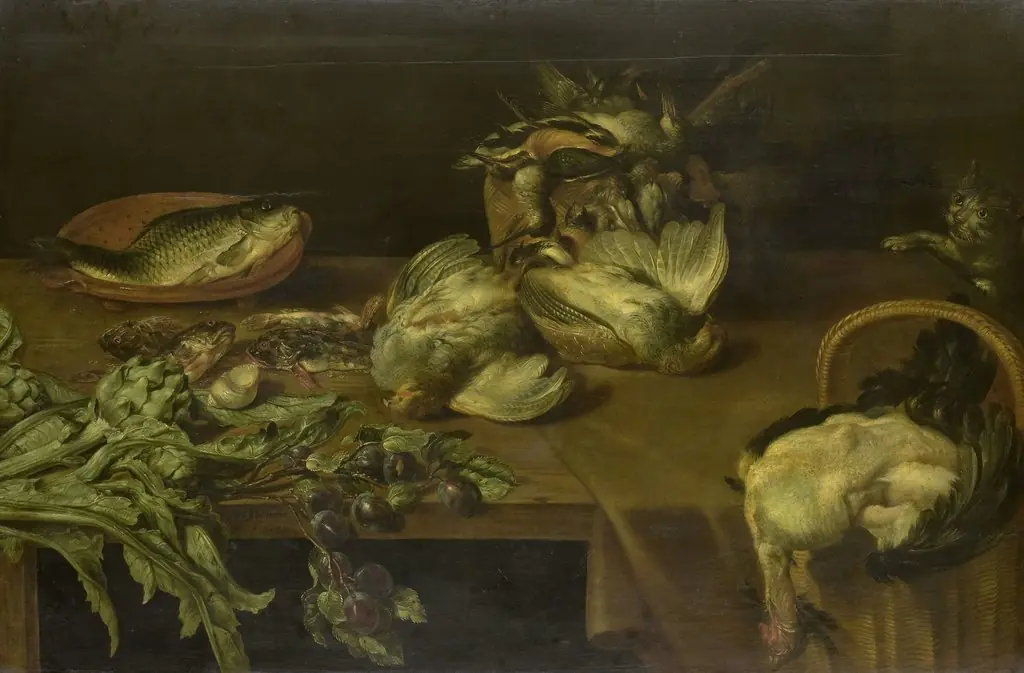
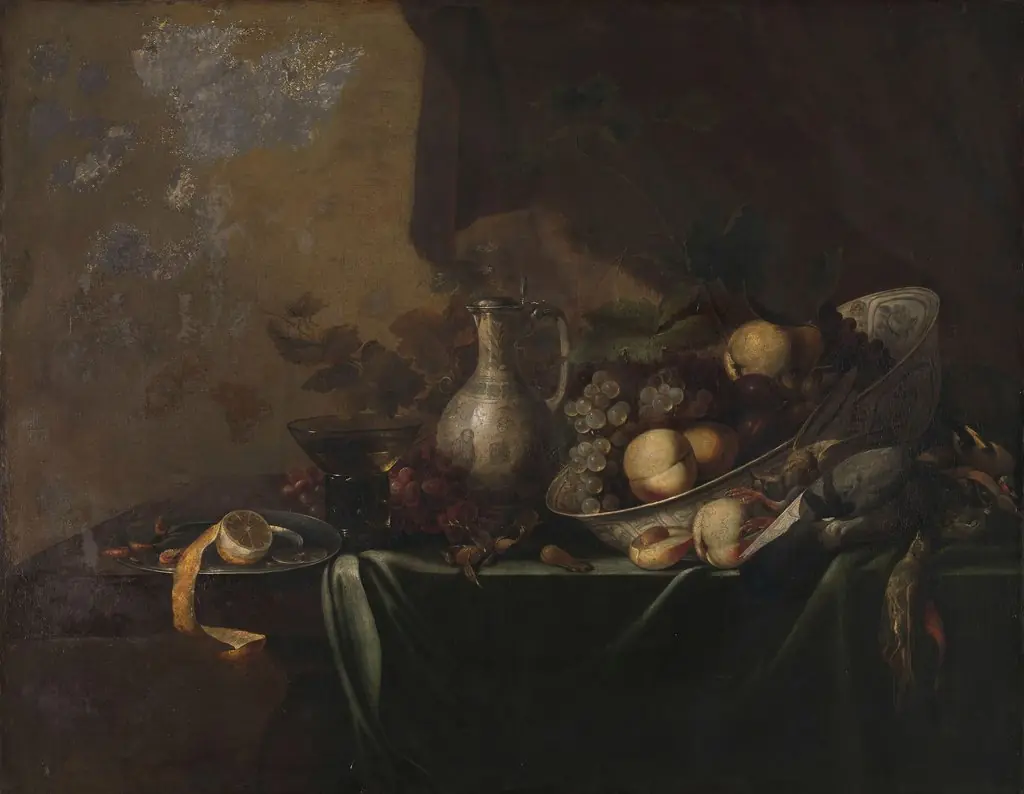
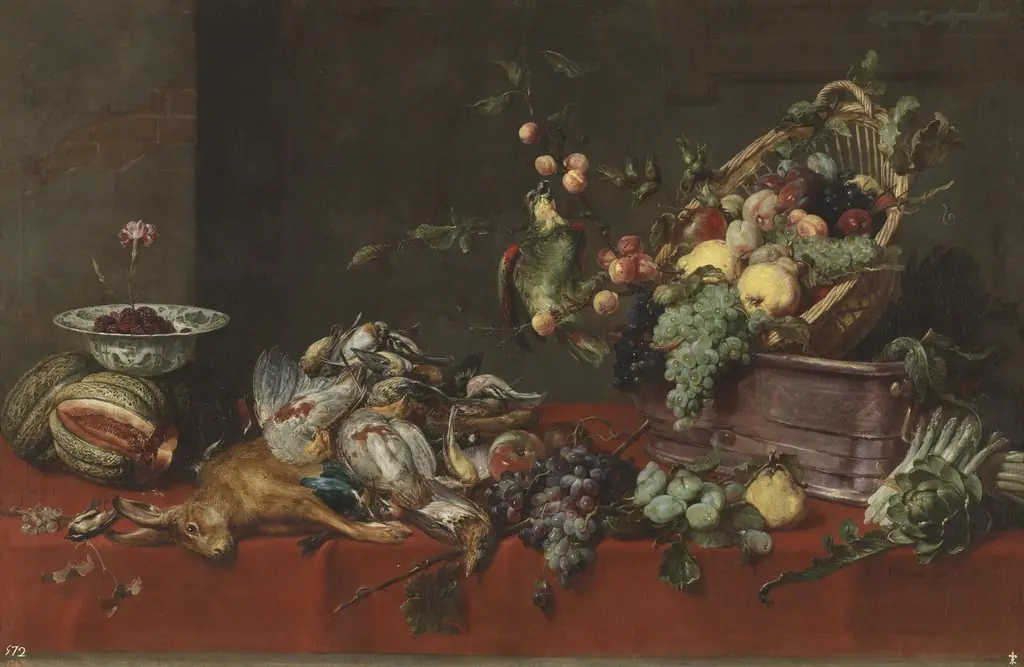
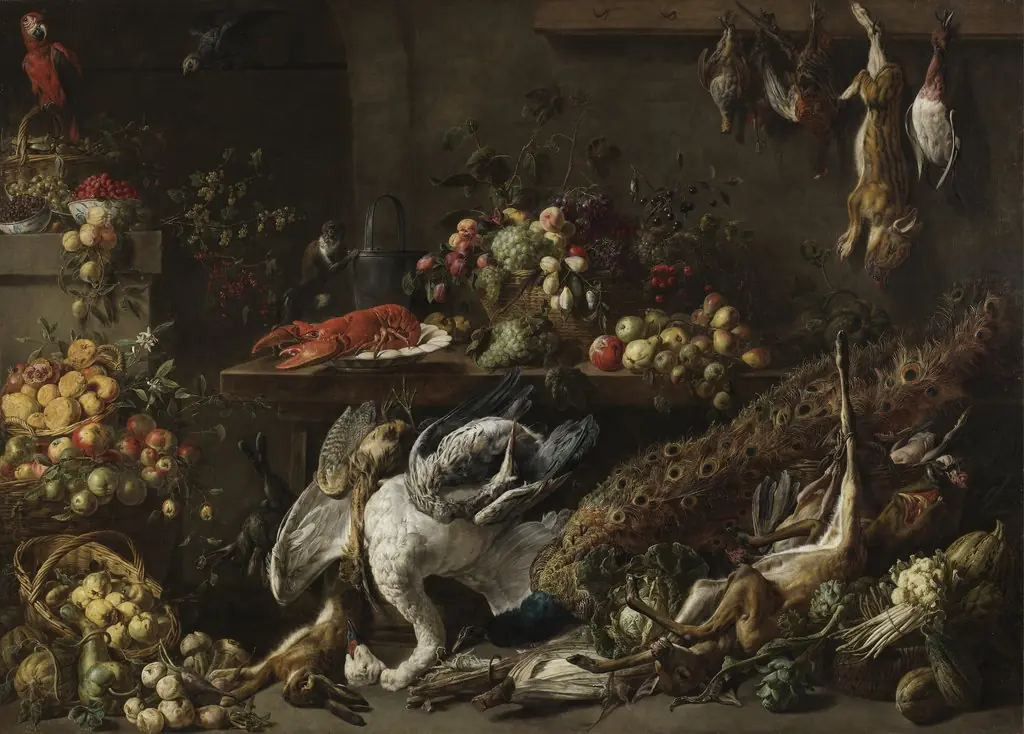
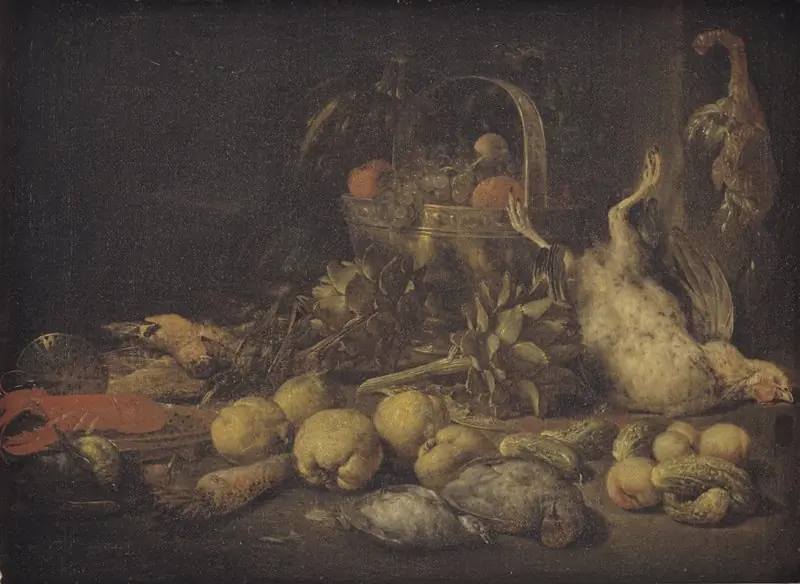
The work depicts a stone ledge crowded with a leg of lamb or ham, onions, a knife, several dead fowl—including roosters and doves—and a basket filled with cucumbers. The composition arranges these elements in a dense, almost tactile tableau, inviting close inspection of the textures and forms presented.
Subject & Meaning
The assortment of meat, poultry, and vegetables suggests a vanitas theme, reminding viewers of the fleeting nature of nourishment and the inevitability of decay. By juxtaposing fresh produce with lifeless birds, the painting comments on the cycle of consumption and the transitory character of material abundance.
Technique & Style
The artist employs a robust, impasto application of paint, especially evident in the rendering of feathers, which appear almost three‑dimensional. Strong contrasts of light and shadow create a chiaroscuro effect, heightening the sense of volume and giving the objects a palpable presence on the stone surface.
History & Provenance
The painting’s origin is not precisely documented, but its subject matter and execution align with the 17th‑century Dutch still‑life tradition, where detailed depictions of food and game were common. Its provenance remains unclear, with no recorded ownership lineage beyond its appearance in later museum collections.
Context
Within the broader context of Northern European still life, the work reflects a period interest in realistic representation and moral symbolism. Similar compositions by contemporaries used comparable motifs—meat, game, and produce—to explore themes of wealth, mortality, and the sensory pleasures of the table.
Artist & collection

 Domestic Scene
 Giacomo and Cardinal Marco, investing Andrea, Abbot of San Zeno, with his Benefice
 The Nymph of Fontainebleau
 Portrait of a Woman
 Madonna and Child with Saints in the Enclosed Garden
 Venus and Minerva
 Family Group of Four on Sofa
 Wall painting from Room H of the Villa of P. Fannius Synistor at Boscoreale