Artwork
strachină
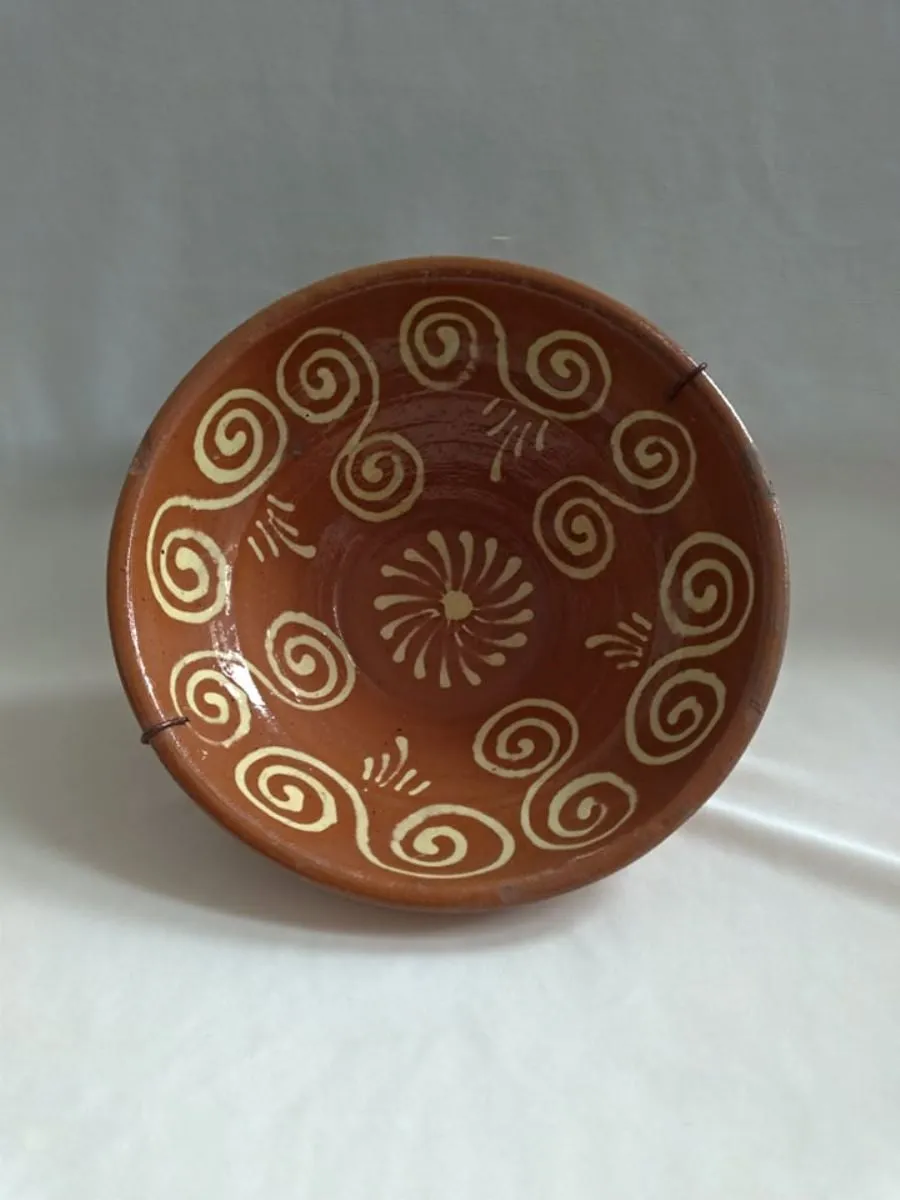
strachină is a photography by Unknown. It dates from 1967 and is held in the collection of the Moldova National Museum Complex. A small, round ceramic bowl with a shallow form and earthy brown glaze, this piece exhibits handmade craftsmanship and utilitarian design.
About this work
Overview
Its surface is adorned with evenly spaced white swirls and a central floral motif, suggesting deliberate ornamentation within a restrained aesthetic.
A small, round ceramic bowl with a shallow form and earthy brown glaze, this piece exhibits handmade craftsmanship and utilitarian design. Its surface is adorned with evenly spaced white swirls and a central floral motif, suggesting deliberate ornamentation within a restrained aesthetic. The overall impression is one of quiet functionality, where decoration serves to enhance rather than overwhelm the object’s practical purpose.
Subject & Meaning
The central flower-like motif and radial swirls may reflect natural forms or symbolic patterns tied to daily life, though no explicit narrative is evident. The repetition of lines suggests an emphasis on harmony and order, possibly rooted in local traditions of domestic craft. The absence of complex iconography points to an aesthetic grounded in routine, not ritual.
Technique & Style
Hand-formed and likely wheel-thrown, the bowl shows subtle irregularities consistent with artisanal production. The white slip decoration is applied with steady, even strokes, creating rhythmic patterns that cover the interior surface. The glaze is matte and unglazed on the exterior, reinforcing its utilitarian character and tactile simplicity.
History & Provenance
The object’s form and decoration align with regional ceramic traditions from Eastern Europe, particularly those produced for household use in the 19th or early 20th century. While its exact origin is unconfirmed, similar vessels are documented in the collections of the Museum of Ethnography, suggesting it was part of a broader cultural practice of domestic pottery.
Context
This bowl belongs to a category of everyday ceramics made for food service in rural households, where beauty emerged from function. Its minimal decoration reflects a cultural preference for understated ornamentation, contrasting with more elaborate ceremonial wares. Such items were typically produced locally, using accessible materials and inherited techniques.
Legacy
Objects like this represent the quiet continuity of folk craft traditions, preserved through generations of domestic use. Though not signed or dated, their presence in ethnographic collections underscores their value as markers of ordinary life. They remain important for understanding how aesthetic choices were embedded in daily practice.
Artist & collection
 Domestic Scene
 Giacomo and Cardinal Marco, investing Andrea, Abbot of San Zeno, with his Benefice
 The Nymph of Fontainebleau
 Portrait of a Woman
 Madonna and Child with Saints in the Enclosed Garden
 Venus and Minerva
 Family Group of Four on Sofa
 Wall painting from Room H of the Villa of P. Fannius Synistor at Boscoreale
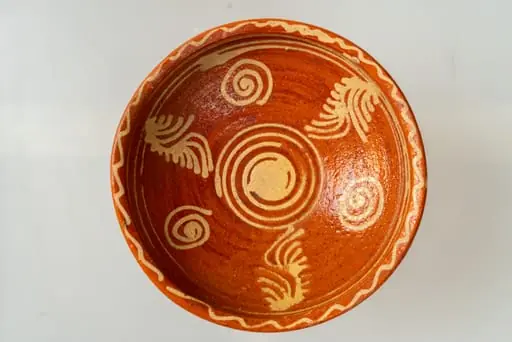 Farfurie adâncă, de tip castron, cu corp de formă tronconică și buză dreaptă, cu muchie ușor curbată înspre exterior. Piesa este modelată la roata olarului, nefiind angobată. Decorul este realizat prin pictare cu cornul și cu pensula, cu angobă albă. Motivele decorative sunt geometrice: pe fundul vasului o linie spiralată rotundă, având în centru o pată mare albă, rotundă; pe pereții farfuriei, alternativ, sunt pictate linii spiralate (3) și un motiv decorativ sub formă de frunză stilizată (3). Pe buză sunt pictate patru linii concentrice, iar pe muchia acesteia o linie continuă, spiralată. Pe fața interioară a farfuriei este aplicat un strat de smalț transparent. Cromatica decorului: alb.
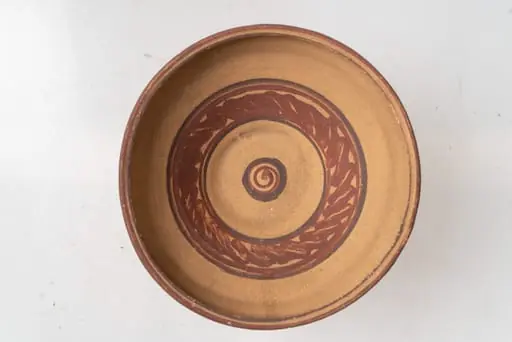 Farfurie adâncă de tip castron, cu bază îngustă și corp tronconic, buză îngustă dreaptă și muchia buzei concavă spre interior; piesa este modelată din lut la roata olarului nefiind angobată. Decorul foarte simplu este realizat cu angobă maro și roșu-închis, prin pictare cu cornul și se compune din motive geometrice: linii circulare, linie groasă ondulată, neglijent executată, linie spiralată. Cromatica: maro, roșu-închis, pe fondul lutului ars. Farfuria este nesmălțuită.
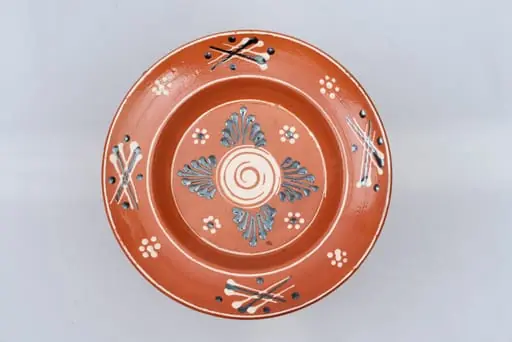 Farfurie adâncă, cu buză dreaptă evazată. Decorul este realizat prin pictare cu cornul și se compune din motive geometrice: central pe fundul farfuriei este pictată o linie spiralată circulară, de culoare albă, pe exteriorul căreia se găsesc patru grupuri de linii dispuse în formă de triunghi, de culoare maro. Decorul din registrul central este completat cu patru flori mici realizate din puncte de culoare albă și maro. Buza farfuriei este decorată cu patru motive formate din linii hașurate intersectat și puncte de culoare maro și alb, plasate diametral opus sub formă de cruce și separate de câte o floare mică formată din puncte albe. Câte o linie circulară de culoare albă marchează fundul farfuriei, bordura interioară a acesteia și muchia buzei. Suprafața ornamentată a farfuriei este acoperită cu un strat de smalț transparent. Cromatica: maro-închis, alb, pe fondul neangobat al lutului ars.
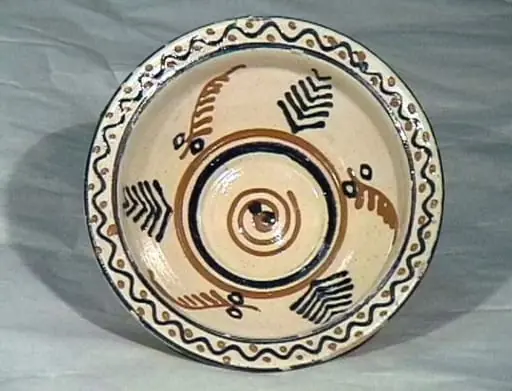 Castron
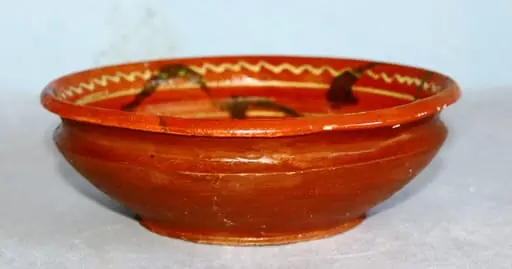 Piesă de formă circulară, adâncită, cu partea superioară concavă la exterior și gaură pentru agățat la spate. În centru, o spirală circulară, înconjurată de patru grupuri de semicercuri cu o bulină în centru. Pe margine: pete elipsoidale între cercuri concentrice și linie șerpuită înspre interior. Stropituri cu verde suprafața interiorului. Cromatică: cărămiziu, alb-gălbui, verde. Timp de lucru: circa două săptămâni.
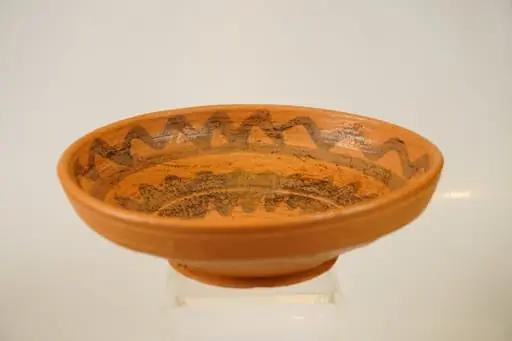 Farfurie adâncă de tip castron, cu corp tronconic și buza verticală; suprafața interioară a farfuriei este decorată prin pictare cu pensula cu angobă maro cu motive geometrice: centrul farfuriei este decorat cu un cerc (realizat cu linie groasă), care conține un punct în interior; peretele farfuriei este decorat cu o linie groasă ondulată, dispusă circular și care are în zona mediană o linie circulară roșie, realizată prin sgrafitare peste pasta de angobă. Buza farfuriei este decorată cu două linii circulare groase, maro, una simplă, cealaltă ondulată, iar exteriorul buzei cu două linii circulare realizate prin incizare. Cromatica: maro, pe fondul roșu al lutului ars.
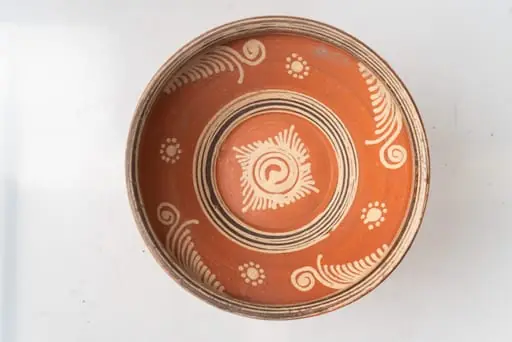 Farfurie adâncă de tip castron, cu corp tronconic, buză îngustă dreaptă și muchia buzei evazată; piesa este modelată la roata olarului nefiind angobată. Decorul este realizat cu angobă albă și maro, prin pictare cu cornul și cu pensula și se compune din motive geometrice (linie spiralată și grupuri de linii paralele crescătoare și descrescătoare, albe, în registrul de pe fundul farfuriei; motive spiralate și grupuri de linii paralele curbe, linii circulare, patru grupuri de puncte sugerând un motiv floral, două dungi maro, pe peretele și buza farfuriei). Cromatica: maro, alb, pe fondul lutului ars. Fața ornamentată este acoperită cu un strat de smalț transparent subțire.
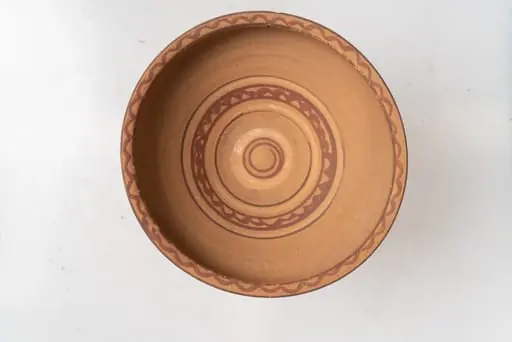 Farfurie adâncă de tip castron, cu bază îngustă și corp tronconic, buză dreaptă și muchia buzei evazată; piesa este modelată din lut la roata olarului nefiind angobată. Decorul foarte simplu este realizat cu angobă maro și roșu-închis, prin pictare cu cornul și se compune din motive geometrice: linii circulare, două linii ondulate, neglijent executate, linie spiralată. Cromatica: maro, roșu-închis, pe fondul lutului ars. Farfuria este nesmălțuită.