Artwork
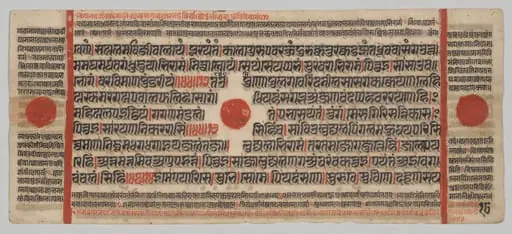
Text, Folio 16 (verso), from a Kalpa-sutra
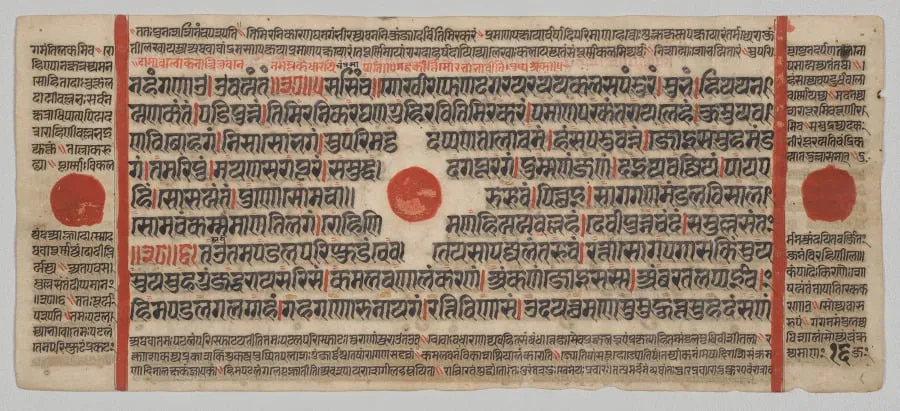
Text, Folio 16 (verso), from a Kalpa-sutra is an unspecified painting by the Mughal Painting artist Unknown. It dates from 1488 and is held in the collection of the Cleveland Museum of Art. This folio is part of a manuscript tradition associated with the Kalpa-sutra, a Jain religious text.
About this work
Overview
It features densely arranged black script in a historical script style, laid out in orderly rows across a yellowed, worn paper surface.
This folio is part of a manuscript tradition associated with the Kalpa-sutra, a Jain religious text. It features densely arranged black script in a historical script style, laid out in orderly rows across a yellowed, worn paper surface. Red marginal lines frame the text, and two circular red marks appear near the center, likely serving as identifiers or annotations. The physical condition suggests frequent use over time.
Subject & Meaning
The text contains passages from the Kalpa-sutra, which outlines the lives and teachings of Jain Tirthankaras, particularly Mahavira. The red seals may denote sections of liturgical importance, such as passages recited during rituals or passages attributed to specific teachers. Their placement suggests a system of textual organization used by scribes and readers to navigate sacred content.
Technique & Style
The script is executed in fine, uniform black ink with precise penwork, typical of Jain manuscript illumination traditions. Red ink is used sparingly for marginal rules and circular markers, emphasizing structure without ornamentation. The paper, though aged and slightly frayed, retains its integrity, indicating careful preparation and handling by monastic scribes over generations.
History & Provenance
This folio likely originated in western India during the late medieval period, produced within a Jain monastic community. Its wear patterns suggest repeated consultation, possibly during religious observances. It entered the Cleveland Museum of Art’s collection as part of a larger group of Jain manuscripts, acquired through scholarly donations or purchases in the early 20th century.
Context
Jain manuscripts like this were central to religious practice, used in study, recitation, and ritual. The emphasis on textual clarity over pictorial decoration reflects the Jain value of non-attachment and reverence for the word. Similar folios survive in temple libraries and museum collections, preserving a tradition of textual transmission that spanned centuries.
Legacy
This folio exemplifies the enduring Jain commitment to preserving sacred texts through meticulous copying. Its survival offers insight into pre-modern literacy, scribal practices, and the role of manuscripts in sustaining religious identity. Today, such fragments serve as critical resources for scholars studying Jainism’s textual history and material culture.
Artist & collection

 Domestic Scene
 Giacomo and Cardinal Marco, investing Andrea, Abbot of San Zeno, with his Benefice
 The Nymph of Fontainebleau
 Portrait of a Woman
 Madonna and Child with Saints in the Enclosed Garden
 Venus and Minerva
 Family Group of Four on Sofa
 Wall painting from Room H of the Villa of P. Fannius Synistor at Boscoreale
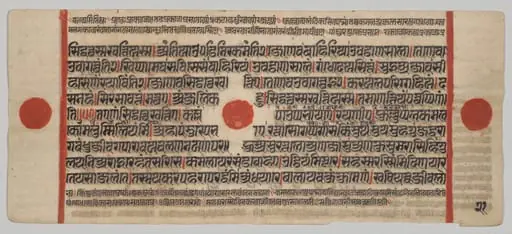 Text, Folio 21 (verso), from a Kalpa-sutra
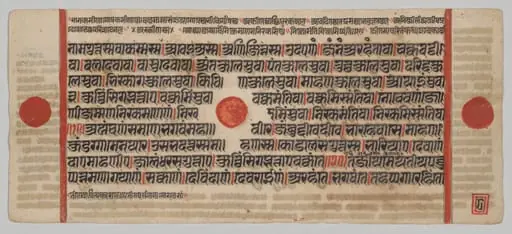 Text, Folio 8 (verso), from a Kalpa-sutra
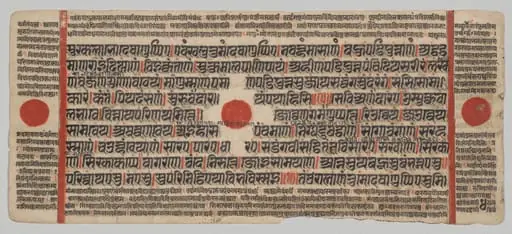 Text, Folio 4 (verso), from a Kalpa-sutra
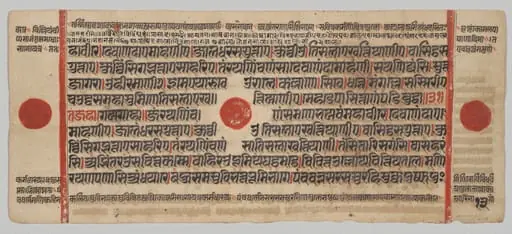 Text, Folio 13 (verso), from a Kalpa-sutra
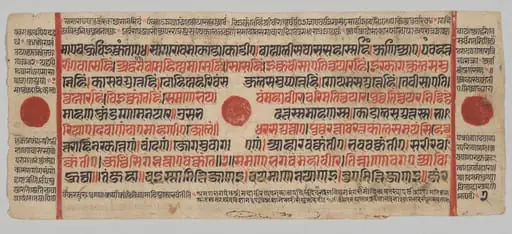 Text, Folio 2 (verso), from a Kalpa-sutra
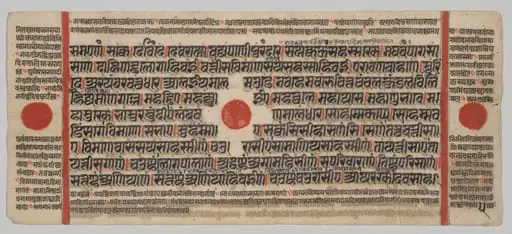 Text, Folio 5 (verso), from a Kalpa-sutra
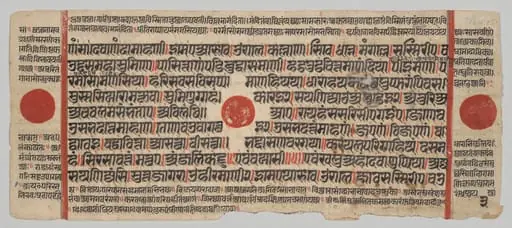 Text, Folio 3 (verso), from a Kalpa-sutra
 Text, Folio 18 (verso), from a Kalpa-sutra