Artwork
The Mosque, Córdoba
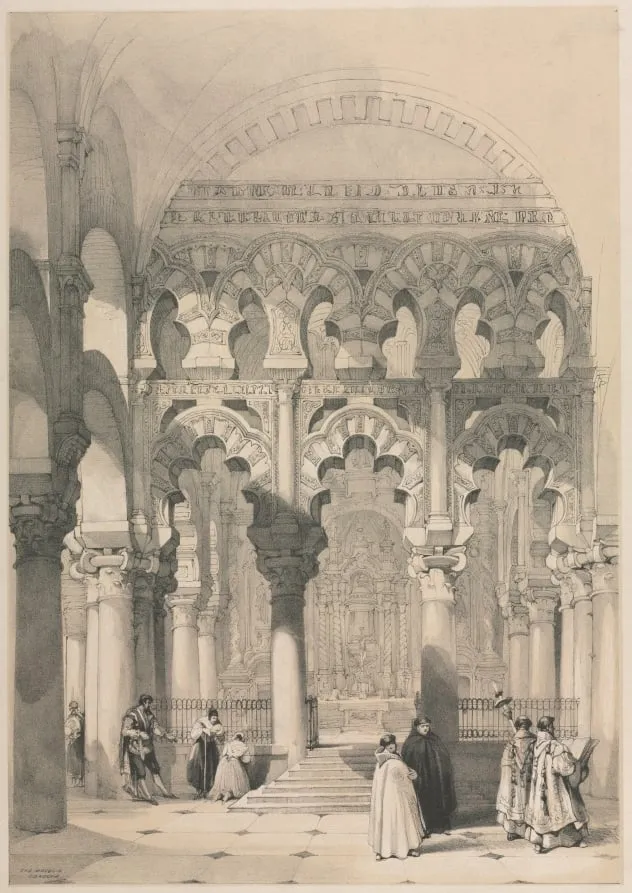
The Mosque, Córdoba is a print by the Romanticist artist Unknown. It dates from 1804 and is held in the collection of the Cleveland Museum of Art. This print depicts the former Great Mosque of Córdoba, transformed into a cathedral after the Christian reconquest of Spain.
About this work
Overview
The scene reflects a physical and spiritual transition, illustrating how sacred space was repurposed across centuries of political and religious change.
This print depicts the former Great Mosque of Córdoba, transformed into a cathedral after the Christian reconquest of Spain. The image captures the layered history of the structure, where Islamic architectural forms coexist with Christian liturgical elements. The scene reflects a physical and spiritual transition, illustrating how sacred space was repurposed across centuries of political and religious change.
Subject & Meaning
The print presents the building as a site of dual religious identity. The horseshoe arches, characteristic of Umayyad design, frame the interior where a Christian altar and crucifix dominate the space. The Christogram IHS, visible on a priest’s garment, signals the institutional presence of the Catholic Church. Together, these elements convey a narrative of conquest, adaptation, and the persistence of layered cultural memory.
Technique & Style
Rendered in fine linear detail, the print emphasizes architectural precision over emotional expression. The scalloped arches are rendered with rhythmic repetition, echoing the original Islamic design, while the figures are minimized and stylized, placing focus on the structure itself. The composition balances symmetry and spatial depth, typical of early modern topographical prints intended for documentation rather than ornamentation.
History & Provenance
Constructed in 785 under Muslim rule, the building was consecrated as a cathedral in 1236 after Castilian forces took Córdoba. Over time, Christian additions—chapels, altars, and choir stalls—were inserted into the mosque’s original layout. This print likely dates from the 17th or 18th century, when European travelers and scholars documented such hybrid monuments, preserving their visual complexity for wider audiences.
Context
The print emerges from a period when Christian Europe increasingly viewed Islamic architecture as both exotic and historically significant. While religious conversion had erased the building’s original function, its form remained a testament to Al-Andalus’s cultural legacy. Such images served not only as records but also as tools for asserting Christian dominance while acknowledging the sophistication of the conquered civilization.
Legacy
The building remains a UNESCO World Heritage site, its architecture a physical archive of coexistence and conflict. Prints like this helped shape Western perceptions of Islamic Spain, influencing later archaeological and preservation efforts. Today, the structure continues to function as a cathedral while being studied as a monument of intercultural encounter, its layered history preserved in both stone and image.
Artist & collection

 Domestic Scene
 Giacomo and Cardinal Marco, investing Andrea, Abbot of San Zeno, with his Benefice
 The Nymph of Fontainebleau
 Portrait of a Woman
 Madonna and Child with Saints in the Enclosed Garden
 Venus and Minerva
 Family Group of Four on Sofa
 Wall painting from Room H of the Villa of P. Fannius Synistor at Boscoreale
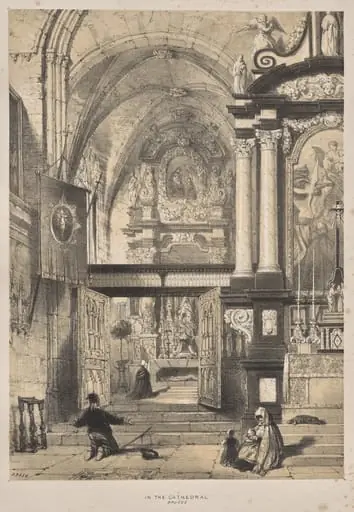 Architecture of the Middle Ages: In the Cathedral, Bruges
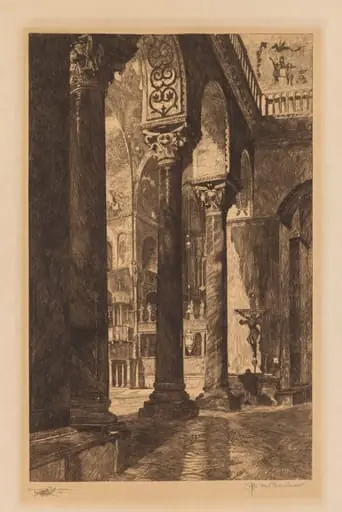 Interior of St. Mark's, Venice
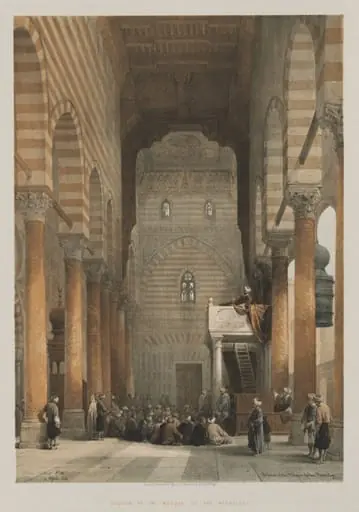 Egypt and Nubia, Volume III: Interior of the Mosque of the Metwalys
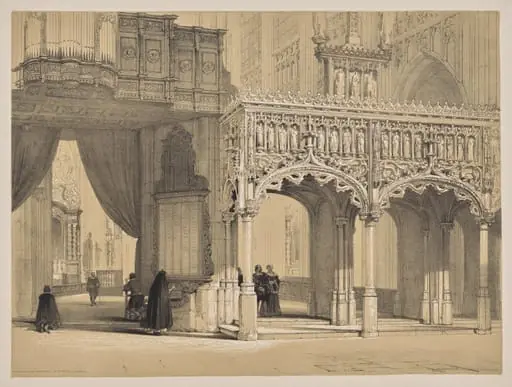 Sketches in Belgium and Germany, First Series, Screen in the Cathedral of St. Peter, Louvain
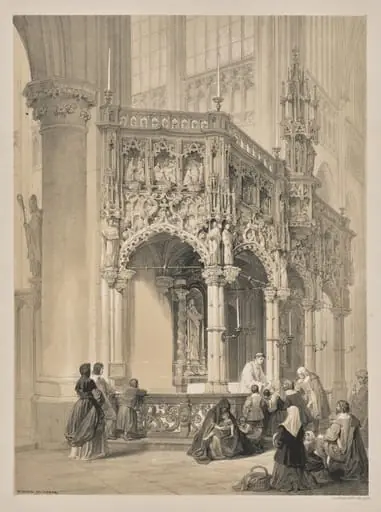 Sketches in Belgium and Germany, Second Series: No. 17 - Screens at Lierre
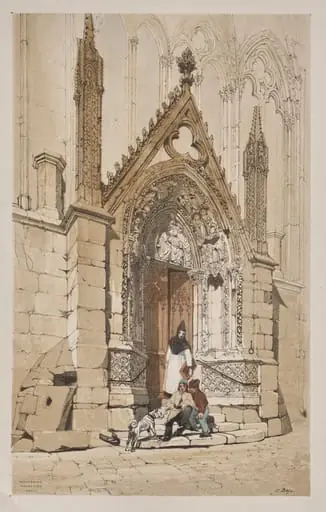 Picturesque Architecture in Paris, Ghent, Antwerp, Rouen: Porte Rouge, Nôtre Dame, Paris
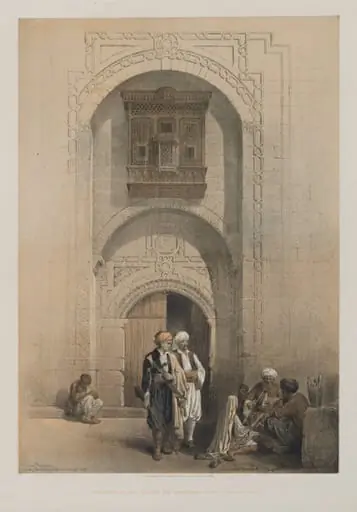 Egypt and Nubia, Volume III: Modern Mansion, showing the Arabesque Architecture of Cairo