Artwork
Untitled
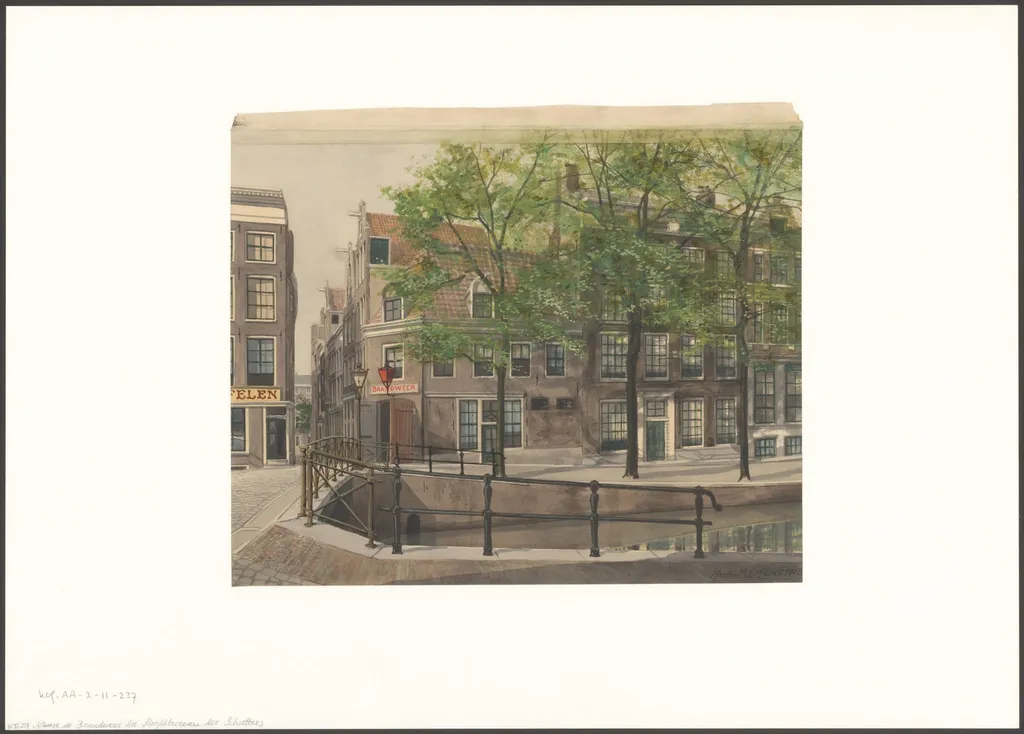
Untitled is a print by Unknown. It dates from 1902 and is held in the collection of the Rijksmuseum.
About this work
A small, worn sheet shows a few quick pencil lines: a woman’s face, half-turned, eyes down.
A small, worn sheet shows a few quick pencil lines: a woman’s face, half-turned, eyes down. The paper is yellowed, the edges frayed.
No one knows who drew it or why it was tucked into a city archive in 1902. The lines feel loose, almost accidental—like a thought caught mid-air. It’s the kind of sketch you might find in a pocket notebook, not a museum.
To see more anonymous drawings like this, visit the Rijksmuseum.
Overview
A small, fragile pencil sketch on yellowed paper, once filed under district number 11 in the Atlas Van Eck, now resides in the Rijksmuseum’s collection of anonymous works. Its edges are worn, its surface softened by time. The drawing contains minimal, hesitant lines—suggesting a face turned slightly, gaze lowered—without context or signature. It was likely never intended for public view, yet survived as a quiet artifact of everyday observation.
Subject & Meaning
The figure is a woman’s profile, rendered with sparse, unrefined strokes. Her eyes are downcast, her expression unreadable. No clothing, setting, or identifier is present, leaving her identity and purpose obscure. The sketch may have been a momentary observation, a memory captured, or an idle gesture—its emotional weight lies in its anonymity and lack of resolution.
Technique & Style
Executed in soft graphite, the lines are loose and unstructured, lacking shading or detail. The hand appears tentative, as if drawn quickly, perhaps in transit or during a pause. There is no attempt at polish or composition; the focus is on capturing a fleeting impression rather than creating a finished image. The fragility of the paper mirrors the impermanence of the gesture.
History & Provenance
The sketch was discovered and cataloged in 1902 among municipal records in the Atlas Van Eck, a collection of urban documentation. Its origin remains unknown—no artist, date, or reason for its inclusion has been recorded. It was likely discarded or forgotten, then preserved by accident, slipping from private use into institutional memory without explanation.
Context
In early 20th-century Amsterdam, such sketches were common in personal notebooks, used for quick notations or idle doodles. They rarely entered public archives unless accidentally filed with official documents. This piece reflects the quiet, unremarkable visual habits of ordinary people, contrasting with the formal art of the period.
Legacy
Its survival is accidental, its significance derived from its obscurity. The drawing invites reflection on the countless unseen acts of looking and recording that shape human experience. In a museum setting, it becomes a silent counterpoint to signed, celebrated works—reminding viewers of art’s quiet, unclaimed margins.
Artist & collection

 Domestic Scene
 Giacomo and Cardinal Marco, investing Andrea, Abbot of San Zeno, with his Benefice
 The Nymph of Fontainebleau
 Portrait of a Woman
 Madonna and Child with Saints in the Enclosed Garden
 Venus and Minerva
 Family Group of Four on Sofa
 Wall painting from Room H of the Villa of P. Fannius Synistor at Boscoreale