Artwork
Untitled
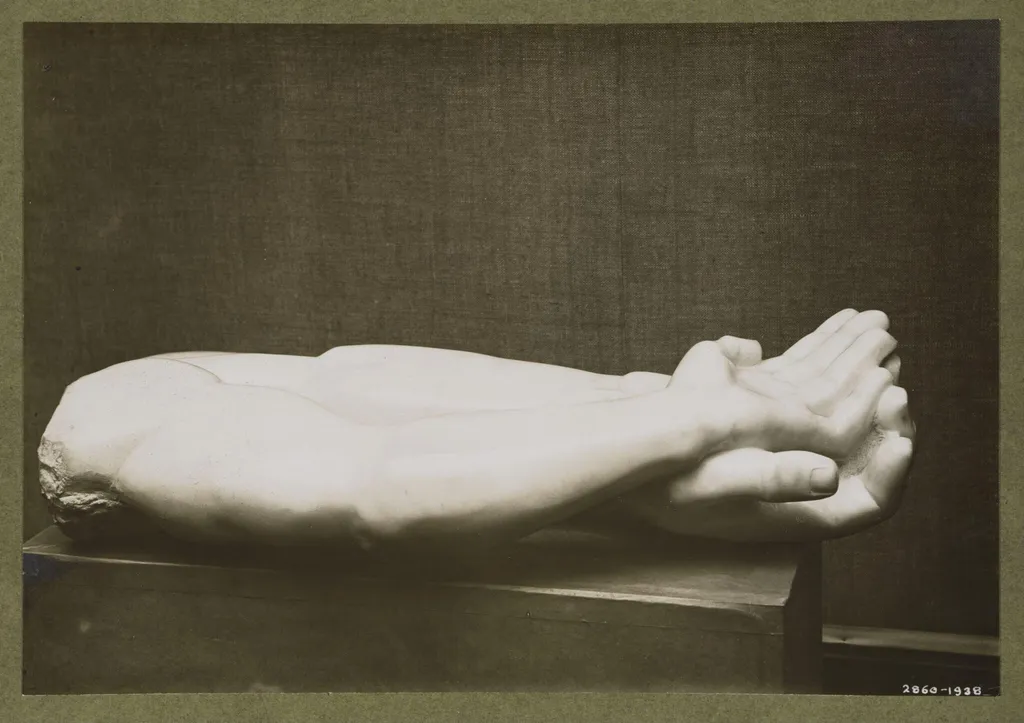
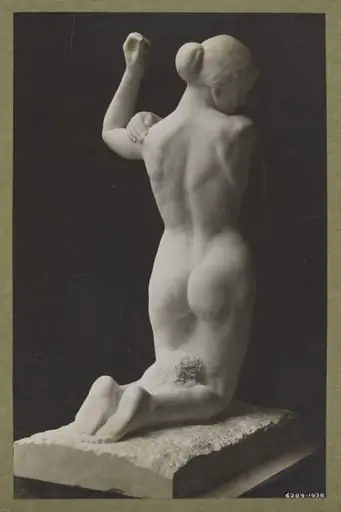
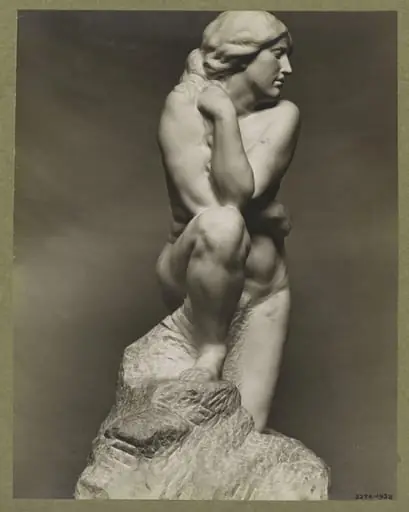
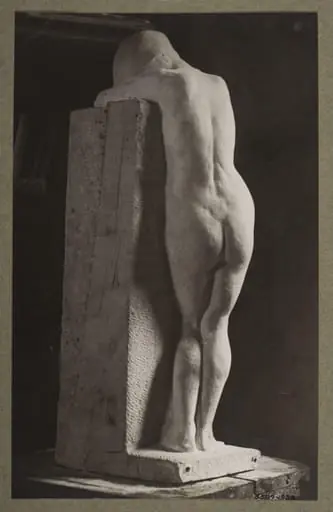
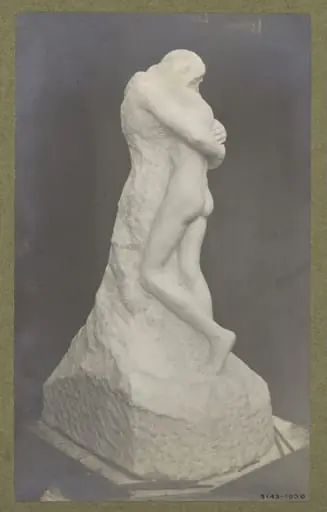
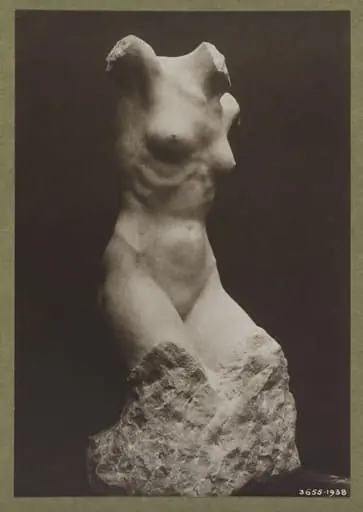
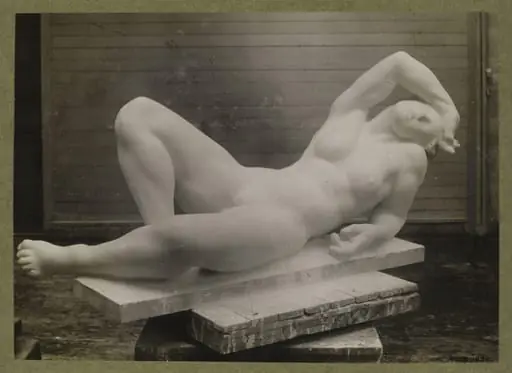
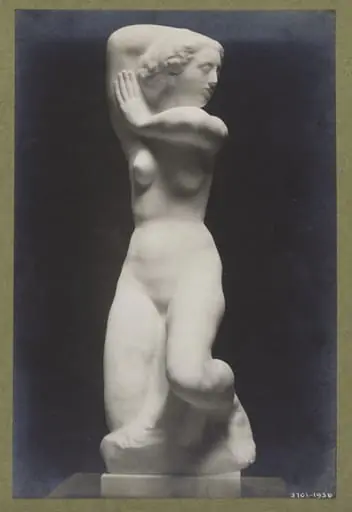
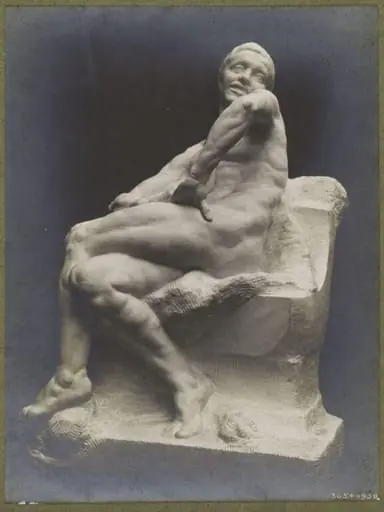
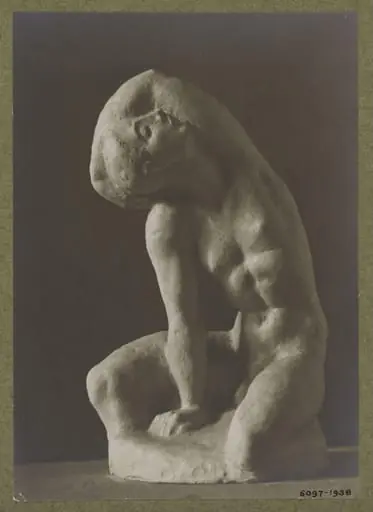
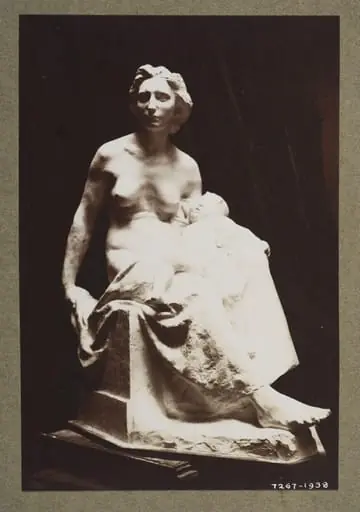
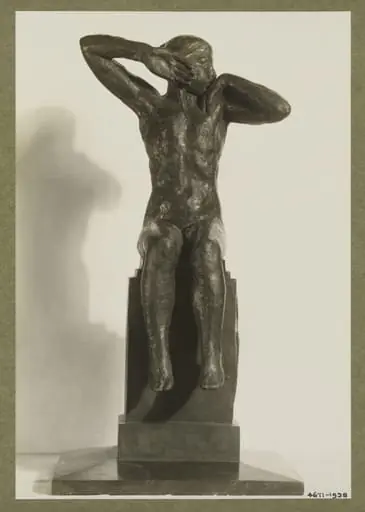
Untitled is a photographic photography by Unknown. It dates from 1924 and is held in the collection of the Victoria and Albert Museum. A black-and-white photograph, mounted on a green card, captures a marble reclining figure.
About this work
Overview
A black-and-white photograph, mounted on a green card, captures a marble reclining figure. It was included in a 1920s survey of sculptors sent to art historian William Kineton Parkes. The image became part of Parkes’s personal archive, which he bequeathed to the Archive of Art and Design in 1938. The photograph serves as a documentary record rather than a standalone artistic work.
Subject & Meaning
The sculpture depicts a reclining human form with a gently turned head and one arm extended above, palm upward. The posture suggests stillness and introspection, evoking a sense of quiet repose. No narrative or symbolic context is evident; the focus remains on the physical presence of the figure, emphasizing form over story or allegory.
Technique & Style
The marble surface appears smooth but retains subtle tool marks, indicating hand-carving rather than mechanical finishing. The photograph’s monochrome tone enhances the contrast between light and shadow across the form, drawing attention to the texture and contours of the stone. The composition is straightforward, with no framing or staging to distract from the sculpture’s volume.
History & Provenance
The photograph was part of a broader research initiative in the 1920s documenting sculptural works. It was included in materials compiled for William Kineton Parkes, a noted art historian. After his death in 1938, his collection was donated to the Archive of Art and Design, where it remains as a resource for studying early 20th-century art documentation practices.
Context
This image reflects a period when scholars systematically recorded sculptural heritage through photography, often prioritizing formal qualities over attribution. The use of a green mount was common in archival practices of the time, providing visual separation and protection. Such photographs were tools for study, not exhibition, and were rarely intended for public display.
Legacy
The photograph endures as a fragment of a larger archival effort to catalog sculpture in the early 20th century. It offers insight into how art historians approached visual documentation before digital systems. While the original sculpture’s identity remains uncertain, the image preserves a moment of observation, contributing to the historical record of sculptural forms.
Artist & collection

 Domestic Scene
 Giacomo and Cardinal Marco, investing Andrea, Abbot of San Zeno, with his Benefice
 The Nymph of Fontainebleau
 Portrait of a Woman
 Madonna and Child with Saints in the Enclosed Garden
 Venus and Minerva
 Family Group of Four on Sofa
 Wall painting from Room H of the Villa of P. Fannius Synistor at Boscoreale