Artwork
Venus și Vulcan. Pandant: Răpirea Europei
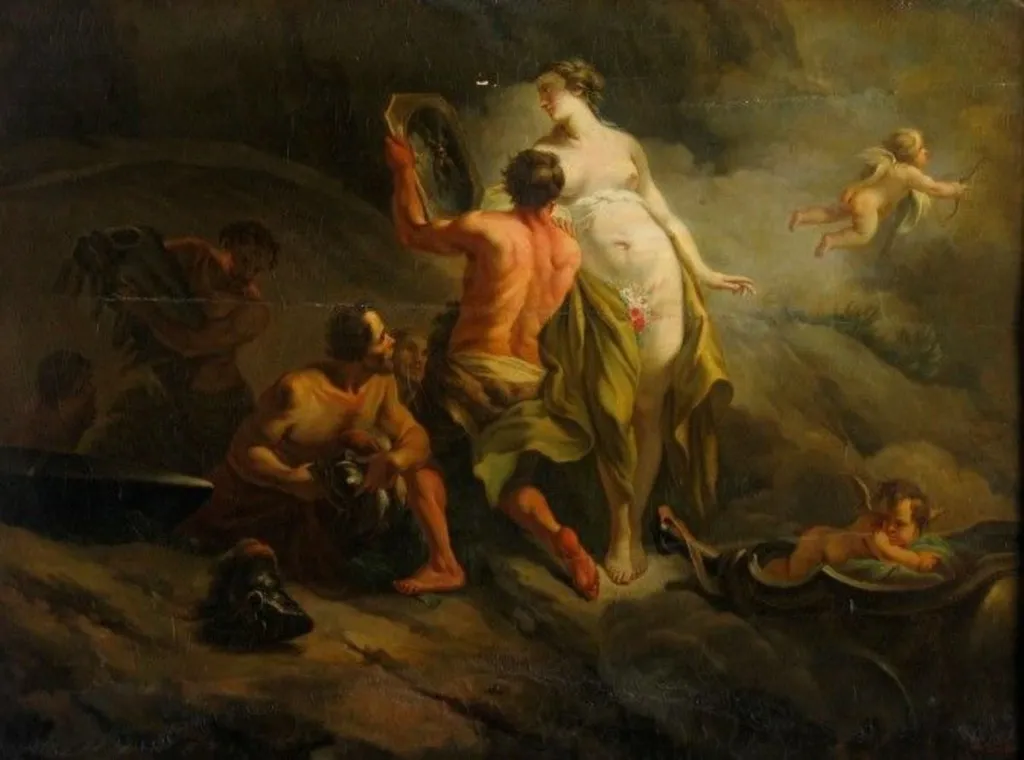
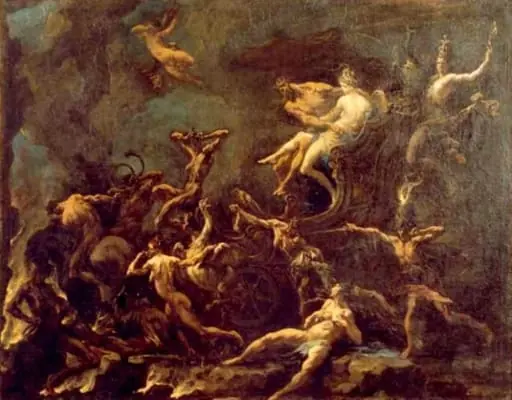
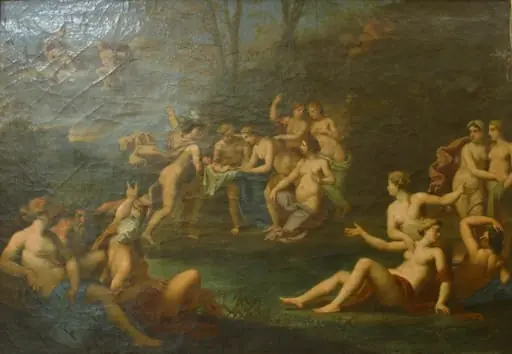
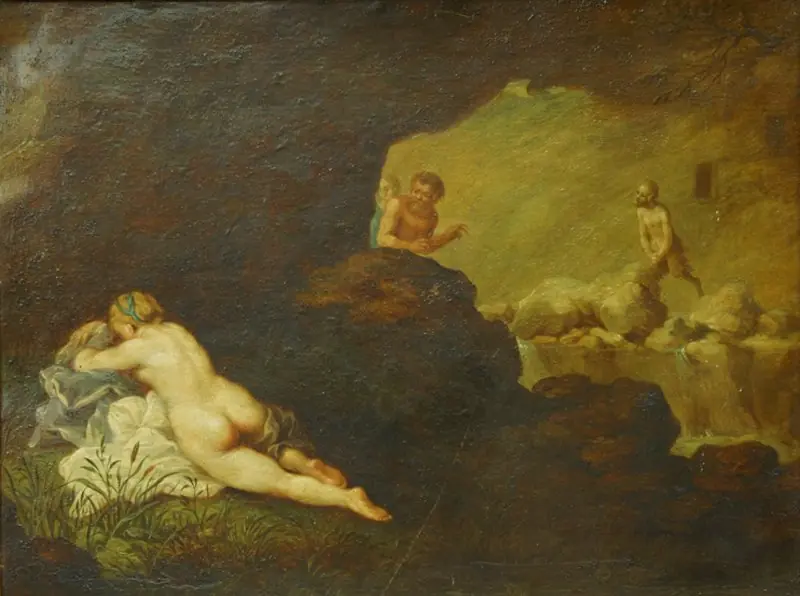
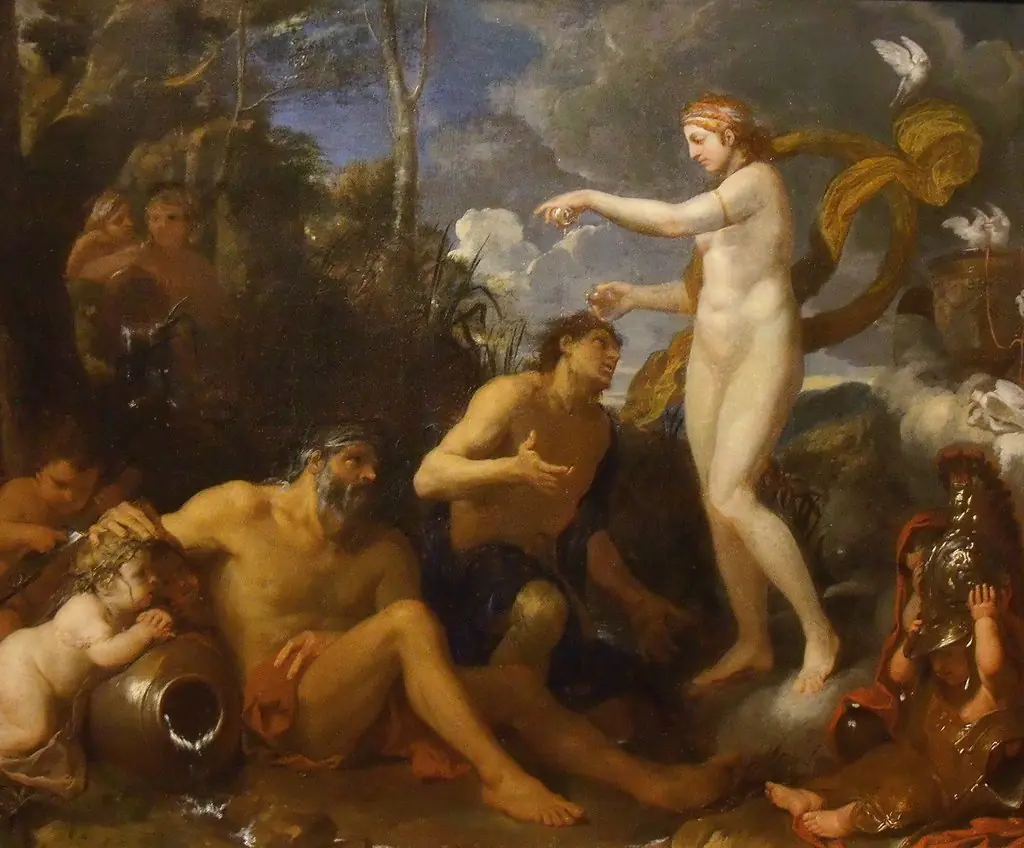
Venus și Vulcan. Pandant: Răpirea Europei is an unspecified painting by the Rococo painting artist Unknown. It dates from 1850 and is held in the collection of the Brukenthal National Museum. This painting depicts a mythological scene featuring Venus and Vulcan, set against a moody, atmospheric landscape.
About this work
Overview
The figures are arranged with deliberate contrast: Venus stands barefoot on a rock, while Vulcan sits at her feet, holding a mirror.
This painting depicts a mythological scene featuring Venus and Vulcan, set against a moody, atmospheric landscape. The figures are arranged with deliberate contrast: Venus stands barefoot on a rock, while Vulcan sits at her feet, holding a mirror. Above them, a winged child hovers in a dark, overcast sky. A distant structure suggests a domestic or sacred space, grounding the divine in a tangible world.
Subject & Meaning
The scene draws from classical mythology, portraying Venus, goddess of love, and Vulcan, god of fire and craftsmanship. The mirror in Vulcan’s hand may symbolize self-reflection or the act of creation, while Venus’s gaze toward him suggests mutual recognition. The winged child likely represents Cupid, reinforcing themes of desire and connection. The setting implies a private, intimate moment between deities, removed from public spectacle.
Technique & Style
The composition emphasizes stillness and quiet tension through balanced poses and muted tones. The figures are rendered with soft contours, contrasting with the turbulent sky and rocky terrain. The use of shadow and cloud cover enhances the emotional weight of the scene. Clothing and skin are treated with subtle gradations, avoiding overt idealization in favor of a more naturalistic, introspective mood.
History & Provenance
The work is associated with the collection of the Museum of Ethnography, suggesting it may have been acquired as part of a broader interest in mythological imagery from European traditions. Its exact origin and artist remain undocumented in available records, though its style aligns with late 18th- to early 19th-century interpretations of classical themes in regional painting.
Context
During the period when this work likely emerged, mythological subjects were commonly used to explore human emotions through allegory. Unlike grand Baroque treatments, this painting favors intimacy over drama, reflecting a shift toward quieter, more psychological depictions of myth. The inclusion of everyday elements—like the small building—hints at a desire to connect divine narratives with lived experience.
Legacy
Though not widely reproduced or studied in mainstream art history, the painting contributes to a lesser-known tradition of regional mythological painting that prioritized mood over spectacle. Its presence in an ethnographic collection underscores its role as a cultural artifact, preserving local interpretations of classical stories outside academic or courtly circles.
Artist & collection

 Domestic Scene
 Giacomo and Cardinal Marco, investing Andrea, Abbot of San Zeno, with his Benefice
 The Nymph of Fontainebleau
 Portrait of a Woman
 Madonna and Child with Saints in the Enclosed Garden
 Venus and Minerva
 Family Group of Four on Sofa
 Wall painting from Room H of the Villa of P. Fannius Synistor at Boscoreale