Artwork
Vernacular photograph
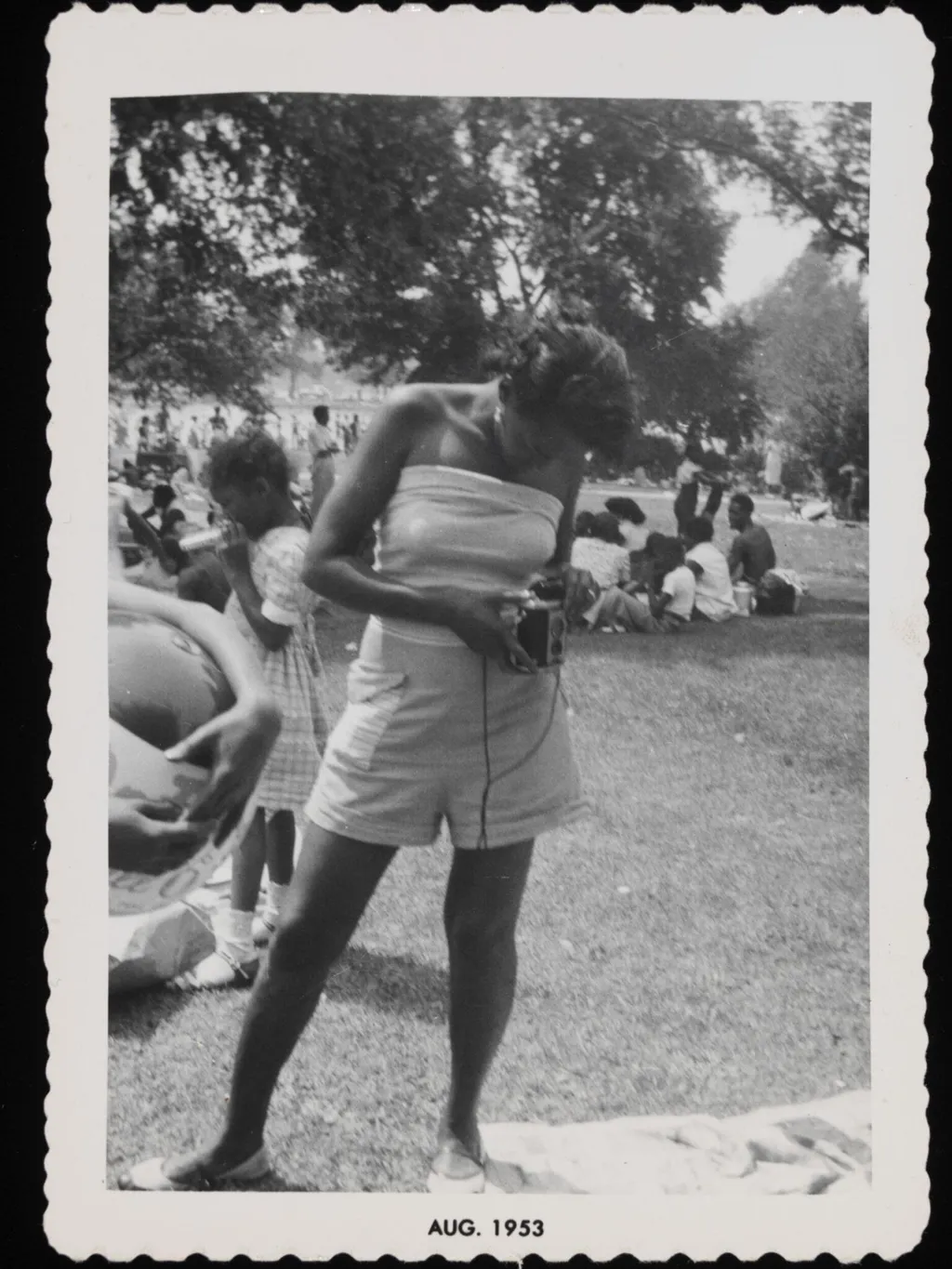
Vernacular photograph is a photographic photography by Unknown. It dates from 1954 and is held in the collection of the Victoria and Albert Museum. This black-and-white photograph, dated August 1953, captures an unposed moment in a public park.
About this work
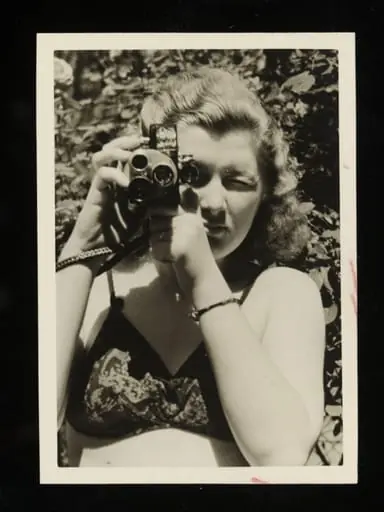
In the foreground, someone stands with their back to us, holding a camera and wearing a light-colored shirt and shorts.
This photo shows a group of people outdoors in what looks like a park. In the foreground, someone stands with their back to us, holding a camera and wearing a light-colored shirt and shorts. Others sit on the grass, some with blankets, while trees and a crowd fill the background.
The date stamp—August 1953—suggests this was a casual moment, maybe a picnic or gathering. The camera hints at someone documenting the day, even if the photo itself isn’t polished.
Check out the Victoria and Albert Museum to see more everyday snapshots like this.
Overview
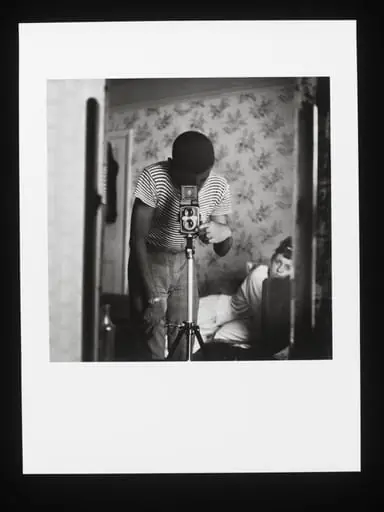
This black-and-white photograph, dated August 1953, captures an unposed moment in a public park. It depicts a woman standing with her back to the viewer, holding a camera at waist level, while others relax on the grass nearby. The image belongs to a collection of fifty snapshots centered on cameras, assembled by Peter Cohen. Its informal composition and everyday subject reflect the rise of amateur photography in postwar America.
Subject & Meaning
The woman, dressed in a simple bandeau top and light shorts, appears absorbed in the act of photographing rather than posing for the camera. Her posture suggests a private, spontaneous engagement with the scene—perhaps documenting a family outing or casual gathering. The presence of others lounging under trees implies a shared, ordinary ritual, elevating the photograph as a record of daily life rather than a staged event.
Technique & Style
Rendered in grainy monochrome, the image exhibits the characteristics of a snapshot taken with a handheld 35mm camera. Composition is unrefined: figures are partially cropped, depth is shallow, and focus is uneven. These qualities, often dismissed as technical flaws, instead convey immediacy and authenticity, aligning the work with vernacular photography’s emphasis on real-time experience over artistic control.
History & Provenance
The photograph was acquired by Peter Cohen, a collector of amateur photographic material, as part of a series of fifty images centered on the presence of cameras in everyday settings. It entered institutional circulation through his collection, later preserved by the Victoria and Albert Museum. Its value lies not in authorship or fame, but in its representation of common photographic practices in the early 1950s.
Context
In the early 1950s, portable cameras like the Kodak Brownie became widely accessible, enabling ordinary people to document personal moments. This image reflects a cultural shift toward self-recording during leisure activities—picnics, outings, family gatherings. Unlike professional photography, these images were not intended for public display, making them valuable as unfiltered records of social behavior.
Legacy
As part of Cohen’s collection, this photograph contributes to broader scholarly interest in vernacular imagery as historical evidence. It challenges traditional hierarchies in photographic history by affirming the significance of non-professional, anonymous work. Museums now recognize such images as essential to understanding how photography shaped personal and collective memory in the 20th century.
Artist & collection

 Domestic Scene
 Giacomo and Cardinal Marco, investing Andrea, Abbot of San Zeno, with his Benefice
 The Nymph of Fontainebleau
 Portrait of a Woman
 Madonna and Child with Saints in the Enclosed Garden
 Venus and Minerva
 Family Group of Four on Sofa
 Wall painting from Room H of the Villa of P. Fannius Synistor at Boscoreale