Artwork
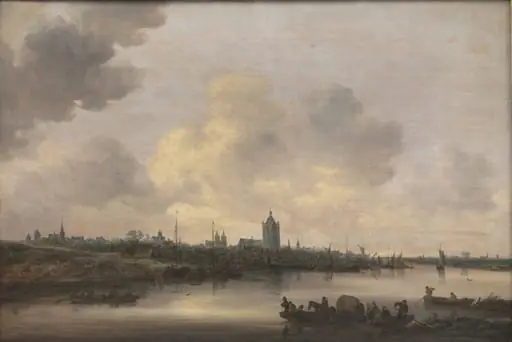
View of Heusden
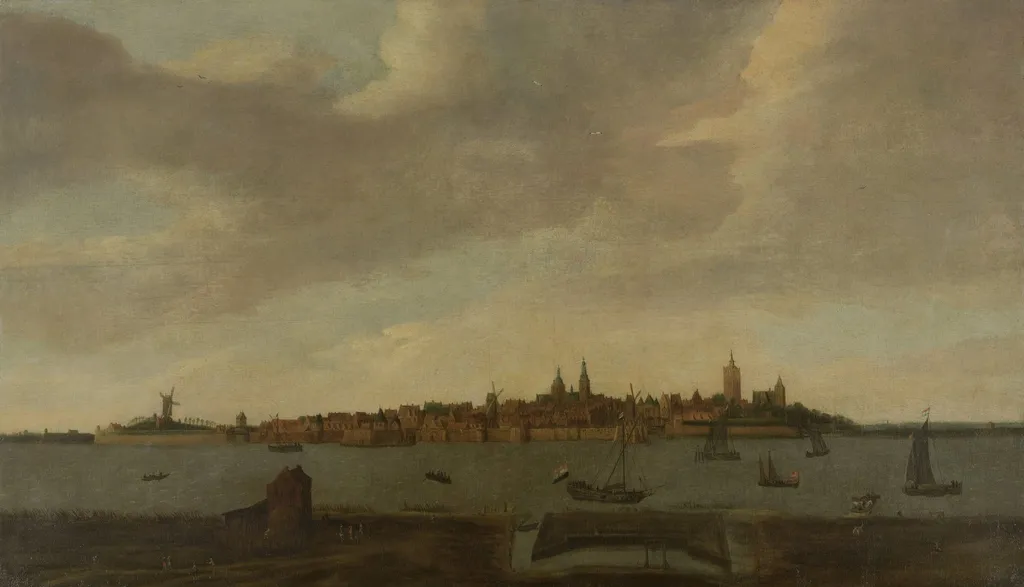
View of Heusden is an unspecified painting by the Dutch Golden Age artist Unknown. It dates from 1650 and is held in the collection of the Rijksmuseum.
About this work
Overview
The artist’s approach favors harmony over topographical accuracy, resulting in a composed, almost idealized view of the town.
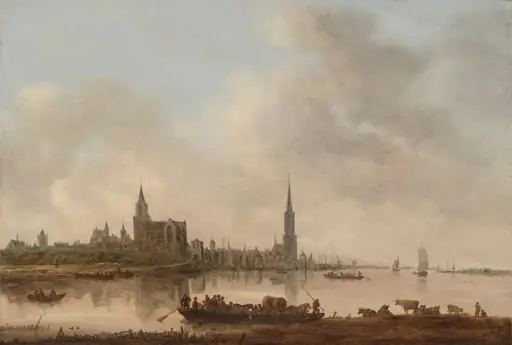
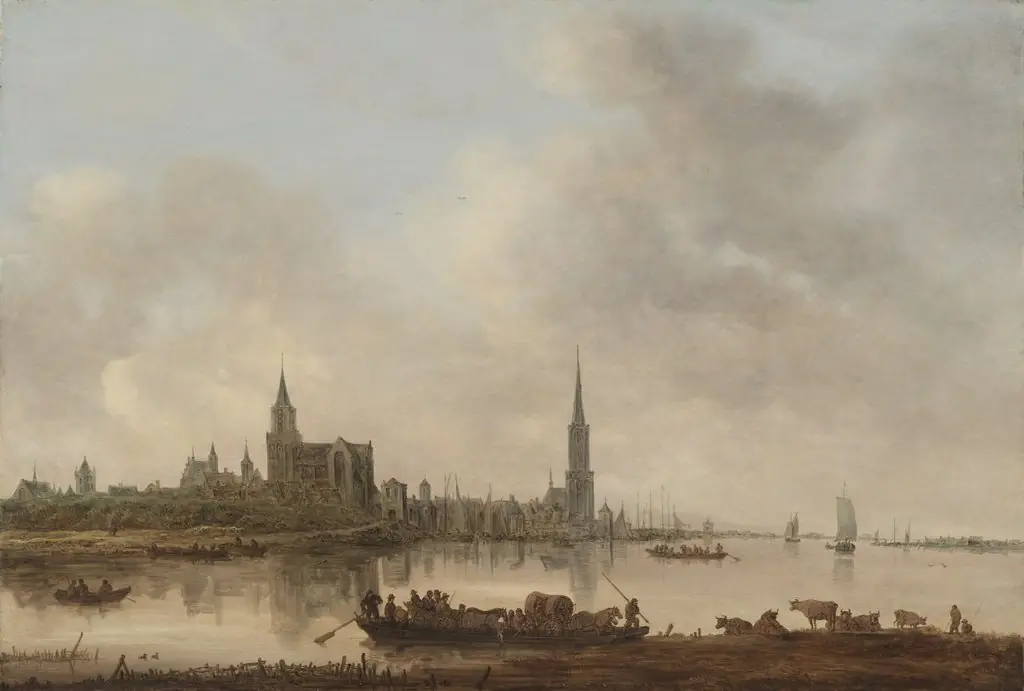
This painting depicts the Dutch town of Heusden as seen from across the river, with a quiet array of small boats on the water and a broad, cloud-streaked sky above. The scene is composed with a sense of stillness, suggesting it was not painted on-site but recalled from observation. The artist’s approach favors harmony over topographical accuracy, resulting in a composed, almost idealized view of the town.
Subject & Meaning
The subject is a peaceful riverside town, rendered not as a documentary record but as a contemplative memory. The absence of human activity and the uniformity of the buildings suggest an emphasis on tranquility rather than urban detail. The scene evokes a sense of order and calm, reflecting a cultural appreciation for serene landscapes in 17th-century Dutch society.
Technique & Style
The artist employed soft, diffused lighting and muted tones to create a gentle atmosphere. Brushwork is smooth and controlled, with minimal texture in the water and sky. Buildings are rendered with precise, almost symmetrical lines, indicating a stylized interpretation rather than direct observation. The lack of strong shadows reinforces the dreamlike, timeless quality of the composition.
History & Provenance
The painting was created in the mid-17th century, likely by a Dutch artist working in the tradition of topographical views. It was probably made after the artist had visited Heusden, relying on memory rather than on-site sketches. Its early ownership is undocumented, but it entered the Rijksmuseum’s collection in the 19th century as part of a broader effort to preserve regional Dutch landscapes.
Context
During the Dutch Golden Age, landscape painting flourished as a genre separate from religious or historical themes. Town views like this one appealed to civic pride and domestic tranquility. Artists often idealized their subjects, balancing accuracy with aesthetic harmony. This work fits within a broader trend of calm, orderly depictions of everyday Dutch environments.
Legacy
Though not widely known outside the Netherlands, this painting exemplifies a quiet, enduring strand of Dutch landscape art. Its emphasis on memory over realism influenced later artists who sought to capture atmosphere rather than detail. Today, it remains a representative example of how Dutch painters transformed ordinary scenes into meditative compositions.
Artist & collection

 Domestic Scene
 Giacomo and Cardinal Marco, investing Andrea, Abbot of San Zeno, with his Benefice
 The Nymph of Fontainebleau
 Portrait of a Woman
 Madonna and Child with Saints in the Enclosed Garden
 Venus and Minerva
 Family Group of Four on Sofa
 Wall painting from Room H of the Villa of P. Fannius Synistor at Boscoreale